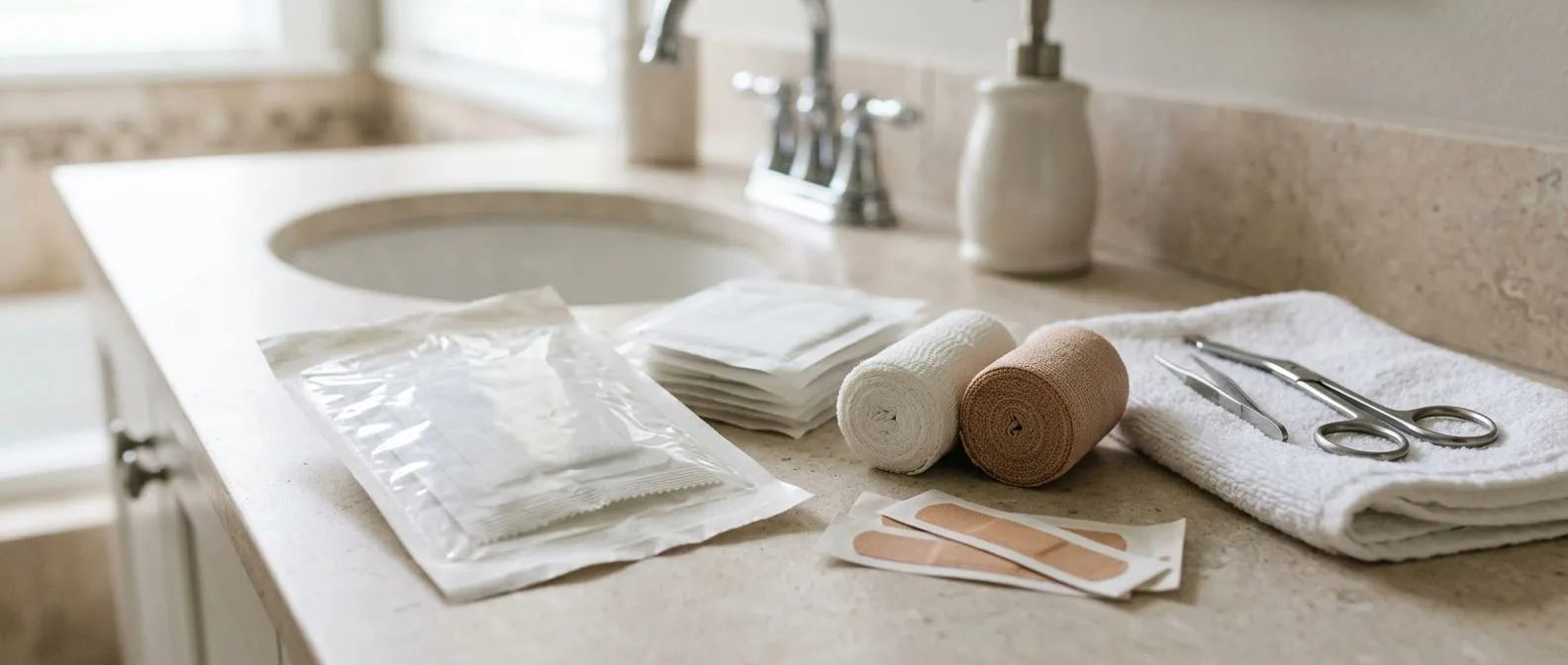
Wound Care After Heart Surgery: Daily Steps
Wound care after heart surgery starts with daily steps you can follow at home.
Good wound care after heart surgery is one of the most important things you can control during recovery. Your incision is the doorway through which the surgical team reached your heart, and how you look after it in the weeks that follow has a real effect on how smoothly you heal. This guide walks you through daily steps, warning signs, and the practical questions patients ask most, so you can recover at home with confidence.
What Is Wound Care After Heart Surgery?
Wound care is the routine of keeping your surgical incision clean, dry, and protected while your body rebuilds the layers of skin, muscle, and bone that surgery separated. In heart surgery this matters more than in most operations, because the main incision usually runs down the centre of the chest through the breastbone, an area under constant movement every time you breathe or lift your arms.
What the incision actually looks like. Most patients go home with a line of small paper strips or a thin dressing along the chest, and sometimes smaller incisions where drainage tubes were placed below the ribs or on the wrist or groin if a less invasive or catheter-based approach was used. The skin edges are closed with dissolvable stitches or small surgical glue, and the deeper layers heal on their own over six to eight weeks.
Why daily care matters. The goal of the daily routine is simple: keep bacteria off the healing surface, watch for changes, and avoid pressure or strain on the breastbone. Ask for written instructions for your specific incision before leaving the hospital, because a conventional sternotomy, a minimally invasive incision, and a TAVR access site each heal differently. When a case is complex or the patient has diabetes or other risk factors, we review the wound plan with the whole multidisciplinary team before discharge.
How to Care for a Chest Incision After Heart Surgery
Learning how to care for your chest incision after heart surgery comes down to a handful of daily habits done consistently. None of them are difficult, but they work best in a set order, at the same time each day.
- Check first: look at the incision in good light before you touch it, and note any new redness, swelling, or drainage so you can compare day to day.
- Clean gently: if your surgeon has cleared you to wash it, use mild soap and running water and pat dry with a clean towel. Never scrub or rub the incision.
- Protect the breastbone: hold a pillow firmly against your chest when coughing, sneezing, or getting out of bed. This is called sternal precaution and reduces strain on the healing bone.
- Skip the products: no powders, creams, hydrogen peroxide, or alcohol on the incision unless your surgical team has specifically told you to use something.
Post cardiac surgery skin care around the incision. The skin on either side of the closure can feel dry and itchy as it heals. That itch is a normal part of recovery, and gentle moisturiser on the surrounding skin, not on the open closure itself, is usually fine once the incision is fully sealed. Ask your team before applying anything close to the wound.
Hands before anything else. Wash your hands before and after every time you touch the incision, even if you are only looking. This single habit is the cheapest and most effective part of sternal wound care at home.
When Can I Shower After Open Heart Surgery?
Most patients are cleared to shower within a few days of surgery, often before they leave the hospital. The general rule is showers, not baths, because soaking keeps the incision wet and soft tissue that needs to stay dry while it seals.
Showering after open heart surgery safely. Use warm, not hot, water and let it run over the incision rather than aiming the stream directly at it. Mild soap and water are enough. Pat the area dry gently with a clean towel, working from side to side, and never rub. Some dressings are waterproof and some are not; your discharge instructions will say which, and if a dressing got soaked and is not waterproof, it usually needs changing.
We tell patients in our consulting rooms in Guadalajara, Querétaro and Hermosillo to plan the shower right before a dressing change rather than after, so any moisture trapped under the tape gets a fresh, dry dressing over it. Avoid swimming pools, hot tubs, and baths until your surgeon explicitly clears them, which is typically many weeks later.

When to Change the Dressing After Heart Surgery
Knowing when to change a dressing after heart surgery depends on the type of covering your team used and how much drainage there is. Many modern chest incisions are left uncovered after the first day or two, once any initial drainage has settled, because air helps the closure dry and heal. Others need a light dressing until follow-up.
The basic rules. Change a dressing when it becomes loose, wet, or visibly soiled, not on a rigid calendar. If the instructions say to change it daily, do it at a fixed time, such as after your shower. Wash your hands, remove the old dressing slowly, pulling toward the incision rather than away from it, inspect the wound, and apply the fresh one only if your instructions say one is still needed.
What the discharge looks like. A small amount of clear or slightly pink ooze in the first days can be normal. Thick yellow, green, or cloudy drainage, or any drainage that persists beyond the first week, is not, and should be reported. Patients often ask us whether a scarred, oozing, or reddening incision is worth a call; our answer is always that a phone call is free and a deep infection is not.
Sternal wound infection is one of the more serious complications after cardiac surgery, and prevention at home plays a measurable role alongside the care the surgical team provides. Published evidence on surgical site infection control, including systematic reviews of post-operative practices, is indexed in open-access databases such as DOAJ, and your own team's protocol will build on those standards.
How Do I Care for the Chest Tube Site?
During surgery, one or more flexible tubes are placed through small cuts below your ribs to drain fluid and air from around the heart and lungs. These are removed before discharge, but the small holes they leave need their own attention while they close.
Chest tube site care in the first weeks. The sites usually close on their own within a week or two. Keep them clean and dry, follow the same gentle washing rules as the main incision, and expect a small, firm ridge to form under the skin as the tunnel heals. That ridge is normal and softens over months.
What is not normal. Watch for a sudden gush or continuous leak of clear fluid from the site, new or increasing swelling that feels like a bubble of air under the skin (called subcutaneous emphysema, which may feel like crackling when pressed), spreading redness, or fever. Any of these means a same-day call to your surgical team. Drainage sites are usually checked at the first follow-up visit; comparing what you see with what normal healing looks like helps you spot a problem early.
For patients who had a TAVR or another catheter-based procedure through the groin or wrist instead of the chest, the same principles apply to the smaller access site: keep it clean, dry, and free of pressure, and report any expanding bruise, swelling, or pulsing lump promptly.
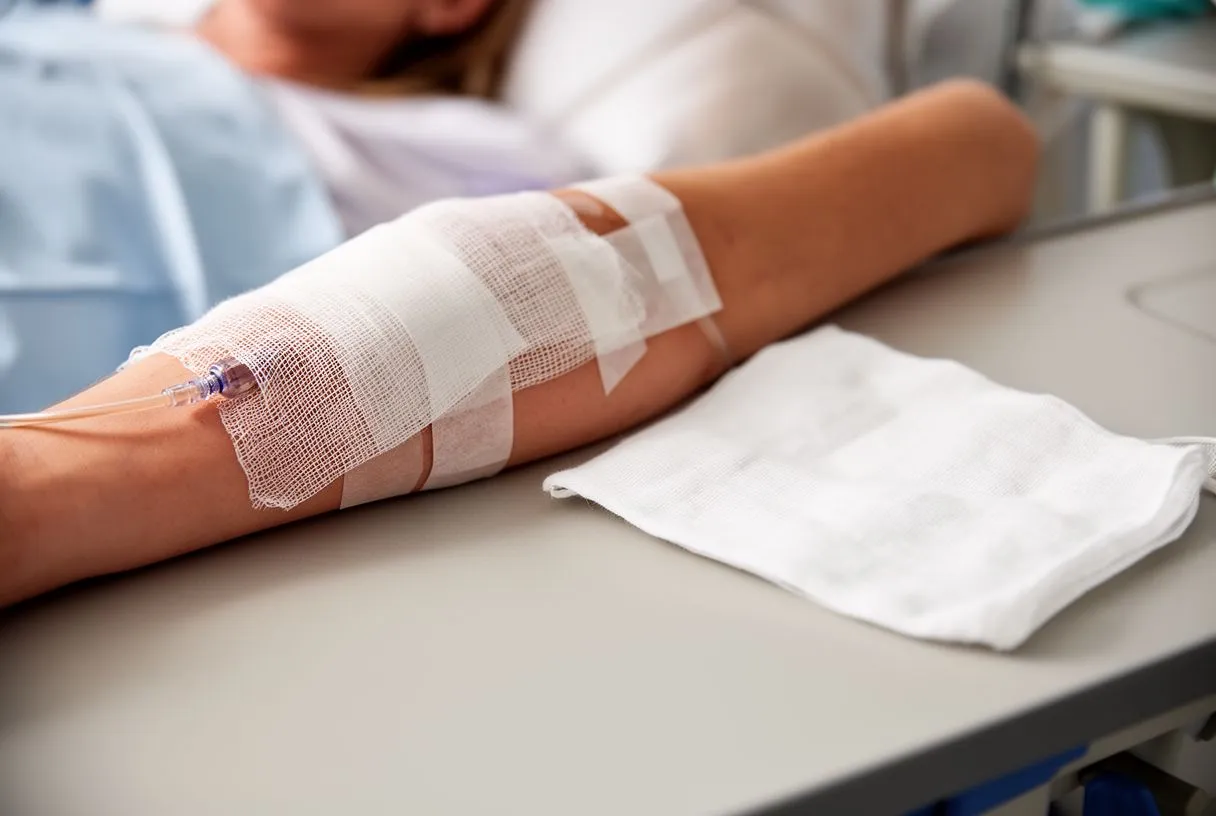
What Are the Signs of Infection After Heart Surgery?
Recognising the signs of infection after heart surgery early is the single most valuable skill in home recovery. Most incisions heal without incident, but deep sternal infections, while uncommon, are serious enough that every patient and family member should know the warning list.
- Increasing pain: pain that gets worse after the first week instead of better, or sudden pain at rest.
- Redness and warmth: spreading redness, or skin around the incision that feels hot to the touch.
- Swelling or pulling: new swelling, or the incision opening and gapping anywhere along the line, a complication called wound dehiscence.
- Drainage: pus, cloudy fluid, or any discharge from a site that had stopped draining.
- Fever: a temperature above roughly 38 °C (100.4 °F), especially with chills or night sweats.
- Instability: a clicking, grinding, or moving sensation in the breastbone, which can signal the bone is not knitting.
Why speed matters. A superficial skin infection caught in the first days is usually manageable with oral antibiotics. The same infection left a week can track down along the breastbone and become a deep sternal infection that may require further surgery. Our team reviews every patient's case against international practice guidelines before surgery precisely because risk factors like diabetes, smoking, and obesity shape this risk, and the recovery plan is adjusted accordingly, with the final decision always the patient's.
What Should I Do If My Skin Is Not Healing?
Some patients find their skin is not healing as expected, weeks after surgery. This happens, it has causes, and it can usually be corrected once the reason is identified.
Common reasons healing stalls. Diabetes is the most significant, because elevated blood sugar damages the small vessels that carry oxygen and healing cells to the wound. Surgical guidance on diabetes, including standards of medical care in diabetes, emphasises glycaemic control as a direct factor in surgical site outcomes (Standards of medical care in diabetes). Smoking, poor nutrition, anaemia, certain medications, and sustained pressure on the incision, such as from a seatbelt or an ill-fitting brace, are other frequent contributors.
Heart bypass surgery wound healing and the leg incision. Patients who had bypass surgery often have a second incision on the leg, where the vein graft was taken. Leg wounds are more prone to swelling and slower closure than chest wounds because circulation in the lower limbs is poorer, especially in people with vascular disease or diabetes. Elevating the leg when resting, wearing the compression stockings your team prescribed, and walking as instructed all improve blood flow and healing there.
When to escalate. If the incision is draining, opening, or simply not closing by around six weeks, ask for a wound specialist's assessment rather than waiting longer. Patients with diabetes, prior radiation to the chest, or other healing risks usually need earlier and closer wound checks.
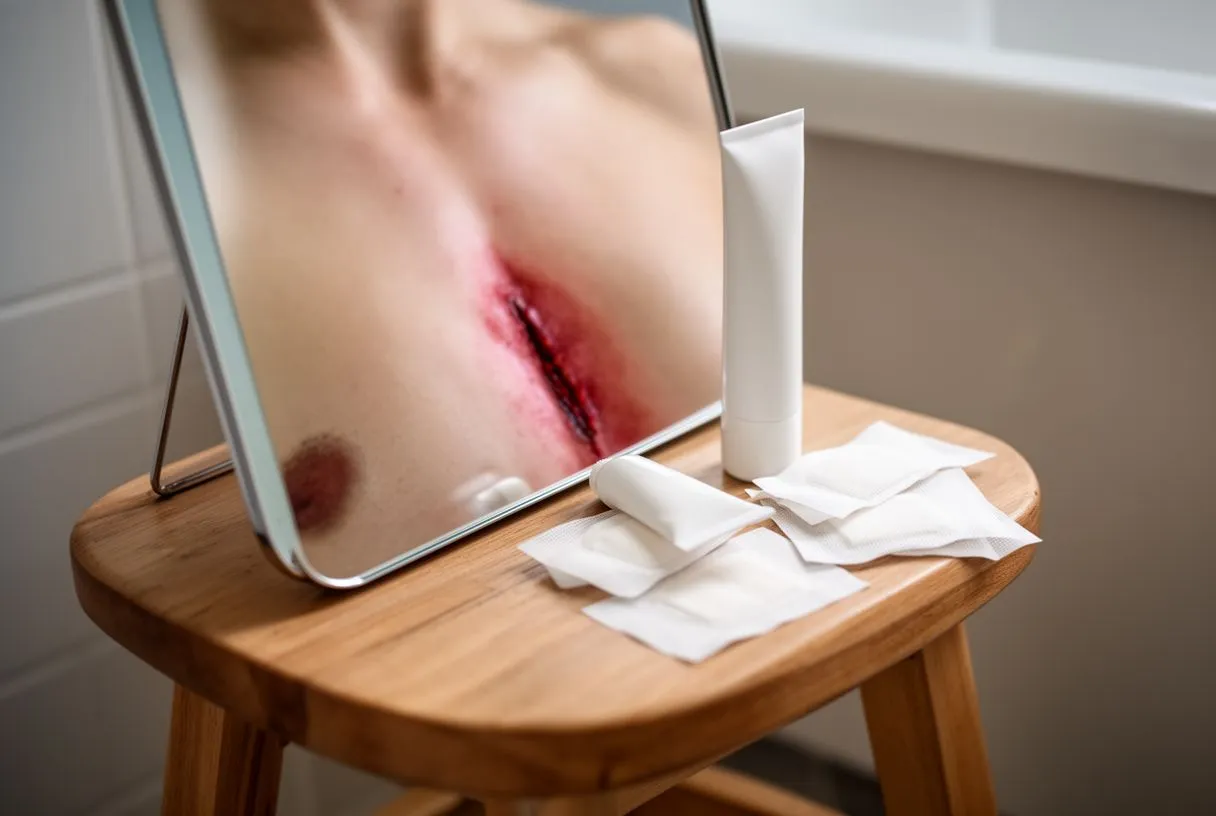
What Do I Need to Know About Sternal Wires?
After a conventional sternotomy, the breastbone is held together with small stainless steel wires. These stay in for life, and patients often worry they will feel them or need them removed. They do not, in almost every case.
Sternal wire care instructions are really breastbone instructions. The wires need no maintenance; what needs protecting is the bone they hold. The breastbone takes roughly six to eight weeks to knit and up to a few months to reach full strength. During that window, follow movement limits: no lifting more than a few kilograms, no pushing or pulling with the arms, no driving until cleared, and no supporting your weight with your arms when getting out of a chair. Press a pillow to your chest during coughs and sneezes.
What you may feel. Some patients notice a slight rubbing, clicking, or awareness of the wires, especially in cold weather or when lying on one side. Occasional mild sensations are common. A new, sharp, or shifting sensation, or one side of the bone feeling like it moves, is different and needs prompt evaluation. Our team is explicit about this in the consultation: we explain in plain words what the studies and scans show, what the bone healing should feel like, and every question gets answered before any decision about care is made.
How Does Heart Surgery Scar Management Work Long Term?
Once the incision has fully closed and the skin has sealed, usually after several weeks, attention shifts from protection to scar care. Heart surgery scar management is about comfort and appearance; it does not change the safety of the wound, but it can meaningfully change how the scar looks and feels over the years.
What helps a scar soften. Gentle daily massage with a plain, unscented moisturiser once the incision is fully healed and cleared, firm sun protection for at least a year because new scars darken in sunlight, and patience. Scars go through a raised, red, sometimes itchy phase for months before flattening and fading, and that timeline varies widely between people.
Sternotomy care best practices for the long term. Most patients are cleared around the two-to-three-month mark for gradual return to normal activity, with heavier lifting reintroduced last. If you develop a raised, thickened, or spreading scar, known as a hypertrophic or keloid scar, mention it at follow-up; there are established treatments, and they work best started early. We walk patients through this timeline during the face-to-face visit that follows the initial free video consultation, once we know which studies are genuinely needed and which are not.
How Can a Surgical Wound Affect Wellbeing and Daily Life?
A wound is not only a physical event. Clinicians describe five psychosocial impacts a wound can have on a person's wellbeing: anxiety about healing and infection, disturbed sleep from pain or position, changes in body image and confidence, loss of independence while needing help with dressing or bathing, and social withdrawal when people avoid going out during recovery. Naming these helps, because each one has practical responses.
Can a healing wound make you tired? Yes, and it is one of the most under-appreciated facts of recovery. Wound healing is metabolically expensive; the body diverts energy and protein toward rebuilding tissue, and that fatigue is a normal part of healing rather than a sign of something wrong. Fatigue that improves week by week is expected. Fatigue that worsens, or comes with breathlessness, fever, or weight gain, needs medical review.
Daily wound checklist for cardiac patients. A structured routine prevents both missed care and unnecessary worry. Patients in a home recovery after heart surgery wounds heal best with the same short checklist every day: look at the incision, wash hands, shower per instructions, change or check the dressing, hold the pillow during coughs, respect the lifting limits, take prescribed medications on time, and note anything new. Cardiac rehabilitation programs reinforce exactly this kind of routine; a structured cardiac rehabilitation wound protocol pairs supervised exercise with healing checks, and referral to one is worth asking about at discharge.
One caution about mobile apps and gadgets: research on mobile-health interventions for disease management shows they can support behaviour change when they deliver clear, personalised guidance, but no app replaces a surgeon examining your incision. Use a tracking app or photos as a supplement, and bring them to your follow-up visits.
Wound care after heart surgery comes down to a small set of daily habits done faithfully: clean gently, protect the breastbone, watch for the warning signs, and never guess when a question comes up. Most incisions heal well, and the ones that run into trouble almost always give early signals that a team can act on. In our practice, led by Dr Alejandro Molina, every recovery plan is reviewed against international guidelines, and we actively encourage a second opinion as a normal part of deciding about heart surgery, not a rejection of it. If you are preparing for surgery or recovering and something about your incision worries you, discuss it with a qualified cardiac team rather than diagnosing yourself at home. You can start with a free video consultation, where we will talk through your condition, tell you which studies are genuinely still needed, and answer every question before anything else is decided.