
Travel After Heart Surgery: Planning the Trip Home
Travel after heart surgery planning helps you get home safely.
Going home after heart surgery is a milestone, and for many patients it involves real distance — sometimes a flight, sometimes a long drive across borders. Good travel after heart surgery planning turns that journey from a source of anxiety into a manageable step in recovery. This guide walks you through timing, transportation, medications, insurance, and the practical details families most often ask us about, so you can make the trip home calmly and safely.
What Is Travel After Heart Surgery Planning?
Travel after heart surgery planning is the process of organizing every part of your journey home — or a later trip — around what your chest, your circulation, and your medications can realistically handle. It is not a separate medical task. It is simply recovery continued outside the hospital walls, with the same caution your care team applied on day one.
Why the journey matters as much as the surgery. The first six weeks after cardiac surgery are when the breastbone (the sternum) is knitting back together and the heart is adapting to its new circulation, whether that came from a bypass graft, a repaired valve, or a new transcatheter aortic valve placed through TAVR. A bumpy transfer, an unprepared medication stop, or a missed follow-up can undo good surgical work. Planning protects the investment you and your surgical team have already made.
What a plan actually covers. A useful plan answers five questions: when you are cleared to move, how you will travel, who will accompany you, how your medications will stay continuous, and what you will do if something feels wrong mid-journey. Write the answers down. Under stress — and travel is stressful — a printed plan beats a good memory. Building this list into your discharge plan means the trip is decided before the bags are packed.
When Can I Fly After Heart Surgery?
This is the single most common question we hear, and the honest answer is: it depends on which procedure you had and how smoothly recovery is going. There is no single calendar that fits everyone. What follows are the general patterns, always to be confirmed with your own surgeon.
Typical timelines by procedure. For uncomplicated heart bypass surgery, the travel timeline usually allows short flights around two to three weeks after surgery, with longer or international trips left until closer to four to six weeks. For minimally invasive procedures, the waiting period is often shorter because the sternum has not been divided. After TAVR, many patients are mobile remarkably quickly, but cabin pressure changes and airport logistics still warrant a conversation with the interventional team first.
Why the sternum sets the clock. The sternum takes roughly six to eight weeks to heal solidly. During that window, cabin pressure changes, lifting luggage overhead, and pushing through crowded terminals all put strain on the healing bone. Air travel also means sitting still for hours, which raises the risk of blood clots forming in the legs — a risk every post-surgical patient carries to some degree.
Signs you are ready. Before booking, you should be walking comfortably, climbing a short flight of stairs without chest pain or breathlessness, and managing your wounds without drainage. If any of those are not true, the flight can wait a week. That week is never wasted. Before flying, the wound, the latest tests and the full itinerary should be reviewed — and if anything raises doubt, it is better to reschedule.
What Are the Driving After Heart Surgery Guidelines?
The driving after heart surgery guidelines most teams follow are simple: wait until you can perform an emergency stop without hesitating or bracing your chest, and until your medications are not making you dizzy or drowsy. For most patients this lands somewhere between two and six weeks after surgery, depending on the procedure and whether the sternum was divided.
The emergency-stop test. Sit in a parked car and imagine the vehicle ahead has braked hard. Slam your foot down. If the motion of your arms against the wheel or the seatbelt causes chest pain, or if you instinctively guard your chest, you are not ready. The reflex has to be automatic, not planned.
Medications and judgment. Some heart medications — particularly certain beta-blockers and pain relievers — can dull reflexes early on. Combine that with a healing sternum and you have a dangerous mix. Ask your care team specifically whether your current prescriptions are safe for driving, and at what point they will be adjusted or discontinued.
Who drives the patient home. This matters more than patients expect. Whoever drives you home after surgery should know your medications, your warning signs, and where the nearest hospital is along the route. Decide who will be driving you home before the discharge date is set, because the answer changes what needs to be prepared.
How Do You Manage a Long Car Ride After Heart Surgery?
A long car ride after heart surgery is often harder than a flight, because it lasts longer and offers fewer chances to stand and move. The rule is rhythm: move every hour, no exceptions, even if you feel completely well.
Stop before you need to stop. Plan the route around rest stops rather than fuel stops. Get out of the car, walk for five to ten minutes, flex your calves, and drink water. Blood that pools in the legs during long sits is the main clot risk on the road — movement is the antidote, and it costs nothing.
Positioning in the seat. A small pillow held against the chest protects the sternum from the seatbelt's edge and from bracing on bumpy roads. Recline the seat slightly to reduce pressure on the chest. Avoid twisting to reach for bags; let your companion handle anything behind you.
Splitting the journey. If home is more than four or five hours away, consider an overnight stop. Fatigue is one of the body's quiet signals after cardiac surgery, and a tired driver on unfamiliar roads is its own risk. Planning the return in stages rather than one hard push is usually the safer choice. Map the return route stage by stage with your team before discharge.

How Do You Handle Traveling With Cardiac Medications?
Traveling with cardiac medications needs more care than most travelers realize, because a missed dose of a heart medication is not like a missed vitamin. The goal is simple: same drugs, same doses, same schedule, from your bedside to your destination.
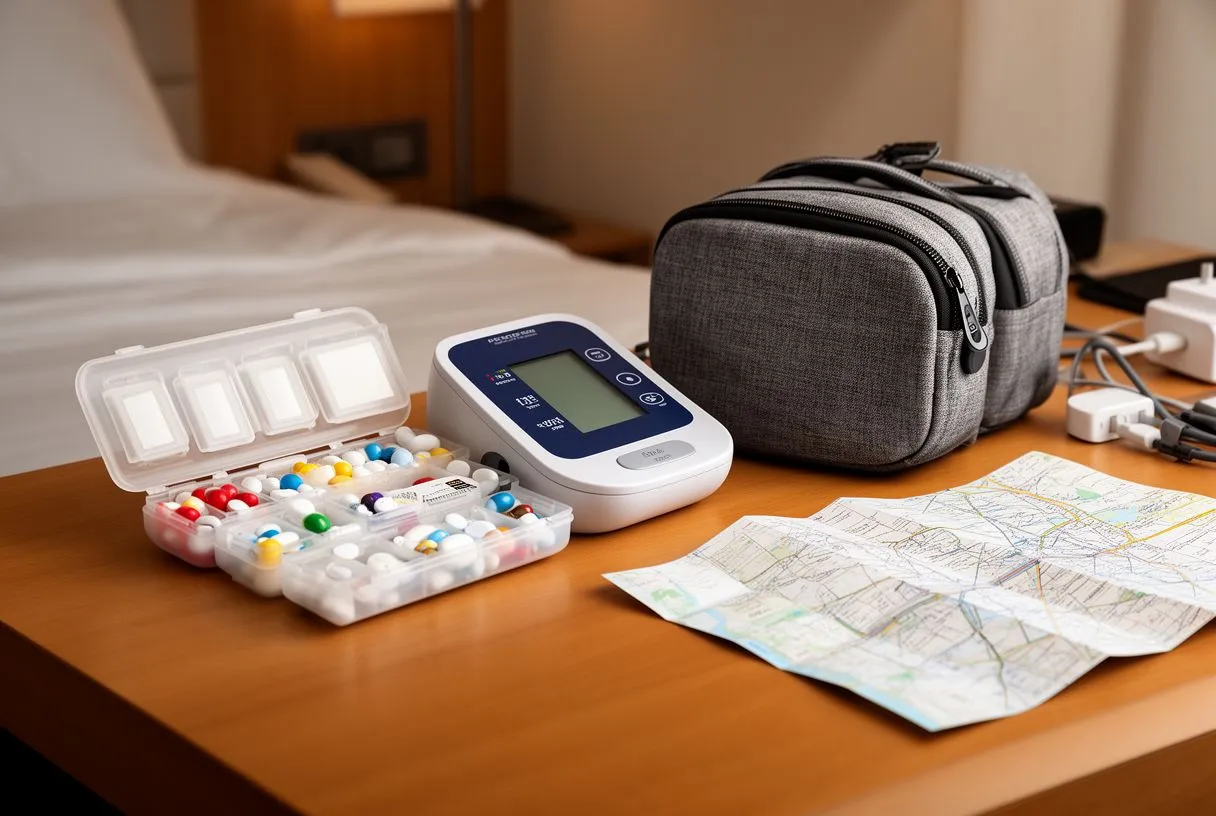
Pack in your hand luggage. Every medication travels with you, never in checked baggage. Checked bags are delayed, lost, and exposed to temperature swings. Keep medications in their original labeled containers — this matters at customs and at any clinic that might see you abroad.
Carry more than you need. Bring at least a week of extra medication beyond your trip length. Delays happen, and finding an equivalent prescription in another country or another language can take days. Bring your prescription list with both generic and brand names, since the same drug may be sold under different names where you are going.
Watch the clock across time zones. A simple approach: keep doses on your home clock for the first day or two, then shift gradually. Set phone alarms. Write the schedule on paper too, in case a phone battery dies at the worst moment.
- Original containers: labels intact, generic names visible, enough for the trip plus a spare week.
- Written medication list: doses, times, prescriber, and purpose of each drug — one copy on you, one with your companion.
- Temperature care: never leave medications in a hot car or direct sun; some cardiac drugs degrade with heat.
What Is Medical Clearance Flying After Surgery?
Medical clearance flying after surgery means a documented assessment confirming you are fit for the specific journey you are taking — not a general "you're doing fine." Many airlines, especially for flights within a few weeks of surgery, ask for a fit-to-fly letter from your surgeon or cardiologist.
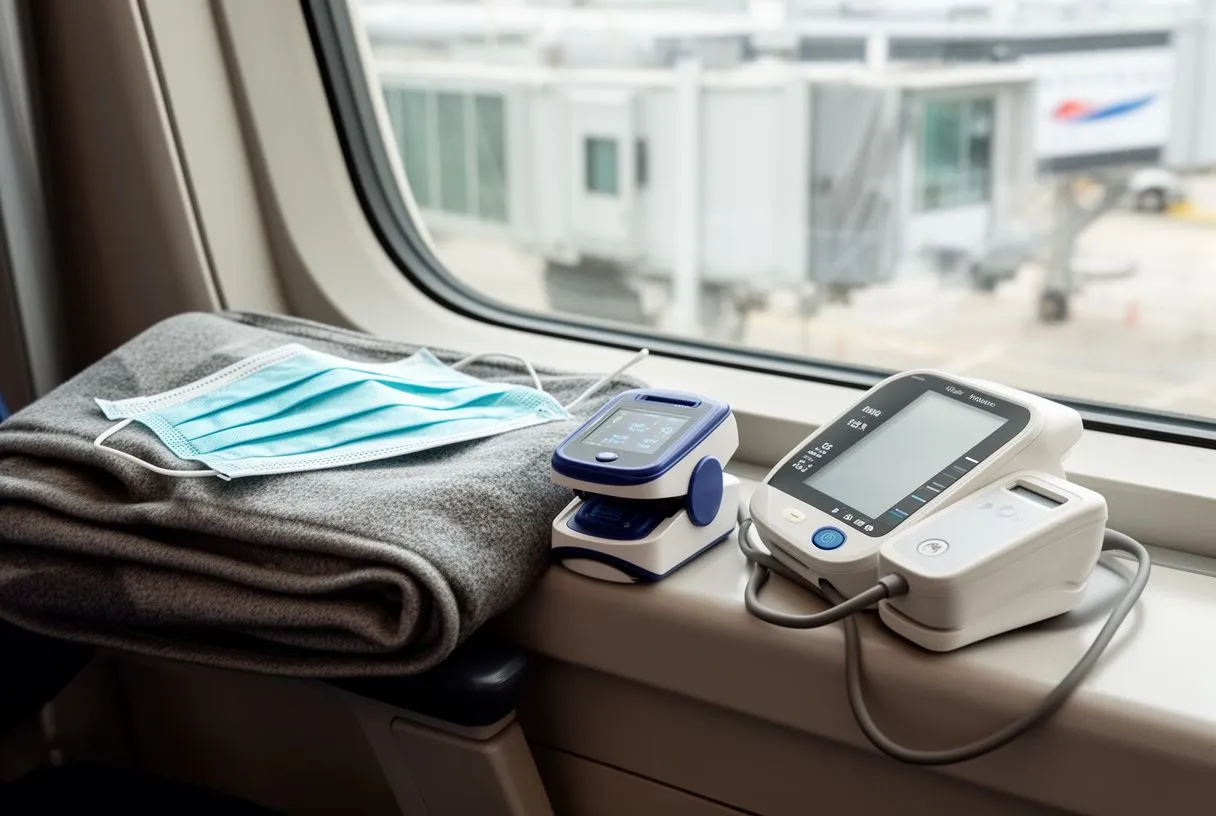
What the assessment includes. Expect a review of your wound healing, your exercise tolerance, your oxygen levels, your most recent heart rhythm readings, and any complications since discharge. The clinician is checking one question: can your heart and circulation handle the cabin environment — lower pressure, reduced oxygen, hours of sitting — without distress?
Why clearance protects you twice. First, it is a genuine safety screen: it can catch a problem — a slow-healing wound, an irregular rhythm — while it is still easy to fix. Second, it is your paperwork. If an airline questions you at the gate, a signed clearance letter resolves it in seconds. In our consultations we take the time to explain exactly what the studies show and what the clearance letter means, so patients travel with understanding, not just a signature.
Who issues it. The surgeon who operated on you, or the cardiologist managing your recovery, should issue the letter — ideally stating the date of surgery, the procedure, the date you were assessed, and confirmation you are fit for commercial air travel. Some airlines have their own medical forms, so check the specific carrier's policy well before the flight.
What Should You Know About Travel Insurance After Heart Surgery?
Travel insurance after heart surgery is one area where the fine print genuinely matters. Most standard travel policies exclude pre-existing conditions — and a recent heart operation is about as pre-existing as a condition gets. You will likely need a specialized policy or a declared pre-existing condition extension.
Declare everything, in writing. When applying, declare the surgery, the date, the procedure name, and any ongoing conditions such as atrial fibrillation or coronary disease. Omitting a known condition is the most common reason post-surgery claims are denied. Keep the declaration confirmation with your travel documents.
What to check before buying. Look for coverage of emergency medical treatment abroad, medical evacuation back home, and repatriation. Medical evacuation after a cardiac event can cost more than the original surgery, so confirm the policy's evacuation limit covers reality, not just the brochure minimum.
Timing of the policy. Buy insurance at the moment you book the trip, not the day before departure. If your clearance is delayed and the trip must move, a policy bought early covers the change. A policy bought late covers nothing. This is a small cost against a large exposure, and patients recovering from major surgery should treat it as part of the medical budget, not an optional extra.
What Are the Pacemaker and Stent Travel Considerations?
Patients with implanted devices — pacemakers, defibrillators, stents — have a few extra considerations, none of which should stop them from traveling once cleared. Knowing them in advance removes the surprise factor.
Pacemaker travel after surgery. Carry your pacemaker or defibrillator identification card at all times. At airport security, inform staff you have a device and follow their screening instructions — hand checks rather than walk-through metal detectors are the usual approach. Modern devices are not affected by ordinary airport equipment, but the card settles every conversation quickly.
Stents and flying. After stent placement, the main flying concerns are the same as after bypass surgery: clot risk during long sits and the need to keep antiplatelet medications (such as dual antiplatelet therapy) absolutely uninterrupted. A stent patient who stops these medications for travel is taking a serious risk; plan the medication supply with the same rigor as any other part of the trip.
Keep a device summary with you. A one-page summary — device model, implant date, stent location, medication list — turns any emergency visit abroad from a puzzle into a briefing. This summary is worth preparing for any implanted device before discharge; it is often the first document a foreign clinic asks for.
What Goes on a Heart Patient Travel Checklist?
A heart patient travel checklist turns scattered worries into a single reviewable list. Build it a week before departure, not the night before. The items below cover what matters most, based on what we see patients forget most often.
- Clearance letter: signed fit-to-fly or fit-to-travel letter dated within the window your airline or team requires.
- Full medication supply: trip length plus a spare week, in hand luggage, original containers.
- Medical summary: procedure date and name, device cards, stent details, allergies, and blood type on one page.
- Companion briefing: your travel partner knows your warning signs and the plan if symptoms appear.
- Rest stops and overnight plans: routes mapped with hourly breaks for journeys over four hours.
- Insurance documents: policy number, emergency line, and pre-existing condition declaration, printed.
- Compression socks: graduated compression socks for flights and long drives to support circulation while seated.
Compression socks deserve their own line. Graduated compression stockings reduce the pooling of blood in the lower legs during prolonged sitting. For a post-cardiac-surgery traveler, they are cheap insurance against one of the trip's main risks. Put them on before the journey starts, not after the legs have already swelled.
What Changes for International Travel After Heart Surgery?
International travel after heart surgery adds a layer of preparation: different health systems, different languages, longer flights, and time zones that complicate medication schedules. For patients from abroad who had surgery with us in Mexico, or Mexican patients traveling abroad, these points apply equally.
Longer flights, stricter timelines. An eight-hour flight places far more demands on circulation than a ninety-minute hop. Most teams prefer international flights at six weeks or later after sternum-dividing surgery, once the bone is solid and exercise tolerance has returned. Discuss the specific flight duration, not just the date.
Know where care exists at your destination. Before departure, identify one or two hospitals near where you will be staying that handle cardiac emergencies, and save their addresses on your phone and on paper. If you have rheumatic heart disease or another condition with specific monitoring needs, note that clearly in your medical summary so any doctor abroad can orient quickly.
Cardiac rehab travel planning. If you are enrolled in cardiac rehabilitation — the structured exercise and education program after heart surgery — plan how sessions continue or pause during travel. Missing a week matters less than arriving home and not resuming. Book the first post-travel rehab session before you leave, so returning means sliding back into the routine rather than rebuilding it. If you travel home internationally, schedule your first follow-up review before you board, so continuity of care survives the flight.
A final word from the team. Every recommendation above is a general pattern, not a prescription for you. Recovery pace varies with age, procedure, and overall health, and the safest plan is one reviewed by the team that knows your case. If you are facing travel after heart surgery and want clear answers about your own timeline, we invite you to start with a free video consultation: we will talk through your condition, tell you which studies are genuinely still needed, and help you plan the journey home with confidence.