

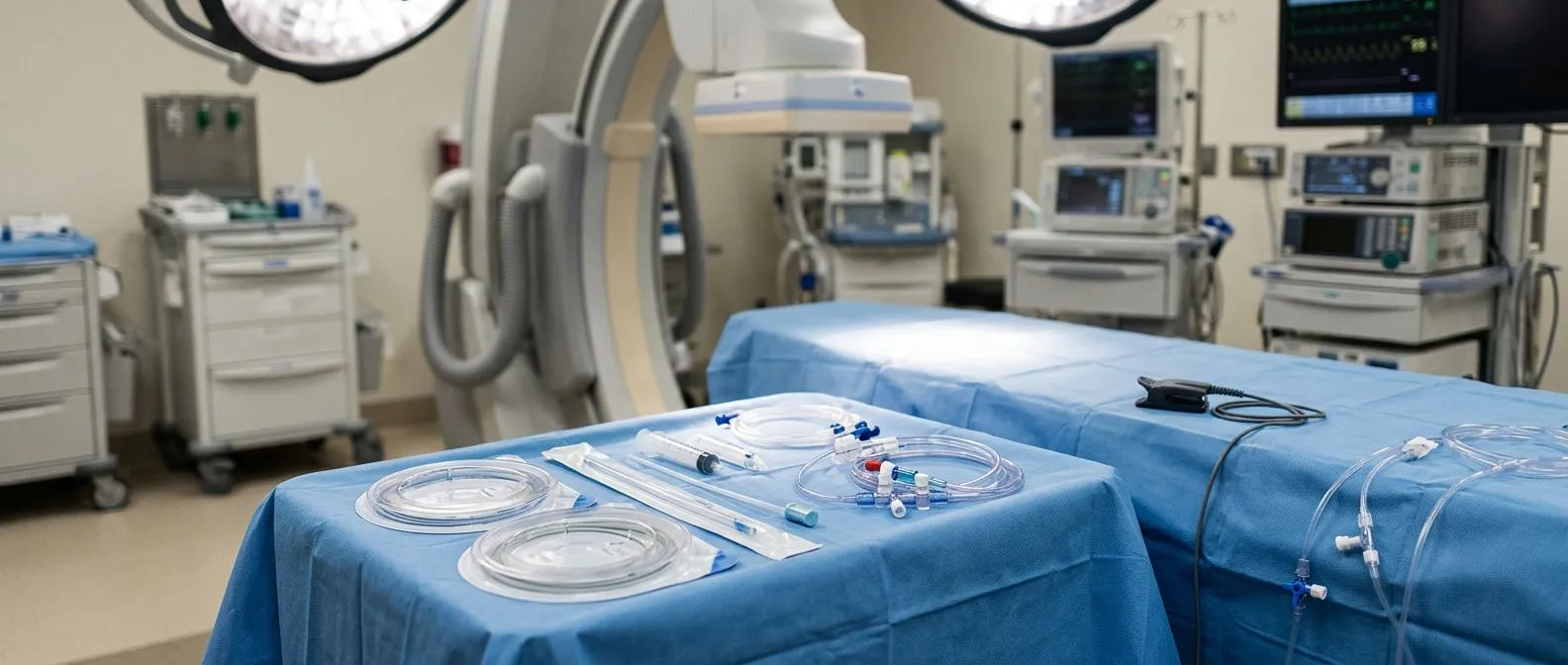
Sedation Versus General Anaesthesia for Heart Procedures
Sedation heart procedures differ from general anesthesia in recovery, awareness, and risks.
Most people facing a heart procedure hear two words that sound similar and mean very different things: sedation and general anaesthesia. Understanding the difference changes how you prepare, how you recover, and how you experience the procedure itself. This guide explains what sedation means, how it compares with general anaesthesia, and how cardiac teams choose between them for procedures like cardiac catheterization, TAVR, and open-heart surgery.
What Is Sedation?
Defining the term. Sedation means using medication to calm you and reduce awareness during a procedure, without always putting you fully to sleep. It sits on a spectrum. At one end you are relaxed but fully aware; at the other end you are deeply asleep and need help with breathing. The word itself describes the depth of that calm, not a single drug or a single state.
How it differs from anaesthesia. General anaesthesia is a controlled, drug-induced state of unconsciousness in which you cannot feel, remember, or respond, and your breathing is usually taken over by a machine. Sedation, by contrast, often leaves your breathing and reflexes working on their own. Both approaches use carefully monitored medication. The difference lies in how much of your body's function the team must take over.
Why this matters to patients. If you know ahead of time that your procedure uses sedation with local anaesthesia — meaning the numbing medicine is injected only where the catheter enters — you can expect to hear voices in the room and may drift in and out of sleep. Many patients tell us this knowledge alone removes half the anxiety before the procedure begins. Our team explains the plan in plain words at the first consultation, and every question is answered before any decision is made.
Does Sedation Mean Going to Sleep?
The honest answer. Not necessarily. Is sedation fully asleep? Sometimes yes, often no. Light or moderate sedation makes you drowsy and calm, but you may still respond to your name or a gentle tap. Deep sedation brings you closer to sleep, and many people under deep sedation remember nothing afterwards. The key point is that sedation is a range, and your anaesthesia team picks the level that fits the procedure.
What you might remember. With moderate sedation during a heart catheterization, patients often describe the experience as a pleasant drowsiness. You may hear the team talking, feel pressure where the catheter enters the groin or wrist, and remember fragments of the room. With deep sedation, the procedure usually vanishes from memory entirely. Neither experience means anything went wrong; amnesia is a normal, planned effect of the drugs used.
Does it feel like natural sleep? It feels different. Sedative drugs do not follow the normal sleep cycle, so you do not dream the way you do at night. Time simply compresses. One moment you are being positioned on the table; the next, someone is telling you it is over. Most patients find this far easier than they had imagined.
Types of Sedation for Heart Procedures
Minimal sedation. This is the lightest level. You are relaxed and awake, breathing normally, and responding fully. In cardiac care it appears in short, low-stress situations — some simple imaging studies or the early moments before deeper medication begins. Anxiolytic medication taken by mouth beforehand is a common example of minimal sedation cardiac practice.
Moderate and deep sedation. Moderate sedation, sometimes called conscious sedation, keeps you responsive to voice and touch. Deep sedation heart protocols push you to the edge of unconsciousness, where you may need help keeping your airway open. Common cardiac sedation protocols pair propofol — a fast-acting white drug that induces sleep within seconds — with dexmedetomidine or remifentanil, both of which blunt pain and stress responses. A study comparing propofol-dexmedetomidine with propofol-remifentanil regimens in transfemoral TAVR found both combinations feasible, with different profiles of blood pressure and heart rate effects (Heart Surgery Forum).
General anaesthesia. This is the deepest state of all. You are completely unconscious, a breathing tube protects your airway, and a specialised anaesthesia doctor continuously manages your heart, lungs, blood pressure, and temperature. For long or invasive heart operations, general anaesthesia cardiac surgery remains the standard, because the team needs total control and total stillness.
How Does General Anesthesia for Cardiac Surgery Work?
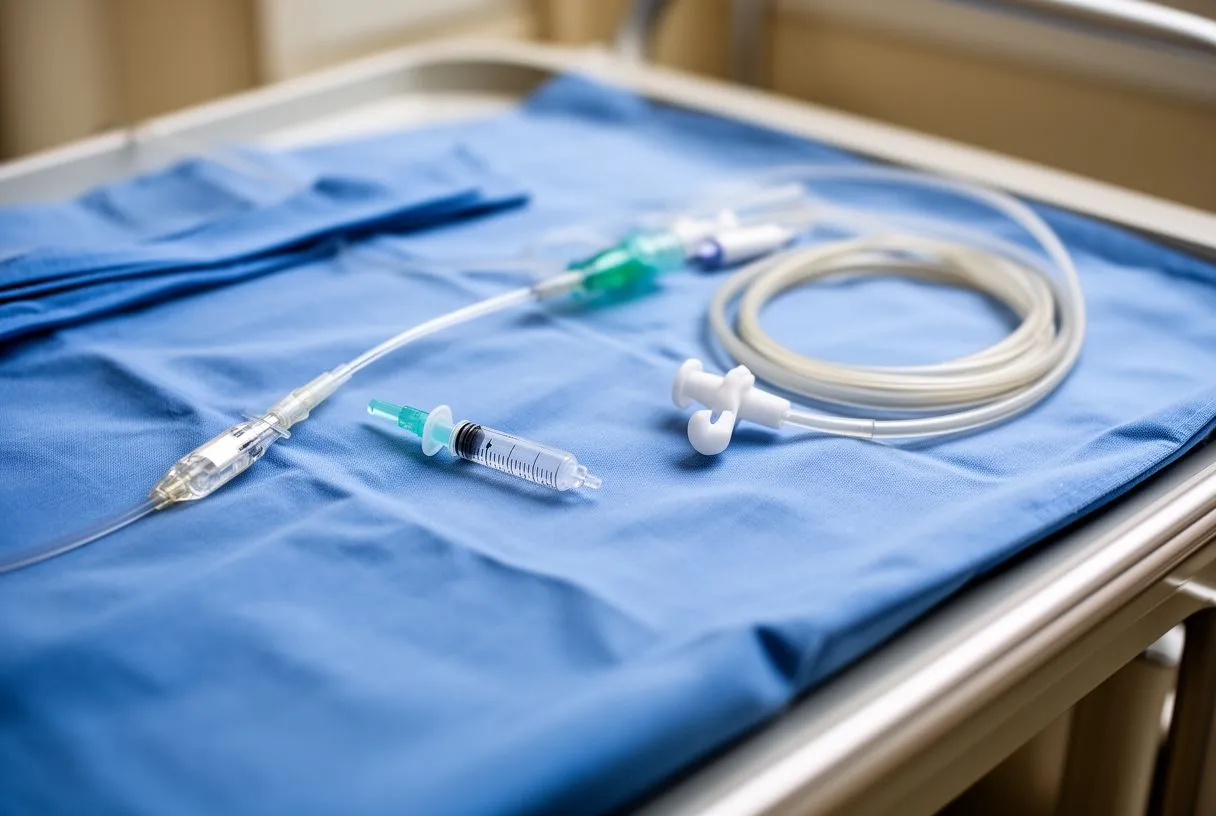
The sequence. General anaesthesia begins in the operating room, not on the day before. You receive medication through an intravenous line, you fall asleep within half a minute, and then a tube is placed in your airway while you are fully unconscious. From that moment, the anaesthesia team monitors your heart rhythm, blood pressure, oxygen levels, and temperature continuously until the operation ends.
What the body experiences. General anaesthesia blocks all sensation, memory, and movement. It also changes how your body works: breathing is done by a ventilator, and drugs are used to keep blood pressure and heart rate in the right range. This is why it suits open-heart surgery, where the chest is opened, the heart may be temporarily stopped, and any movement would be dangerous.
Who provides it. A cardiac anaesthesia specialist — a physician trained specifically in anaesthesia for heart operations — manages this. Their job does not end when you fall asleep. They are present for the entire operation, adjusting medication minute by minute, and they remain with you as you wake. Johns Hopkins Medicine provides detailed patient information on how anaesthesia is managed and monitored during surgery (Johns Hopkins Medicine).
Sedation vs Anesthesia for Heart Procedures: Key Differences
Consciousness and memory. With sedation, some level of awareness or responsiveness is preserved, and memory loss depends on the depth. With general anaesthesia, there is no awareness and no memory — by design. This single difference drives most of the others, including monitoring intensity and recovery time.
Breathing and airway. Under moderate sedation, you breathe on your own. Under deep sedation, breathing may slow and the team watches closely. Under general anaesthesia, a machine breathes for you through a tube. For procedures where the catheter must not be disturbed by coughing or movement, a secured airway is an advantage.
Recovery and side effects. Sedation for cardiac procedures usually wears off within hours, with grogginess as the main side effect. General anaesthesia can take longer to clear, and may bring sore throat, nausea, and a day or two of fatigue. The list below summarises the trade-offs at a glance:
- Sedation: faster wake-up, often same-day discharge, breathing on your own, some awareness possible.
- General anaesthesia: complete unconsciousness, full airway control, needed for open operations, longer recovery.
- Monitoring: sedation requires steady observation; general anaesthesia requires continuous management by a dedicated specialist.
When Is Conscious Sedation Used for Heart Procedures?
Catheterization and diagnostic studies. Cardiac catheterization sedation is typically light to moderate. The catheter is threaded through an artery or vein in the wrist or groin to the heart, and the entry site is numbed with local anaesthesia. Because the procedure is not painful once the entry site is numb, heavy unconsciousness is unnecessary. Most patients go home the same day.
Structural heart procedures. Conscious sedation heart surgery is now well established for many transcatheter procedures. TAVR — transcatheter aortic valve replacement, where a new aortic valve is delivered through a catheter — is frequently performed under conscious sedation rather than general anaesthesia. Avoiding the breathing tube shortens the procedure and can speed mobilisation, which matters in older patients with multiple conditions. Research on transfemoral TAVR has compared analgosedation regimens directly, showing that both propofol-dexmedetomidine and propofol-remifentanil can be used safely in this setting (Heart Surgery Forum). Our team performs transcatheter procedures and recommends the less invasive route only where the evidence supports it for that specific patient.
Patient selection is everything. Conscious sedation suits patients who can lie still, cooperate with instructions, and tolerate lying flat. It is not suitable for everyone. Breathing problems, agitation, or the need to convert to open surgery can change the plan. Every case is reviewed by the multidisciplinary team against international practice guidelines before a recommendation is made, and the patient always receives a clear proposal with the alternatives.
When Is General Anesthesia the Safer Choice?
Open-heart operations. Coronary bypass, valve replacement through the chest, aortic surgery, and the Bentall procedure — which replaces the aortic root and the aortic valve together — all require general anaesthesia. These operations are long, the heart must be stopped or stabilised, and the patient cannot move at all. Early postoperative complications after a Bentall procedure, such as bleeding, arrhythmia, and infection, are actively monitored, and the choice of anaesthetic strategy is part of that risk management (Cardio Surgery International Club).
When sedation is not feasible. Some patients cannot tolerate sedation-based procedures. Severe lung disease may make breathing without a tube impossible for the required duration. Others cannot lie still or may become agitated. In these cases, general anaesthesia is not the more aggressive option — it is the lower-risk one for that situation. Anatomical precision matters here: if the procedure involves the thoracic aorta near the airway, or if immediate conversion to open surgery is possible, a secured airway protects you.
Minimally invasive and robotic surgery. Minimally invasive and robotic heart operations — performed through small incisions rather than a full chest opening — usually use general anaesthesia as well, because the heart must be perfectly still while instruments work inside the chest. Robotic surgery demands even greater stillness. Dr Molina performed the first robotic mitral valve repair in the Ángeles Health System and the first robotic heart surgery in Guadalajara, and our team's experience across these techniques shapes which anaesthetic approach we propose for each operation.
Is Sedation Safe for Cardiac Procedures?
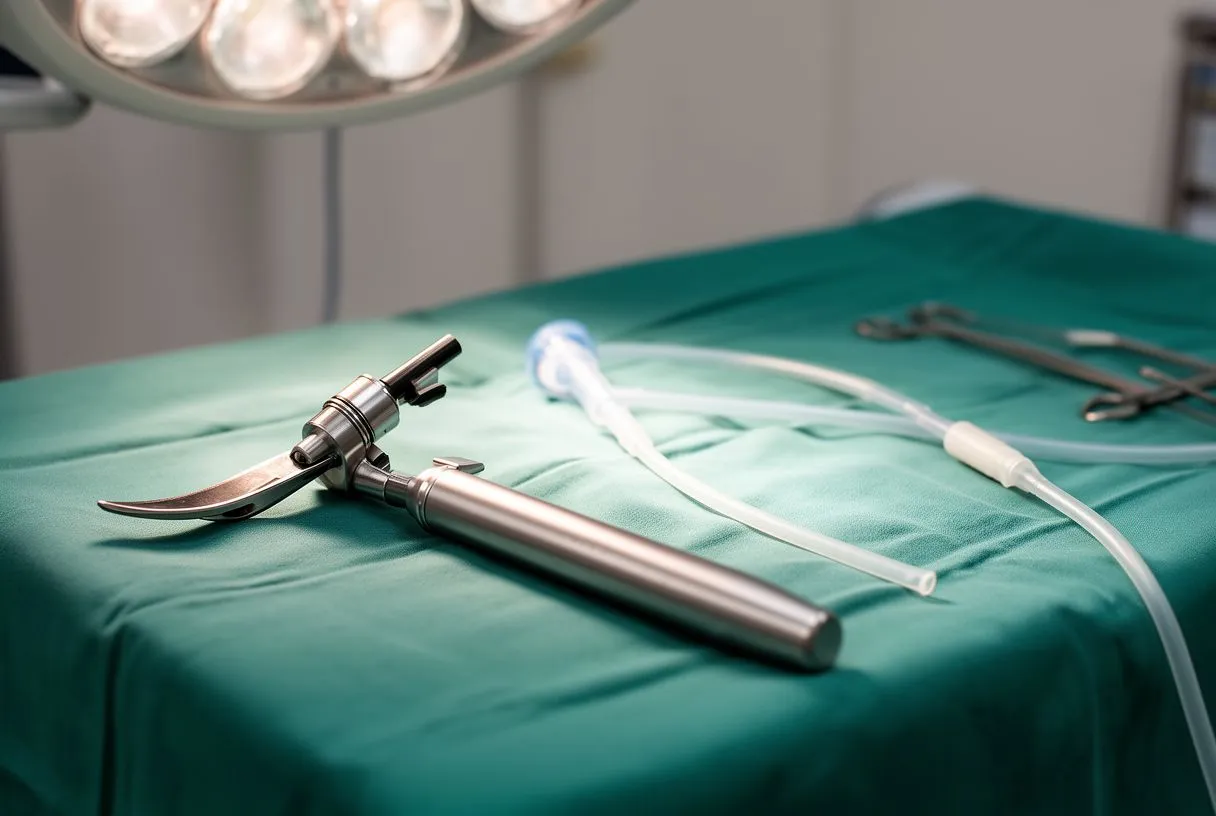
What the evidence shows. For appropriate patients, sedation during cardiac catheterization and transcatheter valve procedures has an established safety record. The complications associated with general anaesthesia — airway injury, prolonged ventilation, postoperative confusion — are reduced or avoided when deep sedation can be used instead. That said, safety depends entirely on matching the technique to the patient and the procedure.
What is monitored. During any sedation, the team watches your oxygen level, heart rhythm, blood pressure, and breathing continuously. A cardiac procedure adds another layer: the interventional team and the anaesthesia or monitoring team work together, so changes in your heart's behaviour are seen the moment they happen. Sedation is never administered without this level of surveillance.
The real risks. The main risks of sedation are a drop in blood pressure, slowed breathing, and allergic reactions — all of which are treatable when detected early. The main risks of general anaesthesia include sore throat, nausea, and, less commonly, confusion after surgery, particularly in older patients. I have seen how much the choice of technique matters for older, frailer patients, and it is one of the factors I weigh personally when recommending a plan.
How Long Does Sedation Last and What Is Recovery Like?
Duration depends on the drug. How long does sedation last? It depends on which medication was used and how much. Short-acting drugs like propofol wear off within minutes of stopping the infusion. Dexmedetomidine can leave you drowsy for a few hours longer. Remifentanil wears off almost immediately once the infusion stops, which is one reason it is used in regimens like those studied for transfemoral TAVR (Heart Surgery Forum).
How long you sleep afterwards. How long do you sleep after sedation? Most patients wake within minutes to an hour of the procedure ending, though grogginess can persist for the rest of the day. You will need someone to drive you home, and you should not make important decisions, sign documents, or drink alcohol for the first 24 hours. General anaesthesia can add a night of heavy sleepiness, and some patients report fatigue for a day or two.
Going home. After moderate or deep sedation for a catheterization, many patients leave the same day after a period of lying flat so the puncture site can seal. After general anaesthesia for open surgery, recovery is measured in days in hospital and weeks at home. In our consultations, we walk patients and families through the realistic timeline for their specific procedure — not an average, but their own.
How Your Team Decides Between Sedation and General Anesthesia
The factors considered. Choosing between sedation and general anaesthesia for heart procedures is not about preference. It is a clinical decision based on several things:
- The procedure itself: diagnostic catheterization and many transcatheter valve procedures can be done under sedation; open-heart operations cannot.
- Your lungs and airway: severe lung disease, sleep apnoea, or difficulty lying flat may tip the balance toward general anaesthesia.
- Your cooperation and calm: sedation requires you to follow instructions and stay still; anxiety or agitation may change the plan.
- Your overall stability: how your heart and blood pressure respond to the drugs is reviewed before anything is decided.
A team decision, not a single opinion. Every case is reviewed by the multidisciplinary team against international practice guidelines before a recommendation is given. You then receive a clear proposal that includes the alternatives, and the final decision is always yours. We actively encourage second opinions and treat seeking one as a normal, sensible part of deciding about heart surgery.
What your first conversation looks like. The first contact is a free video consultation: we get to know you, talk through your condition, and identify which studies are still needed so no unnecessary ones are ordered. When you decide to move forward, a face-to-face visit at one of our consulting rooms in Guadalajara, Querétaro or Hermosillo follows. Dr Molina trained in cardiothoracic surgery at the Universidad de Guadalajara, in cardiac, minimally invasive, robotic and structural surgery at the University of Montreal, and in structural cardiology and TAVR at CHU Bordeaux, and the team also trained at Jena, Bad Berka and Buffalo — but what matters most to you is that we take the time to explain what the studies actually show, in plain words, and to answer every question before any decision.
The bottom line. Sedation and general anaesthesia are not competing philosophies; they are different tools for different procedures and different patients. Sedation offers faster recovery and avoids the breathing tube, and it is now the standard for many catheterizations and transcatheter valve procedures. General anaesthesia provides complete control and remains essential for open-heart and robotic operations. What matters is not which technique is used, but whether it is chosen deliberately for your body and your procedure. If you or a family member is facing a heart procedure and unsure which approach is planned, discuss it openly with a qualified cardiac team — book a consultation rather than trying to self-diagnose, and make sure every question about sedation is answered before the day arrives.






