

Telesurgery and Remote Robotic Heart Surgery
Telesurgery robotic heart surgery lets specialists operate from miles away.
The words telesurgery robotic heart surgery describe one of the most striking ideas in modern medicine: a cardiac surgeon operating on a beating heart while sitting at a console many kilometres away from the patient. If you or a family member has been told you need heart surgery, the flood of new terms — robotic surgery, remote surgery, telemedicine, TAVR — can feel overwhelming. This guide walks through what telesurgery actually means, what the machines can and cannot do, what has been achieved in real operating rooms, and what it all means for a patient in Mexico or beyond who is weighing up heart surgery options today.
What Does Telesurgery Mean?
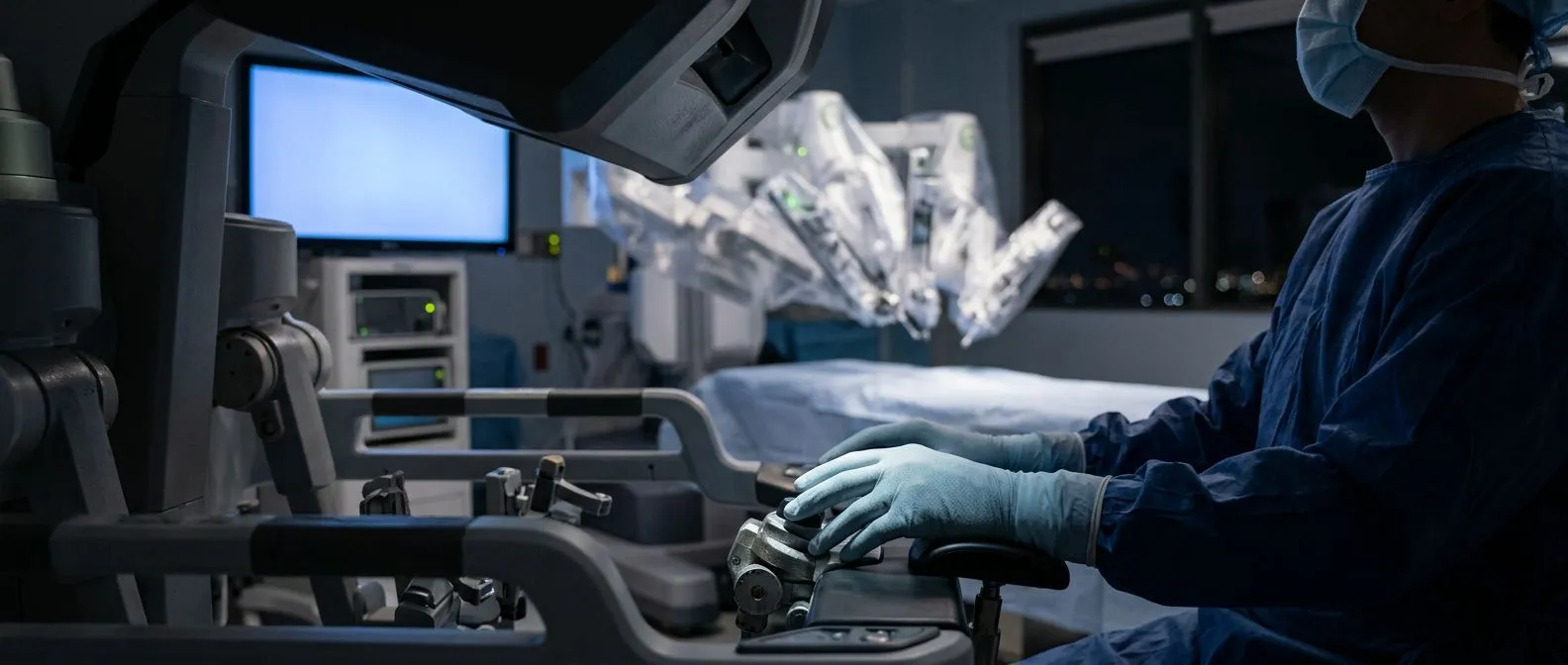
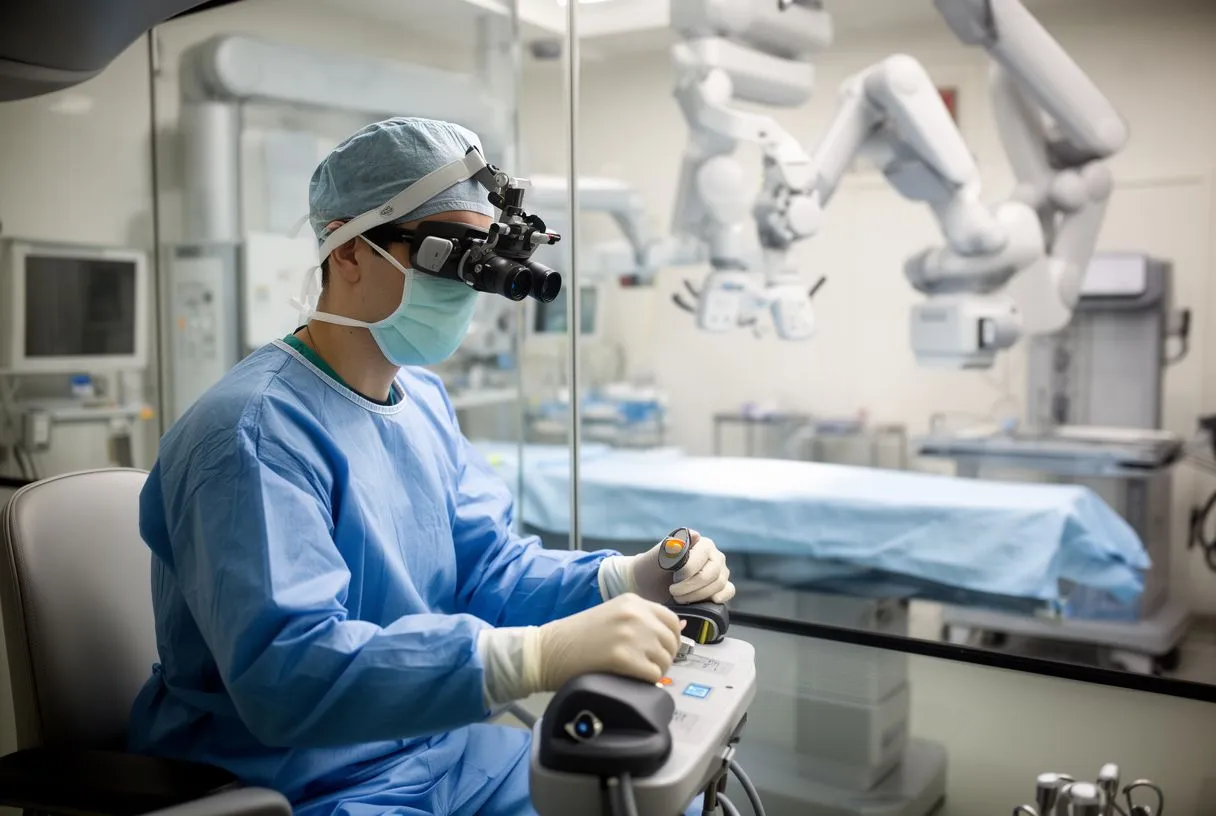
Telesurgery in plain words. Telesurgery means an operation performed by a surgeon who is physically separated from the patient, using a robotic system and a network connection to bridge the distance. The surgeon sits at a control console, sees a magnified three-dimensional image of the surgical field, and moves instrument handles with their hands. Those movements are translated in real time to precise robotic arms at the patient's side.
Where the idea came from. The concept grew out of telemedicine — medicine delivered at a distance — which began with video consultations and remote diagnosis. Over the years, telemedicine evolved into telementoring, where an expert surgeon guides another surgeon remotely, and finally into telesurgery, where the remote expert operates directly. This path from telemedicine heart surgery planning to remote operated surgical robot heart procedures took decades of engineering and regulatory work.
What it is not. Telesurgery is not an autonomous robot deciding what to do. Every cut, suture and repair is controlled by a human surgeon. The robot is a sophisticated tool — an extension of the surgeon's hands, not a replacement for their judgement. Patients sometimes worry that "the machine operates on you"; the reality is the opposite: the machine makes the surgeon's movements steadier and finer.
What Is the Robot That Does Surgery Called?
The surgical robot. The robot most people have heard of is the surgical robot used in the great majority of robotic procedures worldwide. It has been in clinical use since the late 1990s and is approved for cardiac, thoracic, urologic, gynaecologic and general surgery.
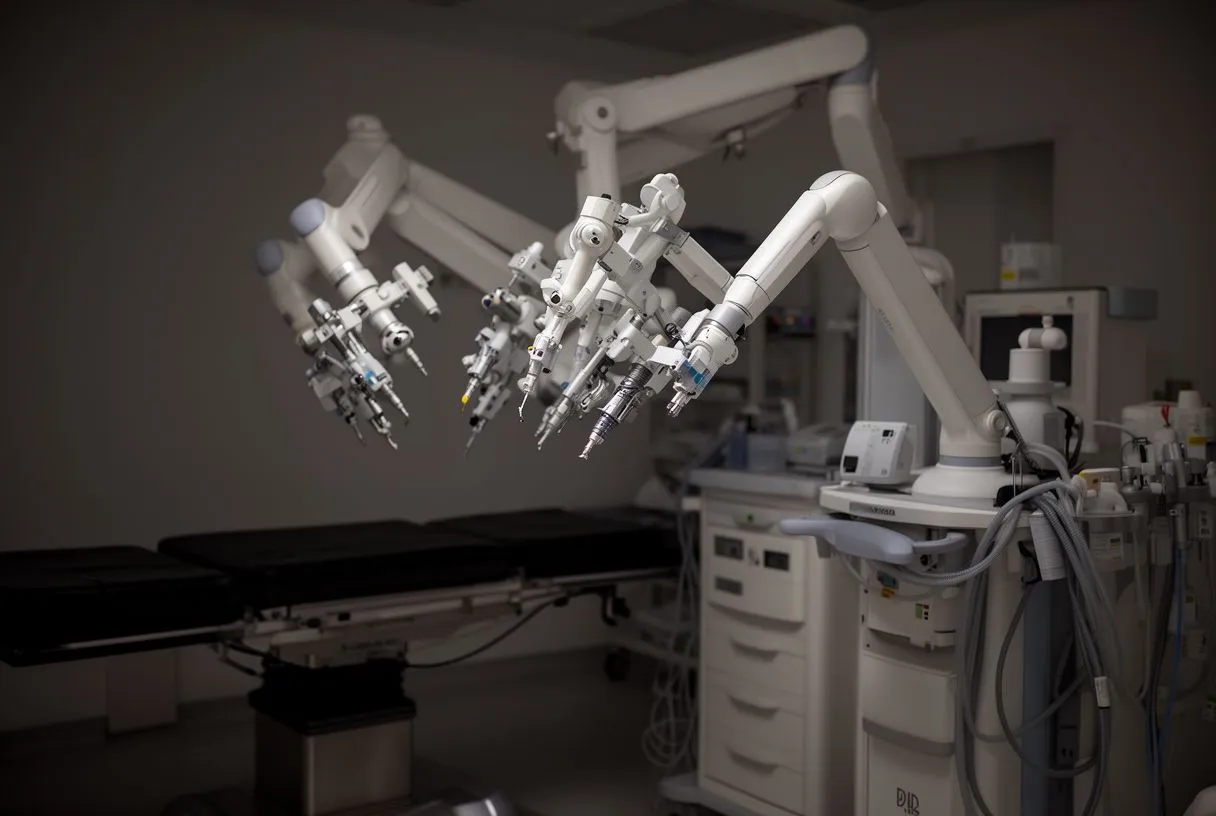
How the hardware is arranged. A typical setup has three parts. First, the surgeon console, where the surgeon sits comfortably with an immersive viewer and hand controls. Second, the patient-side cart, which holds the robotic arms that enter the chest through small incisions. Third, the vision and support tower, which carries the camera and image processing. In telesurgery, a network link extends the console far from the cart — that is the defining leap.
Why robots suit cardiac work. Cardiac surgery demands millimetre precision on delicate structures like heart valves. A robotic arm can filter out a surgeon's natural hand tremor and scale movements down, which is exactly what fine valve work requires. In robotic cardiac surgery this precision advantage is well documented in the surgical literature, including detailed reviews of robotic applications in cardiac surgery (Robotic Applications in Cardiac Surgery).
What Is Robotic Heart Surgery?
Defining the term. "Robotic surgery" is simply surgery performed with the surgical robot. When patients read about a "robotic mitral repair" or a "robotic bypass", they are reading about minimally invasive operations in which the surgeon works through a few small incisions rather than a full sternotomy, the classic opening of the breastbone.
What happens during the operation. The surgeon makes several small incisions, typically between the ribs, and inserts thin metal tubes called ports. The robotic arms pass through these ports. An endoscopic camera gives the surgeon a high-definition, magnified view inside the chest. The patient is placed on a heart-lung machine by a perfusion team, so the heart can be stopped and repaired in a still, bloodless field while the machine maintains circulation.
Surgeon training and economics. Operating a system like this requires formal fellowship training and proctoring. People often ask how much robotic surgeons make: these are highly trained subspecialists, and robotic cardiac surgeons are among the most specialised in the field, which is reflected in compensation. On the hospital side, robotic platforms carry substantial capital and service costs, which helps explain why access is unevenly distributed.
Dr Molina performed the first robotic mitral valve repair in the Ángeles Health System and the first robotic heart surgery in Guadalajara, after training in robotic surgery at the University of Montreal.
How Remote Robotic Heart Surgery Works
The network is the operation. In remote robotic heart surgery, the surgeon's console is connected to the patient-side system through a dedicated, high-bandwidth, low-latency network link. Latency — the delay between the surgeon moving their hand and the robot responding — is the critical number. Experimental work suggests that below roughly 100 to 200 milliseconds, safe control remains feasible; beyond that, safety margins erode quickly.
Safety layers built in. Every serious telesurgery setup includes a local surgeon or surgical team at the patient's bedside, able to take over and undock the system in seconds if the connection fails or an emergency develops. Systems also include fail-safe modes: if the signal is lost, the instruments can stop in a safe position rather than continue blindly. Long distance heart surgery robot operations are therefore never "unmanned" operations.
Distance and real examples. Robotic heart surgery from afar has been demonstrated in landmark cases, and the most famous involved a surgeon in New York operating on a patient in Strasbourg, France — about 6,500 kilometres away, across the Atlantic — using fibre-optic lines for what became the longest distance telesurgery ever performed on a human at that time. Since then, industry demonstrations have pushed remote robotic surgery to ever greater distances, including transoceanic trials.
What this means clinically. The point of the technology is not the spectacle of distance. It is equity: a patient far from a major centre can receive the same standard of operation, or a remote expert can mentor and proctor local teams. This is the equity argument that researchers make when they discuss telesurgery as a lever for widening access to healthcare.
Telesurgery for Heart Valve Repair
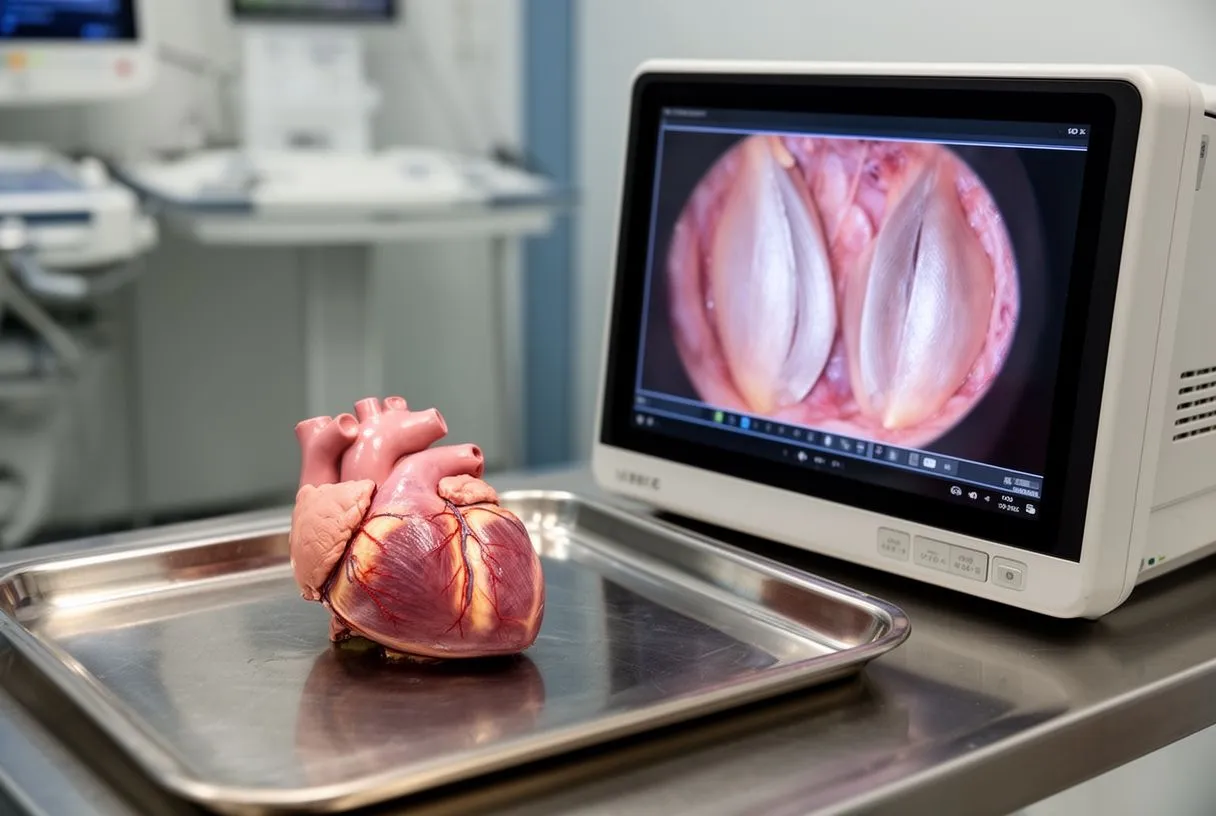
Why mitral valve repair is the flagship. The mitral valve sits between the heart's left atrium and left ventricle. When it leaks, the heart works harder and the ventricle can gradually enlarge. Mitral repair is an operation of exquisite suturing on tissue only a few millimetres thick, which is precisely where robotic tremor filtering and motion scaling shine. Telesurgery for heart valve repair therefore focuses on the mitral valve as its natural candidate.
Imaging and verification. Advanced imaging plays a central role in robotic and remote cardiac work. Surgeons use intraoperative imaging to confirm valve anatomy before and after the repair. Fluorescent imaging with indocyanine green, an injectable dye that lights up in infrared light, has been studied in surgery to assess tissue perfusion and support intraoperative decisions (A review of indocyanine green fluorescent imaging in surgery), and this kind of imaging support is part of what makes complex minimally invasive valve work verifiable while the chest is still open.
Other valves and structural options. The aortic valve — the outlet valve of the heart — can sometimes be treated without open surgery at all through TAVR, transcatheter aortic valve replacement, a catheter-based procedure in which a new valve is delivered through an artery in the groin. Remote expert consultation and telementoring increasingly surround these procedures too, even when the operation itself is done locally.
Our team covers valve disease alongside coronary, aortic and structural heart conditions, and we recommend the less invasive route — robotic, transcatheter or conventional — only where the evidence supports it for that specific patient.
Telesurgery Heart Bypass and Other Remote Options
Bypass on the robot. Coronary artery bypass grafting, or CABG, reroutes blood around blocked coronary arteries using vessels from elsewhere in the body. Telesurgery heart bypass is a smaller chapter than valve repair: totally robotic bypass on a beating heart is technically demanding and has a limited footprint, though robotic-assisted harvest of the internal mammary artery, the graft vessel of choice, is widely used in minimally invasive bypass programmes.
Telemedicine in planning. The more common role of technology at a distance is telepresence surgery cardiology: remote experts planning, proctoring and mentoring procedures rather than driving the instruments themselves. An expert surgeon in another city can watch the operation, advise on technique, and support the local team — which lifts the quality of cardiac care in places without a specialist on site.
Clinical outcomes. Published experience with robotic and remote cardiac techniques shows operative and mid-term results comparable to conventional approaches in appropriately selected patients, with the reviews of robotic applications in cardiac surgery detailing the scope and limits of these techniques. Telesurgery clinical outcomes overall remain a growing evidence base rather than a settled one, which is an honest point every patient deserves to hear.
What Is the Longest Distance Telesurgery Ever Performed?
The transatlantic Lindbergh operation. In 2001, a team in New York performed a laparoscopic cholecystectomy — gallbladder removal — on a patient in Strasbourg, France, roughly 6,500 km away, using dedicated fibre-optic links. It was nicknamed the "Lindbergh operation" after Charles Lindbergh's solo Atlantic flight and remains the milestone people cite when asking about the longest distance telesurgery ever performed.
Cardiac telesurgery distance records. For the heart specifically, experimental and demonstration programmes have validated remote robot control over long links, and animal-model transoceanic robotic procedures have been reported. Large-scale remote cardiac operations in humans are still rare; the discipline is further along in urology and general surgery than in cardiac surgery, and that gap is honest reality rather than marketing.
What limits distance. The physics is unforgiving: light speed alone adds delay over thousands of kilometres, and network congestion adds more. Satellite links, 5G networks and dedicated fibre all trade distance against latency in different ways. This is why real programmes prioritise regional rather than intercontinental operations, with continental links reserved for mentoring and planning.
- Dedicated fibre: lowest latency, best suited to true remote operations over hundreds of kilometres.
- 5G networks: promising for regional coverage where fibre does not reach, still maturing for life-critical control.
- Telemedicine channels: video, imaging and data links carry consultations and mentoring without any latency-critical surgery.
Benefits and the Downside of Robotic Heart Surgery
The benefits, honestly stated. Robotic heart surgery avoids splitting the breastbone, which means less pain, smaller scars, lower blood loss and typically a faster return to normal activity. For a patient with a leaking mitral valve who wants to avoid a sternotomy, these are real, evidence-backed advantages. The balance of outcomes is what comparative literature in surgical journals, including the New England Journal of Medicine, evaluates across surgical innovations.
The downside of robotic surgery. The main disadvantages are the cost, the learning curve, longer operative times in early experience, and dependence on patient selection — not every anatomy or condition suits the robotic route. If the robotic approach runs into difficulty, the team must be ready to convert to an open operation, which is a planned part of every programme, not a failure.
The downside of telesurgery specifically. Distance adds a network dependency on top of the usual surgical risks. Latency, bandwidth, and the availability of an experienced bedside team who can take over instantly are all essential. Patients should expect that any credible remote programme will have a fully staffed operating room at the patient's side and explicit contingency plans.
Cost in Mexico. Robotic telesurgery cost Mexico is a question patients ask directly: robotic systems concentrate in major private hospital systems in Mexico, and costs vary with the hospital, the procedure and the patient's insurance. We encourage anyone comparing options to request a written, itemised proposal covering hospital, surgical team, anaesthesia and recovery costs.
Our team reviews every case against international practice guidelines before a recommendation is made, presents the patient with a clear proposal and its alternatives, and leaves the final decision always with the patient.
Telesurgery vs Traditional Heart Surgery
What changes and what does not. In telesurgery vs traditional heart surgery, the surgical goals are identical: repair the valve, bypass the blockage, restore the heart's function. What changes is the interface — small incisions and a robot instead of a sternotomy and the surgeon's direct hands — and, in telesurgery, the physical location of the surgeon.
How the choices are actually made. The decision is not "robotic versus traditional" in the abstract. It depends on the valve, the arteries, the aorta, the heart's function, the patient's age, chest anatomy, prior surgery, and urgency. Some operations are simply better done through a sternotomy or through a catheter; the robotic route wins only when the anatomy and the evidence favour it.
- Choose the robotic route when: the valve or lesion is technically suitable, the patient's anatomy fits small-incision access, and an experienced robotic team is available.
- Choose traditional surgery when: urgency is high, anatomy is complex, prior surgery distorts the chest, or the evidence for the patient's specific situation favours the open approach.
- Choose a catheter option when: a valve can be treated through TAVR or another structural technique with lower risk for that patient's profile.
Recovery reality. Telesurgery heart surgery recovery time mirrors robotic surgery recovery in general: most mitral repair patients return home within days rather than weeks and return to normal activities markedly faster than after open surgery, though individual recovery always varies with the patient's condition. In our consultation we take the time to explain what the studies actually show, in plain words, and to answer every question before any decision is made.
Is Remote Heart Surgery Available and How to Schedule It?
Availability today. Patients often ask whether robotic surgery is available on the NHS: in the UK, robotic surgery is used in selected NHS centres for several specialties, but robotic cardiac surgery and remote cardiac operations remain limited. The same picture holds in Mexico: robotic cardiac surgery is available in major private hospital systems, while true remote cardiac operations are still essentially demonstrations and research rather than routine service.
What is genuinely available to a patient today. The most valuable remote cardiac service right now is not a remote operation — it is the remote consultation. Telemedicine heart surgery planning means a patient anywhere can be reviewed by a multidisciplinary team, have their studies read, and receive a clear recommendation without first travelling. The first contact with our team is a free video consultation: we get to know the patient, talk through the condition, and say which studies are still needed so no unnecessary ones are ordered.
How to move forward. If you have been told you need valve surgery, bypass surgery, or treatment for an aortic or structural heart condition, the practical steps are simple. Gather your existing studies, ask for a remote consultation, and expect a clear proposal with alternatives — including the option of doing nothing yet, if that is genuinely safe. If you are looking for the best telesurgery heart centers, judge them by whether the team operates the robot daily, whether they explain your alternatives candidly, and whether they welcome a second opinion. We encourage second opinions and treat seeking one as a normal part of deciding about heart surgery; when the patient decides to go ahead, a face-to-face visit at our consulting rooms in Guadalajara, Querétaro or Hermosillo follows.
Closing thought. Telesurgery robotic heart surgery is real, demonstrated and advancing — but today its greatest value lies in the ecosystem around it: remote expert consultation, telemedicine planning, and the spread of robotic cardiac capability to more centres. The most sensible next step for any patient is a calm, thorough conversation with a qualified cardiac team about their own anatomy, their own options, and their own lowest-risk path forward.






