The Surgeon’s Learning Curve and Robotic Heart Surgery
Learning curve robotic heart surgery: how surgeon training and experience shape safer outcomes.
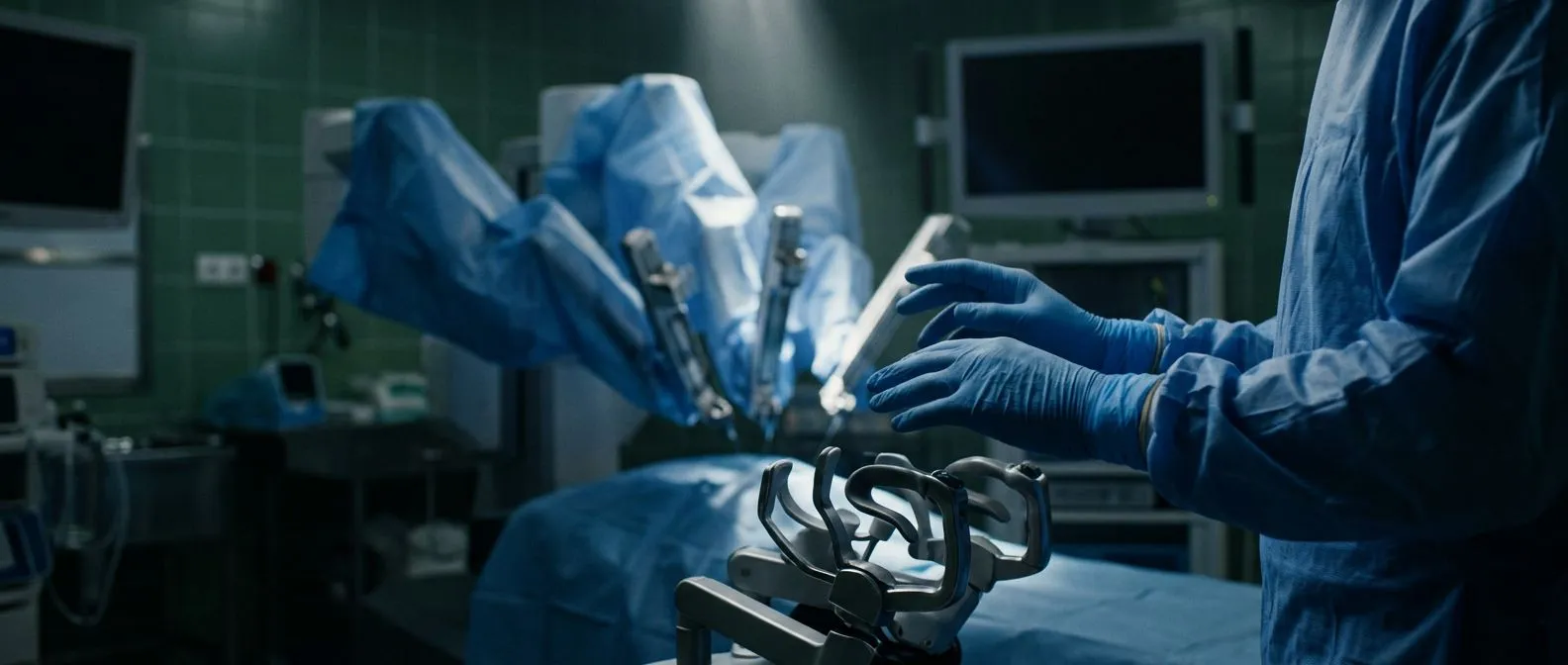
When a surgeon first sits at the console of a robotic surgical system, the procedure they are about to perform is one they have likely done hundreds of times through an open chest — but now they must accomplish it through ports the width of a pencil, watching a three-dimensional screen, and manipulating instruments with no tactile feedback. The learning curve robotic heart surgery demands is steep, measurable, and deeply consequential for patient outcomes. For patients considering a robotic approach — whether for mitral valve repair, atrial fibrillation ablation, or coronary bypass — understanding what their surgeon went through to master this technology can clarify why surgeon experience is the single most important variable in the success of the procedure.
What Is the Learning Curve in Robotic Heart Surgery?
Defining the learning curve in surgical practice: The learning curve describes the relationship between the number of procedures a surgeon performs and the quality of outcomes they achieve. In robotic heart surgery, this curve is particularly pronounced because the technology adds layers of complexity — console-based visualization, wristed instruments with seven degrees of freedom, and the complete absence of haptic feedback (the sense of touch that tells a surgeon how much force they are applying). A surgeon who is an expert in open-chest surgery starts essentially as a beginner again when transitioning to the robotic platform, and must rebuild their procedural intuition from the ground up.
Research across cardiac surgery centres consistently shows that the learning curve for robotic procedures follows a recognisable pattern. Early cases — typically the first 20 to 50 procedures — are associated with longer operative times, higher rates of conversion to open surgery (when the surgeon abandons the robotic approach and opens the chest), and a slightly elevated complication profile. As the surgeon accumulates experience, operative times fall, conversions become rare, and complication rates converge with or fall below those of traditional approaches. The inflection point — the moment at which a surgeon can be considered proficient — varies by procedure type but generally falls between 20 and 75 cases for most robotic cardiac operations.
For patients, this translates into a practical question: how many robotic procedures has your surgeon completed, and what were their outcomes? A surgeon who has performed several hundred robotic mitral valve repairs has moved well beyond the learning curve and operates in a zone where outcomes are stable and predictable. A surgeon in their first few dozen cases is still ascending that curve, and while their work may be perfectly safe, the procedure may take longer and carry a marginally different risk profile. Neither scenario is inherently good or bad — but the patient deserves to know which one they are in.
How Does Robotic Heart Surgery Training Work?
Structured training pathways for robotic cardiac surgery: Robotic heart surgery training does not begin with a patient on the table. It begins in simulation laboratories, where surgeons spend dozens of hours mastering the console interface — learning to translate hand movements into instrument movements, calibrating depth perception through the 3D camera system, and developing the hand-eye coordination that replaces direct tactile feedback. Most established programmes require surgeons to complete a manufacturer-certified training course, followed by proctored cases in which an experienced robotic surgeon observes and guides the procedure in real time.
The training cascade typically follows four stages. First, the surgeon completes didactic modules covering system operation, instrumentation, and patient selection criteria. Second, they work through simulation modules that build console dexterity and camera-driven spatial awareness. Third, they observe live robotic cases performed by experienced operators, studying port placement strategies, cannulation techniques for cardiopulmonary bypass, and intraoperative problem-solving. Fourth, they begin performing proctored cases — initially with a senior surgeon scrubbed in at the table, then gradually taking full console responsibility as their confidence and competence grow.
Clinical studies examining the adoption of robotic cardiac surgery have documented this progression in detail. A review available through Europe PMC outlines how structured training programmes correlate with faster proficiency acquisition and fewer early-case complications. The key insight from this literature is that training quality matters as much as raw case volume — a surgeon who has completed a rigorous, proctored pathway will typically reach proficiency with fewer total cases than one who adopted the technology with less formal structure.
Types of Robotic Heart Surgery Techniques
Procedures performed with robotic assistance: The robotic platform is not a single operation but a surgical approach that can be applied to several different cardiac procedures. Each carries its own learning curve because the anatomical challenges, required instrument movements, and margin for error differ substantially. Understanding which procedures your surgeon performs robotically — and how often — is essential context for evaluating their overall experience.
- Robotic mitral valve repair: The most commonly performed robotic cardiac procedure, involving repair of the mitral valve through right mini-thoracotomy ports rather than a sternotomy. The learning curve is steep because mitral repair itself requires nuanced judgment about leaflet mobility, chordal integrity, and annular dilation.
- Robotic coronary artery bypass grafting: Harvesting the internal mammary artery and creating the anastomosis (the connection between graft and coronary artery) robotically. The anastomosis is the critical technical step and demands extraordinary precision through the console.
- Robotic atrial septal defect closure: Closing a hole between the right and left Atrium (the upper chambers of the heart) using robotic instrumentation, which requires careful suturing of a patch or primary closure in a confined space.
- Robotic atrial fibrillation ablation: Creating lesions on the heart surface to interrupt the abnormal electrical circuits of Atrial Flutter or atrial fibrillation, using robotic precision to place ablation lines accurately.
Each of these procedures presents a different technical challenge. Mitral valve repair, for instance, requires the surgeon to work deep within the heart, manipulating delicate leaflet tissue while maintaining a bloodless field through cardiac arrest and cardiopulmonary bypass. Coronary bypass demands a microvascular anastomosis — suturing a blood vessel roughly 1.5 to 2 millimetres in diameter — using instruments that lack the tactile feedback a surgeon relies on in open surgery. The learning curve for each is measured separately, and a surgeon proficient in robotic mitral repair may not yet be proficient in robotic coronary bypass, or vice versa.
What Affects the Surgeon Learning Curve for Robotic Heart Surgery?
Factors that accelerate or hinder proficiency: Multiple variables influence how quickly a surgeon progresses along the learning curve. Prior experience with minimally invasive cardiac surgery — particularly video-assisted thoracoscopic surgery (VATS) — provides a foundation in operating from a screen rather than through a direct view, which substantially shortens the adaptation period. Surgeons who have already developed the camera-driven spatial reasoning that screen-based surgery demands arrive at the robotic console with a meaningful head start.
Case selection during the early phase is equally important. Surgeons typically begin with straightforward cases — favourable anatomy, single-valve pathology, no prior cardiac surgery — and gradually expand to more complex presentations as their skill develops. A surgeon who pushes into complex cases too early may experience complications that could have been avoided with more conservative case selection during the learning phase. Conversely, a surgeon who never progresses beyond simple cases may build case volume without truly advancing their technical range.
The institutional environment also plays a role. Centres with dedicated robotic programmes, experienced surgical teams, and robust case volumes provide the kind of repetition and team-based learning that accelerates proficiency. A study indexed under PubMed 28512104 examined learning curve dynamics across cardiac procedures and found that institutional volume and team familiarity with the robotic platform were significant determinants of how quickly individual surgeons reached stable outcomes. The surgical team — perfusionists, scrub nurses, and assistants — must also learn the workflow, and a cohesive team shortens the curve for everyone.
Robotic Heart Surgery Outcomes and Success Rates
What the published evidence shows: Once a surgeon has moved beyond the learning curve, robotic heart surgery outcomes compare favourably with traditional approaches. For mitral valve repair, studies consistently demonstrate repair rates exceeding 95% in experienced centres, with low rates of residual regurgitation (leakage). Length of hospital stay is typically shorter — often three to four days compared with five to seven for sternotomy — and return to normal activity is faster because the chest wall remains intact.
The relationship between surgeon experience and outcomes is not linear but rather follows a threshold pattern. Below a certain case volume — often cited as 20 to 30 cases for mitral valve repair — outcomes are more variable, operative times are longer, and conversion to open surgery is more common. Above that threshold, outcomes stabilise, and the variability between surgeons narrows considerably. This does not mean that early-career robotic surgeons produce poor results; it means that the predictability of those results improves with experience, and the operative efficiency that benefits the patient (shorter bypass time, shorter operative time, less anaesthetic exposure) accumulates as the surgeon ascends the curve.
For patients, the practical takeaway is to ask about both the surgeon's total robotic experience and the centre's overall volume. A surgeon who has performed 300 robotic mitral valve repairs in a programme that does 80 to 100 robotic cardiac cases per year operates in a different environment than one performing their first dozen cases in a newly established programme. Both situations can yield good outcomes, but the level of predictability differs, and patients deserve to understand where on that spectrum their care will fall.
Are Robotic Heart Surgery Techniques Safe?
Safety profile and risk mitigation: Safety in robotic heart surgery is not a property of the machine — it is a function of the surgeon's judgment, the team's preparation, and the protocols that govern when to proceed robotically and when to convert to an open approach. The robotic system itself does not make decisions; it executes the surgeon's movements with mechanical precision. Every safety consideration that applies to conventional cardiac surgery — cardiopulmonary bypass management, myocardial protection, anticoagulation, and monitoring — applies equally to the robotic approach.
The most frequently discussed safety concern is conversion to sternotomy — the decision to abandon the robotic approach and open the chest. Conversion can be planned (when intraoperative findings make the robotic approach impractical) or emergent (when bleeding, haemodynamic instability, or technical failure creates an urgent need for direct access). In experienced centres, emergent conversion is rare — below 2% for most procedures — but it is never zero. Patients should understand that conversion is not a failure but a safety mechanism: a surgeon who recognises that the robotic approach is not working and converts to open surgery is exercising sound judgment, not admitting defeat.
Other safety considerations include the management of Aspirin and other antiplatelet or anticoagulant medications before surgery, the placement of an Arterial Cannula (a tube inserted into an artery for cardiopulmonary bypass) and an Arterial Line (a monitoring catheter for continuous blood pressure measurement), and the availability of emergency equipment such as an Automated External Defibrillator in the operating suite. These are standard in any cardiac surgery programme, robotic or open, but the robotic approach introduces additional considerations around port-site bleeding, camera positioning, and the management of instruments that are outside the surgeon's direct physical reach.
Robotic Mitral Valve Surgery Learning Curve
The most studied robotic cardiac procedure: Robotic mitral valve repair deserves special attention because it is the most frequently performed robotic cardiac operation and has generated the largest body of published evidence. The mitral valve sits deep in the heart, between the left atrium and the left ventricle, and its repair demands both diagnostic accuracy (understanding exactly what is wrong with the valve) and technical precision (executing a repair that restores normal function without restricting valve mobility).
The learning curve for robotic mitral valve repair has been studied more extensively than for any other robotic cardiac procedure. Published data suggest that operative time and cross-clamp time (the period during which the heart is stopped) decrease steadily through the first 50 to 75 cases, after which they plateau. Conversion rates and re-exploration rates for bleeding follow a similar pattern, with the most significant improvement occurring in the first 30 cases. These benchmarks provide surgeons and programmes with tangible targets for self-assessment and quality monitoring.
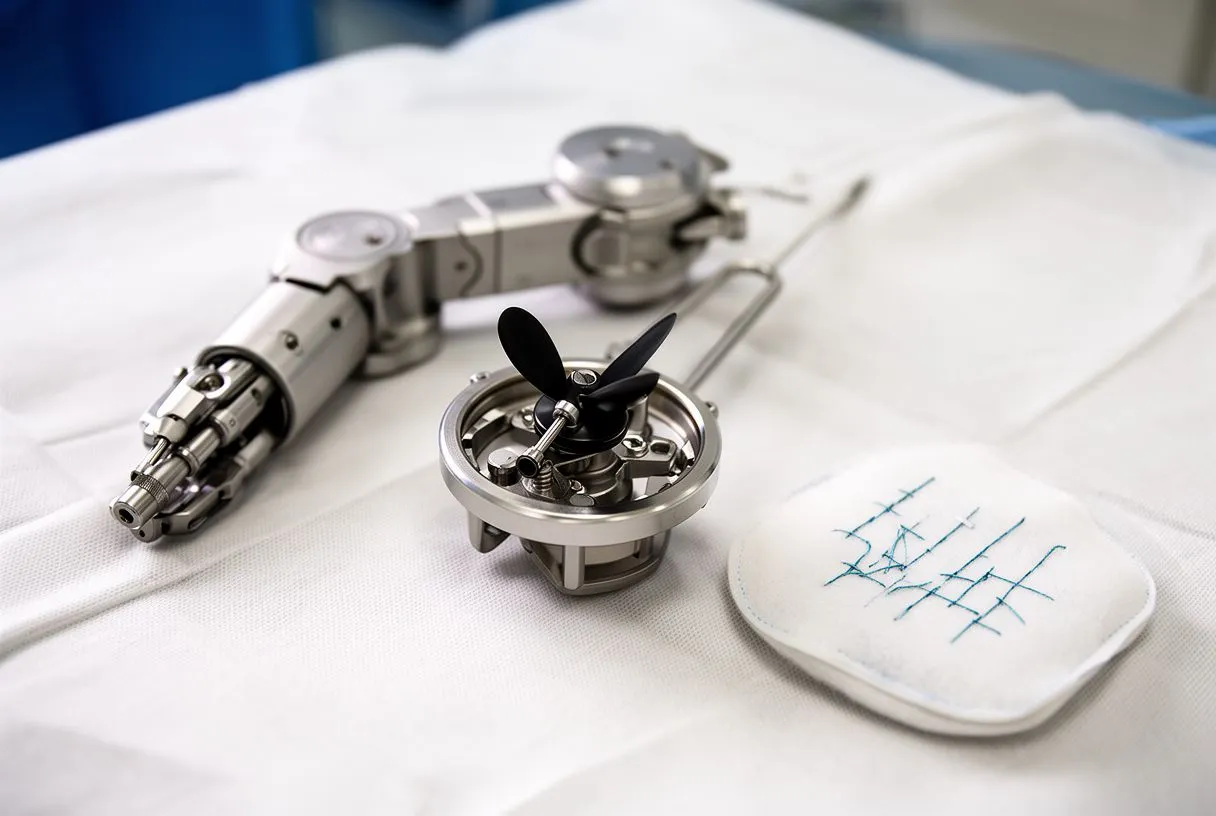
For patients with degenerative mitral valve disease — the most common indication for repair — the robotic approach offers the same quality of repair as open surgery but with less surgical trauma, less postoperative pain (though some Arm Pain or chest wall discomfort can still occur from port placement), and a faster return to full activity. The trade-off is that the surgeon must have mastered the robotic approach to deliver these benefits reliably. A patient facing a complex repair — bileaflet prolapse, calcified annulus, or reoperative surgery — should ask specifically about their surgeon's experience with that particular complexity, not just total robotic case volume.
Robotic Cardiac Surgery Complications and Risks
Understanding the complication landscape: The complications associated with robotic heart surgery fall into two categories: those shared with all cardiac surgery and those specific to the robotic approach. Shared complications include bleeding, infection, stroke, renal dysfunction, atrial arrhythmias (such as Atrial Flutter), and adverse reactions to anaesthesia or cardiopulmonary bypass. These risks exist regardless of surgical approach and are influenced by patient factors — age, comorbidities, lung function, and cardiac function — more than by the incision technique.
Robotic-specific complications include port-site bleeding (bleeding from the intercostal spaces where ports are inserted), phrenic nerve injury (which can cause temporary diaphragm dysfunction), and the consequences of prolonged operative time during the learning curve. Longer operative time means longer anaesthesia, longer cardiopulmonary bypass, and longer aortic cross-clamp time — each of which carries its own incremental risk. This is why operative time is not merely a logistical concern but a genuine safety variable: a surgeon who is still on the steep part of the learning curve will have longer operations, and that length has clinical consequences.
Another consideration is the management of Atheromatous Plaque (cholesterol deposits) in the Ascending Aorta (the first segment of the body's largest artery as it leaves the heart). In robotic surgery, the surgeon's ability to directly palpate the aorta is limited by the camera view, which may not detect soft plaque as reliably as a surgeon's fingers. Programmes that manage this risk carefully use epiaortic ultrasound imaging to assess aortic plaque before placing cross-clamps or cannulas. The clinical trial registered as Clinical Outcomes of PIMSRA Treating for Hypertrophic Obstructive Cardiomyopathy illustrates how procedural innovation in cardiac surgery is evaluated through structured study — a reminder that even established techniques must be validated through evidence, not assumption.
Building Robotic Heart Surgery Proficiency
Milestones in surgeon development: Proficiency in robotic heart surgery is not a single moment but a continuum. Surgeons typically describe their progression in terms of three phases. The first is the acquisition phase, where the surgeon is learning the console mechanics, port placement, and basic workflow. Operative times are long, and the surgeon relies heavily on the proctor or assisting surgeon. The second is the consolidation phase, where the surgeon performs independently but is still refining their technique and judgment. Case selection tends to be conservative. The third is the mastery phase, where the surgeon operates efficiently, handles complex cases with confidence, and may begin teaching others.
- Acquisition phase (cases 1–20): Focus on system mastery, safe port placement, and learning to troubleshoot without panic. Case selection is conservative; complex anatomy is deferred to open approaches.
- Consolidation phase (cases 20–75): Operative times shorten, confidence grows, and case complexity expands. The surgeon begins to develop personal technical refinements and workflow efficiencies.
- Mastery phase (cases 75+): The surgeon handles complex pathology robotically, achieves stable outcomes, and may contribute to training the next generation of robotic surgeons.
It is worth noting that these milestones are approximate and vary by procedure type, prior experience, and institutional support. A surgeon transitioning from extensive minimally invasive experience may compress the acquisition phase significantly. A surgeon in a low-volume centre may take longer to reach consolidation simply because case frequency is lower. The key principle is that proficiency is earned through deliberate, structured practice — not merely through the passage of time.
Choosing a Robotic Heart Surgery Specialist
What patients should ask before committing: Selecting a surgeon for a robotic cardiac procedure involves more than verifying that they offer the technology. The most important questions revolve around experience, outcomes, and the support infrastructure that surrounds the surgeon. A robotic programme is not just one surgeon at a console — it is a team of perfusionists, anaesthesiologists, nurses, and imaging specialists who must function as a coordinated unit.
Patients should ask their prospective surgeon how many robotic procedures of their specific type they have performed, what their conversion rate is (how often they need to switch to open surgery), what their complication rate is for that procedure, and how those rates compare with published benchmarks. A surgeon who can answer these questions with specific numbers — not vague reassurances — is one who tracks their outcomes and uses that data for continuous improvement. Patients should also ask about the centre's total robotic volume, because a high-volume centre provides the team experience that supports individual surgeon proficiency.
Finally, the decision about robotic surgery should never be made in isolation. A patient considering robotic mitral valve repair, for example, should understand that Balloon Angioplasty (a catheter-based technique for opening narrowed coronary arteries), Balloon Aortic Valvuloplasty (a catheter procedure to stretch a narrowed aortic valve), and the implantation of a Balloon-expandable Valve (a transcatheter valve that is expanded with a balloon) are entirely different procedures with different indications and approaches. The robotic platform is one tool among many in cardiac surgery, and the right approach for any given patient depends on their anatomy, their pathology, and their overall health — not on the appeal of a particular technology. If you are considering a robotic cardiac procedure, we encourage you to discuss your specific situation with a qualified cardiac surgery team and to book a consultation so that your individual circumstances can be evaluated with the nuance they deserve.