

Transcatheter Edge-to-Edge Repair: Recovery After TEER
Transcatheter edge-to-edge repair recovery: what to expect week by week, from hospital stay to daily activities.
Transcatheter edge-to-edge repair recovery is usually far easier than recovery from open-heart surgery, and that difference is one of the main reasons patients ask about it. If you or a family member has been told the mitral valve — the valve between the left filling chamber and the main pumping chamber of the heart — is leaking, this procedure may have come up. This guide walks through the whole journey: what the repair involves, what happens on the day, and what the weeks afterward actually look like, so you can face the decision with clear information rather than fear.
What Is Transcatheter Edge-to-Edge Repair?
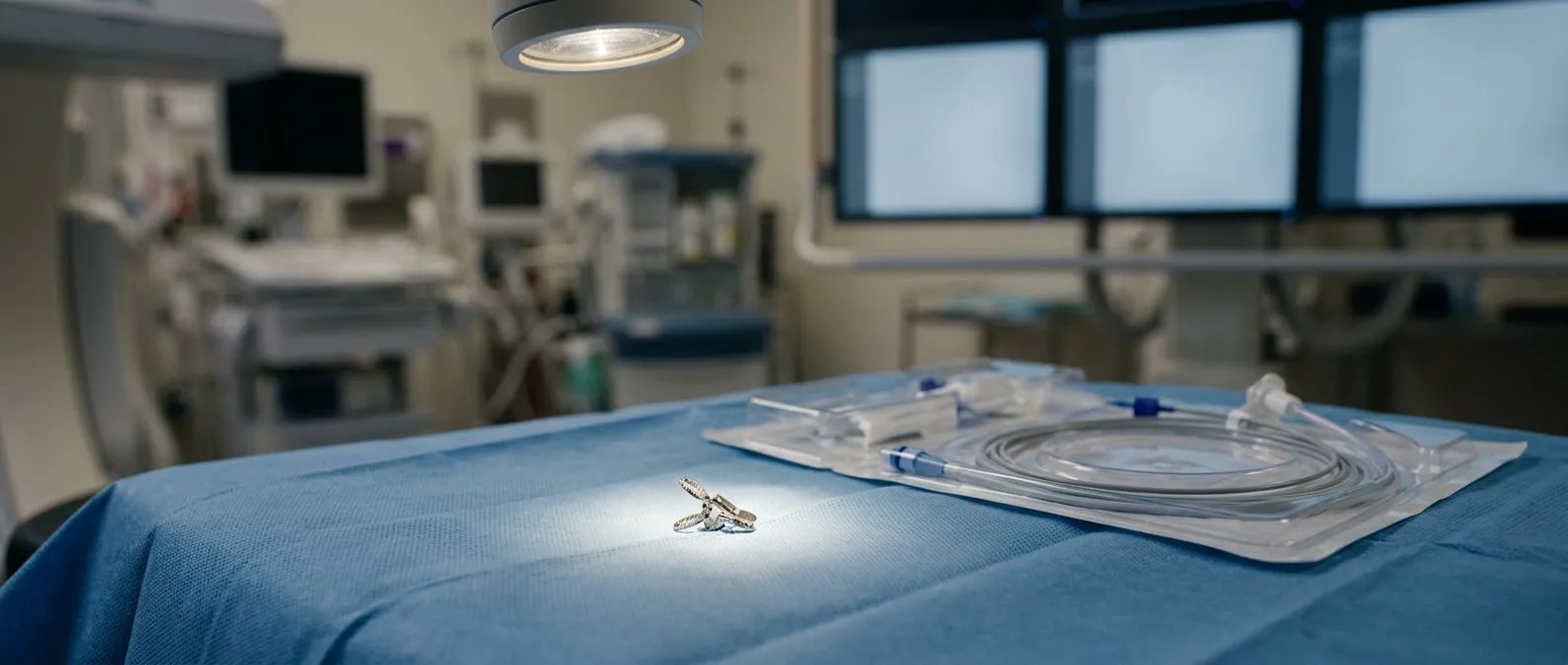
A repair without opening the chest. Transcatheter edge-to-edge repair — often shortened to TEER — is a way to fix a leaking heart valve using a thin tube (a catheter) threaded through a vein in the groin, rather than through a surgical incision in the chest. This is done with an edge-to-edge repair clip, and newer clip systems work on the same principle. A published meta-analysis of two edge-to-edge repair devices describes both as established options for patients who cannot undergo conventional surgery (Journal of Cardiothoracic Surgery).
What the word "edge-to-edge" means. When the two leaflets — the thin flaps of tissue that open and close with every heartbeat — do not meet properly, blood flows backward through the valve. The repair brings the middle of those leaflets together with a small clip, creating a double opening where there was one. Blood then flows forward again, and the leak is reduced.
Where it fits among valve treatments. TEER is one of a family of catheter-based treatments. Others include Transcatheter Aortic Valve Implantation (TAVR) for the aortic valve, Transcatheter Mitral Valve Replacement when a repair is not possible, and Transcatheter Tricuspid Intervention for the valve on the right side of the heart. Each addresses a different valve and a different problem, and your team will explain which, if any, fits you.
How TEER Works for Mitral Regurgitation
The problem being fixed. Mitral regurgitation means the mitral valve leaks, so part of every heartbeat pushes blood backward instead of forward to the body. Over time this makes the heart work harder, the left pumping chamber enlarges, and symptoms appear: breathlessness on stairs, fatigue, swelling in the ankles. The repair aims to stop or greatly reduce that backward flow before the heart becomes permanently strained.
The clip itself. The device is a small implant, roughly the size of a grain of rice or slightly larger. It is delivered folded inside the catheter, positioned under continuous ultrasound imaging of the heart, and then clamped onto the leaking point. Once released, it stays permanently. Some patients need one clip; some need two, placed side by side, depending on how much of the leaflet is involved.
Tricuspid use too. The same edge-to-edge principle has been adapted for the tricuspid valve, and Transcatheter Edge-to-Edge Repair is now studied for Tricuspid Valve Repair in patients whose right-sided valve leaks severely (HAL open science). In our practice, we review every case as a multidisciplinary team against international practice guidelines before recommending any of these routes, and we present the alternatives plainly so the final decision is always yours.
Why Your Team May Recommend TEER Instead of Open-Heart Surgery
Surgical mitral valve repair remains the gold standard. For a patient who is otherwise healthy, conventional Mitral Valve Repair through the chest has decades of evidence behind it and durable long-term results. TEER is not a replacement for that in every case. It exists mainly for patients whose age, frailty, previous operations, or other conditions make open-heart surgery higher risk.
The trade-offs in plain words. Open surgery offers the most complete and durable fix but requires a sternotomy or a chest incision, time on a heart-lung machine, and weeks of healing. TEER avoids the chest entirely and allows a much shorter hospital stay, but its results depend heavily on the shape of your valve, and there is a somewhat higher chance a second intervention may be needed later. Neither option is "better" in the abstract — only better or worse for your specific anatomy and health.
How the decision gets made. A heart team — a cardiac surgeon, an interventional cardiologist, and imaging specialists — reviews the echocardiogram (an ultrasound of the heart) and your overall condition together. In our practice, every case is reviewed this way before a recommendation is given, and we encourage second opinions as a normal part of deciding about heart surgery, not as an insult to anyone.
What Happens on the Day of the Procedure
Arrival and preparation. You will be admitted, change into a hospital gown, and have an intravenous line placed. Blood tests, an electrocardiogram, and a final review of your imaging confirm the plan. You will meet the anaesthesia team, who will explain the sedation — for most TEER procedures you are deeply sedated but not always fully under general anaesthesia, depending on the centre's approach.
During the procedure. The team punctures a vein, usually in the right groin, and threads a guiding catheter up to the right side of the heart. A small hole is then made in the wall between the upper chambers so the clip can reach the mitral valve from the left. Using ultrasound guidance throughout, the surgeon positions the clip and closes it on the leaking point. The whole process typically takes two to three hours.
What you will not feel. Because there is no chest incision and the heart keeps beating throughout, there is no surgical wound on the chest to heal. The entry site in the groin is closed with manual pressure or a small closure device. In our consultation we take the time to explain what the studies actually show, in plain words, and to answer every question before any decision — and on the day itself, the team walks you through each step as it happens.
Transcatheter Edge-to-Edge Repair Recovery: Your Hospital Stay
The first hours. After the procedure you are moved to a Recovery Room or an intensive care unit for close observation, usually overnight. Nurses check your blood pressure, heart rhythm, and the groin puncture site frequently. Because there is no chest wound, most patients are surprised by how quickly they feel alert — often within hours.
The first check: is the leak reduced? Before you go home, a repeat echocardiogram measures how much the leak has improved. This is the moment that determines whether the result is satisfactory or whether the team considers a second clip. You will usually sit up and walk a short distance within the first day, with the groin leg kept straight at first to protect the puncture.
How long you stay. For an uncomplicated mitral TEER, most patients go home in one to two days. This is dramatically shorter than the five to seven days typical after open-heart surgery. Arranging follow-up before discharge, rather than figuring it out afterward, usually helps patients settle into recovery more smoothly.

TEER Recovery Week by Week
Days 1 to 7. The groin puncture heals quickly; expect some bruising and mild tenderness. You will feel more tired than usual — this is normal and reflects your body adjusting, not damage. Walk several times a day around the house. Do not lift anything heavier than about five kilograms (roughly a bag of shopping), and avoid climbing stairs more than necessary at first.
Weeks 2 to 4. Energy begins to return. Most patients can drive again in this window once their team confirms it is safe, and light daily activities — cooking, walking, desk work — become routine. The breathlessness you felt before the procedure often improves noticeably here, because the heart is no longer fighting the backward leak.
Weeks 4 to 6. By about a month, most people have returned to everyday life. Walking distance extends, sleep improves, and follow-up imaging shows how the heart is responding. The overall TEER recovery time is measured in weeks, not months, which is one of the most meaningful differences from surgical recovery.
Activity Restrictions After Transcatheter Edge-to-Edge Repair
The short list of rules. The restrictions after this procedure are fewer than after open surgery, but they matter. Keep in mind:
- Walk daily from the first days — gentle movement helps circulation and healing.
- No heavy lifting (over about five kilograms) for the first two to four weeks.
- Showers are fine soon after discharge; avoid baths and swimming until the puncture site is fully healed.
- Do not drive until your team clears you, typically within the first two weeks.
- Discuss air travel before booking; most teams advise waiting at least the first few weeks.
Why these rules exist. The concern is the groin puncture and, less directly, giving the clip time to settle onto the valve tissue. Heavy straining raises pressure that could disturb the healing puncture. The rules are conservative, not because the procedure is fragile, but because a few weeks of caution protects a result meant to last years.
Returning to exercise. Gentle aerobic activity such as walking resumes early. More demanding exercise — gym work, cycling, swimming laps — returns in stages, guided by how you feel and by your follow-up appointments. Our team covers the whole spectrum of cardiac procedures, from conventional operations to robotic and transcatheter ones, and we recommend the less invasive route only where the evidence supports it for that patient — which also shapes how we pace your return to activity.
Transcatheter Edge-to-Edge Repair Complications and Healing
What can go wrong, honestly. Every heart procedure carries risks, and TEER is no exception. The recognised complications include bleeding or clot at the groin puncture, an abnormal heart rhythm (particularly atrial fibrillation) around the time of the procedure, a small stroke, damage to the valve leaflets by the clip, and — importantly — a residual leak if the clip cannot fully correct the regurgitation. Serious complications are uncommon in experienced centres, but you should hear the full list, not just the reassuring part.
Signs that need a call to your team. After discharge, contact your doctor promptly if you notice leg swelling, pain, or redness at the puncture site, a fever, new breathlessness, palpitations, or sudden weight gain from fluid retention. These are the signals that something needs checking before it becomes serious. Most turn out to be minor, but they should never be ignored.
How healing actually proceeds. The clip itself is inside the heart, so "healing" in the usual sense applies only to the puncture site, which closes within days. The leaflet tissue grows around the clip over weeks and months, securing it further. In our practice, we tell patients candidly about every known risk before they decide, because a decision made with full information is one you can commit to calmly.
Follow-Up Care and Cardiac Rehab After TEER
The appointment schedule. Typical follow-up after TEER includes a visit or video review within the first month, an echocardiogram at around one to three months, and periodic imaging each year afterward. These check that the leak stays reduced and that the heart is recovering in size and function. Medications — often including blood thinners for a period — continue as prescribed, and never stop them without your team's approval.
Cardiac rehab is not just for surgical patients. A supervised programme of graded exercise, education, and support speeds up recovery after catheter procedures too. It teaches you how far to push, corrects deconditioning from months of breathlessness before the procedure, and gives you confidence that your symptoms are improving rather than worsening.
Staying connected to your team. Recovery is not a solo project. Keep your follow-up appointments even when you feel well, and bring a written list of questions. Patients who keep their scheduled reviews — even the ones that feel routine — are more likely to catch small issues before they grow.

Life After TEER: Long-Term Outlook
What improves, and how much. The clearest benefit patients report is relief from breathlessness and fatigue. Many return to activities they had quietly abandoned — walking with grandchildren, gardening, travel. The degree of improvement depends on how much the leak was reduced and how much the heart had already stretched, which is why earlier treatment generally leads to better outcomes.
Living with a durable result. The clip is permanent and does not degrade, and it does not trigger airport metal detectors or interfere with most daily technology. Regular echocardiograms confirm the repair is holding. If a residual leak persists, the team may discuss additional clips, medical therapy, or — in selected cases — Transcatheter Mitral Valve Replacement as a later option.
The bigger picture. TEER sits within a wider shift toward less invasive structural heart care — from Transcatheter Edge-to-Edge Repair and TAVR to catheter-based Tricuspid Intervention — all designed to help patients who would once have been told nothing more could be done. Dr Molina trained in cardiac, minimally invasive, robotic and structural surgery at the University of Montreal, and in structural cardiology and TAVR at CHU Bordeaux, and the team also trained at Jena, Bad Berka and Buffalo — experience we bring to judging honestly when a catheter approach is the right one and when surgery would serve you better.
Where to begin. If you are reading this because a loved one has been diagnosed with a leaking mitral valve, start with a conversation rather than a search engine. In our team, the first contact is a free video consultation: we get to know the patient, talk through the condition, and say which studies are still needed so no unnecessary ones are ordered. Transcatheter edge-to-edge repair recovery is one of the gentler paths in cardiac medicine — but the right path for you is the one a qualified cardiac team confirms against your own heart, your own images, and your own goals. Book a consultation and let that conversation, not anxiety, make the decision.






