Vitamin K Interactions With Warfarin and Supplements
Discover vitamin K interaction warfarin patients must manage.
If you or a family member has been prescribed warfarin, a blood thinner used to prevent dangerous clots, you have probably heard conflicting advice about leafy greens. Some people tell you to avoid spinach entirely. Others say it is fine. The truth sits in between, and it comes down to one word: consistency. A vitamin K interaction warfarin patients need to understand is not about banning healthy food. It is about keeping your intake steady so your medication works predictably. This guide explains how the interaction works, which foods and supplements matter, and how to keep your blood-thinning levels safe and stable.
What Is a Vitamin K Interaction?
How the clash happens. Warfarin belongs to a family of medicines called a Vitamin K Antagonist, which means it works by partially blocking vitamin K. Your liver uses vitamin K to make several clotting factors, the proteins that help blood solidify after an injury. When warfarin blocks that process, your blood takes longer to clot, which protects you from strokes and clots. If you suddenly eat much more vitamin K than usual, you quietly push back against the medicine, and your protection drops.
Why consistency beats avoidance. The problem is not vitamin K itself. It is the swing. A big salad one day and none for the rest of the week makes your blood-thinning level unstable, and unstable levels mean either clot risk or bleeding risk. Doctors measure this with a blood test called the INR, short for international normalized ratio, which shows how long your blood takes to clot compared with normal. This is why a National Library of Medicine overview of vitamin K stresses that total intake matters more than any single meal.
Two directions of risk. An interaction can go both ways. Too much vitamin K weakens warfarin and raises your clot risk. Too little vitamin K, or adding other medicines that amplify warfarin, can push your blood too thin and raise bleeding risk. Both directions are preventable, and the rest of this guide shows you how.
How Warfarin and Vitamin K Work in Your Body
The liver is the control room. Your liver constantly manufactures clotting factors, using vitamin K as a necessary ingredient in the assembly line. Warfarin slows that line down. The effect is not instant; it takes several days for existing clotting factors to wear out and for the warfarin effect to fully appear. That same delay works in reverse, which is why a change in diet does not show up in your INR the same afternoon.
Why the dose is personal. Two patients on the same milligram dose can have very different INR results, because genetics, other medications, liver health and diet all play a part. This is a well-documented Drug Interaction territory: many common medicines, from antibiotics to pain relievers, can shift how warfarin behaves. Your prescribing team adjusts the dose based on your own blood tests, not on a standard chart.
After a mechanical heart valve replacement or certain clot conditions, warfarin is often the long-term choice precisely because its effect can be measured and tuned. In our practice, every patient on anticoagulation gets a clear explanation of the INR targets we are aiming for and how diet, medicines and supplements fit into that plan.
Which Foods Are High in Vitamin K?
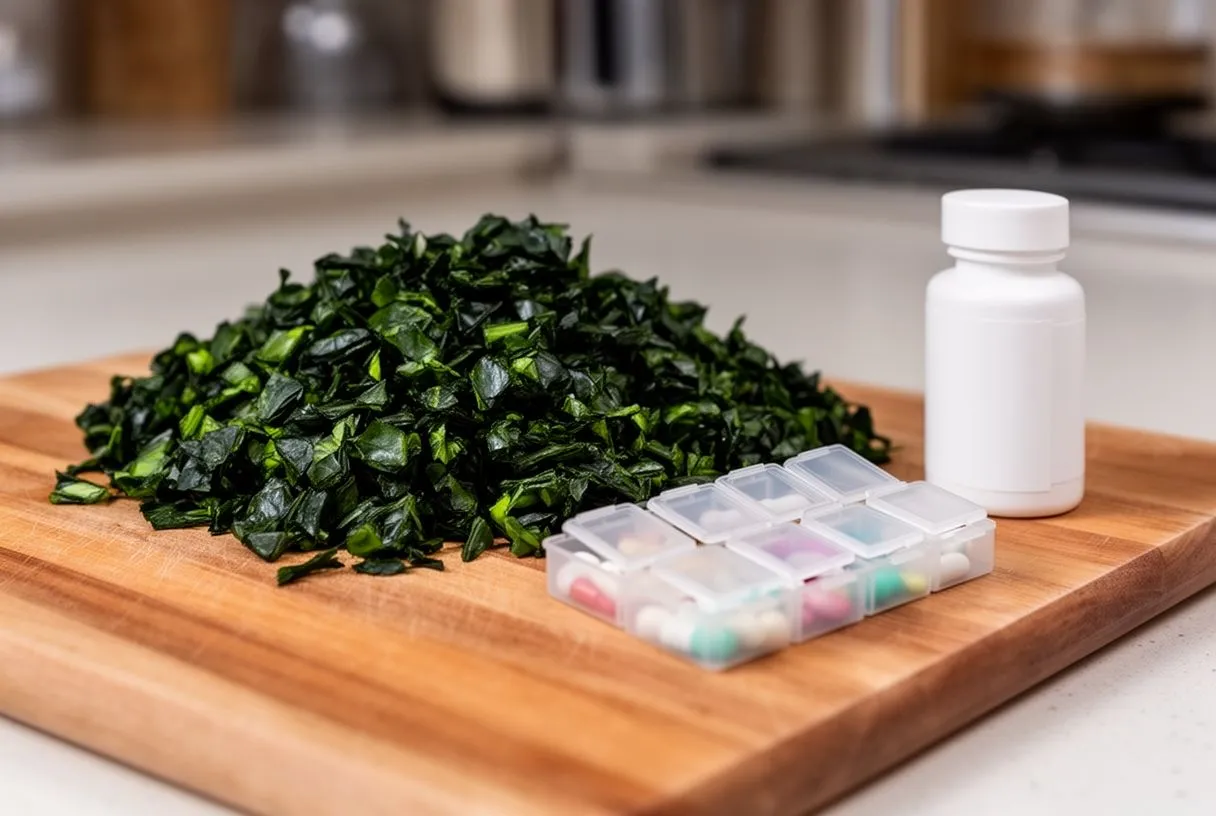
The green rule of thumb. The richest sources of Vitamin K in Food are dark leafy greens: kale, spinach, collard greens, Swiss chard, Brussels sprouts, broccoli and romaine lettuce. The greener and darker the leaf, the more vitamin K it generally carries. Parsley and other fresh herbs are surprisingly concentrated, so a small garnish can carry a real dose.
Moderate sources still count. You do not need to build your whole diet around the top-tier greens. There is vitamin K in smaller amounts in green beans, peas, asparagus, cabbage, kiwi, avocado, prunes and some vegetable oils such as soybean and canola. These add up over a day, which is another reason the total pattern matters more than one ingredient.
Here is a practical way to think about your plate:
- High vitamin K: kale, spinach, collards, Swiss chard, Brussels sprouts — keep portions consistent from week to week.
- Moderate vitamin K: broccoli, cabbage, green beans, kiwi, avocado — fine to enjoy regularly as part of your normal routine.
- Low vitamin K staples: grains, potatoes, apples, bananas, most meats and dairy — these form a safe base for your meals.
A simple food diary for the first few weeks on warfarin can be very useful. When an INR result is unexpected, that diary often explains it, and the advice can be adjusted rather than the food.
Foods High in Vitamin K2 and Why They Are Different
Two forms, one family. Vitamin K comes in two main dietary forms. Vitamin K1, called phylloquinone, comes from plants and is the form that most directly affects warfarin. Vitamin K2, called menaquinone, comes from animal and fermented sources: aged cheeses, natto (a fermented soybean dish), egg yolks, liver and some chicken. People often ask what foods are high in vitamin K2, and the short answer is aged and fermented foods, with natto being by far the richest.
Why K2 deserves attention anyway. K2 is also biologically active against warfarin, just usually in smaller amounts than a serving of kale. A daily plate of natto, a common food in Japan, is well known to destabilize warfarin control. Aged cheeses like Gouda contain modest amounts that matter mainly if portions are large and habitual. The same consistency rule applies: if cheese is part of your life, keep it steady rather than swinging.
Probiotics and fermented foods. Some fermented foods also change warfarin indirectly, because certain gut bacteria produce vitamin K that your body can absorb. Large changes in your gut flora, for example from a new probiotic or an antibiotic course, can nudge your INR. Mention any probiotic you start taking to the team managing your blood tests.
What Should You Not Take Vitamin K With?
Medicines that raise bleeding risk. If you are on warfarin, several common medications can amplify its effect and push bleeding risk upward, independent of your diet. The clearest examples are aspirin and other antiplatelet drugs, non-steroidal anti-inflammatory pain relievers such as ibuprofen and naproxen, and certain antibiotics. These do not fight warfarin the way vitamin K does; they stack on top of it.
Supplements with their own blood-thinning effect. Herbal products are a frequent blind spot. High-dose fish oil, ginkgo biloba, garlic supplements, ginger, ginseng, St. John's wort and high-dose vitamin E can all affect clotting or warfarin metabolism. St. John's wort is particularly important because it weakens warfarin, which is the same direction a vitamin K spike points. The safest habit is to bring every pill, tea and powder you take to your anticoagulation review.
Alcohol deserves a mention. Heavy or irregular drinking destabilizes warfarin control in both directions. An occasional modest drink is usually tolerated, but binge patterns are a genuine hazard. If drinking is part of your social life, say so plainly at your INR checks so your team can advise you honestly.
Can I Take Vitamin K Supplements With Warfarin?
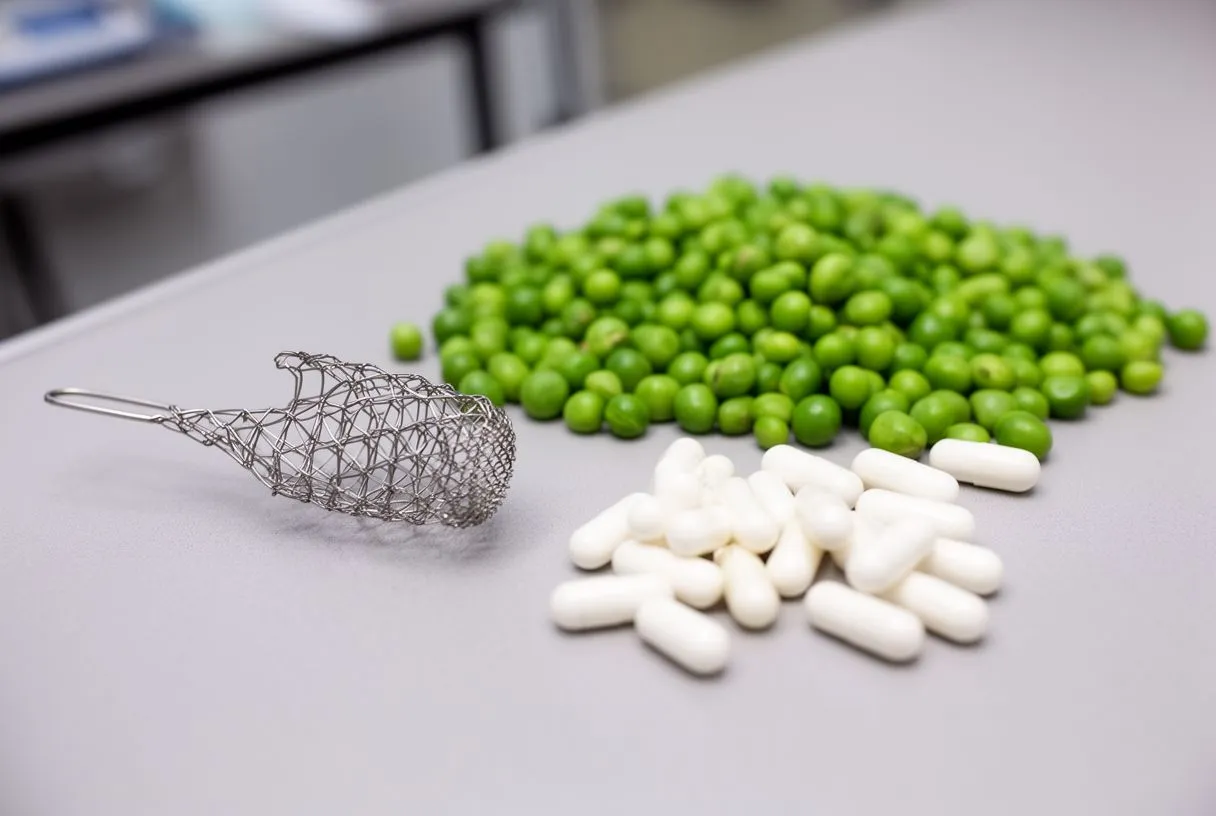
The short answer is: only with your doctor's approval. Vitamin K supplements with warfarin are not automatically forbidden, but they are a direct intervention in how your medicine works. A multivitamin containing a small amount of vitamin K, taken at the same dose every day, is usually manageable. A standalone high-dose vitamin K supplement taken irregularly is a recipe for unstable INR readings.
When supplements are actually used. There is a place for deliberate vitamin K dosing. If your INR climbs too high and there is no bleeding, some protocols use a small, carefully calculated oral dose of vitamin K to bring it back down. That is a medical decision, made with blood test results in hand, not something to attempt at home with a supplement from the pharmacy.
What to do before starting anything. Before you add any supplement, ask the team managing your anticoagulation. Bring your full supplement list to the team managing your anticoagulation and go through it one by one, so you understand what each one can do to the INR and which ones are worth keeping. If you are considering a change after heart surgery, review that list again with your doctor at every follow-up.
Is It Okay to Take Vitamin D and K Together?
A common pairing, a reasonable question. Many bone-health products combine vitamin D3 with vitamin K2, on the theory that D improves calcium absorption while K directs it to bone. For most people not on anticoagulants, this combination is reasonable. For warfarin patients, the question is whether the K2 dose inside the product is large enough to matter.
Do D3 and K2 interact with any medications? The D3 component itself does not meaningfully affect warfarin. The K2 component is the one to watch, because it is the same molecule family that warfarin blocks. Typical supplement doses of K2 are usually modest, but "usually" is not a guarantee for your particular dose of warfarin and your particular INR sensitivity.
The safe path. If your doctor recommends vitamin D for bone health, ask whether the product can be D3 alone. If a K-containing product is genuinely needed, take it every single day at the same dose so its effect on the INR becomes predictable and can be absorbed into your warfarin dose. As with every supplement in this article, the decision belongs with the team that sees your blood test results, not with a label on a bottle.
What Are the Symptoms of Vitamin K Deficiency?
What deficiency actually looks like. True vitamin K deficiency is uncommon in healthy adults eating a normal diet. When it does occur, the signs are bleeding-related: easy bruising, small red or purple spots on the skin, bleeding gums, nosebleeds, blood in urine or stool, and unusually heavy menstrual bleeding. In newborns, whose stores are naturally low, deficiency can cause serious bleeding, which is why vitamin K injections at birth are standard practice.
Who is genuinely at risk. People at higher risk include those with liver disease, patients on long-term total nutrition without supplementation, people with conditions that impair fat absorption (vitamin K is fat-soluble, so it needs dietary fat to be absorbed well), and anyone on long-term broad-spectrum antibiotics. If you fall into one of these groups, your doctors will usually monitor for it.
A confusing overlap for warfarin patients. Here is something important: many of the symptoms of too much warfarin look exactly like the symptoms of vitamin K deficiency, because both leave you with too few working clotting factors. If you notice unusual bruising or bleeding while on warfarin, do not assume you need more vitamin K. Tell your medical team and get an INR check, because the fix could be a dose adjustment rather than a dietary one.

How Much Vitamin K Can You Have on Warfarin?
The target is consistency, not a number on a poster. There is no single universal vitamin K allowance for warfarin patients, because warfarin doses are individualized. General adult guidance puts adequate vitamin K intake around 90 to 120 micrograms per day, and most warfarin management programs aim for you to stay near a steady intake in that range rather than eliminating vitamin K entirely. Your INR results tell you whether your personal pattern is working.
Practical portion thinking. A cup of raw spinach or half a cup of cooked greens can approach or exceed a full day's adequate intake in one serving. That does not make it forbidden. It makes it something to eat regularly if you like it, so its effect is constant. If you have eaten leafy greens rarely for years and then start a daily green smoothie, expect your team to check your INR more often while your body and your dose adjust.
Monitoring ties it all together. Dietary intake, warfarin dose and INR form a triangle, and regular blood tests are the tool that keeps all three in balance. Research on dietary vitamin K intake and anticoagulation control consistently finds that patients with the most stable, habitual intake have the most stable INR values. When INR checks are frequent at the start and settle into a routine later, you gain real freedom to enjoy a normal, varied diet.
Managing Vitamin K on Warfarin After Heart Surgery
Why some heart patients need warfarin at all. Patients who receive a mechanical heart valve almost always need a Vitamin K Antagonist such as warfarin for life, because mechanical valves encourage clot formation. Some patients with atrial fibrillation, an irregular rhythm that raises stroke risk, also stay on warfarin or a newer anticoagulant. Others take it temporarily after certain procedures. Knowing which group you are in, and for how long, shapes every dietary and supplement decision you make.
Choosing the right valve changes the medication story. The trade-off between a mechanical valve, which requires lifelong warfarin, and a tissue valve or a TAVR procedure, which usually does not, is one of the most important decisions in valve treatment. In our practice, every case is reviewed by the multidisciplinary team against international practice guidelines before a recommendation is made, and the patient receives a clear proposal with the alternatives, including what each choice means for long-term medication and diet. The final decision is always the patient's, and we encourage second opinions as a normal part of that decision.
Recovery and diet after surgery. In the first weeks after heart surgery, appetite is often poor and eating patterns change, which can temporarily disturb INR control. Expect more frequent blood checks during that period rather than strict new food rules. Once your routine normalizes, the same consistency principle applies: eat what you normally eat, keep your vitamin K pattern steady, and let the monitoring catch anything that drifts.
Getting the plan right from the start. If you are facing a valve decision or taking warfarin and feel uncertain about diet and supplements, talk to a qualified cardiac team rather than piecing together advice online. Our first contact is a free video consultation: we get to know the patient, talk through the condition, explain what the studies actually show in plain words, and say which tests are still needed so no unnecessary ones are ordered. You can book a consultation with Dr Alejandro Molina's team in Guadalajara, Querétaro or Hermosillo to review your own situation.
The bottom line. A vitamin K interaction warfarin patients can manage well comes down to three habits: keep your vitamin K intake consistent rather than trying to eliminate it, review every new medicine and supplement with the team managing your anticoagulation, and stay on schedule with INR checks. Do that, and leafy greens, cheese and a normal varied diet can stay part of your life. If anything about your diet, your valve type or your medication plan is unclear, bring those questions to your cardiac team — your safest decisions come from your own blood test results discussed with people who know your case.