Warfarin and INR: Keeping Your Level Steady
Warfarin and INR monitoring keeps your anticoagulation safe.
If you or someone you love has been prescribed warfarin — a blood thinner taken as a daily tablet — the question that comes up at almost every appointment is the same: is the dose right? That is exactly what warfarin and INR monitoring is for. INR stands for international normalised ratio, a simple blood test that shows how quickly your blood clots. This guide explains, in plain language, what your INR numbers mean, how diet and medicines affect them, what bleeding warning signs to watch for, and how testing fits into life before and after heart surgery.
What Is the Relationship Between INR and Warfarin?
The relationship is straightforward: warfarin slows down clotting, and the INR measures how much it has slowed. Warfarin works by blocking vitamin K, which your liver needs to make several of the clotting factors that stop bleeding. The higher your INR, the thinner your blood — and the lower your INR, the closer it is to clotting normally.
Think of it like a thermostat. The tablet is the heater; the INR test is the thermometer that tells you whether the room is too cold, too hot, or just right. Without that reading, nobody can tell whether your dose of this blood clot prevention medication is doing its job safely.
This is why warfarin is never prescribed on a "take it and forget it" basis. It is one of the few long-term medicines that needs regular blood checks for as long as you take it, because small changes in your body, your diet or your other medicines can shift the number. As MedlinePlus notes in its patient guidance on warfarin, regular testing is what keeps the medicine both effective and safe.
What Is the INR Level for Warfarin?
For most people without a mechanical heart valve, the target INR sits between 2.0 and 3.0. This is called the therapeutic INR range — the window where warfarin prevents clots well while keeping bleeding risk acceptably low. Below 2.0, your protection against stroke and clot drops; above the range, bleeding risk climbs steadily.
What if your INR is 1.5? An INR of 1.5 means your blood is only slightly thinner than normal. For someone on warfarin, that is usually too low — the dose is probably not strong enough yet, and your team will likely adjust it. But for some people with certain conditions who are not on warfarin, 1.5 may be a normal, expected reading, which is why context always matters.
The INR goal range for a mechanical valve. If you have a mechanical heart valve — an artificial valve made of metal and fabric, usually in the aortic or mitral position — the target is stricter, typically 2.5 to 3.5, because mechanical valves are more prone to clot formation. Your cardiac team sets your individual target based on the valve type, its position, and your other risk factors, so never assume someone else's number applies to you.
How Warfarin and INR Monitoring Works
A standard INR check takes a small blood sample, either from a fingertip or a vein in your arm. The sample is tested to see how long it takes to clot, and that time is compared against a normal reference to produce the INR number. The whole idea behind warfarin and INR monitoring is simple: measure, adjust, measure again.
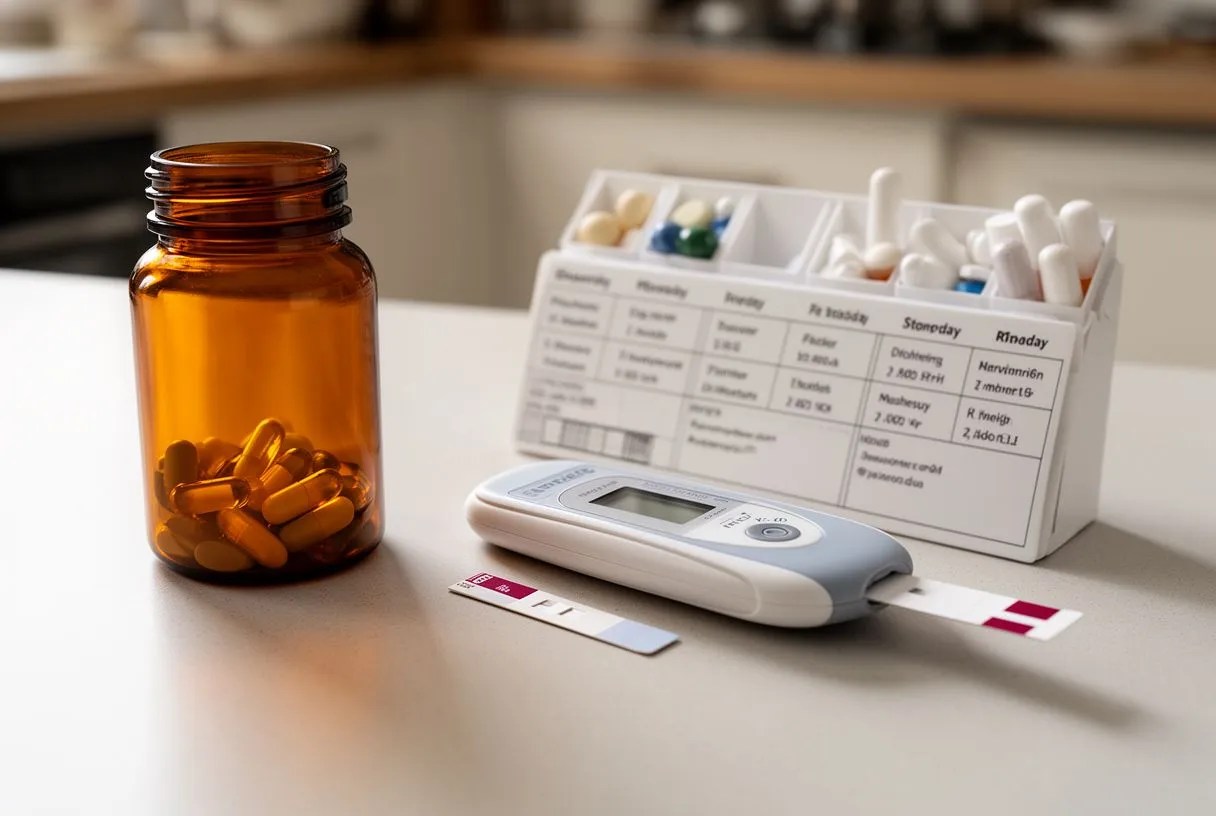
Your doctor uses the result to fine-tune your weekly dose. Warfarin comes in several tablet strengths, so adjustments are usually made by changing which tablets you take on which days of the week. Doses are rarely doubled or halved abruptly; small, deliberate changes keep the level steady.
Timing matters too. Warfarin is taken once a day, at roughly the same time, because it builds up and clears from your body in a predictable rhythm. Skipping doses or doubling up after a missed one throws off that rhythm and shows up in your next result.
Do I Take More or Less Warfarin if My INR Is Low?
If your INR is low, you generally take more warfarin — but only under your doctor's direction. A low INR means the current dose is not thinning your blood enough, so the dose is usually increased slightly and rechecked. Never change the dose yourself, because "low" on one person's plan may be deliberate on another's.
How to manage warfarin dosing safely. The safest approach follows a few fixed habits: take the tablet at the same time daily, keep your testing appointments, tell every doctor and pharmacist that you take warfarin before starting anything new, and report any missed doses rather than guessing at a correction. Good warfarin patient education also means knowing your own target range, not just your last result.
What happens after a dose change. Warfarin takes several days to show its full effect, so your team will not recheck the INR the day after an adjustment — usually a few days to a week. Expect a little back-and-forth when starting out, and patience while the right weekly pattern is found. Once stable, dose changes become rare.
What Affects INR Levels? Diet, Illness and Medicines
The honest answer to "what affects INR levels" is: a lot. Vitamin K and warfarin interaction is the best-known example — vitamin K helps your blood clot, so sudden changes in how much you eat directly push your INR up or down. This is why warfarin diet restrictions are really about consistency, not elimination.
The highest vitamin K foods are leafy greens: kale, spinach, collard and mustard greens, and Brussels sprouts. You do not need to avoid them — you need to eat roughly the same amount week to week. A big spinach salad after months without one can swing your INR. Other influences include:
- Medicines and supplements: antibiotics, pain relievers such as aspirin or ibuprofen, and herbal products like St John's wort or ginkgo can all shift the INR sharply.
- Illness and fever: infections, vomiting, diarrhoea and reduced appetite change how warfarin is absorbed and metabolised.
- Alcohol: heavy or irregular drinking raises clotting risk on one hand and bleeding risk on the other — moderation and consistency matter here too.
- Travel and routine changes: missed doses, changed meals and different time zones all nudge the number.
Can constipation affect the INR? Indirectly, yes. If constipation changes how your gut absorbs the tablet — or if you start taking a laxative or fibre supplement that alters absorption — your level can drift. The real lesson is that any persistent change in digestion, appetite or bowel habit is worth mentioning at your next INR check. When reviewing foods to avoid on warfarin, our team prefers to talk about consistency rather than a long list of forbidden items, because a steady diet is far safer than an anxious, restricted one.
Warfarin Side Effects: Bleeding and Signs of Too Much Warfarin
The most important warfarin side effects — bleeding signs — are the ones to learn by heart, because they signal the dose may be too high. Common warfarin side effects include easy bruising, gums bleeding when you brush, and nosebleeds that come more easily than before. These are early warnings, not reasons to stop the tablet on your own.
Warning signs that need same-day attention. Some signs of too much warfarin go beyond nuisance-level bruising and should be reported immediately:
- Blood in your urine (pink or brown) or black, tarry stools.
- Bleeding that will not stop after ten minutes of firm pressure.
- A severe headache, sudden confusion, or vision changes — possible signs of bleeding in the brain.
Less obvious effects. Some people notice skin changes, unusual fatigue, or hair thinning on warfarin, though these are less common. Very rarely, warfarin can cause a painful skin reaction early in treatment. The practical rule: any new or worsening symptom while on a blood thinner deserves a phone call, not a wait-and-see approach. Patients leaving surgery on warfarin should have written bleeding warning signs to check against at home, so nobody has to rely on memory in a stressful moment.

INR Meter Home Testing: Warfarin and INR Monitoring at Home
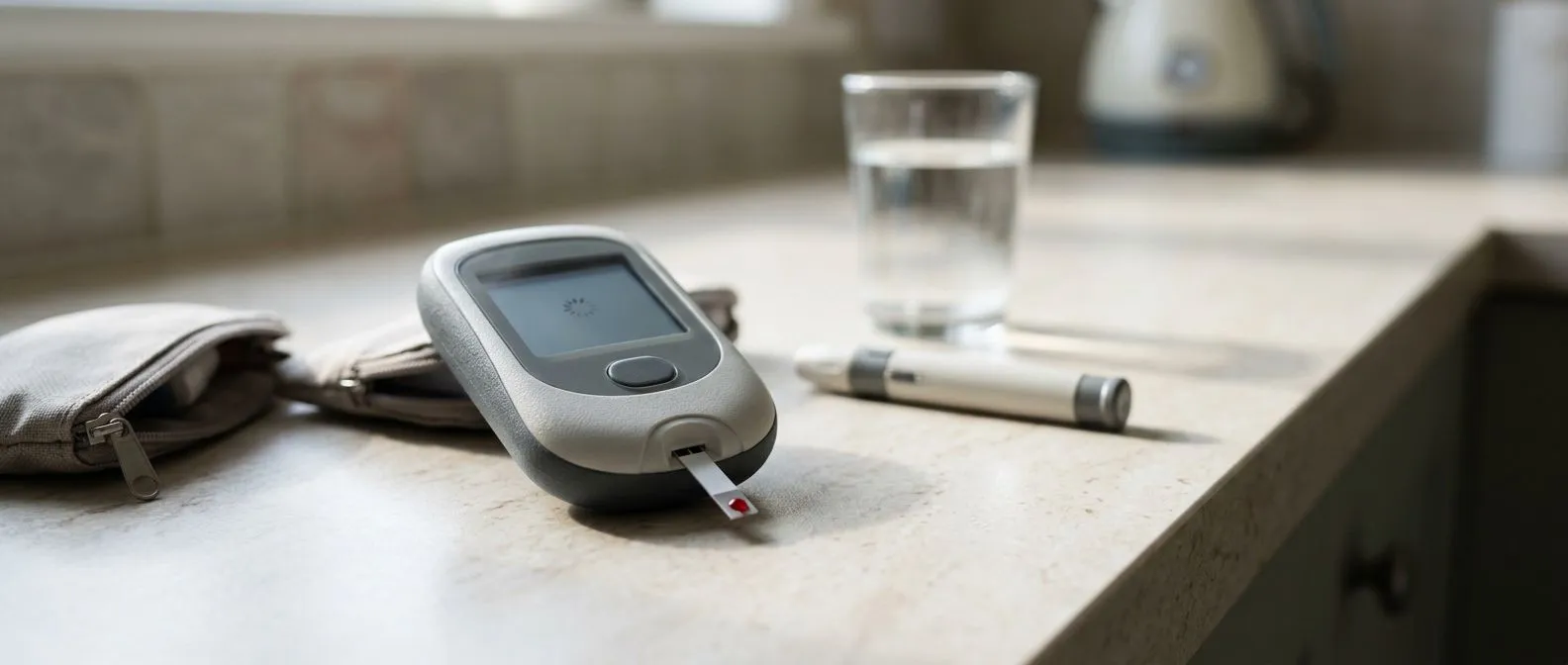
An INR meter home testing kit works much like a glucose meter for diabetes: a fingertip prick, a drop of blood on a test strip, and a reading in about a minute. For many patients, warfarin and INR monitoring at home means fewer trips to a lab and faster dose adjustments, because the result reaches the doctor the same day.
This approach is called point-of-care INR testing, because the test happens where the patient is rather than in a central laboratory. It suits patients who are stable, comfortable with small devices, and well supported by a clinic that reviews their readings remotely. It is not right for everyone — results near the edges of your target range are sometimes confirmed with a laboratory blood draw.
If home testing interests you, ask your medical team whether it is available and appropriate in your case, and never buy a meter and start self-managing without that supervision. The device is only as safe as the plan behind it.
When to Bridge Warfarin Around Surgery
Some surgical procedures require stopping warfarin temporarily to reduce bleeding risk, while many dental procedures can be done without interrupting it. But stopping it briefly raises clot risk in some patients — particularly those with mechanical heart valves. "When to bridge warfarin" refers to this decision: whether to use a fast-acting injectable anticoagulant (usually a heparin-type medicine) during the gap while the tablet is paused.
Bridging is not automatic. Guidelines generally reserve it for patients at high clot risk — a mechanical mitral valve, a recent stroke or clot, or several risk factors together. Low-risk patients often simply stop the tablet a few days before the procedure and restart it after, with no injections needed. The decision depends on the exact procedure, your valve or rhythm history, and your bleeding risk.
If you need any procedure, from a tooth extraction to an operation, tell the team you take warfarin well in advance and let your prescriber make the plan. Every bridging plan should be decided case by case with the patient's full history, because the right answer for one mechanical-valve patient can be wrong for the next.
Warfarin Management After Heart Surgery
Many heart operations make warfarin part of the recovery plan. A mechanical valve replacement always requires lifelong warfarin. Some mitral valve repairs, certain rhythm procedures, and recovery from a clot inside the heart call for it for a defined period — often three to six months — after which the need is reassessed. Good warfarin management after heart surgery starts before you leave the hospital, with a clear target range and a testing schedule.
The first weeks after surgery are the most delicate. Your body is healing, inflammation changes how warfarin is metabolised, and new pain medicines or antibiotics can interact. Frequent checks — often weekly at first — catch drift early. Once your dose is stable and other medicines are settled, the interval stretches out.
Our team reviews every postoperative anticoagulation plan together as a multidisciplinary group before recommending one, and we explain in the consultation exactly why a given target and duration apply to that patient. If you are weighing surgical options and want a second opinion on the anticoagulation that follows, we treat that as a normal, sensible step — you can start with a free video consultation, and we will tell you which studies are genuinely needed rather than ordering everything at once.
How Often to Test INR on Warfarin — and When to Check
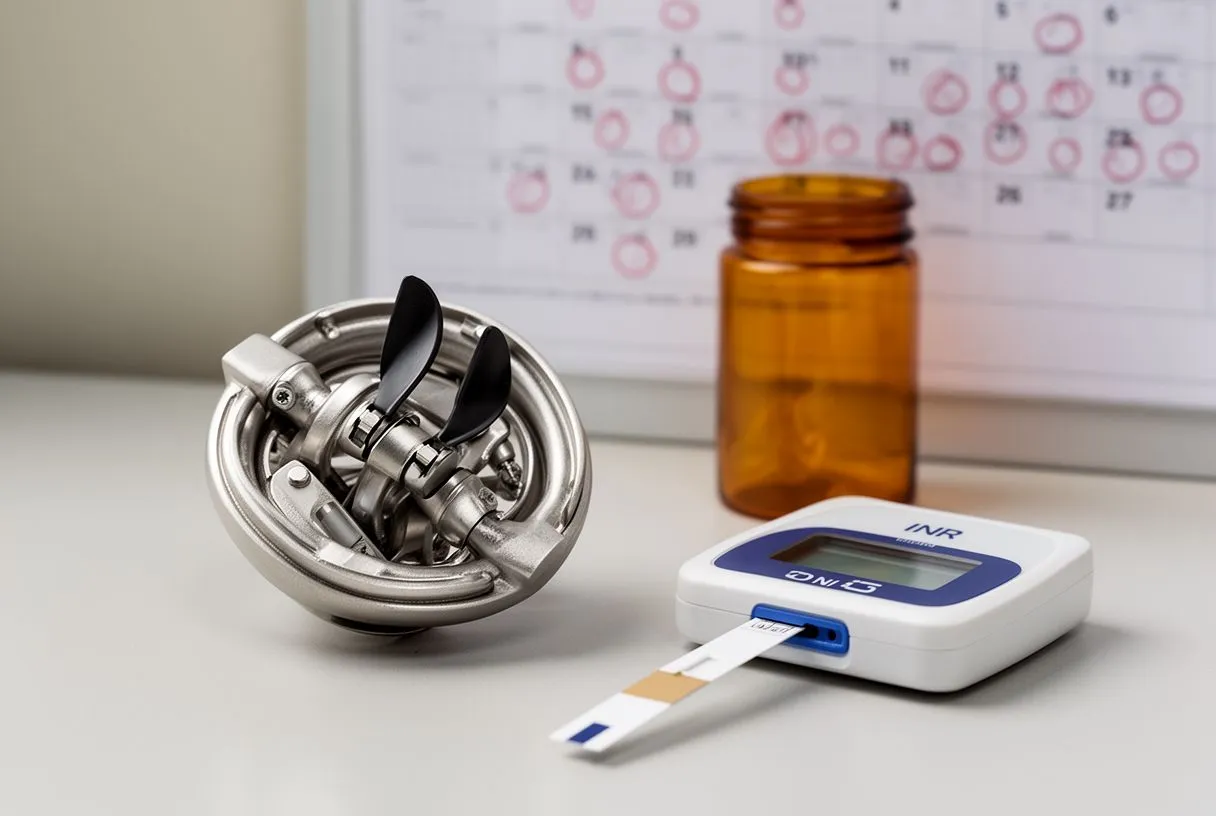
So how often to test INR on warfarin? The pattern follows your stability. When starting, checks may be every few days. Once your dose settles, testing typically moves to every two to four weeks, and very stable patients may stretch to every six weeks or longer. The question of when to check INR levels also has a short answer: after any significant change — new medicine, illness, big diet shift, or symptoms of bleeding — contact your clinic, because that is when the level is most likely to move.
Warfarin monitoring guidelines from international bodies reflect exactly this logic: test often while unstable, space out testing once steady, and never let the interval drift without a plan. Your anticoagulation schedule should be written down, with your next test date known before you leave each visit.
Finding ongoing support. Many patients search for an anticoagulation clinic near them for routine INR checks and dose advice between specialist visits. Whether your care runs through a clinic, your cardiologist's office, or home testing with remote review, what matters most is that someone qualified sees every result and that you know exactly who to call. If a question involves your heart — a new valve, a procedure on the horizon, or a result you do not understand — our cardiac team in Guadalajara, Querétaro or Hermosillo is glad to review your situation with you and help you decide the next step. Bring your questions; we will take the time to answer every one.