When to See a Structural Cardiologist for Valve Disease
A structural cardiologist referral can catch valve disease early.
Valve problems rarely announce themselves with dramatic symptoms. More often, a heart murmur heard on a routine examination, a creeping tiredness, or a moment of breathlessness on the stairs is what starts the conversation. If you or a family member has been told something is "wrong with a valve," you may have been handed the words "structural cardiologist" without much explanation. This guide explains what these specialists do, when a structural cardiologist referral genuinely makes sense, and what to expect once you book the appointment — so you can move from worry to a clear plan.
What Is a Structural Cardiologist and What Do They Do?
A structural cardiologist is a heart specialist trained to treat problems in the physical structure of the heart — the valves, the walls between chambers, and the openings known as the valve annulus, which is the ring of tissue that anchors each valve. Unlike a general Clinical Cardiologist, who manages conditions mainly with medication and lifestyle guidance, a structural cardiologist works with catheters, clips, and new valves that can be delivered through a puncture in the groin rather than through open-chest surgery.
The work falls into three broad areas. First, diagnosing: reading echocardiograms (ultrasound scans of the heart) and other imaging to measure exactly how badly a valve is leaking or narrowed. Second, planning treatment: deciding whether a valve should be watched, repaired, or replaced, and whether the least invasive route will work for that specific patient. Third, performing the procedure itself — most famously TAVR, or transcatheter aortic valve replacement, in which a replacement aortic valve is guided to the heart through a blood vessel. In a multidisciplinary heart team, the structural cardiologist sits alongside the cardiac surgeon, and together they decide which approach fits.
Because these procedures are still relatively new compared with traditional surgery, training matters enormously. A serious structural cardiologist will have trained at centres that perform high volumes of these procedures, not just observed them. When you ask for a structural cardiologist referral, it is fair — and wise — to ask directly where the doctor trained and how many of the procedures they have personally performed.
What Is Structural Heart Disease?
Structural heart disease is the umbrella term for physical defects in the heart's architecture: valves that leak or stiffen, holes in the walls separating chambers, and inherited abnormalities of the heart muscle itself. Some of these conditions are present from birth; most develop over decades of life as tissue wears down. Cardiovascular disease as a whole remains the leading cause of death worldwide, accounting for roughly a third of all deaths according to the Global Burden of Disease study — and valve disease is a growing slice of that picture as populations age.
Valve disease explained simply. Your heart has four one-way valves — the aortic, mitral, tricuspid, and pulmonic valves — that keep blood moving in a single direction. When a valve narrows (stenosis), the heart must push harder to force blood through a smaller opening. When a valve leaks (regurgitation), blood flows backwards, and the heart slowly stretches and weakens doing wasted work. Either problem, left unmanaged, leads to heart failure, rhythm disturbances, or worse.
What makes structural heart disease tricky is that the heart compensates. For years it can hide a leaking valve by enlarging a chamber, which is precisely why symptoms often appear late. That is also why specialists track valve disease with regular imaging rather than waiting for symptoms — catching the moment when the heart begins to strain, before damage becomes permanent. Knowing your heart: the aortic valve sits at the exit of the main pumping chamber; the mitral valve sits between the two chambers on the left side of the heart, and each behaves — and fails — differently.
What Is the Most Common Type of Structural Heart Defect?
In adults, the most common structural heart defect is calcific aortic stenosis — narrowing of the aortic valve caused by calcium deposits that build up over a lifetime. It affects a substantial share of people over seventy, and because populations are ageing, its numbers keep climbing. Many people carry it silently for years while the valve gradually stiffens.
Other frequently seen problems in adult practice include:
- Mitral valve regurgitation: the mitral valve fails to close completely, so blood leaks backward with every heartbeat — one of the most common reasons for a heart valve specialist referral.
- Tricuspid valve problems: leakage on the right side of the heart, often dismissed for years as "fluid retention" before the true cause is identified; a tricuspid valve doctor referral is becoming more common as awareness grows.
- Congenital defects found in adulthood: small holes between the upper chambers (atrial septal defects) or abnormally shaped valves discovered by chance on a scan done for another reason.
One caution worth knowing: not all valve problems are simply wear and tear. Some arise from infections or from conditions such as Carcinoid Heart Disease, in which hormones from certain tumours scar the valves on the right side of the heart. Mixed rheumatic tricuspid valve disease — valve damage caused by childhood rheumatic fever — still requires careful preoperative evaluation to distinguish which parts of the valve can be repaired and which must be replaced, as described in surgical reviews of mixed rheumatic tricuspid valve disease. The cause of a valve problem changes the treatment plan, so diagnosis is never a formality.
What Are the Warning Signs of Heart Valve Disease?
The early signs are easy to blame on age, stress, or being out of shape. The most typical pattern is breathlessness on activity that used to be easy — stairs, hills, carrying shopping. Fatigue follows, then sometimes dizziness or near-fainting, particularly with aortic stenosis. Chest pressure during exertion is another signal that the heart is working against a narrowed valve. A new heart murmur — the whooshing sound a doctor hears through a stethoscope — is often the first clue of all.
Swelling and rhythm changes. Leaking valves, especially on the right side, can cause swelling of the ankles and abdomen, because blood backs up in the circulation. Palpitations or a fluttering sensation can mean the stretched upper chambers have started beating irregularly, a condition called atrial fibrillation, which itself raises stroke risk. These signs deserve attention sooner rather than later, not because they are emergencies, but because they shift the conversation from watching to treating.
When symptoms are urgent. Fainting during exertion, breathlessness at rest, or chest pain that comes on with minimal activity in someone known to have aortic stenosis should be assessed urgently — these are the heart's way of saying the valve can no longer cope. In our consultations in Guadalajara, Querétaro and Hermosillo, we often meet patients who tolerated symptoms for a year or more before anyone connected them to a valve, and a short conversation and one echocardiogram usually settles the question. If you already know you have valve disease and your symptoms are worsening, that is precisely when a structural cardiologist referral becomes worth pursuing.
When Should You Ask for a Structural Cardiologist Referral?
A structural cardiologist referral makes sense at a few clear crossroads. The first is diagnosis: a murmur, an abnormal echocardiogram, or symptoms your current doctor suspects come from a valve. The second is decision-making: your general cardiologist has told you a valve needs treatment, and you want to know whether repair, replacement, surgery, or a catheter-based option fits you. The third is complexity: previous heart surgery, a valve that has failed years after being replaced (a situation called structural valve deterioration or Valve Degeneration), or multiple problems at once — for example a tight aortic valve plus a leaking tricuspid one.
Situations where the referral adds real value:
- Severe valve disease confirmed on imaging: when measurements show severe stenosis or regurgitation, even without symptoms, a specialist assessment clarifies the timing.
- Choosing between surgery and catheter treatment: the choice between surgical valve repair or replacement and a transcatheter valve depends on your age, anatomy, and overall health — a decision that should never be made by one doctor alone.
- A previously treated valve that is failing: a degenerated bioprosthetic Stented Valve can often be treated with a Valve-in-valve procedure, placing a new valve inside the old one through a catheter, without repeat open surgery.
In our practice, every case is reviewed by the multidisciplinary team against international practice guidelines before any recommendation is made, and the patient receives a clear proposal together with the alternatives — the final decision is always theirs. That team model is the point of a referral: you are not seeking a second opinion on a stranger, you are seeking a group that sees enough of these cases to know which path carries the lowest risk for your situation.
What Are the Three Types of Cardiology?
Patients are often surprised to learn that "cardiologist" covers several distinct specialities. Broadly, cardiology divides into three areas: general (or clinical) cardiology, interventional cardiology, and — overlapping with cardiac surgery — structural and advanced heart disease care. A Clinical Cardiologist diagnoses and manages heart conditions medically: blood pressure, rhythm problems, heart failure. An interventional cardiologist opens blocked coronary arteries with stents through catheters. A structural cardiologist applies similar catheter techniques to the heart's architecture instead of its arteries — valves, holes, and closures.
Interventional cardiologist vs structural cardiologist: the practical difference is the target. If your problem is a blocked artery causing angina or a heart attack, you want an interventional cardiologist. If your problem is a valve or a hole in the heart, a structural cardiologist — working with the cardiac surgeon — is the right specialist. The two roles share tools and catheter skills, which is why many structural programmes grew out of interventional cardiology, but the diseases and the decisions differ.
There is also a spectrum within structural practice itself. Some structural cardiologists focus almost entirely on aortic valve work such as Transcatheter Aortic Valve Implantation (usually called TAVR in North America and in our own practice); others take on the mitral valve, including newer catheter-based Transcatheter Mitral Valve Replacement; a few work on the tricuspid and pulmonic valves, where techniques are newest. Our own team spans that spectrum — we perform conventional, minimally invasive, robotic and transcatheter procedures, and we recommend the less invasive route only where the evidence supports it for that specific patient. That breadth is what lets a team offer you the option that genuinely fits, rather than the one it happens to perform.
What Happens at a Structural Heart Consultation?
Most patients arrive expecting an examination and leave surprised at how much of the visit is conversation. A first consultation typically includes a careful history — what you can and cannot do physically, how symptoms have changed — followed by a physical examination focused on the murmur itself. Then comes imaging. The echocardiogram is the workhorse: it shows the valves moving in real time, measures pressure differences across a narrowed valve, and quantifies how much blood leaks backward. Depending on the valve, you may also need a transoesophageal echo (a probe swallowed under light sedation for sharper pictures), a CT scan to map the access route for a catheter procedure, or an exercise test.
What the specialist is actually deciding. Behind the tests, the structural cardiologist is answering three questions: how severe is the problem, has the heart begun to suffer from it, and does your anatomy favour repair, replacement, or a catheter-based approach? For example, a leaking mitral valve in a patient with good anatomy is often repairable surgically with excellent long-term results — while a heavily calcified aortic valve in an elderly patient may be better served by TAVR. The anatomy decides as much as the disease does.
We start with a free video consultation, where we get to know the patient, talk through the condition, and say which studies are still needed so no unnecessary ones are ordered; a face-to-face visit at the consulting rooms follows when the patient decides to go ahead. In the consultation itself, we take the time to explain what the studies actually show, in plain words, and to answer every question before any decision is made. Bring your previous reports, images, and a list of medications to that first meeting — they save weeks of duplication.

What Are the Treatment Options for Valve Disease?
Not every valve problem needs an intervention. Mild disease is usually followed with periodic echocardiograms and medication to manage symptoms and protect the heart. The point where treatment is recommended is defined by guidelines that weigh valve severity, heart function, and symptoms — not by a doctor's preference or convenience. When intervention is needed, the options form a spectrum from least to most invasive.
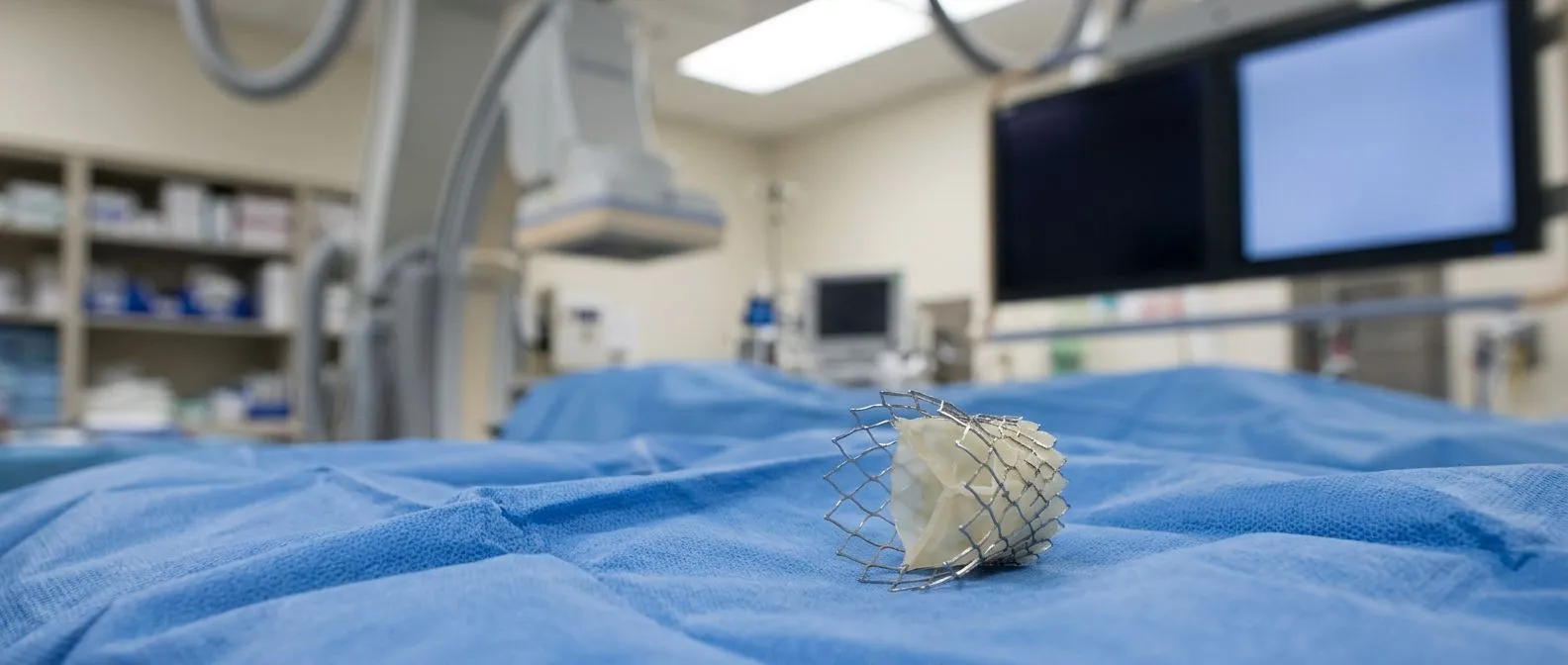
Catheter-based options. TAVR replaces the aortic valve through a tube inserted, most often, in the groin artery — no chest incision, typically a shorter hospital stay. The mitral valve can be treated with a clip that pins the leaking edges together, or in selected patients with a catheter-delivered replacement valve. Devices such as the Lotus Valve represent a generation of self-expanding replacement valves designed to be repositionable during implantation. A failing surgical valve can often be treated with a Valve-in-valve technique, avoiding a second open operation. Tricuspid Valve Repair through catheters is a newer frontier for right-sided leakage.
Surgical options. Open repair or replacement remains the gold standard for many valves — particularly the mitral valve in younger patients, where a skilled repair can last decades. Within surgery there are further choices: a Stented Valve (a replacement mounted on a supporting frame), a Stentless Valve (tissue valve without a frame, which may behave more like a native valve), an Intra-annular Valve (seated within the natural ring) versus a Supra-annular Valve (positioned above it), and a Sutureless Valve designed for rapid implantation. The choice among these affects future reoperation options, which is why it should be discussed, not defaulted. Because our team performs the full range — conventional, minimally invasive, robotic, and transcatheter — the recommendation comes from what the evidence supports for your anatomy, not from a single technique we happen to favour.
Are Structural Heart Procedures Safe?
Any heart procedure carries risk, and honesty about that is part of good care. The reassuring news is that risk is measurable. Surgical teams calculate scores such as EuroSCORE II, which estimates operative risk from your age, kidney function, lung function, and previous surgery. That number is not a prediction of your fate — it is a tool for choosing between an open operation and a catheter-based one, and for tailoring monitoring in the hospital.
How risks are managed. Catheter procedures avoid opening the chest and generally mean less pain and a shorter recovery, but they have their own considerations: the possibility of needing a pacemaker after TAVR, vascular complications at the access site, or incomplete sealing of the new valve. Surgical repair carries the risks of anaesthesia and the incision but offers durable, sometimes lifelong results. The genuinely important safety factor is volume and teamwork: outcomes are consistently better where experienced surgeons, structural cardiologists, anaesthetists, and imaging specialists work as one team. Our multidisciplinary team reviews every case together before recommending anything, which is our main safeguard against choosing the wrong procedure for the wrong patient.
What recovery realistically looks like. After a catheter procedure such as TAVR, many patients go home within days and feel meaningfully better within weeks. After open valve surgery, expect four to eight weeks before returning to normal activity, with cardiac rehabilitation to rebuild strength. Neither path is "painless," and no honest team claims it is — but both paths, done for the right reasons, return patients to lives their failing valve had taken from them.
How Do You Prepare for a Structural Cardiologist Referral?
Preparation turns a good consultation into a decisive one. Before the appointment, gather what you have: previous echocardiogram reports and images (the actual images, not just the summary), any cardiac catheterisation reports, your medication list, and recent blood tests. Write down your symptoms with dates — not "tired for a long time," but "since March, I stop halfway up the hill I used to climb without stopping." Specific timelines matter enormously in valve disease, because progression speed drives the recommendation.
Questions worth asking any specialist:
- What exactly is wrong with my valve — and how severe is it, in measurements you can show me on the scan?
- What are my real options — watching, repairing, replacing, catheter treatment — and what are the trade-offs of each for someone my age and health?
- Has a full heart team reviewed my case, and what does the team recommend rather than one doctor?
Finally, treat a second opinion as normal. Good specialists expect it and rarely take offence; the ones who discourage it are telling you something. A valve disease second opinion is one of the highest-value things you can obtain in cardiac medicine, because the differences between reasonable treatment paths are real and permanent. We actively encourage second opinions and treat seeking one as a normal part of deciding about heart surgery — if you come to us with reports from another team, we will read them and tell you plainly where we agree and where we would do things differently. If you have been told you need a structural cardiologist referral, or you suspect a valve problem has gone undiagnosed, the practical next step is a conversation with a qualified team. Book a consultation rather than self-diagnosing; the heart is too important for guesswork, and the earlier a valve problem is understood, the more options remain open to you.