Atrial Septal Defect in Adults: Symptoms and Closure
Atrial septal defect adults often face fatigue, shortness of breath, and stroke risk.
Many people reach middle age carrying a heart condition they never knew they had. An atrial septal defect in adults is a hole in the wall — the septum — that separates the two upper chambers of the heart. Some adults discover it only when a doctor hears a murmur or a scan is done for another reason. Others have lived for years with tiredness or breathlessness they chalked up to aging. This guide walks through the symptoms, the risks of leaving it untreated, and the closure options available today.
What Is an Atrial Septal Defect in Adults?
An atrial septal defect — often shortened to ASD — is a hole between the right atrium and the left atrium, the two upper chambers of the heart. In a healthy heart, that wall is complete, so oxygen-rich blood stays on the left side and oxygen-poor blood on the right. When a hole is present, some oxygenated blood flows back from the left atrium into the right, a movement doctors call a left-to-right shunt.
Why does it matter in adulthood? Because that extra blood recirculates through the lungs over and over. The right side of the heart works harder than it should, year after year, and the lungs receive more flow than they were designed for. Many adults feel nothing for decades, which is why an ASD heart defect in adults is often found late — sometimes in a person's forties, fifties, or beyond.
The defect is congenital, meaning it formed before birth. It is one of the most common congenital heart lesions diagnosed in adulthood, and its natural history has been studied for generations, as a detailed review of atrial septal defect — its past, present, and future — makes clear (Cerrahpaşa Medical Journal). Understanding what the hole is doing to your circulation is the first step toward deciding what, if anything, to do about it.
Atrial Septal Defect Symptoms Adults Often Notice
Atrial septal defect symptoms in adults tend to arrive slowly. The most common are fatigue that no amount of rest seems to fix, shortness of breath during activity that used to be easy, and a growing sense that your stamina is fading. Because these changes come on over years, many people attribute them to being out of shape or simply getting older.
Palpitations and irregular rhythm. As the right atrium stretches from years of extra blood flow, rhythm problems can appear — most often atrial fibrillation or atrial flutter, where the upper chambers beat quickly and chaotically. Adults with a long-standing ASD notice fluttering sensations, a racing pulse, or sudden episodes of breathlessness. This is one of the clearest signs that the defect has been present a long time.
Less obvious clues. Some adults present in unexpected ways. A published case report describes a young child whose atrial septal defect surfaced as chronic cough and repeated chest infections (Paediatrics and International Child Health); in adults, the equivalent can be recurrent bronchitis or lung congestion that keeps returning. Frequent respiratory infections, swelling in the legs, and in rare late cases signs of elevated lung pressure all warrant a proper cardiac workup. In our consulting rooms in Guadalajara, Querétaro and Hermosillo, we take the time to explain what the echocardiogram actually shows, in plain words, before any decision is discussed. We see many adults who dismissed their symptoms for years, and part of our job is connecting those dots carefully.

Patent Foramen Ovale vs Atrial Septal Defect
People often mix up a patent foramen ovale (PFO) with a true atrial septal defect, and the distinction matters. Everyone is born with a small flap-like opening between the atria — the foramen ovale — which is needed in the womb and normally seals itself shortly after birth. When it stays patent, or open, that is a PFO. A PFO is usually a tiny, valve-like slit with no missing tissue.
Why the difference changes management. An atrial septal defect is a genuine deficiency in the wall's tissue, not just an unfused flap. It is typically larger, allows a much greater shunt of blood, and puts real volume load on the right heart. A PFO usually does not. Both can matter — a PFO has been associated with certain kinds of stroke in young people — but the reasons to close them, and the urgency, are different.
How doctors tell them apart. An echocardiogram with bubble study, where saltwater with tiny bubbles is injected while the heart is filmed, usually settles the question. The size, the edges of the hole, and whether there is actual missing tissue are what the cardiologist looks at. Knowing which condition you have determines whether closure is even on the table.
Secundum Atrial Septal Defect Treatment and Other Types
Not all ASDs are the same, and the type determines the treatment. The four main types are named for where in the wall the hole sits: secundum, primum, sinus venosus, and coronary sinus defects. Each has its own anatomy, its own associations, and its own preferred repair technique.
- Secundum defect: the most common type by far, located in the middle of the septum where the tissue is naturally thinner. It is the type most often suitable for closure with a plug-like device delivered through a catheter.
- Primum defect: sits low in the septum, near the valves, and is usually associated with a valve abnormality. It almost always requires surgical repair.
- Sinus venosus defect: sits high, near where the veins return from the lungs, and is often linked to abnormal pulmonary vein drainage. Surgery is the rule here too.
- Coronary sinus defect: rare, involving the channel through which the heart's own veins drain. Surgical closure is standard.
Why secundum defects dominate the conversation. Because they sit in the center of the wall with tissue around them, secundum ASDs are the type where transcatheter device closure works beautifully in most cases. When we talk about secundum atrial septal defect treatment, the practical question is usually whether the hole has a firm rim of tissue all around — if it does, a device can clamp onto those rims and seal the hole without open surgery. If the rims are deficient, or the hole is simply too large, surgical closure with a patch becomes the safer route. Our multidisciplinary team reviews every case against international practice guidelines before recommending either option, and the final decision always rests with the patient.
What Is an Atrial Septal Defect Murmur in Adults?
An atrial septal defect murmur in adults is often the first clue that something is there. Despite the name, the murmur is not caused by blood rushing through the hole itself — the pressure difference across the atria is too small for that. Instead, the murmur reflects the extra blood flowing across the tricuspid valve into the right ventricle and out through the pulmonary valve.
What it sounds like. Doctors describe it classically as a soft, systolic murmur heard at the upper left sternal border, sometimes accompanied by a fixed splitting of the second heart sound — a detail careful listeners pick up. It is typically described as "flow" rather than harsh or noisy. That subtlety is exactly why ASDs slip through routine examinations for years.
From murmur to diagnosis. When a murmur is heard, the next step is an echocardiogram, an ultrasound of the heart that shows the hole, its size, the direction of blood flow, and how much the right side of the heart has enlarged. This is painless and takes about half an hour. A murmur alone is not a diagnosis, but it is frequently the doorway to one — so if a doctor has mentioned one at a routine visit, it is worth following up with imaging rather than waiting.

Atrial Septal Defect Stroke Risk and Atrial Septal Defect Untreated Life Expectancy
Two questions worry adults with an ASD more than any others: what happens to my stroke risk, and what happens if I do nothing? Both deserve honest, unhurried answers.
The stroke mechanism. Atrial septal defect stroke risk comes primarily through two routes. First, the rhythm disturbances that stretched atria develop — atrial fibrillation above all — raise the risk of clots forming in the heart. Second, in some people, small clots from the veins can pass directly across the defect from the right side to the left, bypassing the lungs' filtering effect and traveling to the brain. This is called paradoxical embolism, and it is the reason any ASD can matter even when you feel fine.
Life expectancy without treatment. Atrial septal defect untreated life expectancy has been studied for decades. The honest picture: many adults with a small defect and normal lung pressures live into later life without major trouble. But a significant shunt carried untreated puts progressive strain on the right heart, raises the risk of rhythm problems, and — rarely, after decades — can lead to elevated and sometimes irreversible pressure in the lung arteries, a condition called pulmonary hypertension. Harvard Health notes that untreated congenital heart conditions in adults can carry real long-term consequences, which is why regular specialist follow-up matters even when no closure is planned (Harvard Health Publishing).
What the size of the shunt means. Cardiologists quantify the shunt with a ratio — how much blood the lungs receive relative to the body. Above certain thresholds, closure is generally advised; below them, watchful waiting with periodic imaging may be reasonable. There is no one-size-fits-all answer, which is exactly why individual assessment matters.
When to Repair an Atrial Septal Defect
The question of when to repair an atrial septal defect comes down to a handful of measurements, not to symptoms alone. Many adults with a sizable defect have no symptoms at all, and symptoms alone cannot be the trigger — the damage builds silently.
The general thresholds. Current practice favors closure when the shunt is significant — commonly judged by a ratio of lung-to-body blood flow above about 1.5 to 1 — or when the right ventricle shows clear enlargement from the extra workload. Closure is also advised once a paradoxical embolism has occurred. On the other hand, if the pressure in the lung arteries has already risen severely and the shunt has reversed, closure may do more harm than good, and closure is generally not offered in that situation.
The gray zone deserves a real conversation. Between the clear-cut cases sit adults whose findings are borderline: borderline size, borderline right-heart enlargement, borderline lung pressures. Here, guidelines advise individual judgment. In our practice, every case is reviewed by the multidisciplinary team against international practice guidelines before a recommendation is given, and the patient receives a clear proposal with the alternatives laid out alongside it. We also encourage second opinions and treat seeking one as a normal part of deciding about heart surgery — not as an insult.
Atrial Septal Defect Closure: Device or Surgery?
When closure is indicated, there are two broad paths, and understanding both helps you take part in the decision. What is often called heart hole surgery is, for many secundum defects, no longer surgery in the traditional sense at all — it is a catheter procedure.
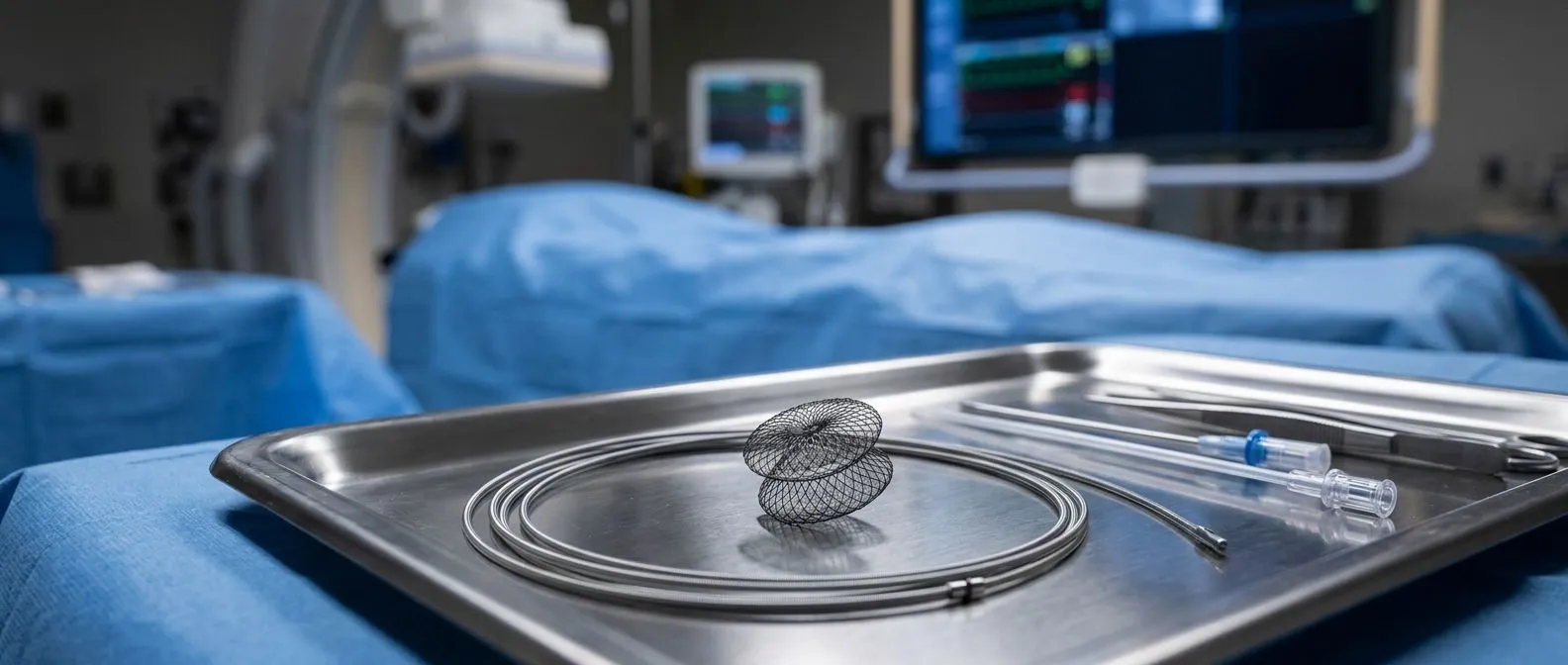
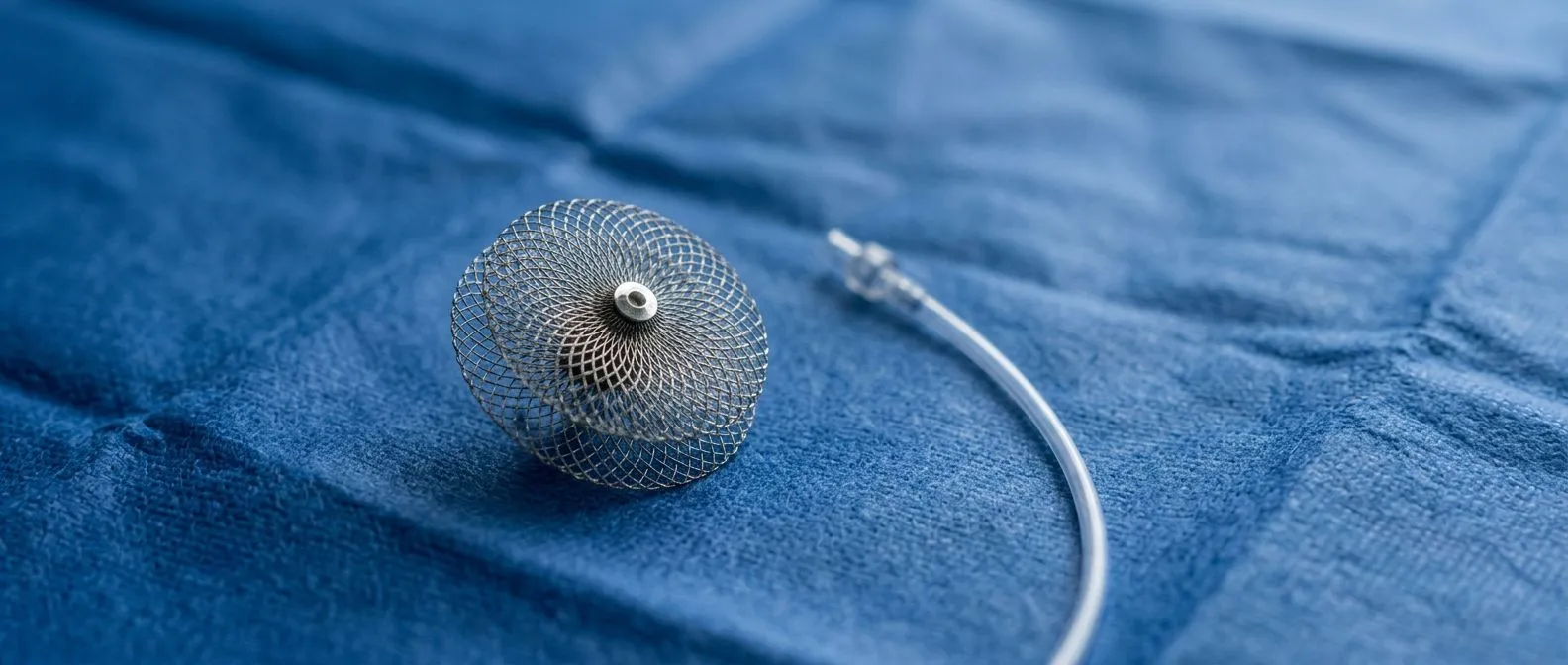
Device closure — how it is performed. In atrial septal defect device closure, a cardiologist threads a thin catheter through a vein in the groin up to the heart. A folded, double-umbrella-shaped device — most commonly an Amplatzer-type occluder — is passed through it and deployed so that one disc sits in each atrium, clamping the hole shut. Over weeks, heart tissue grows over the device and it becomes part of the wall. The procedure usually takes one to two hours, involves no chest incision, and the heart is never opened. This is the treatment of choice for most secundum defects with suitable rims.
Surgical closure — when it is the right answer. Large defects, deficient rims, primum or sinus venosus types, and defects needing concurrent valve repair call for surgery. This can be done through a sternotomy — opening the breastbone — or, in selected patients, through a minimally invasive right-chest approach, with the heart-lung machine supporting circulation while a patch sews the hole closed. In experienced hands, both device and surgical closure carry excellent results for appropriate candidates. Our team performs conventional, minimally invasive, robotic and transcatheter procedures, and we recommend the less invasive route only where the evidence genuinely supports it for that specific patient.
For many adults considering treatment — particularly international patients — the practical question of transcatheter ASD closure cost sits alongside the medical one. Costs vary widely by country, hospital, and whether the device is imported, so it is worth addressing directly rather than avoiding the topic.
What drives the cost. The main components are the occluder device itself, the catheterization laboratory time and team, the imaging used during the procedure, and the hospital stay — which for device closure is usually just one to two nights. Surgical closure costs more, reflecting operating room time, anesthesia, and a longer stay. Insurance coverage differs dramatically between systems, so patients should ask their insurer specifically about congenital heart defect closure before travel or scheduling.
Access in Mexico and for medical travelers. Structural heart procedures of this kind are available in major private hospital systems in Guadalajara and other Mexican cities. Our first contact is a free video consultation: we get to know the patient, talk through the condition, and say which studies are still needed so no unnecessary ones are ordered — and a face-to-face visit follows only when the patient decides to go ahead. Ask any center you are considering about device volumes, complication handling, and follow-up arrangements before committing.
Transcatheter ASD Closure Cost and Access
For many adults considering treatment — particularly international patients — the practical question of transcatheter ASD closure cost sits alongside the medical one. Costs vary widely by country, hospital, and whether the device is imported, so it is worth addressing directly rather than avoiding the topic.
What drives the cost. The main components are the occluder device itself, the catheterization laboratory time and team, the imaging used during the procedure, and the hospital stay — which for device closure is usually just one to two nights. Surgical closure costs more, reflecting operating room time, anesthesia, and a longer stay. Insurance coverage differs dramatically between systems, so patients should ask their insurer specifically about congenital heart defect closure before travel or scheduling.
Access in Mexico and for medical travelers. Structural heart procedures of this kind are available in major private hospital systems in Guadalajara and other Mexican cities, and many patients travel from abroad for care that combines experienced teams with more accessible pricing than in the United States or Canada. Our first contact is a free video consultation: we get to know the patient, talk through the condition, and say which studies are still needed so no unnecessary ones are ordered — and a face-to-face visit follows only when the patient decides to go ahead. Ask any center you are considering about device volumes, complication handling, and follow-up arrangements before committing.
Atrial Septal Defect Surgery Recovery and Exercise Restrictions
Atrial septal defect surgery recovery is one of the gentler recoveries in cardiac medicine, especially after device closure — but "gentle" does not mean "instant," and knowing the realistic timeline helps you plan.
After catheter closure. Most people go home within a day or two. The groin site needs a few days of care; heavy lifting is restricted for roughly a week; and antiplatelet medicines — usually aspirin, sometimes with a second agent — are taken for several months while the device endothelializes, meaning tissue grows over it. Atrial septal defect catheter closure recovery also includes scheduled echocardiograms to confirm the device is seated well and the shunt is gone.
After surgical closure. Recovery is longer: typically several weeks before returning to desk work and six to twelve weeks before unrestricted activity, depending on the approach. Sternotomy patients follow sternal precautions — no pushing, pulling or lifting heavy objects — while the breastbone heals. Wound care, gradual walking, and cardiac rehabilitation all help. Before leaving the hospital, ask your team to walk you through each recovery milestone, so you do not go home guessing about what comes next.
Can you exercise if you have a hole in your heart? Before closure, the answer depends on the size of the shunt and your lung pressures — many adults with small defects tolerate ordinary exercise well, while competitive endurance sports deserve specialist clearance. Long-term side effects of ASD closure are uncommon but include device-related issues such as erosion or arrhythmias after device closure, and rhythm disturbances after either approach; these are monitored rather than assumed. As for atrial septal defect exercise restrictions after successful closure, most adults return to full activity without lasting limits — but that clearance should come from your own cardiac team, not from a general article.
An atrial septal defect in adults is common, often silent for decades, and — when it needs treating — closeable through techniques that have matured enormously: a device through a vein for most secundum defects, patch surgery for the rest. The key decisions rest on measurement, not symptoms: shunt size, right-heart enlargement, lung pressures, and defect anatomy. If an echocardiogram has shown a hole in your heart, or a murmur has raised the question, do not leave it to guesswork. Bring your studies to a qualified cardiac team, ask what the images actually show, and discuss your own situation openly. Our multidisciplinary team of cardiac surgeons, led by Dr Alejandro Molina, offers a free video consultation as the first step — and we will tell you plainly whether anything needs doing at all. The final decision about your heart should always be yours, made with clear information in hand.