


Back Pain After Heart Surgery: Causes and Relief
Back pain after heart surgery is common during recovery.
If you or a loved one has recently undergone a cardiac procedure, you may be surprised to find that back pain after heart surgery is one of the most common complaints during the first weeks of healing. Many patients focus on chest discomfort and incision care, only to be caught off guard by persistent aching in the upper or lower back. Understanding why this happens — and what you can safely do about it — can make your recovery far less stressful.
What Causes Back Pain After Heart Surgery?
During open-heart procedures, the surgeon accesses the heart through a sternotomy — a careful incision through the breastbone — or sometimes through a minimally invasive approach between the ribs. To reach the heart, the surgical team must position your body in ways that place sustained stretch on the muscles and ligaments of your back. The an arterial cannula and other cannulation lines used during cardiopulmonary bypass can also require specific body positioning that leaves the thoracic spine and shoulder girdle under tension for hours. When you wake, those muscles have been held in an unnatural posture, and the resulting soreness can feel like a deep, persistent ache across the mid-back or between the shoulder blades.
Positioning and prolonged immobility: You lie flat and motionless on a firm operating table for several hours. The muscles of your back, shoulders, and neck are not designed to remain static that long. Blood pools in dependent areas, soft tissues become ischemic (low on oxygen), and micro-strain accumulates in the fascia surrounding the spine. This is the single most common explanation for post-operative back pain, and it typically resolves with gentle movement over the first one to two weeks.
Internal mammary artery harvest: If your surgeon used an arterial graft — most commonly the left internal mammary artery — to bypass a blocked vessel, that artery runs along the inside of the chest wall, close to the ribcage and intercostal nerves. Harvesting it can irritate the chest wall and referral patterns can send discomfort into the upper back. This type of pain is usually sharp at first, then settles into a dull ache as nerves recover.
How Long Does Back Pain Last After Heart Surgery?
Most patients notice a significant improvement in back pain within the first two to three weeks after surgery, though the timeline varies depending on the type of procedure, your baseline fitness, and whether you had pre-existing spinal or muscular issues. For some, the discomfort fades entirely by the six-week mark; for others, a low-grade soreness lingers for two to three months, especially after physical activity or long periods of sitting. According to Harvard Health, gradual return to normal activity is one of the strongest predictors of a smooth recovery, and staying ahead of pain — rather than waiting until it becomes severe — helps you move sooner and heal faster.
The key distinction is between expected healing soreness and pain that worsens over time. In the first week, it is normal for back pain to fluctuate: you may feel stiff in the morning, better after walking, and sore again by evening. This pattern reflects the natural ebb and flow of inflammation and muscle fatigue. By week three, the intensity and frequency should be decreasing noticeably. If the pain is the same or worse at that point, your surgical team needs to evaluate whether something else — such as a fluid collection, nerve irritation, or a musculoskeletal complication — is contributing.
Patients who underwent minimally invasive approaches, including transcatheter aortic valve replacement (TAVR), generally experience less back pain than those who had a full sternotomy, because the operation does not require the chest to be opened and the body is not held in the same prolonged position. However, even after TAVR, some patients report back stiffness from lying flat on a catheterization table for an extended period. Either way, gentle, progressive mobility is your most effective tool for shortening the recovery window.
Upper Back Pain After Heart Surgery: What It Means
Upper back pain — the region between the base of your neck and the bottom of your ribcage — is particularly common after heart surgery because of how the thoracic spine connects to the rib cage and sternum. When the breastbone is separated and retracted, the entire thoracic cage shifts. The muscles that anchor your shoulder blades to the spine, including the rhomboids and trapezius, must adapt to a new resting tension. The result is a deep, aching sensation that many patients describe as feeling like they are being squeezed from behind, or as though someone is pressing a fist between their shoulder blades.

Intercostal nerve irritation: The nerves that run along each rib (intercostal nerves) can become irritated during surgery, especially when a rib spreader is used or when the internal mammary artery is harvested. This irritation can produce sharp, shooting, or burning sensations that wrap around the side of the chest and into the back. Most intercostal nerve irritation resolves on its own over weeks to months, but if it persists, your team may recommend nerve pain medications that target this specific type of discomfort rather than standard pain relievers.
Another contributor is the way you hold your body after surgery. Many patients instinctively hunch forward to protect their chest incision, and this guarded posture places sustained load on the upper back muscles. Over days and weeks, that compensation pattern becomes a source of pain in its own right. Becoming aware of your posture — sitting tall, rolling your shoulders back gently, and avoiding slumping in bed or in a chair — can reduce upper back strain significantly.
Lower Back Pain After Cardiac Surgery: Common Triggers
Lower back pain after heart surgery often surprises patients because the operation site is in the chest, not the lumbar spine. The connection lies in prolonged immobility, altered movement patterns, and the use of vein grafts harvested from the leg. When the saphenous vein is taken from the inner thigh or calf for coronary bypass, the body compensates by shifting weight and altering gait. That changed walking pattern, combined with extended time in bed, places unaccustomed load on the lumbar muscles and spinal discs.
Bed rest and deconditioning: Even a few days of bed rest causes measurable loss of muscle tone in the core and lower back. The paraspinal muscles that support the lumbar spine weaken quickly when you are not upright. When you begin walking again, those muscles must suddenly stabilize a spine they are no longer conditioned to support, and the result is aching, stiffness, and sometimes muscle spasm in the lower back. The solution is gradual, supervised walking — not pushing through pain, but building tolerance step by step.
Leg graft harvesting and referred pain: When the saphenous vein is removed, the incision sites and the healing tissue can alter how you bear weight on your legs. Patients unconsciously favour one side, and that asymmetry travels up the kinetic chain to the lumbar spine. As the leg incisions heal and you resume a normal gait, this referred lower back pain usually diminishes. If it persists beyond several weeks, a physiotherapy assessment can identify whether a persistent gait abnormality or a pre-existing lumbar issue is being aggravated.
Thoracic Back Pain After Heart Surgery: Nerve and Muscle Factors
The thoracic spine — the twelve vertebrae that connect to your ribcage — sits directly behind the heart and great vessels such as the ascending aorta. Because of this anatomical relationship, any procedure that manipulates the chest wall, sternum, or anterior thoracic structures can generate referred pain into the thoracic back. The pain is not coming from the spine itself; it is the nerves and muscles of the chest wall sending signals that the brain interprets as back pain. This is one reason back discomfort can feel diffuse and hard to pinpoint.
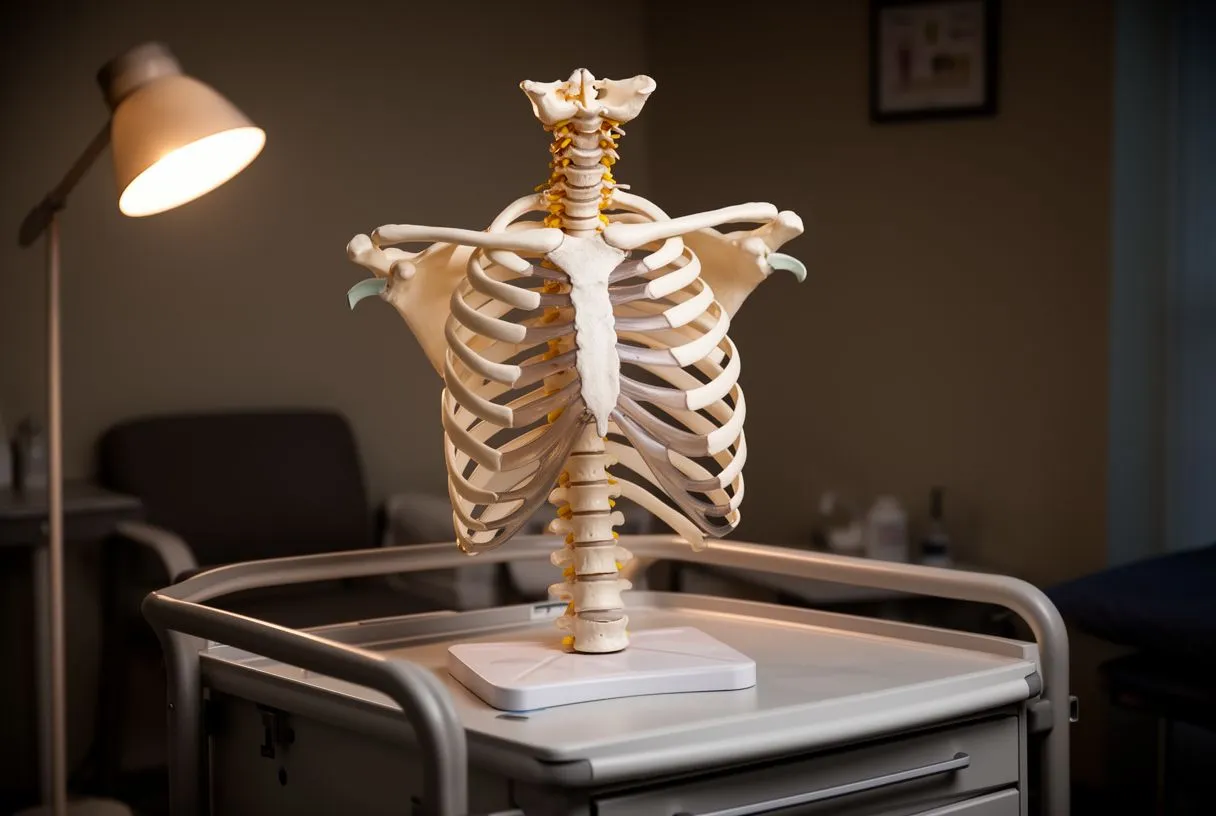
Muscle spasm from splinting: After surgery, it is natural to guard or "splint" the chest by holding the torso rigid. The intercostal muscles (between the ribs) and the paraspinal muscles (alongside the spine) can go into sustained contraction, producing a hard, knotted feeling in the mid-back. These spasms can be more uncomfortable than the incision itself. Warm compresses (not applied directly to the surgical incision), gentle shoulder rolls, and controlled breathing all help interrupt the spasm cycle by signalling the nervous system that the body is safe to relax.
It is also worth noting that some cardiac conditions themselves can present with back pain. An atypical infarction, for example, may produce discomfort between the shoulder blades rather than the classic crushing chest pain. This is why, before surgery, your cardiologist will have carefully distinguished between cardiac and musculoskeletal sources of any back pain you reported. After surgery, the calculus changes: new or worsening thoracic back pain should always be discussed with your team to confirm it is healing-related and not a sign of a cardiac issue.
Back Pain Relief After Heart Surgery: Safe Options
Relieving back pain after heart surgery requires a careful balance: you want enough comfort to move and breathe deeply, but you must avoid interventions that could interfere with healing or interact with your cardiac medications. The safest approach combines gentle movement, positional changes, and medications that your surgical team has approved. Never take over-the-counter pain relievers — even common ones — without confirming they are safe alongside your post-operative regimen, particularly medications like aspirin or blood thinners that are commonly prescribed after cardiac procedures.
Positioning and support: Simple changes in how you sit, rest, and sleep can dramatically reduce back pain. Use a firm mattress or add support to a soft one. When resting in bed, place a pillow under your knees to reduce lumbar strain, and avoid lying flat on your back for extended periods if it increases stiffness. When sitting, choose a chair with firm back support and keep your feet flat on the floor. Avoid soft couches that let your spine slump. Small, frequent position changes — shifting from lying to sitting to standing to walking — keep tissues mobile and prevent stiffness from building up.
- Gentle walking: Start with short, flat distances and increase gradually as your team advises. Walking promotes circulation, reduces muscle spasm, and prevents the deconditioning that worsens back pain.
- Ice or warmth on the back (not the incision): Ice packs wrapped in a towel can reduce acute muscle inflammation in the back; warmth can ease muscle spasm. Never apply either directly to your surgical incision without explicit instruction.
- Supported sleeping posture: Sleep on your back with a pillow under your knees, or on your side with a pillow between your knees. Avoid sleeping on your stomach, which twists the spine.
Managing Pain After Cardiac Surgery: Medication and Movement
Your surgical team will give you a pain management plan that balances comfort with safety. This typically includes a short course of a prescription analgesic for the first one to two weeks, followed by a transition to milder options as healing progresses. The goal is not to eliminate all pain — some discomfort is expected as you increase activity — but to keep pain at a level that allows you to cough, deep-breathe, and walk. If pain is preventing you from doing those three things, tell your team so the plan can be adjusted.
Breathing exercises and pain: After heart surgery, you will be asked to use an incentive spirometer — a simple device that encourages you to take deep breaths — and to practice coughing to clear your lungs. These activities can temporarily increase chest and back discomfort, but they are essential for preventing pneumonia and lung collapse. Many patients hold back from deep breathing because of the pain, which delays recovery. Taking your prescribed pain medication thirty minutes before breathing exercises can make the practice tolerable and effective.
As you progress, structured cardiac rehabilitation becomes the cornerstone of long-term pain management. According to the 2016 ESC Guidelines for the management of atrial fibrillation developed in collaboration with EACTS, structured rehabilitation and physical reconditioning play a critical role in recovery for patients with complex cardiac histories, including those with rhythm concerns such as atrial flutter. Rehabilitation programmes are designed to rebuild core and back strength progressively, under monitoring, so that the muscular sources of post-operative back pain are addressed at their root rather than merely masked with medication.
Chest and Back Pain After Surgery: When to Worry
Most back pain after heart surgery is musculoskeletal and improves with time and movement. However, certain patterns of pain — especially when chest and back pain occur together — warrant immediate medical attention. The challenge for patients and families is distinguishing between expected healing discomfort and a signal that something more serious may be happening. When in doubt, always call your surgical team or go to the nearest emergency department. No one will fault you for being cautious.

Red-flag symptoms to watch for: Seek immediate medical help if your back or chest pain is accompanied by shortness of breath that is worsening, a feeling of pressure or squeezing in the chest that does not go away with rest, sudden dizziness or fainting, a rapid or irregular heartbeat that feels different from what your team has described as normal for you, fever above 38°C (100.4°F), or redness, swelling, or drainage from your incision. These symptoms could indicate a complication — such as a pleural effusion (fluid around the lung), a pericardial effusion (fluid around the heart), or an infection — that requires prompt evaluation.
It is also important to distinguish between incisional pain and deeper pain. Pain that is clearly located along the incision line, that worsens when you press gently on the area, and that improves with rest is typically healing-related. Pain that feels deeper, that is not changed by position, that radiates around to the back in a band-like pattern, or that is associated with breathlessness may need imaging to rule out pleural or cardiac causes. The Management of spontaneous pneumothorax: British Thoracic Society pleural disease guideline 2010 underscores how important it is to evaluate new or atypical chest and back pain in patients who have recently undergone thoracic procedures, as pleural complications can present with exactly this pattern.
Heart Surgery Recovery Timeline: What to Expect Week by Week
Understanding a general recovery timeline helps you gauge whether your back pain is following a normal course. In the first week, expect significant soreness in the chest, shoulders, and upper back. You will be encouraged to walk short distances, use your spirometer, and manage pain with the medications prescribed. Most patients are discharged home within five to seven days for a standard sternotomy, and sometimes sooner for minimally invasive procedures. Back pain during this phase is typically at its most intense, but it should already be improving day by day.
By weeks two to four, the incision is beginning to knit together and your activity level should be increasing. Walking is your primary exercise — aim for several short walks per day rather than one long one. Back pain during this window often shifts from a constant ache to something that flares after activity and settles with rest. This is the period when many patients begin light stretching (as approved by their team) and start to sleep in more varied positions. If your pain is not improving by the end of week three, or if it is limiting your ability to walk and breathe deeply, that is the moment to contact your surgeon for reassessment.
- Weeks 1–2: Focus on pain control, gentle walking, and breathing exercises. Back pain is common but should be gradually lessening.
- Weeks 3–6: Increase walking distance and duration. Most back pain continues to improve; residual soreness is typically activity-related.
- Weeks 6–12: Many patients begin supervised cardiac rehabilitation. Core and back strengthening work starts to address the muscular causes of lingering discomfort.
Heart Surgery Rehabilitation in Guadalajara: Getting the Right Support
For patients and families in Guadalajara, Querétaro, Hermosillo, and those travelling to Mexico for cardiac care, access to a coordinated rehabilitation programme can make a meaningful difference in how quickly and completely back pain resolves. Post-operative recovery should include not only surgical follow-up but also guidance on physical reconditioning, pain management, and return to daily life. Rather than navigating recovery alone, you benefit from a team that understands the specific demands cardiac surgery places on your body.

Rehabilitation after heart surgery is not generic exercise. It is a monitored, individualised programme that accounts for your surgical approach, your cardiac function, and any comorbidities. The programme typically begins with low-intensity walking and breathing work, progresses to supervised strengthening of the core, back, and shoulder girdle, and eventually incorporates cardiovascular conditioning. Each stage is calibrated to your healing status, and your progress is monitored so that any concerning symptoms — including unusual back pain — are caught early.
If you are recovering from heart surgery and back pain is interfering with your daily activities, your sleep, or your confidence in moving, that is reason enough to reach out. Do not wait for the pain to become severe. A consultation with your cardiac team can determine whether your recovery is on track, whether your pain management plan needs adjustment, and whether supervised rehabilitation is appropriate for your stage of healing. Every patient's recovery is different, and the right guidance for your situation comes from a team that knows your cardiac history, your surgical details, and your goals. Book a consultation to discuss your specific circumstances rather than relying on general advice — your back, your heart, and your recovery deserve personalised attention.






