


Blood Products in Heart Surgery: When They Are Needed
Blood products in heart surgery—learn when transfusions are necessary, what types surgeons use, and how teams minimize risks.
If you or a family member is facing heart surgery, one of the quiet questions that often goes unasked is whether you will need a transfusion. Blood products in heart surgery are used every day, and in most cases they make an operation safer rather than riskier. This guide explains what these products are, when surgeons reach for them, how teams reduce the need for donated blood, and what you should ask before your operation.
What Are Blood Products?
Blood products are the separate parts of human blood that are collected, processed and stored for medical use. Whole blood is rarely given as it comes from a donor; instead, it is separated into components so each patient receives exactly the part they need. This is why one donation can help several people.
Red blood cells carry oxygen. The most widely used product is packed red blood cells, which transport oxygen from your lungs to every organ, including the heart muscle itself. During heart surgery, some blood is lost and the heart-lung machine dilutes what remains, so red cells are the component most often transfused.
Platelets and plasma control bleeding. Platelets are tiny cell fragments that make clots form, and plasma is the liquid part of blood containing clotting proteins. Both matter enormously in cardiac operations, where the heart-lung machine can temporarily dull the blood's ability to clot. A Full Blood Count — a routine blood test — helps the team check your red cells and platelets before surgery.
Understanding these components turns a vague worry into a concrete picture: your surgical team is not pouring in "someone else's blood" wholesale, but replacing specific parts your body is short of.
When Are Blood Products Needed in Heart Surgery?
Not every cardiac operation needs donated blood. Many patients who arrive in good condition, not anaemic and not on strong blood thinners, get through a bypass or valve operation without a single unit. Transfusion becomes likely in a few well-defined situations.
- Significant blood loss: complex or repeat operations, where scar tissue makes dissection harder, tend to lose more blood.
- Pre-existing anaemia: a low red cell count before surgery lowers the margin of safety, so the team may correct it beforehand or transfuse during the operation.
- Blood thinners before surgery: patients on anticoagulants, or with clotting problems, may need plasma or platelets to restore normal clotting after the operation.
In our team's experience, the decision is never automatic. Every case is reviewed by the multidisciplinary team against international practice guidelines, and the patient receives a clear proposal that includes whether transfusion is likely and why. The final decision is always the patient's.
Knowing your own starting point — your haemoglobin level, your medications, the complexity of your operation — lets you have this conversation early rather than on the morning of surgery.
Types of Blood Products in Cardiac Surgery
Cardiac surgical teams keep several components available, each with a distinct job. Knowing the names helps you follow what is happening in the operating room and afterwards.
Packed red blood cells. These are the oxygen carriers. They are given when haemoglobin falls below levels the body can tolerate, typically during or after significant bleeding. Units are matched to your blood group and cross-matched before use.
Platelets. After prolonged use of the heart-lung machine, platelets drop in number and function. A platelet transfusion is given when bleeding continues despite other measures. This is one of the most common questions patients ask: platelets are small cell fragments that plug small holes in blood vessels and start the clotting cascade.
Fresh frozen plasma. Plasma is frozen shortly after donation to preserve clotting proteins. It is used when clotting tests show the blood is not coagulating properly, often after long operations or in patients on warfarin.
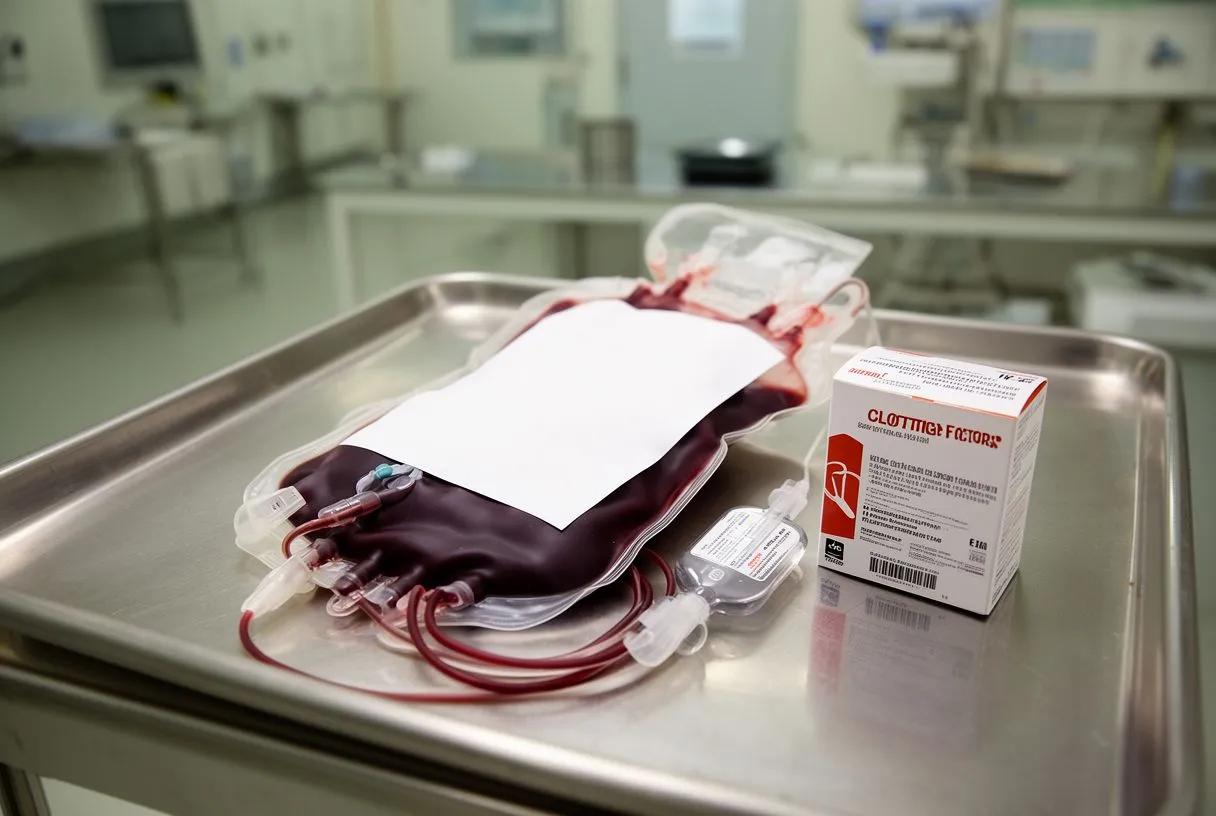
Cryoprecipitate and other products. Cryoprecipitate is a concentrated fraction of plasma rich in fibrinogen, a key clotting protein. It is used in heavier bleeding situations. Some centres also use topical agents, such as fibrin sealants, applied directly to the surgical field.
What Happens During a Blood Transfusion in Surgery?
Patients often imagine transfusion as dramatic — bags of blood being rushed in. The reality is calm, controlled and closely monitored.
Before surgery: testing and matching. Your blood is drawn and typed for ABO group and Rhesus factor, then cross-matched against donor units to make sure they are compatible. This prevents the most serious transfusion reactions. If you have unusual antibodies, the blood bank needs extra time to find suitable units — another reason planning matters.
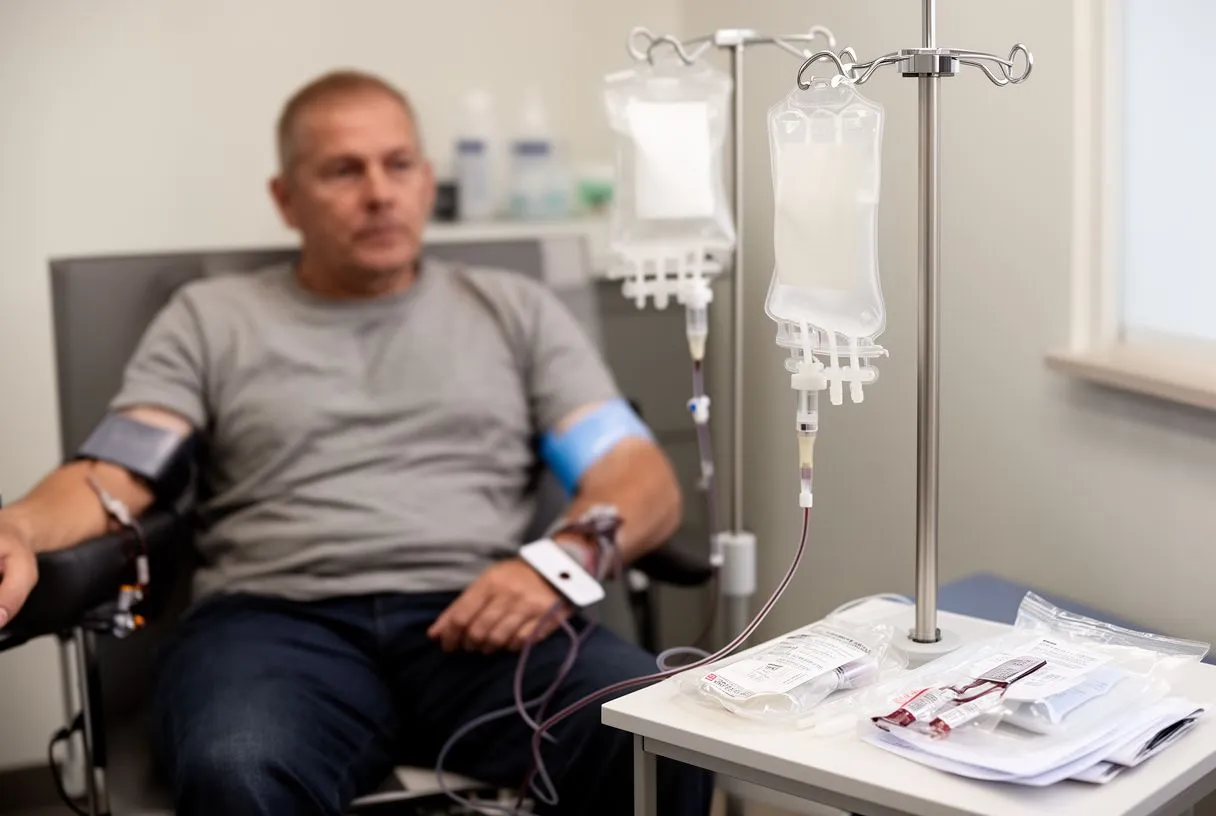
During surgery: steady replacement. The anaesthesia team tracks blood loss, haemoglobin and clotting tests continuously. If a transfusion is needed, the product is given through the same intravenous lines already in place, warmed to body temperature, and infused gradually. Nobody waits until a crisis; the thresholds for giving blood are decided in advance.
After surgery: monitoring in recovery. In the intensive care unit, drains measure any continued bleeding and blood tests confirm that counts are stable. If a drain shows unexpected loss, the team investigates rather than simply transfusing more. In the consultation we take the time to explain what the studies actually show, in plain words, and we answer every question before any decision — and that same plain-language habit continues at the bedside.
Cell Saver and Blood Conservation in Heart Surgery
One of the biggest advances in modern cardiac surgery is the ability to recycle a patient's own blood. The device behind this is the cell saver, and it has changed how teams think about donated blood.
How the cell saver works. Blood lost during the operation is suctioned into a sterile chamber, washed with saline, and the red blood cells are concentrated and returned to the patient through an intravenous line. The result is oxygen-carrying capacity restored without any donor exposure. For many routine bypass operations, a well-run cell saver can substantially reduce — and sometimes eliminate — the need for allogeneic blood transfusion, meaning blood from other donors.
Other blood conservation techniques. Conservation is a bundle of measures, not a single device:
- Minimising the heart-lung machine circuit: smaller tubing means less blood diluted and less priming fluid.
- Careful surgical haemostasis: meticulous sealing of every bleeding point before closing the chest.
- Medications such as tranexamic acid: a drug that reduces clot breakdown and lowers bleeding risk.
- Restrictive transfusion thresholds: giving blood only when lab values genuinely demand it, not by habit.
Blood conservation is now standard practice in good cardiac centres, and it protects patients in another way too: less donor blood means fewer transfusion reactions and less strain on the blood supply.
Autologous Blood Donation Before Heart Surgery
Autologous blood is your own blood, set aside before the operation and given back to you during or after it. For selected patients this is an elegant way to avoid donor blood entirely.
How it is done in cardiac surgery. Rather than donating weeks in advance — which can lower your haemoglobin before a major operation — many teams now collect a unit of whole blood in the operating room just before surgery begins, after the anaesthetic. The plasma and platelets are preserved, and your own red cells are returned near the end of the operation. Because the blood never leaves the surgical team's hands, it is the safest possible match.
Who benefits most. Autologous approaches suit patients with higher starting haemoglobin, a reasonable margin of safety, and operations where transfusion is likely but not certain. It is less suitable for patients who are already anaemic or who need urgent surgery.
The honest trade-offs. Pre-operative donation done too early can leave you weaker going into surgery, which partly defeats the purpose. Modern practice therefore favours acute collection in theatre combined with cell salvage, rather than weeks of advance donation. Dr Molina trained in cardiothoracic surgery at the Universidad de Guadalajara and in cardiac, minimally invasive and robotic surgery at the University of Montreal, and our team reviews each patient's blood management plan individually rather than applying one formula to everyone.
Are Blood Product Transfusions Safe in Cardiac Surgery?
This is the question families whisper about, and it deserves a straight answer. Donated blood today is screened rigorously, and the risk of catching an infection from a transfusion is extremely low. But research has shown that transfusions are not entirely without consequences, which is why good teams work hard to avoid unnecessary units.
Studies published in major journals — including work indexed on Springer — have associated liberal transfusion practices in cardiac surgery with longer hospital stays and higher rates of complications such as lung problems and infections, compared with restrictive, guideline-driven thresholds. This does not mean transfusions are dangerous; it means the right amount, at the right moment, matters.
Reactions and screening. Donated blood is tested for HIV, hepatitis B and C, syphilis and other infections. Mild febrile reactions can still occur, and rare immune reactions are possible, which is why every unit is checked at the bedside against your identity band.
The patient's role in safety. Telling your team about previous transfusions, reactions, or a family history of clotting or bleeding disorders helps them plan. In our practice, every transfusion decision is reviewed against international guidelines before a recommendation is given, and we encourage patients to seek a second opinion — treating it as a normal part of deciding about heart surgery, not an insult.
Bloodless Heart Surgery: What Are the Options?
Some patients cannot or will not accept donor blood — most prominently Jehovah's Witnesses, whose religious beliefs reject blood transfusion, but also patients with rare antibodies or those who simply prefer to avoid donor products. Modern cardiac surgery can often accommodate them.
What makes bloodless surgery possible. The combination of cell salvage (which many Jehovah's Witness patients accept, as the blood stays continuously connected to their body), meticulous surgical technique, medications that reduce bleeding, and acceptance of lower haemoglobin targets during recovery. Bloodless open-heart surgery is performed regularly in experienced centres, including complex valve and coronary procedures.
Planning is everything. A bloodless operation cannot be improvised. The anaesthesia team, surgeon, perfusionist (the specialist who runs the heart-lung machine) and blood bank must all agree on a plan before the day of surgery. Strategies to minimize blood transfusion — cell saver use, acute normovolaemic dilution, careful patient positioning to reduce venous bleeding — are mapped out in advance.
Our team performs conventional, minimally invasive, robotic and transcatheter procedures, and we recommend the less invasive route only where the evidence supports it for that patient — because smaller incisions and less bleeding are themselves part of blood conservation. If you have constraints around blood, say so at the very first conversation; it shapes the whole plan.
Blood Products in Pediatric Heart Surgery
When the patient is a child, blood management becomes even more delicate. A small infant has a very small total blood volume — sometimes less than the amount held in the heart-lung machine's tubing — so paediatric teams plan transfusion differently from adult teams.
Why children need special handling. In paediatric heart surgery, even small losses represent a large fraction of the child's blood. Teams use smaller circuits, pre-donated units matched precisely to the child's weight, and sometimes donor blood is unavoidable and completely appropriate. Parents should know that needing donor blood in a baby's operation is not a failure — it is often the safest choice.
Fresh and small-volume components. Children often receive paediatric-sized units, sometimes fresher than adult units, to preserve red cell function. Blood banks split single adult donations into several small packs so one donor serves one child, reducing exposure.
For families travelling for a child's operation, the practical questions are the same: which studies are needed, what the plan for blood is, and who will explain it clearly. A good paediatric cardiac team will answer all three without being pressed.
How to Prepare and Questions to Ask Your Team
Good blood management starts weeks before surgery, not in the operating room. Patients can do a great deal to reduce the chance of needing donor blood.
Before surgery: build your reserves. If you are anaemic, ask whether iron — oral or intravenous — should be started early, since preoperative blood management can meaningfully reduce transfusion needs. Review your medications with your cardiologist: some blood thinners can be paused safely, others cannot. Stop smoking, which improves oxygen delivery and healing. If you have coronary artery bypass surgery scheduled, controlling conditions such as diabetes also supports better outcomes — research such as the study published in the Annals of Noninvasive Electrocardiology shows how closely blood pressure and metabolic control shape cardiac risk, a reminder that the weeks before surgery are part of the operation.

Questions worth asking in your consultation:
- "How likely is a transfusion in my specific operation?" — and what would make it more or less likely.
- "Do you use a cell saver?" — and whether acute autologous collection is an option for me.
- "What are your transfusion thresholds?" — a team that can answer precisely follows guidelines, not habit.
- "How do you handle bloodless surgery if I refuse donor blood?" — ask early if this applies to you.
Our first step with every patient. The first contact is a free video consultation: we get to know the patient, talk through the condition, and identify which studies are still needed so no unnecessary ones are ordered. A face-to-face visit at the consulting rooms follows when the patient decides to go ahead. Dr Molina performed the first robotic mitral valve repair in the Ángeles Health System and the first robotic heart surgery in Guadalajara, and blood-sparing technique is part of what minimally invasive and robotic approaches offer.
Blood products in heart surgery are neither a mystery nor a menace. They are one more tool, used when the evidence says they help and avoided when your own reserves will do. The closing takeaway is simple: understand the components, know your own numbers, ask how your team conserves blood, and remember that the final decision about your care is always yours. If you are weighing up an operation, discuss your situation with a qualified cardiac team and book a consultation rather than trying to self-diagnose — it costs nothing to ask, and it may change the whole shape of your surgery.






