

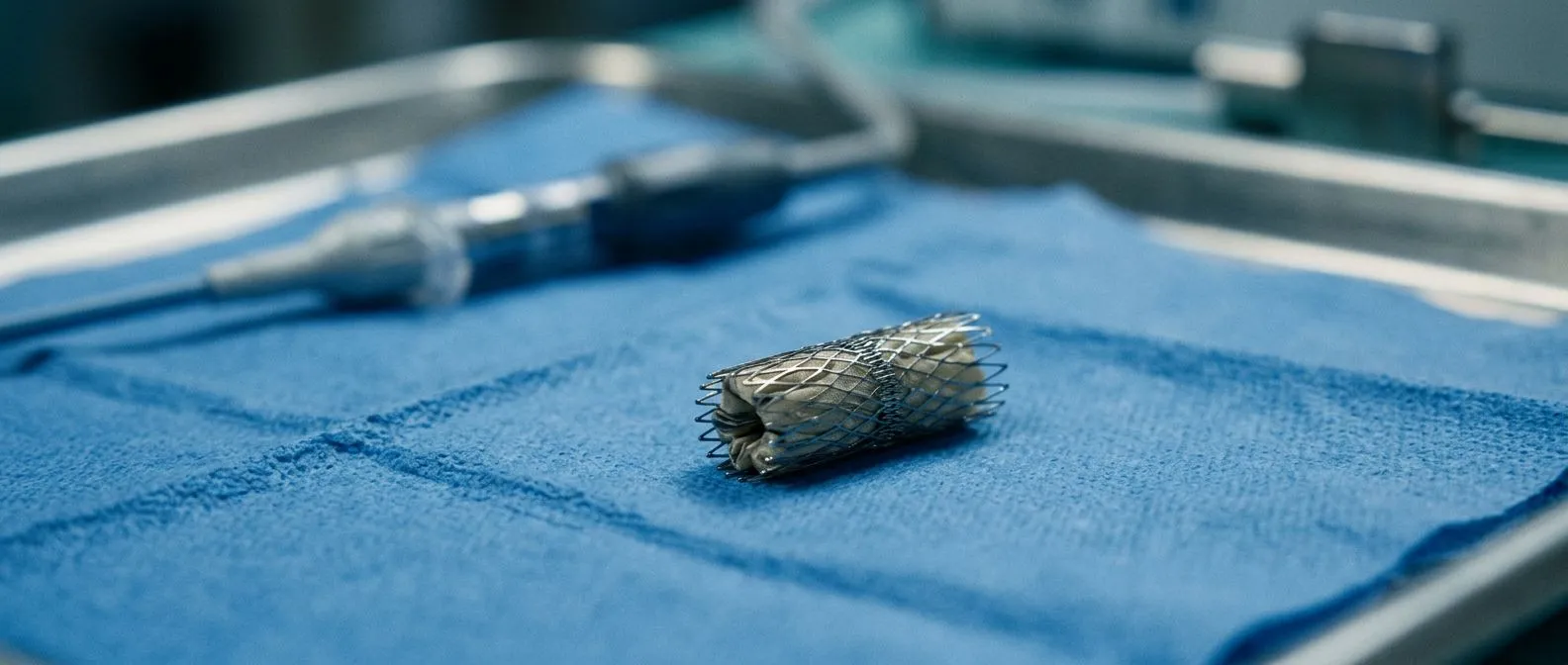
Cobalt-Chromium Frames in Transcatheter Valves
A cobalt-chromium frame valve delivers superior radial strength and long-term durability for transcatheter valve replacement.
If you or a family member has been told you need a transcatheter heart valve, you have probably heard the phrase a cobalt-chromium frame valve and wondered what it means. In simple terms, it is a replacement heart valve mounted on a metal scaffold made from a cobalt-chromium alloy, a material chosen for its exceptional strength. That strength matters because the frame must hold the new valve open and stable inside your artery for years, delivered through a tube no wider than a pencil. This guide explains what these valves are, how they behave inside the body, how they compare with other materials, and what questions to bring to your cardiac team before deciding.
What Is a Cobalt-Chromium Frame Valve?
The valve and the scaffold. A transcatheter valve has two working parts: the biological leaflets that open and close with every heartbeat, and the frame that supports them. In a cobalt-chromium frame valve, that frame is manufactured from a cobalt-chromium alloy, a blend of cobalt and chromium metals with small additions of other elements. The alloy is what allows the frame to be made with extremely thin struts that still resist crushing and deformation.
Why thinness matters. A thin frame means the valve can be folded into a very low profile and crimped onto a delivery catheter. It also means more blood flows through the valve opening once it is in place, because the frame takes up less room. Engineers value this balance: strong enough to stay open, slim enough to travel through the arteries.
Where the idea came from. Cobalt-chromium alloys have a long history in implanted medical devices, including coronary stents, precisely because the body tolerates them well and they do not corrode in a meaningful way. Transcatheter valve designers borrowed that track record. If your surgical team has mentioned an Intra-annular Valve or a specific brand, the frame material is one of the key differences between designs, and it is fair to ask which alloy your valve uses.
How Cobalt-Chromium Frame Valves Work in TAVR
TAVR, which stands for transcatheter aortic valve replacement, is a procedure where a new aortic valve is delivered through an artery, usually in the groin, rather than through open chest surgery. The valve arrives compressed inside a catheter. Once it reaches the diseased aortic valve, it is positioned and expanded, and its frame presses outward against the calcium of your old valve to anchor itself.
Step by step. The delivery catheter crosses the narrowed valve. The cardiologist confirms the position with imaging and contrast. The valve is then released, either by inflating a balloon underneath it or by letting a self-expanding mechanism deploy. The frame of a cobalt-chromium valve typically expands by balloon force and holds its shape immediately, because the alloy does not spring back the way some other metals do.
Why the frame behaves differently from a stent. In a coronary stent, the metal holds a vessel open. In TAVR, the frame also acts as the foundation for the valve leaflets, so any frame deformation can affect how the valve closes. This is why alloy choice is not a minor detail. It is central to how well the valve performs on day one and ten years later.
In our practice, every TAVR candidate is reviewed by the full multidisciplinary team before we recommend a specific valve design, because the frame and the delivery system must match that patient's anatomy and calcium pattern. We explain these choices in plain language and leave the final decision with you.
Why Frame Material Matters in Transcatheter Valve Replacement
Force from the heart. The aortic valve endures enormous pressure. Every beat pushes blood at high force through an opening the size of a large coin. The frame of a transcatheter valve must resist that pressure indefinitely without bending inward or shortening. A frame material that yields, even slightly, can change the valve's shape and function.
The calcium problem. Most patients who need TAVR have a heavily calcified aortic valve. That calcium is hard and irregular, like rock embedded in the valve. The transcatheter frame must expand against it and hold position. This is where the concept of transcatheter valve radial strength becomes decisive: the alloy's ability to push outward and stay expanded against resistant tissue.
Implant longevity. A durable frame material in a transcatheter valve protects the leaflets as much as the patient. If the frame deforms, the leaflets fold unevenly and wear faster. A stable geometry spreads stress evenly. This is one reason structural valve deterioration, the slow wearing out of valve leaflets, is closely linked to how well the frame maintains its original shape over time.
Cobalt-Chromium vs Nitinol: Frame Materials Compared
Two alloys, two behaviours. Nitinol is a nickel-titanium alloy famous for its superelasticity: it can be compressed at body temperature and will spring back to a pre-set shape. Cobalt-chromium is stronger and stiffer, so it expands predictably when a balloon pushes it and holds that exact shape. Neither is universally better; each suits different valve designs and anatomies.
The differences matter in practical ways a patient can understand:
- Shape control: a cobalt-chromium frame valve expands to the size the balloon sets, giving the implanting team direct control over final valve diameter.
- Self-positioning: nitinol frames can be designed to shorten as they deploy, which helps with self-positioning in certain anatomies but requires the team to predict that shortening.
- Profile: cobalt-chromium's strength allows thinner struts and smaller delivery catheters, which is gentler on leg arteries.
- Fracture resistance: both alloys are fatigue-resistant, but cobalt-chromium tolerates constant pressure loads with very little dimensional change.
What it means for you. When your team discusses valve options, the alloy comparison is really a conversation about your specific anatomy: how much calcium you have, where it sits, and how the valve will anchor. Ask them directly which alloy they plan to use and why it fits your case.
Radial Strength and Collapse Resistance: What the Alloy Delivers
Radial strength explained. Radial strength is the outward force a frame can exert and resist. A transcatheter valve frame must push firmly against the calcified native valve so it stays exactly where it was placed. If radial strength is too low, the frame can be compressed inward by the surrounding calcium, narrowing the valve opening. Cobalt-chromium excels here because of its high strength-to-thickness ratio.
Collapse resistance. Transcatheter valve frame collapse resistance refers to the frame's ability to withstand crushing forces without failing. In the aortic position, the main forces come from blood pressure and from the calcium. A cobalt-chromium heart valve stent resists these loads with minimal elastic recoil, meaning it holds the diameter the team intended at implantation.
The practical payoff. Stable frame geometry means stable valve function. The leaflets coapt properly, blood does not leak backwards around or through the valve, and the effective opening stays as large as possible. When patients ask us how a valve will behave years from now, we explain that frame stability is one of the foundations of that answer, alongside leaflet tissue quality and the patient's own health factors.
Cobalt-Chromium Frame Valve Durability and Fatigue Testing
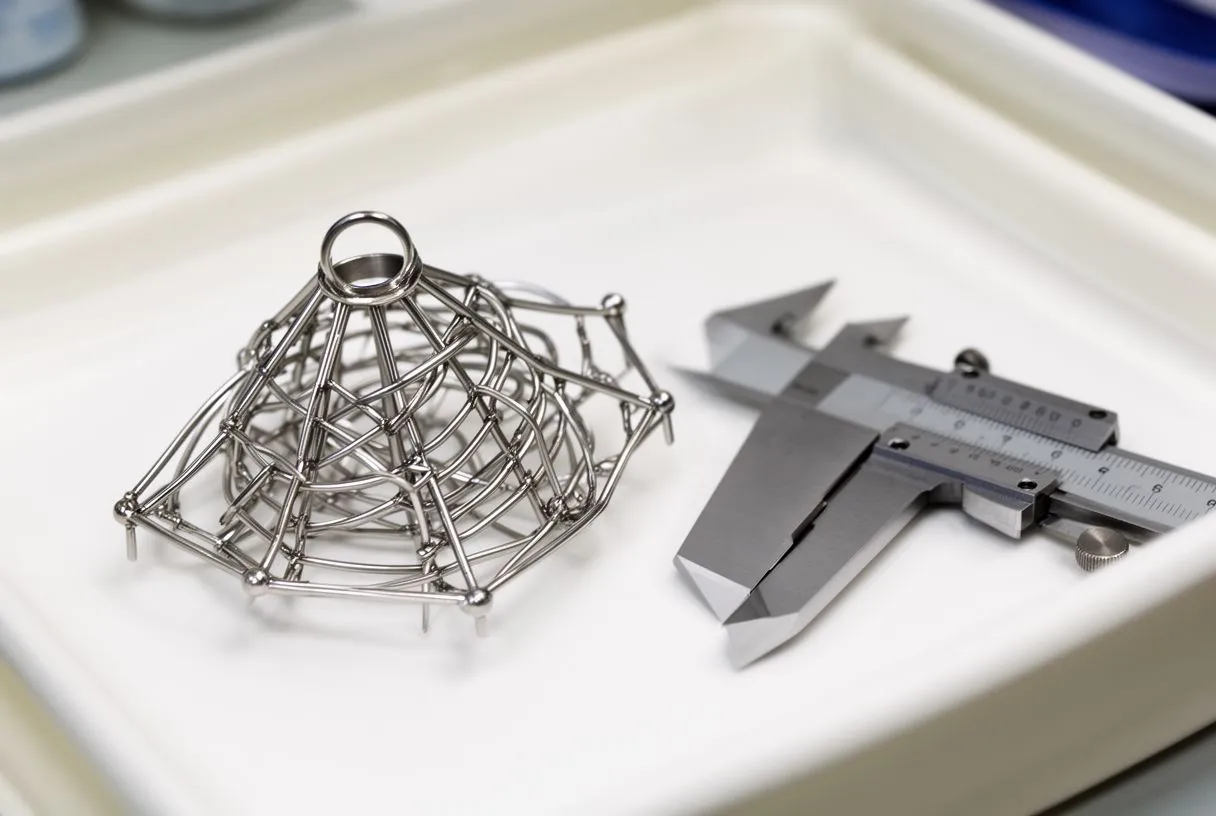
What fatigue testing involves. Before any transcatheter valve is approved, its frame undergoes cobalt-chromium valve frame fatigue testing: millions of simulated heartbeats in laboratory conditions, far beyond what a human heart performs in a lifetime. The frame is cycled under pressure and temperature to prove it will not crack, fracture, or deform in normal use.
Why the alloy passes. Cobalt-chromium alloys tolerate cyclic loading with very high fatigue resistance. The strut geometry is designed so that stress does not concentrate at any single point. In practice, this means the cobalt-chromium frame valve lifespan, as far as the metal component is concerned, comfortably exceeds a human lifetime. The limiting factor for durability is almost always the biological leaflet tissue, not the frame.
Cobalt-chromium frame valve durability in context. It is honest to say that transcatheter valves are still younger than surgical valves in long-term data, and durability of leaflet tissue depends on age and calcium metabolism. But the frame itself is the most predictable part of the device. Published research on these devices is tracked in peer-reviewed databases such as DOAJ, and independent journals continue to publish long-term follow-up as cohorts age.
A note on honest expectations. We tell patients that the frame is engineered for life, while the leaflet tissue is engineered for many years, and that follow-up echocardiograms are how we watch valve function over time. That framing sets realistic expectations rather than false promises.
How Cobalt-Chromium Frame Valve Expansion Works During Implantation
Balloon-driven expansion. Most cobalt-chromium transcatheter valves are balloon-expandable. The valve is crimped tightly onto a balloon-tipped catheter. When the balloon inflates, it forces the frame to expand from its compressed diameter to its final diameter in seconds. Because the alloy is stiff and plastic rather than elastic, the frame stays at that size once the balloon deflates.
Controlled sizing. Cobalt-chromium frame valve expansion is deliberately predictable. The team chooses a balloon size based on measurements from CT imaging of your aortic root. Slight over- or under-sizing changes how tightly the frame grips the calcium, so this sizing step is one of the most important decisions in the whole procedure.
What the team watches for. After expansion, imaging confirms the frame is round, open, and seated at the right depth. If a small leak exists around the frame, called paravalvular leak, the team can often address it immediately with a second balloon inflation or a plug. The quality of the initial expansion directly influences these outcomes.
Best Frame Material for TAVR Valves: How Teams Choose
There is no single best. The best frame material for TAVR valve selection depends on anatomy, not on advertising. A balloon-expandable cobalt-chromium frame valve suits patients with symmetric, heavily calcified annuli where precise diameter control matters. Self-expanding nitinol designs suit patients where repositioning before final release is valuable, or where the annulus shape is irregular.
How a real decision is made. A heart team weighs several factors together:
- Annulus size and shape: measured on CT, this determines which valve diameters fit.
- Calcium distribution: heavy, asymmetric calcium favours frames with higher radial strength and precise sizing.
- Access route: narrow leg arteries favour the smallest possible delivery catheter, where cobalt-chromium's thin struts help.
- Future needs: the team considers whether a Valve-in-valve procedure might be needed decades later, and how the frame accommodates that.
When we plan a TAVR at our consulting rooms, we sit with the CT images and explain, in plain words, why we favour one frame design over another for that specific patient, and we present the alternatives openly before any decision is made.
Risks and Safety of Cobalt-Chromium Frame Valve Implantation
Common and serious risks. TAVR is minimally invasive but not risk-free. The main risks include bleeding at the access site, injury to blood vessels, conduction disturbances that may require a pacemaker, stroke, and paravalvular leak, which is blood escaping around the frame rather than through the valve. Understanding these risks honestly helps patients participate in the decision.
Paravalvular leak and the frame. Research has looked closely at what predicts paravalvular leak after implantation of specific transcatheter valves. The PREDICT PVL study examined predictors of paravalvular leak following implantation of a self-expanding transcatheter heart valve, showing that valve sizing relative to the patient's anatomy is one of the key factors (Open Heart). This reinforces why frame sizing and expansion behaviour matter so much in cobalt-chromium frame valve implantation.
Vascular closure. Closing the artery after the procedure is a routine part of TAVR, and techniques keep evolving. Case reports describe solutions even in complex patients, such as achieving hemostasis with a perclose device in a patient with a prior aortobifemoral bypass graft (Case Reports in Cardiology). Skilled access management is as important to recovery as the valve itself.
In our team's experience, careful access-site planning and honest pre-procedure imaging reduce the surprises that drive complications, and we review every case against international guidelines before we recommend proceeding.
What drives cost. Cobalt-chromium frame valve cost is driven by the device itself, the imaging required before and during the procedure, the hospital setting, and the team's experience. Because these valves are advanced manufactured devices, they are typically the largest single cost component of a TAVR admission. Costs vary by country, hospital, and insurance arrangement, so no general figure is meaningful without your specific case.
For international patients. Many patients travel to Mexico for cardiac care, and travel adds planning questions: how long to stay near the hospital, what follow-up can be done remotely, and what documentation your insurer needs. A transparent team will put these answers in writing before you commit.
Our first contact is a free video consultation: we get to know you, talk through your condition, and tell you exactly which studies are still needed, so no unnecessary tests are ordered before you ever travel to Guadalajara, Querétaro or Hermosillo.
Questions worth asking your team. Before consenting to any transcatheter valve, we encourage you to ask:
- Which alloy and valve design? Ask whether it is a cobalt-chromium frame valve or a nitinol one, and why that fits your anatomy.
- What imaging decided the sizing? A good team shows you the CT and explains the sizing choice.
- Can I get a second opinion? We encourage second opinions and treat them as a normal part of deciding about heart surgery; a confident team will welcome yours.
- What follow-up schedule? Ask how your valve will be monitored with echocardiography in the years after implantation.

Bringing it together. A cobalt-chromium frame valve is a transcatheter valve built on one of the strongest, most fatigue-resistant alloys used in medicine. Its cobalt-chromium heart valve stent gives surgeons precise control over valve size, resists deformation under the relentless pressure of the aorta, and provides a stable foundation for the valve's biological leaflets. Compared with nitinol, it trades self-expanding flexibility for predictability and a thinner profile, and the right choice depends on your anatomy, your calcium pattern, and your access arteries rather than on any universal answer.
The most important takeaway is that the frame is only one part of a decision. Outcomes depend on careful imaging, honest sizing, a multidisciplinary team, and realistic follow-up planning. If you are considering transcatheter aortic valve replacement, bring your questions about frame material, durability, cost, and risks directly to a qualified cardiac team, and ask for a consultation rather than trying to self-diagnose. We welcome those conversations at our practice, and we will always explain the studies, the options, and the alternatives before you decide anything.






