Diaphoresis and Heart Attack: When Sweating Means an Emergency
Diaphoresis heart attack symptoms can save your life if recognized early.
A sudden cold sweat drenching your forehead and chest while pressure builds behind your sternum is one of the most frightening combinations a person can experience. This profuse, clammy perspiration — medically termed diaphoresis — is one of the body's loudest distress signals, and when it appears alongside chest pain, it frequently points to a cardiac emergency. Recognizing a diaphoresis heart attack early — understanding what that cold sweat means, why it happens, and when to act — can preserve heart muscle and save lives. This guide walks you through the warning signs, the differences between normal sweating and cardiac sweating, and what to do if you or someone you love develops these symptoms.
What Is a Diaphoresis Heart Attack and Why Does It Matter?
Diaphoresis is the medical term for excessive, often sudden sweating that is not caused by heat, exercise, or fever. When a heart attack occurs, a coronary artery becomes blocked — usually by a ruptured atheromatous plaque (a fatty deposit inside the artery wall) — and the heart muscle downstream begins to starve for oxygen. The body's autonomic nervous system perceives this as a catastrophic threat and fires a massive sympathetic response, the same fight-or-flight cascade that would make you sweat if you were in grave danger. The result is cold, profuse perspiration that can soak through clothing within minutes.
Understanding why this happens matters because diaphoresis is one of the strongest independent predictors that chest pain is truly cardiac in origin. According to Verywell Health, patients who present with both chest pain and cold sweating are significantly more likely to be having an acute myocardial infarction than those with chest pain alone. When a physician performs auscultation — listening to the heart with a stethoscope — alongside an electrocardiogram, the combination of diaphoresis, pain, and abnormal findings drives the urgency of treatment decisions. Every minute of delayed restoration of blood flow means more heart muscle dies permanently.
What patients actually feel: The experience is rarely subtle. Most people describe a wave of something profoundly wrong — not just sweating, but a sense of doom, weakness, nausea, and a crushing or squeezing sensation in the chest that may radiate to the jaw, back, or arms. The sweat itself feels different from exercise sweat: it is cold, clammy, and appears on skin that looks pale or grey. Some patients describe it as feeling as though someone turned on a faucet inside their body. If you witness this combination in yourself or another person, the time to act is immediately — not after waiting to see if it passes.
How Is Diaphoresis Different From Normal Sweating?
Normal sweating serves thermoregulation — your body releases moisture onto the skin so evaporation can cool you down during exercise, in hot weather, or when you have a fever. The sweat is typically warm, appears gradually, and stops when you rest or cool off. Cardiac diaphoresis is entirely different in origin: it is driven by the sympathetic nervous system's response to internal ischemia (lack of blood flow to tissue), not by external temperature. The sweat appears suddenly, often without any physical exertion, and feels cold and sticky rather than warm and productive.
The timing tells the story: If you break into a drenching sweat while sitting still, watching television, or lying in bed, that pattern is a red flag. Exercise sweat builds predictably with effort; cardiac sweat erupts without provocation. A person may be completely at rest, even asleep, when the sweating begins. This is one of the reasons patients and families often delay seeking help — the symptoms seem inexplicable, and without obvious exertion to blame, people rationalize the sweat as anxiety, a hot flash, or a minor illness.
Appearance and texture: Cardiac sweat tends to make the skin look pale, ashen, or grey because blood vessels constrict during the sympathetic surge, shunting blood toward vital organs. The skin feels cold and clammy to the touch, sometimes with visible goosebumps. Normal sweat, by contrast, leaves skin flushed and warm. If you touch the forehead of someone having a heart attack, it may feel cold and wet — distinctly different from the warm, dry heat of someone who has been exercising. Trusting your instinct that something is wrong is appropriate here; diaphoresis combined with any chest discomfort warrants emergency evaluation.
What Are Heart Attack Warning Signs in Men?
Men tend to present with what textbooks call the classic heart attack picture: crushing central chest pain, pain radiating down the left arm, shortness of breath, and diaphoresis. The chest pain is often described as a heavy weight sitting on the chest, a squeezing band around the ribs, or a deep pressure that does not change with breathing or position. Arm pain — specifically aching, heaviness, or numbness radiating to the left arm (and sometimes the right arm or both) — is a hallmark that many men recognize but still hesitate to act on.
What often gets dismissed: Many men experience warning symptoms in the days or weeks before a full heart attack — intermittent chest discomfort with exertion that stops with rest, new shortness of breath when climbing stairs, or episodes of unexplained sweating. These are signs of worsening coronary artery narrowing, and they represent a window during which evaluation and treatment can prevent a complete blockage. A simple medication like aspirin, which reduces blood clot formation, can be life-saving when taken early during a suspected heart attack, but it should never replace emergency transport — it is a bridge, not a treatment.
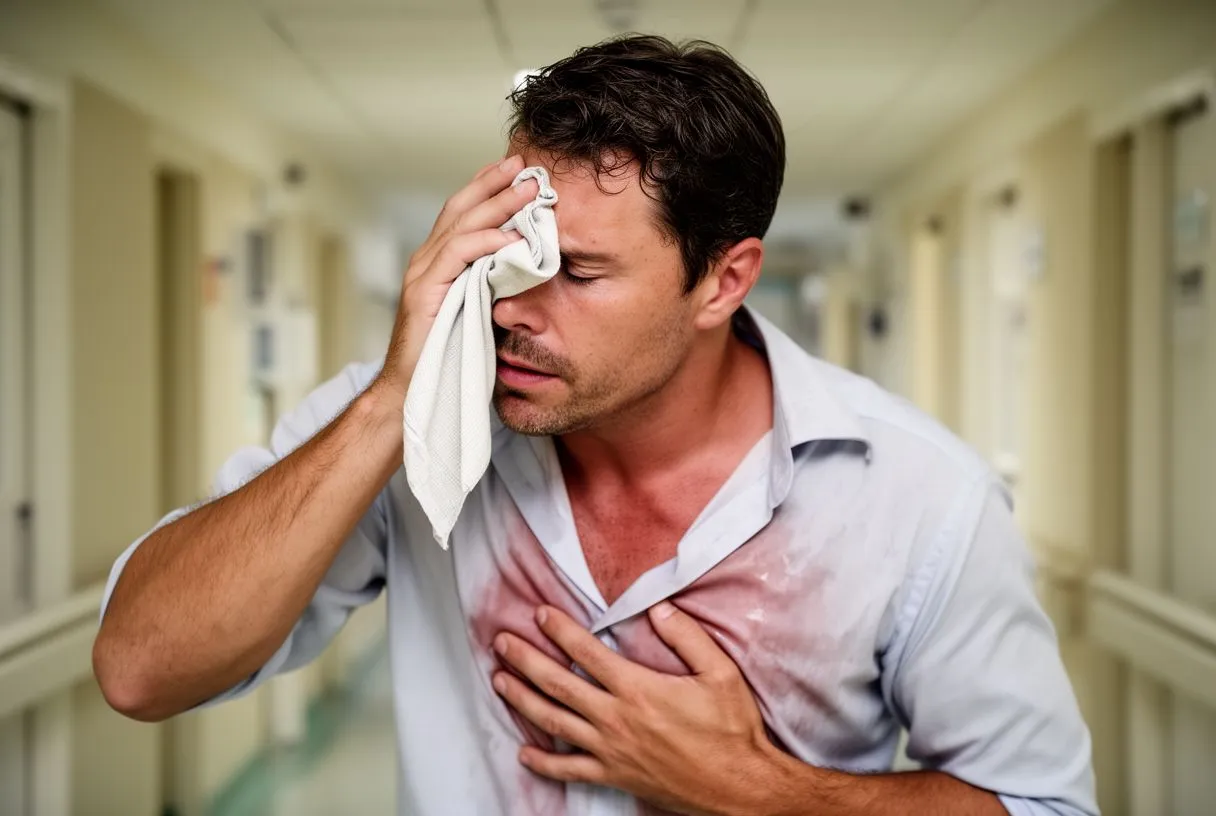
When symptoms escalate: The transition from stable angina (predictable, exertion-related chest pain) to a full heart attack happens when a plaque ruptures and a clot forms, completely blocking the artery. This is the moment diaphoresis typically erupts — the body recognizes catastrophe. Men who ignore early warning signs or delay calling emergency services lose heart muscle every minute they wait. The message is straightforward: if you develop new chest pain with cold sweats, do not drive yourself to the hospital, do not wait to see if it improves, and do not rationalize it as indigestion. Call emergency services immediately.
What Heart Attack Symptoms Do Women Experience?
Women frequently experience heart attack symptoms that differ from the classic male presentation, and this difference contributes to dangerous delays in diagnosis and treatment. Instead of crushing chest pain, many women report vague discomfort — a feeling of pressure, fullness, or squeezing that they mistake for heartburn, stress, or fatigue. Shortness of breath, unusual exhaustion, nausea, and diaphoresis may be the dominant symptoms rather than dramatic chest pain. This pattern is sometimes called an atypical infarction, though the term "atypical" is misleading because it is actually typical for women.
Why women's symptoms get missed: Medical research historically studied heart attacks primarily in men, and diagnostic criteria were built around male symptom patterns. Women themselves often do not recognize their symptoms as cardiac because the cultural image of a heart attack — a man clutching his chest and collapsing — does not match what they feel. A woman who suddenly feels profoundly tired, slightly short of breath, and damp with cold sweat while doing housework may lie down and rest, hoping it passes. That delay can be fatal. Women are more likely than men to die from their first heart attack, partly because they arrive at the hospital later.
What to watch for: If you are a woman and you develop sudden, unexplained fatigue, shortness of breath, cold sweating, nausea, or upper body discomfort (jaw, neck, back, or both arms), treat it as a potential cardiac emergency — even if you do not have the classic crushing chest pain. Women with diabetes, women who smoke, and women with a family history of early heart disease face elevated risk. The same advice applies: call emergency services, describe all symptoms honestly, and do not minimize what you feel. Emergency teams would rather evaluate a false alarm than miss a real heart attack.
When Should You Go to the ER for Chest Pain and Sweating?
The threshold for going to the emergency room should be low when chest pain and diaphoresis appear together. Emergency physicians and cardiologists universally agree: it is better to be evaluated and sent home than to stay home and lose heart muscle. The goal is to restore blood flow to the heart within 90 minutes of first medical contact — a benchmark known as door-to-balloon time — because every additional minute means more irreversible muscle death. If you call an ambulance, paramedics can begin evaluation, start an electrocardiogram in the field, and alert the receiving hospital, saving precious time.
Signs that demand immediate action: Not every episode of sweating is cardiac, but certain combinations make emergency evaluation non-negotiable. Call emergency services if any of these occur:
- Sudden cold sweat with chest pressure or pain — the single most predictive combination for a heart attack
- Chest discomfort that radiates to the jaw, neck, back, or arms — especially with sweating, nausea, or shortness of breath
- Unexplained diaphoresis with no chest pain but profound weakness or breathlessness — common in women and elderly patients
- Any chest pain lasting more than a few minutes that does not improve with rest — particularly if it is new, severe, or accompanied by a sense of doom
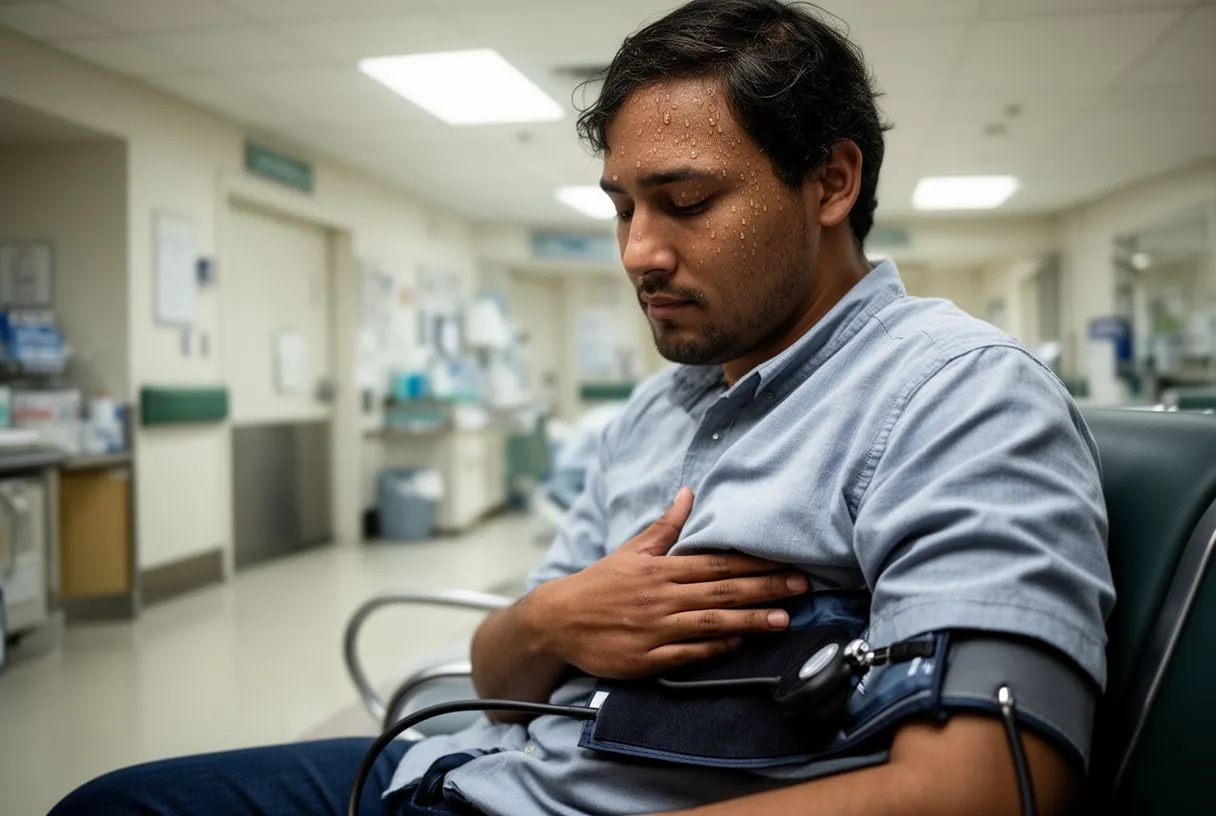
When paramedics arrive, they will assess your vital signs, perform an electrocardiogram, and possibly administer medications. If the heart rhythm becomes dangerously unstable — such as progressing to cardiac arrest — they may need to use an automated external defibrillator to deliver a controlled electric shock and restore a normal rhythm. This is why calling an ambulance is always safer than having someone drive you: the ambulance is a mobile emergency room, equipped and staffed to intervene the moment your condition changes.
Why Do You Sweat With Chest Pain but No Fever?
Sweating without fever can confuse patients and families, because we are culturally conditioned to associate sweating with infection, heat, or exertion. When someone breaks into a cold sweat without any of those triggers, the instinct is often to reach for a thermometer rather than a phone. But diaphoresis without fever, especially when paired with chest symptoms, points toward a neurologic and cardiovascular cause rather than an infectious one.
The sympathetic nervous system at work: During a heart attack, the body releases a flood of adrenaline and noradrenaline. These stress hormones cause blood vessels to constrict, heart rate to accelerate, and sweat glands to activate profusely. This is the same mechanism that causes sweating during a panic attack, but the stakes are vastly different. The heart itself — specifically the left ventricle and the atrium (the upper receiving chamber) — is sending distress signals that cascade through the autonomic nervous system. If the ischemia affects the electrical pathways, it may also trigger arrhythmias such as atrial flutter, a rapid, organized rhythm disturbance that compounds the heart's inability to pump effectively.
Non-cardiac causes to consider: Not all chest pain with sweating is a heart attack. Severe acid reflux, panic attacks, pulmonary embolism (a blood clot in the lungs), and aortic dissection (a tear in the wall of the aorta) can all produce similar symptoms. However, distinguishing among these requires medical evaluation — blood tests, imaging, and electrocardiograms — that cannot be done at home. The safest approach is to treat unexplained diaphoresis with chest symptoms as a cardiac emergency until proven otherwise. Emergency departments are equipped to rapidly sort out the cause, and they expect patients to come in for exactly this kind of evaluation.
Stress Sweat vs Heart Sweat: What Is the Difference?
Telling the difference between stress sweat and cardiac sweat is one of the most common questions patients ask, and it is a reasonable concern. Both involve the sympathetic nervous system, both can appear without exertion, and both can feel overwhelming. The distinction matters because stress sweat, while uncomfortable, is not dangerous, whereas cardiac sweat may signal a life-threatening emergency.
Context is the key differentiator: Stress sweat typically follows an emotional trigger — a conflict, a deadline, bad news — and tends to be accompanied by rapid breathing, trembling, and a racing heart that subsides when the stressor resolves. Cardiac sweat appears without an emotional trigger, often at rest or during minimal activity, and is accompanied by physical symptoms that worsen rather than improve: chest pressure, shortness of breath, nausea, and a sense that something is physically wrong. Stress sweat may make you feel anxious; cardiac sweat often makes you feel as though your body is failing.

What to do when you are unsure: If you cannot confidently distinguish stress sweat from cardiac sweat, and you have any risk factors for heart disease — age, family history, smoking, diabetes, high blood pressure, or high cholesterol — err on the side of caution. A panic attack will not harm you; a heart attack will. Emergency physicians regularly evaluate patients whose symptoms turn out to be anxiety, and they do not consider that visit a waste of resources. The cost of a missed heart attack is irreversible heart damage or death; the cost of a reassurance visit is time and a medical bill. When in doubt, get checked.
Are Night Sweats Connected to Heart Disease?
Night sweats — waking up drenched in perspiration — are a symptom that sends many patients to the internet and, appropriately, to their doctor. While night sweats have many causes ranging from menopause to infections to certain medications, they can occasionally signal underlying cardiovascular disease. The question is not whether night sweats always mean heart trouble — they do not — but whether your specific pattern warrants cardiac evaluation.
When night sweats raise cardiac concern: Night sweats become a potential cardiac warning sign when they are new, persistent, and accompanied by other symptoms such as chest discomfort, shortness of breath that worsens when lying flat, palpitations, or unexplained weight gain (which may indicate fluid retention from heart failure). In heart failure, the heart's pumping ability declines, fluid backs up into the lungs, and the body's stress response can trigger nighttime diaphoresis. Patients may also wake up gasping for air — a condition called paroxysmal nocturnal dyspnea — which is a hallmark of congestive heart failure.
How to approach night sweats practically: If you experience occasional night sweats after eating a heavy meal, drinking alcohol, or sleeping in a warm room, simple lifestyle adjustments may resolve them. But if night sweats are frequent, severe enough to soak your sheets, and associated with any chest symptoms, schedule a cardiology evaluation. A cardiologist can assess your heart function with noninvasive tests — echocardiography, stress testing, and blood work — to determine whether the heart is the source. Night sweats alone are rarely the only sign of a heart attack, but they can be an early indicator of progressive heart disease that needs management before a crisis occurs.
What Heart Attack Risk Factors Should You Know?
Understanding your personal risk profile helps you and your cardiac team make informed decisions about prevention, monitoring, and treatment. Some risk factors are modifiable — you can change them through lifestyle and medication — while others, like age and family history, are fixed. The more risk factors you carry, the more seriously you should take any chest symptom, and the lower your threshold should be for seeking emergency evaluation.
Key modifiable and non-modifiable risk factors:
- High blood pressure and high cholesterol — including elevated apolipoprotein B levels, a lipid particle that directly drives plaque formation in artery walls
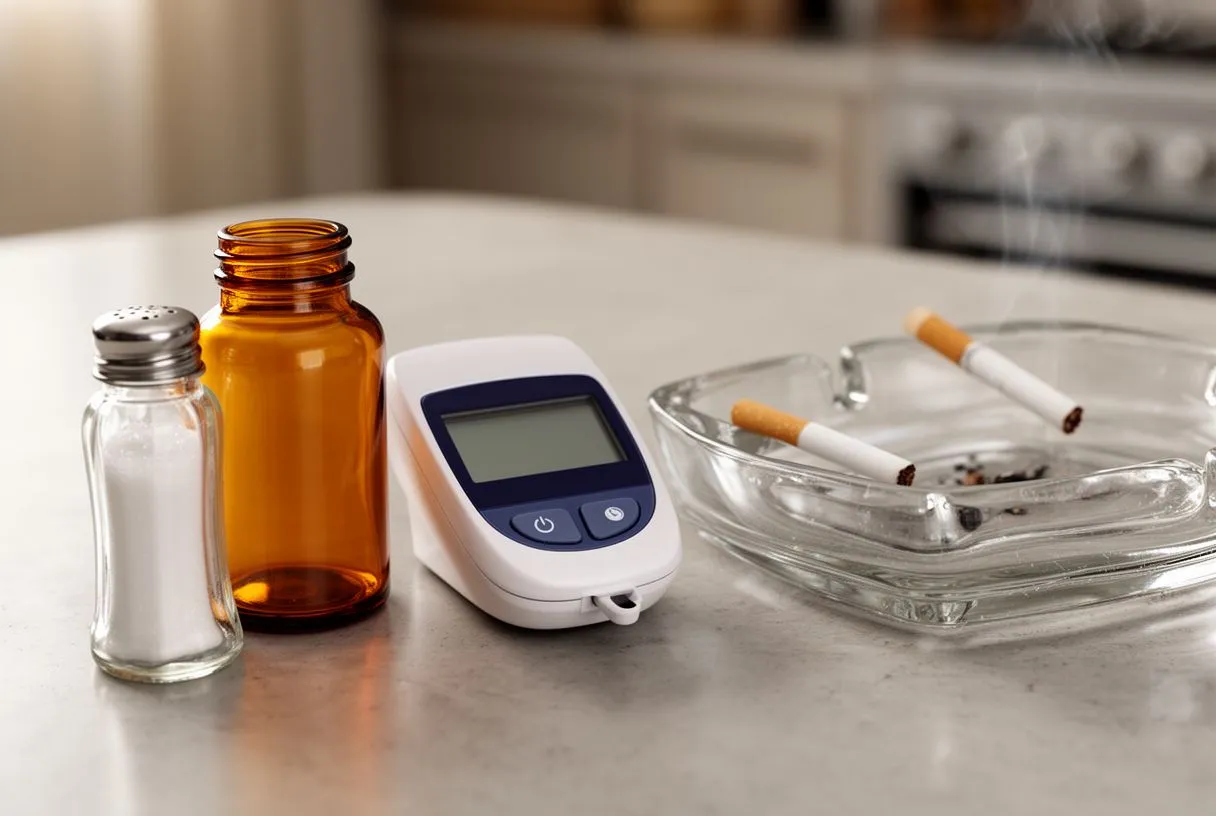
- Smoking and diabetes — together these multiply risk rather than simply adding it; a diabetic smoker faces several times the danger of a non-diabetic nonsmoker
- Family history of early heart disease — a first-degree male relative with heart disease before age 55, or a female relative before 65, significantly raises your risk
- Age and sex — risk rises sharply after 55 in men and after 65 in women, though heart disease can and does strike younger people
For patients with severe aortic stenosis — a narrowing of the heart's main exit valve — procedures such as TAVR (transcatheter aortic valve replacement) may become necessary. Research comparing valve types, including a clinical comparison of balloon-expandable versus self-expanding transcatheter heart valves, informs which device offers the lowest risk for your situation. Similarly, conditions affecting the ascending aorta (the first segment of the body's largest artery) may require surgical intervention when the aortic diameter exceeds guideline thresholds such as 5.5 cm. Medications like blood thinners — studied in large trials such as ARISTOTLE — help manage atrial fibrillation and reduce stroke risk in patients who also carry coronary artery disease risk. The point is that cardiac risk factors interconnect, and managing one often means monitoring several.
Where to Find Emergency Cardiac Care in Guadalajara
If you are in Guadalajara, Querétaro, or Hermosillo and experience chest pain with cold sweats, emergency cardiac care is available and accessible. The first step is always to call local emergency services — paramedics can begin evaluation and treatment in the ambulance and alert the receiving hospital. Dr Alejandro Molina and the team at Cirugía de Corazón have consulting rooms in these three cities and cover cardiac surgery from planned valve and coronary procedures to aortic surgery. For international patients and those traveling within Mexico, the practice coordinates care across language barriers and helps navigate insurance and logistics.
During emergency cardiac care, the medical team may place an arterial line — a thin catheter into an artery for continuous blood pressure monitoring — and begin treatments to restore blood flow. In complex cases, advanced support such as awake ECMO (extracorporeal membrane oxygenation, where blood is circulated and oxygenated outside the body) may be used to stabilize critically ill patients. Procedures like balloon angioplasty (inflating a tiny balloon to open a blocked artery) are performed in the catheterization laboratory, often followed by stent placement. For patients who need valve intervention, options include balloon aortic valvuloplasty (a balloon procedure to stretch a narrowed valve) and TAVR with devices such as a balloon-expandable valve. Some surgeries require an arterial graft (using a blood vessel from elsewhere in the body to bypass a blockage) or an autograft (using the patient's own tissue for reconstruction). In certain cases, autologous blood (the patient's own previously collected blood) may be used to minimize transfusion risks. Research on valve performance continues to guide these decisions, including a quantitative angiographic assessment of aortic regurgitation after transcatheter valve implantation that evaluates how well different valves prevent leakage.
Your next step matters most: If you are reading this because you or someone near you has chest pain and cold sweating right now, stop reading and call emergency services. If you are researching for yourself or a loved one because of recent symptoms or a family history of heart disease, the most important thing you can do is schedule a consultation with a qualified cardiac team. A cardiologist can assess your risk factors, perform noninvasive testing, and develop a prevention or treatment plan tailored to your specific situation. Do not self-diagnose based on what you have read here — every person's cardiac anatomy and risk profile is unique, and decisions about treatment, medication, and surgery should be made in conversation with a physician who knows your case. Cirugía de Corazón offers consultations in Guadalajara, Querétaro, and Hermosillo; booking an appointment is the first step toward understanding your heart health and protecting it for the future.