Fondaparinux for Blood Clots: Uses and Precautions
Learn about fondaparinux blood clots treatment, how this anticoagulant works, dosing, side effects, and key safety precautions.
If you or a loved one has been told you need a blood thinner after surgery, or because a clot has formed in a leg vein or travelled to the lungs, the name fondaparinux may have come up. It is a modern anticoagulant, which simply means a medicine that makes blood clot less easily, and it is given as a small injection under the skin. This guide explains fondaparinux for blood clots: uses and precautions, in plain language, so you can walk into your next appointment knowing exactly what questions to ask. Nothing here replaces a conversation with your own cardiac team, but it should make that conversation easier.
What Is Fondaparinux and What Type of Anticoagulant Is It?
Understanding the drug class. Fondaparinux is a synthetic anticoagulant called a factor Xa inhibitor. It is not a blood thinner in the old sense of aspirin; it works further down the clotting cascade, blocking a single protein that clots need to grow. It was developed in a laboratory rather than derived from animal tissue, which matters to some patients for both safety and personal reasons.
Because it is synthetic, its behaviour in the body is very predictable. Each dose produces the same, reproducible effect, and doctors do not need to run repeated blood tests to fine-tune it the way they do with warfarin. That predictability is one of the reasons it became popular for treating and preventing venous thromboembolism, the umbrella term for deep vein thrombosis and pulmonary embolism.
To answer the common question directly: is fondaparinux a type of low molecular weight heparin? No, it is not. It belongs to a different chemical family, even though doctors sometimes prescribe it in situations where low molecular weight heparin would normally be used. Knowing the distinction helps you understand why your physician may have chosen one over the other. Reviews of its clinical role have been catalogued in open-access literature such as DOAJ.
Is Fondaparinux the Same as Heparin or Lovenox?
The short answer. No. Fondaparinux is not heparin, and it is not Lovenox, which is the brand name for enoxaparin, the best-known low molecular weight heparin. They all reduce clotting, but they get there by different routes. Heparin is a long, mixed-chain molecule extracted from animal tissue. Enoxaparin is a shortened version of it. Fondaparinux is a single, precisely manufactured five-unit chain with no animal origin at all.
Differences between Arixtra and Clexane. Arixtra is the brand name for fondaparinux, while Clexane is the European brand name for enoxaparin. The practical differences are these: enoxaparin is dosed by body weight and, in kidney impairment or pregnancy, monitored with an anti-Xa blood test; fondaparinux is given as a fixed dose regardless of most body sizes and does not need that routine monitoring. Enoxaparin carries a small risk of heparin-induced thrombocytopenia; fondaparinux essentially does not, which is precisely why it is often chosen when that reaction is suspected or confirmed.
So when someone asks whether fondaparinux is the same as heparin, the honest answer is that they share a destination but not a road. For patients, the visible difference is usually practical: once-daily injections with fondaparinux versus once or twice daily with enoxaparin, and no routine anti-clotting blood draws. Your prescriber weighs those differences against your kidney function, your weight, and the reason you need the medicine.
What Is Fondaparinux Used For?
Treating established clots. Doctors prescribe fondaparinux to treat deep vein thrombosis, a clot that usually forms in the deep veins of the leg, and pulmonary embolism, which happens when part of such a clot breaks off and lodges in the arteries of the lungs. In both conditions, the goal is to stop the clot from growing while the body's own systems break it down over weeks to months.
Preventing clots before they form. The second major use is prevention after operations that put patients at high risk, particularly orthopaedic surgery such as hip or knee replacement and hip fracture repair. It is also used in some patients with unstable angina or certain types of heart attack, always alongside other cardiac medicines. Post-operative prevention is a common reason a cardiac patient first encounters the drug.
In short, fondaparinux for blood clots covers both sides of the problem: stopping new clots in high-risk situations and containing existing ones. When a patient needs extended clot prevention after a procedure, the choice of anticoagulant should be reviewed against international guidelines, with the alternatives explained in plain words so the final decision is the patient's. If a clot is suspected, never self-diagnose; seek medical assessment the same day.
Fondaparinux Versus Heparin: Why Choose Fondaparinux Instead?
One reason dominates: HIT. The main reason doctors reach for fondaparinux instead of heparin is heparin-induced thrombocytopenia, or HIT. This is a paradoxical immune reaction in which heparin causes platelets to clump and, alarmingly, promotes clotting rather than preventing it. It can be dangerous, so when it is suspected, all heparin products are stopped and fondaparinux is one of the standard replacements.
Other practical advantages. Fondaparinux offers a few further benefits that make it attractive in specific situations:
- No routine monitoring: a fixed dose gives a predictable effect, so there are no repeated anti-Xa blood tests the way there can be with heparin products.
- Once-daily dosing: one subcutaneous injection a day is easier to manage at home than injections two or three times daily.
- Synthetic origin: no animal-derived material, which removes impurity concerns and suits patients who prefer it.
- Skin reactions: heparin can cause injection-site skin irritation or allergic skin lesions; fondaparinux does so far less often.
Where heparin still wins. This is not a one-way contest. Unfractionated heparin has a very short life in the body and can be switched off almost instantly with an antidote, which is why it remains first choice in situations such as heart-lung machines during open-heart surgery, where rapid reversal may be needed. Fondaparinux has no routine reversal agent, so it is not the right tool for every job. Your cardiac team chooses based on whether reversibility matters for your particular procedure.
How Fondaparinux Injections Work in the Body
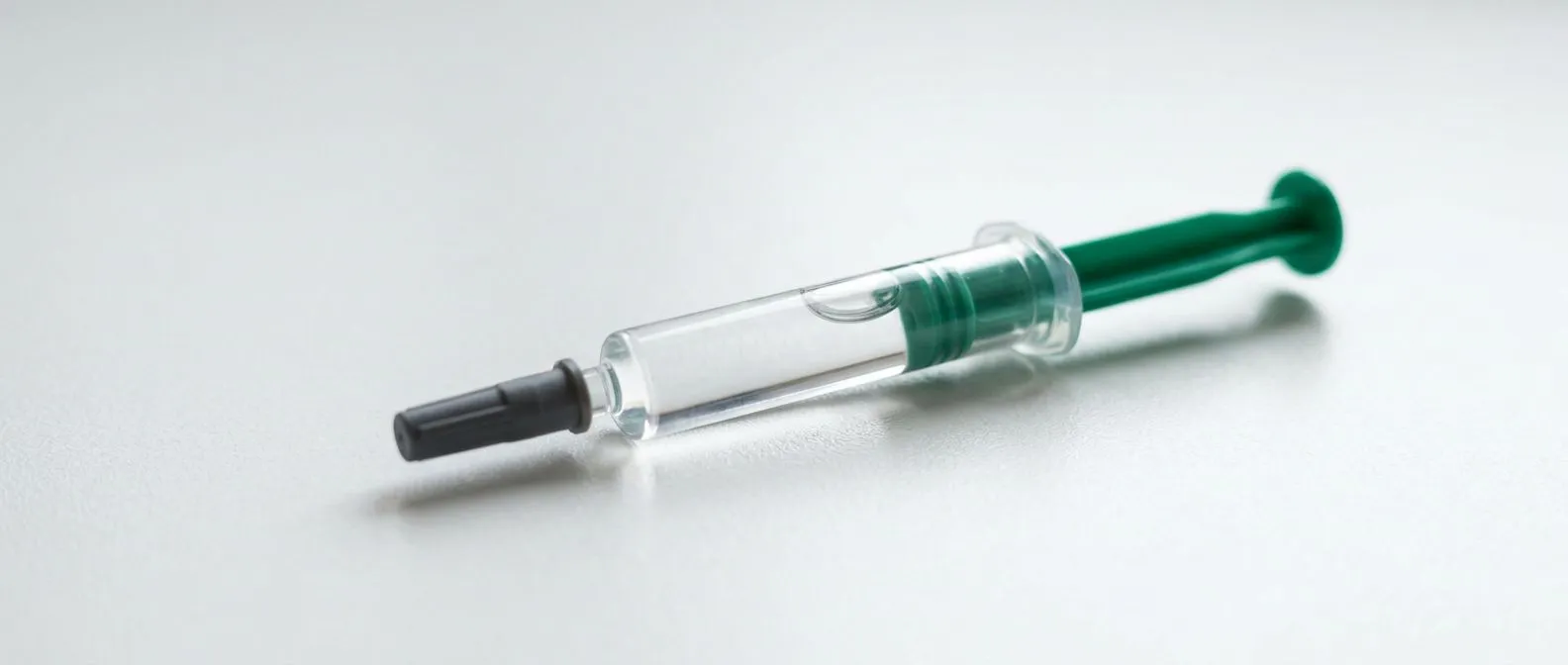
To understand what the medicine does, it helps to picture clot formation as a cascade. When a blood vessel is injured, a chain of proteins activates one another in sequence, ending in an enzyme called thrombin, which converts fibrinogen into the sticky fibrin mesh that holds a clot together. Factor Xa sits in the middle of this chain. Fondaparinux binds to the body's natural anticoagulant protein, antithrombin, and the pair then switches factor Xa off. With factor Xa blocked, less thrombin is made, and clots form far more slowly.
One injection reaches its peak effect in the blood within about two hours, and because the drug is cleared by the kidneys rather than the liver, its effect fades steadily over roughly a day. That steady profile is what makes once-daily dosing possible. It also explains why kidney function is central to dosing decisions, which we come to shortly.
Patients sometimes worry that an anticoagulant "thins" the blood in the sense of making it watery. It does not. Your blood still carries oxygen and nutrients exactly as before; the medicine simply lowers the clotting system's readiness to form a thrombus inside a vessel. That is also why the usual risks are about bleeding rather than anything else, and why you should tell any treating clinician that you take it before dental work, biopsies, or surgery.
Fondaparinux Dosing Guidelines and After Surgery Use
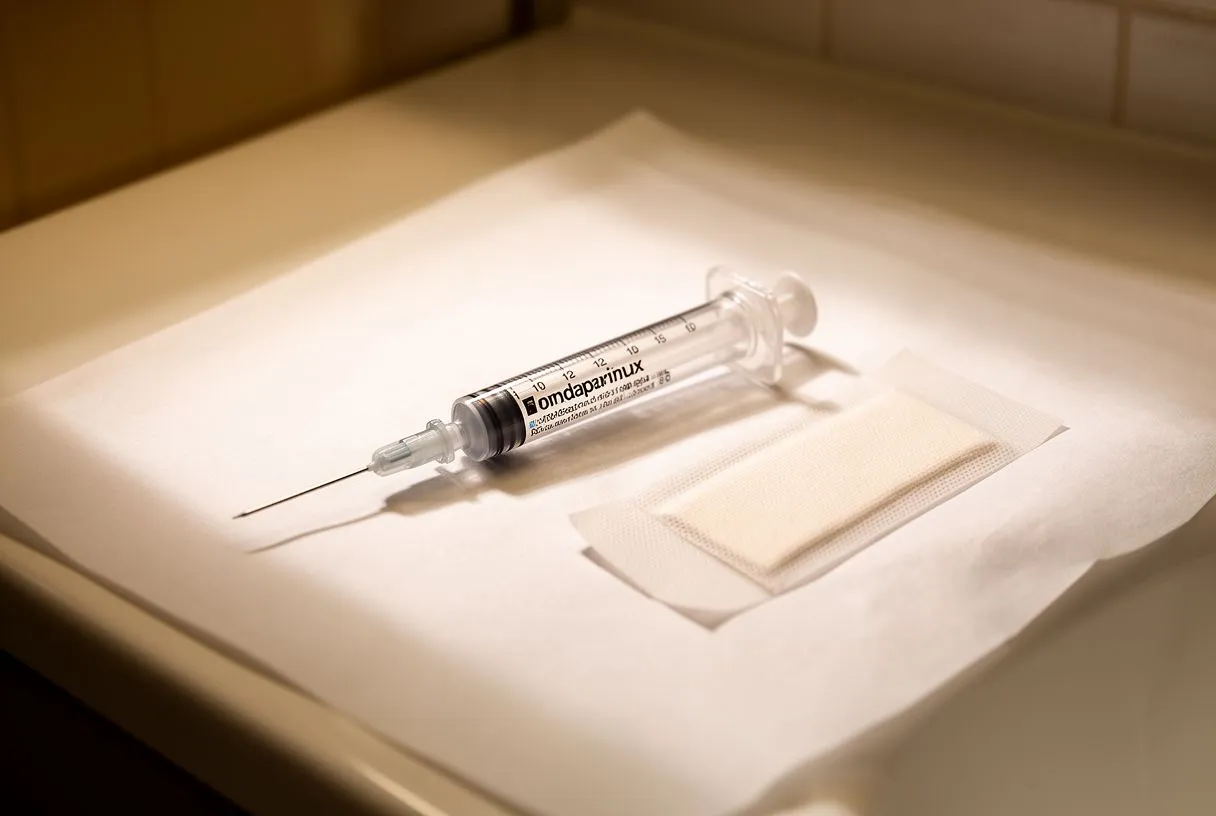
Typical treatment doses. For treating deep vein thrombosis or pulmonary embolism in adults, the usual dose is once daily by subcutaneous injection, with the amount adjusted upward for higher body weight. Initial treatment usually runs for at least five to ten days, often overlapping with the start of an oral anticoagulant such as a DOAC or warfarin, before the injection is stopped if the oral drug has taken over.
Prevention after surgery. For fondaparinux after surgery, the preventive dose is lower than the treatment dose. After hip or knee replacement or hip fracture surgery, it is typically started several hours after the operation and continued for several weeks, because clot risk does not end when you leave hospital. Your surgeon sets the exact duration based on your mobility and risk factors.
Special populations. Doses are reduced, or the drug avoided altogether, when kidney function is significantly impaired, when weight is very low, or in advanced age. Do not adjust or skip doses on your own. If you are discharged on fondaparinux after surgery, make sure you are shown the injection technique and told exactly when the first dose should be given relative to the operation, because that timing matters for bleeding safety. If you ever miss a dose, take the next one at the usual time and never double up; check with your pharmacist or doctor for the specific rule that applies to you.
Fondaparinux Injection Side Effects and Bleeding Risk
Bleeding is the main risk. The most important side effect of any anticoagulant is bleeding. On fondaparinux you may bruise more easily, gums may bleed when you brush, and nosebleeds can last a little longer than usual. Those minor signs are expected. What needs urgent attention is bleeding that will not stop, blood in the urine or stool, black tarry stools, a sudden severe headache, coughing up blood, or unusual dizziness. Any of these means seeking medical care immediately.
Local and less common effects. At the injection site, mild redness, itching, or a small bruise is common and usually settles. Less commonly, patients report fever, rash, or a drop in blood counts. Because fondaparinux is cleared by the kidneys, patients with reduced kidney function can accumulate the drug and bleed more easily, which is why your team checks a kidney blood test before and sometimes during treatment. A Full Blood Count may also be requested to watch platelets and haemoglobin, and regular Blood Pressure checks are part of routine review, since uncontrolled hypertension raises bleeding risk. Studies of related vascular physiology, including work on endothelial dysfunction in diabetes, appear in journals indexed by the Indian Journal of Endocrinology and Metabolism, and underline why vascular health and clot risk travel together.
When to pause the injections. Before any planned procedure, from major surgery to a dental extraction, tell the team you are on fondaparinux. Some procedures require holding a dose, others do not. Before any operation, your team needs to confirm exactly which anticoagulants you are taking and when the last dose was, because that single question prevents many peri-operative bleeding problems. Never stop the medicine on your own before a procedure without explicit medical instruction.
Fondaparinux Contraindications and Renal Impairment
Kidney function comes first. Because the kidneys clear fondaparinux from the body, renal impairment is the single most important contraindication to check. In severe kidney impairment the drug accumulates, and bleeding risk climbs sharply, so the medicine is generally avoided in patients on dialysis and used with caution, or not at all, in severe impairment. If your kidney numbers are borderline, your doctor may choose a different anticoagulant or adjust the schedule.
Other situations where it is not suitable. Fondaparinux should not be used, or used only with great care, in the following circumstances:
- Active major bleeding: any significant ongoing bleed rules it out until the bleeding is controlled.
- Bacterial endocarditis: infection of the heart's inner lining, where anticoagulation can worsen bleeding into valves and tissues.
- Very low body weight: fixed dosing becomes less predictable in patients under about fifty kilograms, so alternatives are usually preferred.
- Pregnancy and breastfeeding: other anticoagulants have longer safety records here; the choice is made case by case.
Your team will also review every other medicine and supplement you take, because drugs that themselves increase bleeding, such as certain painkillers and antiplatelet medicines, compound the risk. Bring a complete list to every appointment, including herbal products. It is a five-minute conversation that prevents serious problems.
Are Fondaparinux and Arixtra Safe for Heart Patients?
What the evidence shows. Fondaparinux has been studied in large trials across its approved uses, including treatment of venous thromboembolism and in acute coronary syndromes, and it has a well-established safety profile when prescribed for the right patient at the right dose. For most heart patients it is a reasonable and effective option. Safety, though, is always individual: the right answer depends on your kidneys, your bleeding history, your other medicines, and the procedure you may be facing.
Before cardiac surgery specifically. For patients heading into valve surgery or coronary bypass, the timing and choice of anticoagulation around the operation is a genuine decision point, because some agents are easier to manage than others. Research continues into how aggressively blood pressure and clotting risk should be balanced around surgery; one recent analysis of intensive blood pressure lowering and silent myocardial infarction was published in Annals of Noninvasive Electrocardiology, and it illustrates how carefully teams weigh pressures and risks before and after procedures.
Every case is reviewed by the team against international guidelines before anything is recommended, and second opinions are encouraged, because deciding about heart surgery deserves that level of care. If you are on fondaparinux and cardiac surgery is being discussed, ask explicitly how and when it will be stopped or bridged, and what the plan is for restarting it afterwards.
Living Well on Fondaparinux: Practical Precautions
Injections you can master. Most patients give themselves the injection into the abdomen or thigh, rotating sites daily. Use a fresh site each time, keep the used needles in a proper sharps container, and ask your nurse to watch your technique before you go it alone. After a few days, nearly everyone manages comfortably. If a dose is missed, take the next scheduled one; if you are unsure, call your clinic rather than guessing.
Daily habits that protect you. A few straightforward habits lower your bleeding risk meaningfully. Use a soft toothbrush and an electric razor. Avoid unnecessary non-steroidal anti-inflammatory painkillers such as ibuprofen unless your doctor approves. Wear a medical alert card or bracelet stating you take an anticoagulant. Stay moderately active to protect against further clots, but avoid contact sports or activities with high fall risk while on treatment. And keep follow-up appointments so your kidney function and blood counts can be checked as planned.
Finally, keep perspective. Anticoagulation for a limited period after surgery or a clot is one of the most routine and well-managed treatments in modern medicine, and with sensible precautions most patients carry on with normal life throughout. Our team, led by Dr Alejandro Molina and consulting in Guadalajara, Querétaro and Hermosillo, offers a free first video consultation in which we talk through your condition, explain what your studies actually show in plain words, and identify only the tests you still need, so you never pay for unnecessary studies. If clots, anticoagulation, or upcoming heart surgery are part of your situation, bring your questions to a qualified cardiac team and book a consultation; a well-informed decision, made with experts who explain things clearly, is the safest one you can make.