


General Anaesthesia for Heart Surgery: What to Expect
General anaesthesia heart surgery: learn how it works, risks, recovery, and what to ask your cardiac team.
General anaesthesia for heart surgery is the controlled, closely monitored state of unconsciousness that lets a surgical team operate on the heart safely while you feel nothing and remember nothing. If you or someone in your family is facing a valve repair, a bypass operation, or a transcatheter procedure, the anaesthesia plan is as important as the surgery itself — and it deserves the same careful questions. This guide walks through what the anaesthetic involves, how it is given, what the real risks are, and what recovery actually feels like, so you can walk into the operating room knowing what to expect at every stage. Cardiovascular disease remains the leading cause of lost healthy years worldwide, according to the Global Burden of Disease Study, which means millions of families navigate exactly the decisions you are facing now.
What Is General Anaesthesia for Heart Surgery?
General anaesthesia is a medically induced state in which you are unconscious, feel no pain, remain motionless, and have no memory of the operation. It is produced by a combination of intravenous drugs and inhaled anaesthetic gases, delivered and continuously adjusted by a specialist doctor called an anaesthesiologist. For heart surgery specifically, it is the standard choice because operations on the heart require complete stillness, controlled breathing, and often the use of a heart-lung machine.
Why the heart demands a deeper level of control. Cardiac surgery differs from most other operations because the anaesthetic must protect not just comfort but the heart muscle itself. Blood pressure, heart rate, rhythm, and oxygen delivery are managed minute by minute. The anaesthesiologist works alongside the surgeon and perfusionist — the specialist who runs the heart-lung machine — as one coordinated team.
Who gives the anaesthetic. In cardiac surgery, general anaesthesia is always administered and supervised by a fully trained anaesthesiologist, not delegated. In our team, every case is reviewed by the multidisciplinary group against international practice guidelines before any recommendation is made, and the anaesthetic plan is part of that review. The patient receives a clear proposal with the alternatives, and the final decision is always theirs.
Are You Fully Asleep Under General Anaesthesia?
This is the question patients ask most often, and the honest answer is: yes, when it is done properly for cardiac surgery. General anaesthesia is not ordinary sleep — it is a drug-controlled state in which the brain's awareness of the outside world is switched off. You do not dream in the normal sense, you do not hear the operating room, and you do not feel or remember the surgery.
How awareness is prevented. Anaesthesiologists do not simply guess at drug doses. They use monitors that track brain activity, along with blood pressure, heart rate, and exhaled anaesthetic gas levels, to confirm the depth of unconsciousness throughout the operation. These measurements let them keep you deeply asleep without using more medication than necessary.
What about waking up during surgery? Accidental awareness during general anaesthesia is rare, and in cardiac surgery it is rarer still because anaesthetic depth is monitored so closely. Large reviews of patient outcomes published through PubMed consistently place accidental awareness in a small fraction of one percent of general anaesthetics, and modern depth-of-anaesthesia monitoring has reduced it further. If it is a fear of yours, say so plainly before surgery — it is a normal question, and your anaesthesiologist can explain exactly which monitors will be used for you.
What Types of Anaesthesia Are Used for Heart Surgery?
When people look up heart surgery anaesthesia types, they usually find three categories: general anaesthesia, regional techniques such as spinal or epidural blocks, and local anaesthesia, which numbs only a small area. For open heart operations — valve repair or replacement, coronary bypass (often called heart bypass surgery), aortic procedures — general anaesthesia is the standard, because the chest must be opened and the heart must be still.
General anaesthesia for open and minimally invasive cardiac surgery. Whether the operation is a conventional sternotomy (opening the breastbone), a minimally invasive approach through small incisions, or a robotic procedure, general anaesthesia is used. The difference between these approaches lies in the surgical technique, not in whether you are asleep — you are fully asleep in all of them.
Where lighter options appear. Some structural heart procedures, notably certain TAVR cases — transcatheter aortic valve replacement, where a new aortic valve is delivered through a catheter in the groin — can occasionally be done with conscious sedation and local numbing at the puncture site instead of full general anaesthesia. Our team performs conventional, minimally invasive, robotic and transcatheter procedures, and we recommend the less invasive anaesthetic route only where the evidence supports it for that specific patient. The choice is made case by case, with the reasons explained to you in plain words.
- General anaesthesia: full unconsciousness with a breathing tube; required for open and most minimally invasive heart operations.
- Conscious sedation with local anaesthesia: relaxed, pain-free, breathing on your own; used selectively for some catheter-based procedures.
- Regional blocks: numb larger areas of the body; occasionally combined with general anaesthesia for pain control after chest surgery.
How Do You Prepare for General Anaesthesia Heart Surgery?
Good preparation lowers both anaesthetic and surgical risk, and most of it happens weeks before the operation date. The heart of preparation is the preoperative evaluation: a structured review of your medical history, current medications, heart function tests, lung function, blood work, and any other conditions such as diabetes or kidney disease that could affect how your body handles the anaesthetic.
Medications and fasting instructions. You will be given explicit instructions about which medications to continue and which to pause — blood thinners such as warfarin or clopidogrel usually need careful adjustment days ahead, while most blood pressure medicines are taken as normal. Fasting is standard: no food for several hours before surgery, though a sip of water is often permitted closer to the time. Follow these instructions exactly; they exist to keep your stomach empty so nothing can enter your lungs while you are unconscious.
Anxiety is normal — and manageable. Studies of patients facing heart procedures show that preoperative anxiety is common and measurable, and research such as the work collected at the National University of Singapore has shown how significantly health events can affect psychological wellbeing. Knowing what will happen, in order, reduces that fear more than any reassurance alone. At our practice, the first contact is a free video consultation: we get to know the patient, talk through the condition, and say which studies are still needed so no unnecessary ones are ordered. A face-to-face visit at the consulting rooms follows when the patient decides to go ahead.
What Happens During General Anaesthesia for Open Heart Surgery?
The sequence on the day of surgery is remarkably consistent, and knowing it in advance makes the morning feel far less mysterious. You will change into a hospital gown, have an intravenous line placed in your hand or arm, and meet your anaesthesiologist, who will confirm your identity, your operation, and your allergies one final time.
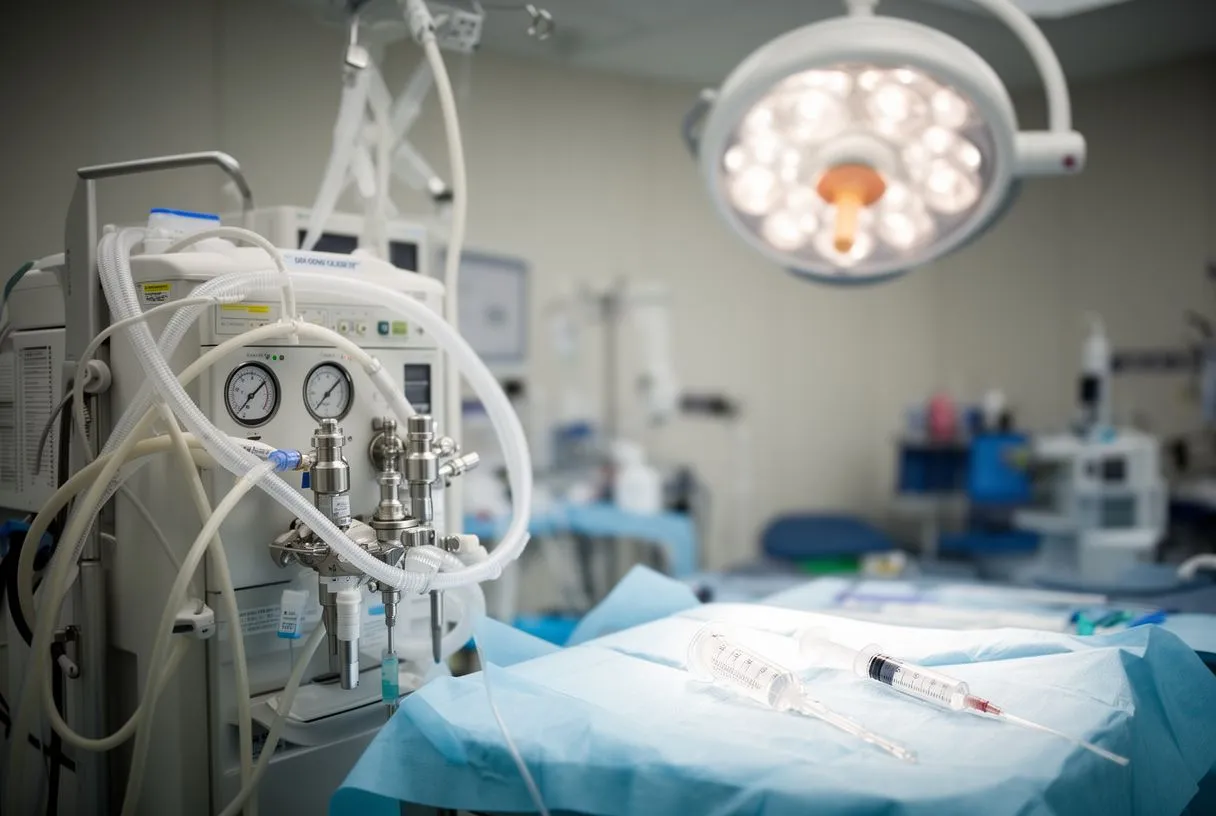
Induction: falling asleep. Once you are on the operating table, monitors are attached — blood pressure cuff, oxygen sensor, ECG electrodes. The anaesthetic begins with medication through the intravenous line; you drift off within half a minute. A breathing tube is then placed in your windpipe (you will be fully asleep and will not feel this), and a ventilator breathes for you. In many cardiac cases, an ultrasound probe called a transoesophageal echocardiogram is passed into the oesophagus to give the team real-time moving images of your heart during the operation.
Maintenance and emergence. Throughout the operation, anaesthetic drugs keep you unconscious while the team monitors every number continuously. When the surgery is complete, the drugs are stopped, your breathing resumes, and the tube is removed once you are awake enough to breathe safely on your own — this happens in the operating room or the intensive care unit, with your anaesthesiologist present. I have seen the first moments after the tube comes out hundreds of times: patients are drowsy, quiet, and usually back to asking sensible questions within minutes.
What Are the Risks of General Anaesthesia for Heart Surgery?
Every honest conversation about general anaesthesia risks in heart surgery starts with the same point: the overall risk for a planned cardiac operation at an experienced centre is low, but it is not zero, and you deserve to know the specific possibilities. The main risks fall into a few clear groups, and each one has known, active strategies to reduce it.
The most common effects. Sore throat or hoarseness from the breathing tube, nausea, drowsiness, and confusion in the first hours or days are the effects patients notice most. They are temporary. Older patients, particularly those with existing cognitive changes, can experience longer-lasting confusion after surgery called postoperative delirium — the cardiac team watches for it and manages it with familiar surroundings, daylight, and medication review rather than alarm.
Serious complications are rare. Major events — severe allergic reaction to anaesthetic drugs, stroke, heart attack during surgery, or life-threatening breathing problems — are uncommon, and their likelihood depends heavily on your pre-existing heart and lung condition rather than on the anaesthetic alone. This is precisely why the preoperative evaluation matters so much. Our multidisciplinary team reviews every case against international practice guidelines before a recommendation is given, precisely so that a patient's individual risk profile — not a general average — drives the anaesthetic and surgical plan.
- Breathing-related: the breathing tube can irritate the airway; chest physiotherapy and early walking after surgery reduce lung complications.
- Brain-related: temporary confusion and memory fog are more common in older adults and usually resolve within days to weeks.
- Medication reactions: rare allergies are screened for in advance, and the operating room carries drugs to treat any reaction immediately.
How Do You Wake Up After General Anaesthesia for Heart Surgery?
After cardiac surgery you do not wake up in the operating room with your family beside you — you wake up in the intensive care unit, and that is deliberate. ICU monitoring lets the team watch your heart rhythm, blood pressure, breathing, and drainage from the chest in the hours when vigilance matters most. Most patients remember waking gradually, with a tube still in the throat at first, then the strange but painless sensation of it being removed, then their first slow breaths on their own.
What the first day feels like. Expect sleepiness, a dry mouth, some blurred memory of the hours around waking, and discomfort at the incision rather than the sharp pain people fear — modern pain protocols combine several approaches so pain is managed continuously rather than chasing spikes. Most patients are sitting on the edge of the bed within the first day and taking their first supervised steps soon after.
How long until you feel normal? The anaesthetic drugs themselves leave your system within hours to a day; what takes longer is recovering from the surgery. A realistic rhythm for many patients: ICU for one to two days, hospital ward for several more, then progressive recovery at home over weeks to months depending on the operation. If you have a procedure done without full unconsciousness — some catheter-based cases — discharge is typically faster, but the underlying heart condition still sets the recovery pace.
How Long Do the Side Effects of General Anaesthesia Last?
Most post-anaesthesia symptoms are measured in hours, not days. Sore throat and hoarseness usually settle within one to three days. Nausea, if it occurs, is controlled with medication and typically resolves the same day. Drowsiness and a mild sense of unreality fade over 24 to 48 hours, though sleep patterns can be disturbed for a week or two after major surgery.
Memory and thinking after cardiac surgery. A measurable decline in memory and concentration can occur after operations that use the heart-lung machine, particularly in older patients. For most people this is temporary and improves over weeks to months; for a minority it persists longer. This is a recognised phenomenon in cardiac surgery research, and it is one more reason teams discuss the surgical approach — including whether a minimally invasive or off-pump option suits your case — before the date is set.
When side effects are not normal. Call your surgical team — do not wait — if you experience confusion that worsens rather than improves, severe headache, chest pain, shortness of breath, a fever above 38°C, or any new weakness in an arm or leg. These are signs that need assessment on the same day, not at the next scheduled appointment. In our consultations we take the time to explain what the studies actually show, in plain words, and to answer every question before any decision — and that same openness continues after surgery.
General Anaesthesia vs Local Anaesthesia for Cardiac Procedures
Patients increasingly ask whether they can avoid full unconsciousness, so it is worth setting out the comparison clearly. General anaesthesia and local anaesthesia serve different purposes, and in cardiac medicine the choice is dictated by the procedure, not by preference alone. Local anaesthesia numbs a specific small area while you stay fully awake; general anaesthesia makes you completely unconscious so the surgical team can operate inside the chest safely.
Which procedures can use which. Diagnostic catheterisations, some pacemaker implants, and select transcatheter valve procedures can be done with local numbing plus light sedation. Anything requiring the chest to be opened — bypass grafting, valve repair or replacement through the chest, aortic work — requires general anaesthesia for heart surgery without exception. The heart-lung machine, controlled ventilation, and complete stillness are only possible when you are fully unconscious.
The trade-offs in plain terms. Avoiding general anaesthesia means faster initial recovery and fewer airway-related side effects, but it is only appropriate when the procedure itself allows it and when the patient can lie still and cooperate safely. Choosing it when it does not fit the procedure is not safer — it is riskier. Our team recommends the less invasive route only where the evidence supports it for that patient, and every case is reviewed by the multidisciplinary team against international guidelines before a recommendation is made.
What Should You Ask Your Cardiac Team Before General Anaesthesia?
You are not a passive participant in this decision, and the best patients we meet are the ones who arrive with questions written down. Before you consent to any heart operation, you are entitled to clear answers about the surgery, the anaesthesia, and the recovery — and a good team welcomes every one of them.
Questions worth writing down. Bring this list to your consultation:
- What type of anaesthesia do you recommend for my procedure, and why this one for me?
- Who will be my anaesthesiologist, and what experience do they have with cardiac patients?
- How will you monitor my level of unconsciousness during the operation?
- What are the specific risks given my age, my heart condition, and my other health problems?
- What does waking up look like, and how long will I be in intensive care?
Second opinions are normal. We encourage second opinions and treat seeking one as a normal part of deciding about heart surgery — no experienced cardiac surgeon should be threatened by it. If any part of the anaesthesia or surgical plan does not make sense to you, ask until it does, or take the plan to another qualified team for review. In our team's experience, patients who understand their operation recover with less anxiety and make better-informed choices at every step.

General anaesthesia for heart surgery is one of medicine's most studied and most monitored practices, and the version you will experience today — with depth-of-anaesthesia monitoring, structured preoperative evaluation, and specialised cardiac anaesthesiologists — is far safer and more predictable than what patients faced a generation ago. The key takeaways: you will be fully asleep and unaware, the serious risks are rare and actively managed, most side effects resolve within days, and you have both the right and the responsibility to ask every question on your mind before you consent. If you are facing a valve operation, bypass surgery, or a transcatheter procedure, bring your questions to a qualified cardiac team and book a consultation rather than trying to answer these decisions alone — a proper evaluation with specialists who review your case as a team is the surest way to a calm, well-planned operation and a recovery you can prepare for with confidence.






