HDL Cholesterol and the Heart: How the Good Cholesterol Protects You
HDL cholesterol heart protection works by removing excess fat from arteries.
What is HDL Cholesterol and Why Is It Called Good?
HDL cholesterol is the fraction of blood cholesterol that actively removes fat from your artery walls, which is why doctors call it the "good" cholesterol. If you or a family member are facing heart surgery or a major cardiac decision, understanding this one number on your lab report can make the whole picture feel far less mysterious. Cholesterol itself is not an enemy; it is a waxy, fat-like substance your body needs to build cell membranes and hormones. The trouble begins with how it travels — and that is where HDL and its counterpart, LDL Cholesterol, come in.
What is HDL cholesterol in practical terms? Cholesterol cannot float freely in blood, which is mostly water. So it is packaged inside particles called lipoproteins — tiny spheres of fat wrapped in protein. HDL stands for high-density lipoprotein: the smallest and densest of these packages. Its job is the reverse of every other lipoprotein. Instead of delivering cholesterol to tissues, it patrols the bloodstream collecting surplus cholesterol and carries it back to the liver, where it can be recycled or excreted in bile.
Why the "good" label matters for your arteries: LDL Cholesterol, the low-density lipoprotein, tends to lodge its fatty cargo inside the lining of arteries. Over years, this becomes plaque — the material that narrows coronary arteries and can rupture to cause a heart attack. HDL works against that process. When your good cholesterol is low, LDL particles operate unchecked and plaque accumulates faster. Balancing these two forces is one of the central goals of preventive cardiology, long before any surgical conversation becomes necessary.
How HDL Cholesterol Heart Protection Actually Works
The mechanism behind HDL cholesterol heart protection is a process scientists call reverse cholesterol transport. Picture HDL particles as tiny maintenance vehicles patrolling your circulation. When they pass the endothelium — the delicate inner lining of your blood vessels — they pick up cholesterol that has been deposited there. Once loaded, they travel back to the liver, unload, and return to work. This continuous cleaning loop is one of the body's natural defenses against the slow narrowing of the arteries that feed your heart muscle.
How HDL affects plaque directly: HDL cholesterol function goes beyond simple collection. Healthy HDL particles also stabilize the plaque that has already formed, making it less likely to rupture. It is plaque rupture, not gradual narrowing alone, that triggers most sudden heart attacks. HDL also carries antioxidant and anti-inflammatory properties that calm the inflammation inside artery walls. That said, HDL cannot dissolve hardened, calcified plaque on its own — which is why early prevention matters so much.
What the evidence actually shows: The story is not as simple as "higher is always better." Large trials that tried to raise HDL artificially with drugs did not reliably reduce heart attacks, and large population studies have questioned whether HDL universally predicts heart risk the way LDL does. In patients with chronic kidney disease, for example, the Study of Heart and Renal Protection found that lowering LDL cholesterol with simvastatin plus ezetimibe reduced vascular events — reinforcing that LDL lowering remains the proven backbone of treatment, while HDL is a marker to monitor and support. In our practice, every case is reviewed by the multidisciplinary team against international practice guidelines before any recommendation is made, and the patient receives a clear proposal with the alternatives.
What Is a Good HDL Cholesterol Range and Test Result?
The HDL cholesterol range is reported on a standard lipid panel, usually in milligrams per deciliter (mg/dL). For adult men, an HDL level below 40 mg/dL is considered low; for women, below 50 mg/dL. A level of 60 mg/dL or higher is generally regarded as protective and is treated as a positive factor in your overall cardiovascular risk profile. Levels between 40 and 59 mg/dL sit in the acceptable zone, but there is usually room to improve them through lifestyle changes.
How an HDL cholesterol test is done: The test is a simple blood draw from a vein in your arm, sometimes after nine to twelve hours of fasting so that recent food does not skew the triglyceride measurement. The sample is analyzed in a laboratory to separate the lipoproteins by density. The procedure takes a few minutes, and the discomfort is usually just a brief pinch. Results typically arrive within a day or two.
Reading your result in context: A single number never tells the whole story. A low HDL combined with high LDL and high triglycerides creates a much more concerning risk profile than any one of those alone. Your cardiologist will weigh your HDL alongside blood pressure, family history, smoking status, and diabetes before drawing conclusions. In our consultations we take the time to explain what the studies actually show, in plain words, and to answer every question before any decision is made. If your numbers are unclear, your doctor may order a follow-up test rather than leave you guessing.
What Happens If Your HDL Cholesterol Is Low?
Low HDL cholesterol matters because it removes one of your arteries' natural cleaning mechanisms. When HDL levels are low, LDL particles have more opportunity to deposit cholesterol in the vessel lining, and inflammation inside the arteries runs higher. Over years, this accelerates the development of coronary artery disease — the gradual narrowing of the vessels that supply your heart muscle with oxygen-rich blood.
Common causes of low HDL: Several everyday factors and medical conditions can depress your good cholesterol. Knowing which apply to you is the first step toward fixing it.
- Smoking: tobacco chemicals damage the vessel lining and measurably lower circulating HDL.
- Physical inactivity: a sedentary routine suppresses the enzymes that load cholesterol into HDL particles.
- Diets high in refined carbohydrates and trans fats: these push triglycerides up and HDL down.
- Insulin resistance and type 2 diabetes: these often produce the classic pattern of low HDL with high triglycerides.
- Certain medications: some beta-blockers and steroids can lower HDL as a side effect — never stop a prescribed medication without medical advice.
Genetics also play a role: Some people inherit conditions that keep HDL chronically low regardless of lifestyle. If your family has a history of early heart disease and your HDL has never responded to lifestyle changes, your cardiologist may consider advanced lipid testing to look at particle number and function. The encouraging news is that even a modest rise in HDL, achieved through the changes described below, meaningfully improves your overall lipid balance when combined with LDL control.
What Foods Can Help Increase HDL Cholesterol Levels?
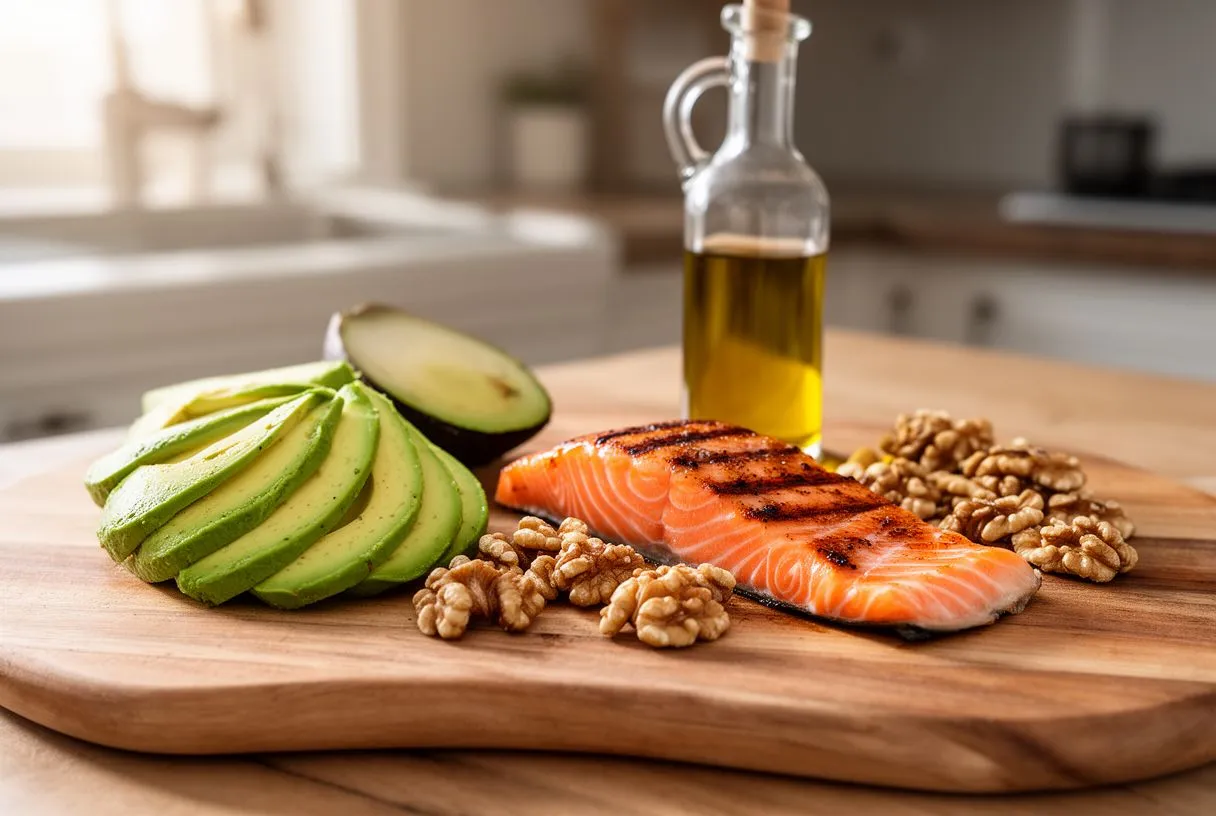
Many patients ask which foods can help increase HDL cholesterol levels, and the honest answer is that no single food performs magic — but the overall pattern of your diet matters enormously. The most consistent evidence points toward a Mediterranean-style eating pattern: generous amounts of vegetables, legumes, whole grains, fish, and unsaturated fats, with red meat and processed food kept to a minimum. This pattern supports good cholesterol while simultaneously lowering LDL and triglycerides.
Fats that work in your favor: Monounsaturated fats — found in olive oil, avocados, and most nuts — are the best dietary allies of HDL. Fatty fish such as salmon, sardines, and mackerel supply omega-3 fatty acids, which lower triglycerides and support the heart's electrical stability. Walnuts, almonds, flaxseed, and chia seeds add plant-based omega-3s and fiber. Extra virgin olive oil, used as your primary cooking fat, is one of the simplest swaps with the strongest evidence behind it.
What to limit, and why: Trans fats — historically found in some fried and packaged foods — both raise LDL and lower HDL, making them the worst combination possible. Excess refined sugar does something similar. Focusing on whole foods rather than "fat-free" processed products is the practical rule. A practical note: when reviewing your diet, look for achievable changes rather than perfection. A daily handful of nuts and a switch to olive oil are changes most people can actually sustain — and sustained change is what moves lipid panels over months.
How to Increase HDL Cholesterol Through Daily Habits
Knowing how to increase HDL through daily habits matters because diet alone rarely does the job. Regular aerobic exercise is the single most effective lifestyle tool for raising HDL. Sustained activity that raises your heart rate increases the enzymes responsible for transferring cholesterol into HDL particles. Global heart health guidelines recommend at least 150 minutes of moderate aerobic activity per week — for example, brisk walking, cycling, or swimming — or 75 minutes of vigorous activity such as running.
Other habits that move the number: Quitting smoking is perhaps the fastest win. HDL levels often begin to rise within weeks of the last cigarette, alongside improvements in vessel function. Limiting alcohol is also wise; although moderate intake has been associated with higher HDL in some studies, no cardiologist recommends starting to drink for your lipid panel. Maintaining a healthy weight matters too, since excess abdominal fat is strongly linked to low HDL and high triglycerides.
Set realistic expectations: Lifestyle changes typically produce modest HDL improvements — a few points, not a doubling — over three to six months. The larger benefit comes from the combination: higher HDL, lower LDL, lower triglycerides, better blood pressure, and improved glucose handling all moving in the right direction together. That combined effect is what genuinely reduces your long-term risk. If your HDL stays stubbornly low despite honest effort, that is a reason to see a specialist, not a reason to give up.
HDL vs LDL Cholesterol: What Is the Difference?
Understanding the HDL vs LDL distinction clarifies almost everything else on your lab report. Both are lipoproteins — packages of fat and protein — but they travel in opposite directions. LDL carries cholesterol from the liver out to your tissues, and unfortunately drops some of it in artery walls. HDL carries cholesterol away from the arteries back to the liver for disposal. One delivers; the other collects.
Why doctors aim LDL low and HDL high: LDL particles are more prone to lodging in damaged vessel walls, where they trigger inflammation and plaque growth. This is why LDL Cholesterol is called the "bad" cholesterol and why LDL lowering is the most firmly proven strategy in preventive cardiology. HDL particles are smaller and denser, with proteins that specialize in pulling cholesterol back out of tissues. High HDL also correlates with lower cardiovascular risk in population studies, even though, as discussed above, the relationship is more nuanced than a simple straight line.
When the balance fails completely: If plaque narrows a coronary artery severely over many years, medication and lifestyle may no longer be enough. At that stage, surgical options enter the conversation: coronary artery bypass grafting, which creates a new route for blood around a blocked vessel, or in selected cases less invasive approaches. Our team performs conventional, minimally invasive, robotic, and transcatheter procedures, and we recommend the less invasive route only where the evidence supports it for that specific patient. The goal is always the lowest risk for your situation — and the best long-term outcome is avoiding that stage entirely.
What Happens If Your HDL Cholesterol Is Very High?
What happens if your HDL is very high? For decades, the assumption was that more was always better. Current evidence is more cautious. Extremely high HDL levels — well above 80-90 mg/dL — have not shown additional protection in large studies, and in some rare genetic profiles they may even be associated with higher cardiovascular risk. This has led specialists to focus on HDL function rather than sheer quantity.
Dysfunctional HDL is a real phenomenon: Some people have abundant HDL particles that simply do not work — they fail to remove cholesterol from the arteries effectively. Trials of drugs designed purely to inflate HDL numbers, such as certain cholesterol-ester transfer protein inhibitors, failed to reduce heart attacks despite raising HDL substantially. The lesson: the quality of your HDL particles matters more than the raw number on the report.
What a very high HDL means for you: In most cases, a high HDL is simply good news and requires no action. But if your HDL is unusually high, your cardiologist may look deeper to make sure the particles are functioning and that no other structural condition is complicating the picture. Preclinical rigor guidelines, such as those published in Practical guidelines for rigor and reproducibility in preclinical and clinical studies on cardioprotection, remind us that cardioprotection claims must be tested carefully — a principle we apply when interpreting any single lab value. We also encourage second opinions and treat seeking one as a normal part of deciding about heart care; a number that does not fit the clinical picture deserves a second look.
What a Cardiology Visit for Lipid Testing Involves
Here is what a lipid evaluation with a cardiologist usually looks like. We are a multidisciplinary team of cardiac surgeons led by Dr Alejandro Molina, with consulting rooms in Guadalajara, Querétaro and Hermosillo, and the first contact is a free video consultation: we get to know the patient, talk through the condition, and say which studies are still needed so no unnecessary ones are ordered. A face-to-face visit at the consulting rooms follows when the patient decides to go ahead.
What is checked, and why: A comprehensive lipid panel measures HDL, LDL, and triglycerides together, because each tells part of the story. Depending on your risk profile, a cardiologist may also order non-invasive imaging such as an echocardiogram — an ultrasound of the heart — or a coronary calcium scan, which measures calcified plaque in the coronary arteries. These studies show whether lipid imbalance has already begun to affect your arteries, not just what the blood numbers say.
How the decision is made: Every case is reviewed by our multidisciplinary team against international practice guidelines before a recommendation is given, and the final decision is always the patient's. We never rush anyone toward intervention. If lifestyle changes and medication can manage your lipid profile safely, that is usually the right path. If a structural problem is found — a valve issue, significant coronary disease — we explain every option with its trade-offs, including conventional and less invasive approaches, and we support you in seeking a second opinion before committing.
When to Seek Help from a Heart Specialist in Mexico
Knowing when to seek help from a heart specialist in Mexico is just as important as knowing your numbers. Managing cholesterol is a long-term commitment, but certain signs require prompt evaluation. If you have been diagnosed with low HDL cholesterol and begin to notice symptoms of restricted blood flow — chest pressure or tightness during exertion, unusual breathlessness, or discomfort that eases with rest — do not wait. These can be signs of coronary artery disease that has progressed beyond what a lab report can show.
Recognizing a heart emergency: The classic warning signs of a heart attack include crushing chest pressure, shortness of breath, and pain radiating to the left arm or jaw. Women and people with diabetes often present atypically — profound fatigue, nausea, or dizziness without chest pain. If you suspect a heart attack, call emergency services immediately; every minute matters. Do not drive yourself to the hospital.
Turning knowledge into action: HDL cholesterol is one piece of your heart health puzzle, alongside LDL, blood pressure, weight, glucose, and family history. The most valuable thing you can do today is get a complete lipid panel, understand your HDL levels, and discuss them with a qualified cardiac team rather than self-diagnosing from internet articles. If you would like a clear, unhurried explanation of your own results and a plan built around your situation, book a consultation with our team at Cirugía de Corazón in Guadalajara, Querétaro or Hermosillo. The first step is a free video conversation — and it costs nothing to ask the questions you have been carrying with worry.