

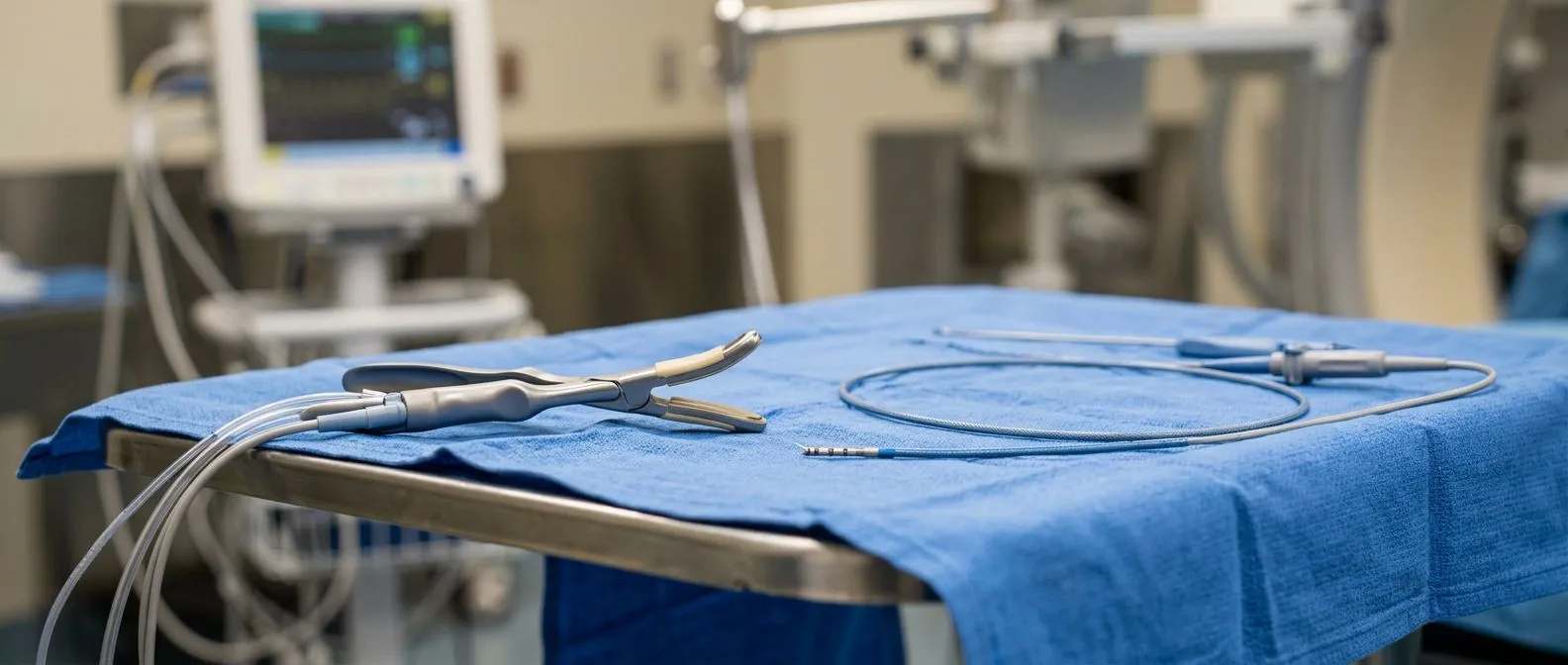
Hybrid Procedure for AFib: Surgery Plus Ablation
A hybrid ablation procedure AFib combines surgical and catheter techniques for better rhythm control.
Atrial fibrillation — often called AFib — is the most common heart rhythm problem in adults, and it happens when the electrical signals that coordinate your heartbeat become chaotic, so the upper chambers of the heart quiver instead of pumping properly. When medications and catheter-based treatments have not brought the rhythm back under control, a hybrid ablation procedure for AFib offers a different path: it combines surgical ablation, performed through small incisions, with catheter ablation, delivered from inside the heart, so that both sides of the heart wall are treated in one coordinated plan. This guide explains what the treatment involves, who it suits, what recovery looks like, and what questions you should ask before deciding.
What Is a Hybrid Ablation Procedure for AFib?
At its core, the procedure is a partnership between two specialties. A cardiac surgeon creates ablation lines on the outside of the heart — typically on the back wall of the left atrium, the chamber where most AFib signals originate — using minimally invasive access through small incisions between the ribs. Then an electrophysiologist, a cardiologist who specialises in heart rhythm, works from inside the heart through a catheter to complete the pattern and confirm that every line is actually blocking the abnormal electrical signals.
Why the two-sided approach matters: when catheter ablation is done alone from inside the heart, it can be difficult to create complete, continuous lesions on the outer wall of the left atrium, which is thick and sits in a hard-to-reach position. A surgical approach from outside can reach that wall directly, and doing both together makes the treatment more complete. The overall concept of a hybrid cardiac procedure — surgeons and electrophysiologists collaborating on the same heart — is well described in the medical literature, including in the PMC article “Hybrid cardiac procedure: the ultimate cooperation.”
How it relates to the maze: the operation is also called a hybrid maze procedure or convergent ablation procedure because it is based on the Cox-Maze pattern, a classic surgical design in which the surgeon creates a set of lines like a maze that blocks the electrical chaos. The hybrid version aims to deliver the same idea with far less trauma than a full open-heart maze operation, which requires the breastbone to be divided and the heart-lung machine to be used.
How Is a Hybrid Ablation Procedure Performed?
The procedure is usually done in a single session under general anaesthesia. First, the surgeon makes small incisions in the chest wall and uses a thoracoscope — a thin camera — to see the outside surface of the beating heart. A surgical ablation device then creates a set of lesion lines on the outer wall of the left atrium. If the left atrial appendage is present, the surgeon also closes it: this is the small blind pouch where blood clots tend to form during AFib, and closing it is one of the most important steps for reducing stroke risk.
Then the catheter phase: without any additional incision, the electrophysiologist passes a catheter through a vein in the groin into the heart, maps the electrical activity of the left atrium, and completes the ablation pattern from inside — including the lines around the pulmonary veins, the vessels that carry oxygenated blood from the lungs into the left atrium and are the most common trigger of AFib. The team then verifies that each line is electrically complete. If the team finds incomplete blocks, the hybrid procedure is repeated or adjusted.
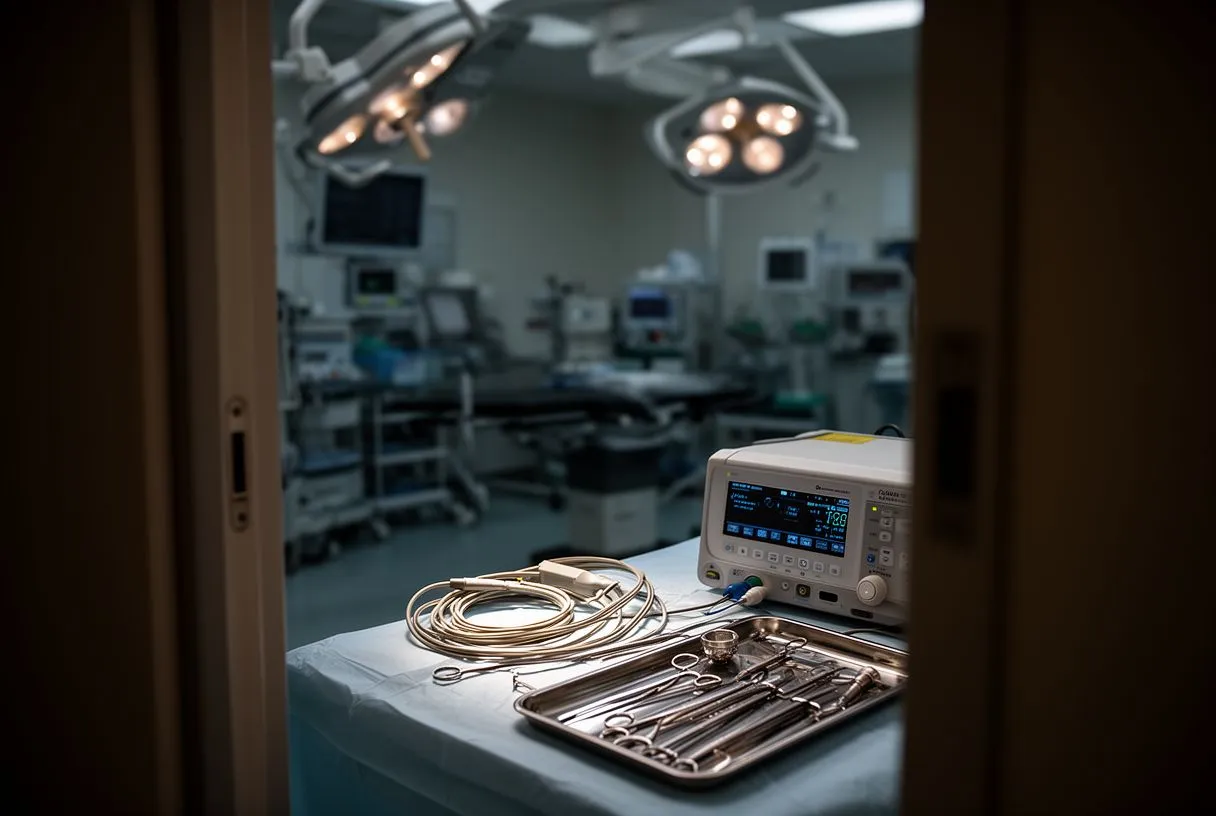
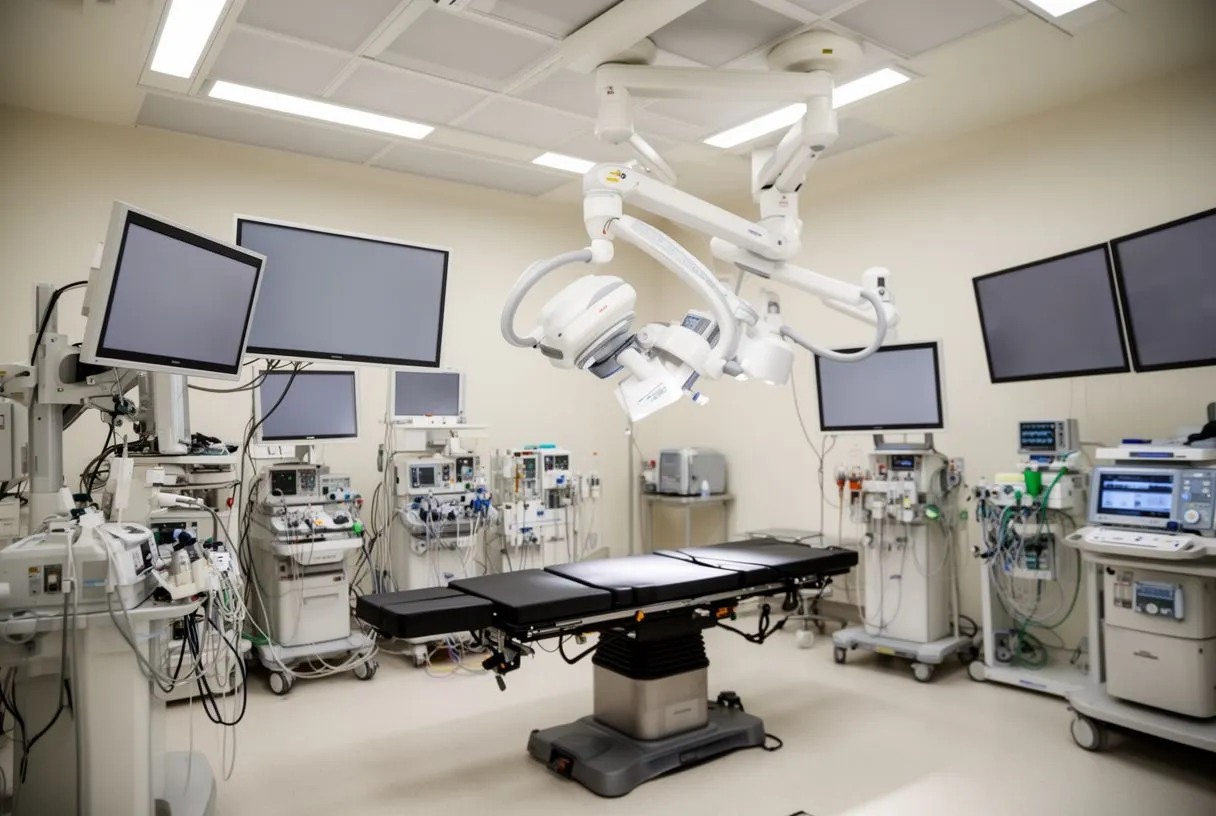
Positioning and teamwork: the patient is positioned with the chest slightly elevated so that the surgeon can access the chest wall and the electrophysiologist can work with the catheter from below at the same time. This positioning is why the whole procedure is performed in a hybrid operating theatre — a room equipped with both surgical instruments and real-time X-ray and mapping equipment — so the two teams can work in sequence without moving the patient. In our practice, Dr Molina reviews every imaging study and rhythm record before recommending this approach, so that we know beforehand whether the left atrium is large enough and whether the anatomy is suitable.
Why Combine Surgery and Catheter Ablation?
AFib is not a single problem — it is a pattern of electrical storm that often begins in the pulmonary veins and spreads through the left atrium over time. Once AFib has been persistent, meaning the heart stays in that rhythm permanently rather than coming and going, a single catheter procedure from the inside often fails to eliminate all the triggers, especially those located on the outer wall of the left atrium.
What the two approaches each offer:
- Surgical side: the surgeon can create lesions that reach the outer wall in one pass, with a depth and reliability that is difficult to achieve from inside the heart.
- Catheter side: the electrophysiologist can map the rhythm in real time, find any remaining triggers, and prove the lines are complete.
- Together: the two approaches complement each other — the surgeon creates the base, the electrophysiologist verifies it and fills in the gaps.
Why this matters for persistent AFib: when catheter ablation is used alone for persistent AFib, a significant number of patients need a second procedure later, because the initial ablation was incomplete. Treating the heart from both sides in a single session aims to reduce the chance of that second procedure, and it is the reason the approach exists at all.
Who Is a Candidate for a Hybrid Ablation Procedure for AFib?
Not every patient with AFib needs this operation. The approach is most relevant for patients who have persistent or longstanding AFib, whose heart chambers are enlarged or whose previous catheter ablation has failed, and who are not good candidates for full open-heart surgery because of their general condition or their anatomy. It is a middle ground — more thorough than a catheter procedure alone, but less invasive than a full maze operation.
When the answer may be “yes”: the patient has had persistent AFib for more than a year, the left atrium is enlarged, and medications have not controlled the heart rate. Or the patient has had one or more catheter ablations and the AFib has returned. Or the patient has AFib and is already undergoing another heart operation for another reason, in which case the ablation can sometimes be combined with that operation.
When the answer is usually “no”: the patient has only occasional, short-lived AFib that has never been treated before — paroxysmal AFib — in which case a straightforward catheter ablation is the usual first step. Or the patient has other heart conditions — a stiff valve, a blocked artery, a problem with the heart muscle — that need a different operation altogether, and the ablation can be performed during that operation instead. In our multidisciplinary team, every case is reviewed against international practice guidelines before we recommend anything, and the patient receives a clear proposal with the alternatives; the final decision is always theirs.
What Is the Success Rate of a Hybrid Ablation Procedure?
The honest answer is that success depends on how long you have had AFib, how large your left atrium is, and how careful you and your team are about the follow-up plan. For patients with persistent AFib, a single hybrid ablation procedure for AFib has a higher rate of rhythm control at one year than catheter ablation alone, because the treatment is more complete. But there is no guarantee of a permanent cure, and some patients still need medication to keep their heart rate in a normal range.
What “success” means: it can mean a heart that stays in normal rhythm without medication, or it can mean a heart that still needs one medication but no longer races, no longer causes symptoms, and has a lower risk of clot formation. Both are real wins, and the team should be clear about which one you are aiming for. We always explain in plain words what the studies actually show, what we expect for your particular case, and what we cannot promise — because patients deserve to understand exactly what they are agreeing to.
How to think about the numbers: any figure a team quotes you should be based on published clinical series, not marketing. Ask how many patients in your specific situation have been treated, what the one-year and two-year rhythm-control rates are, and what the team considers a failure that requires a second procedure.

What Are the Risks Associated with Hybrid Ablation Procedures?
Every heart operation and every catheter procedure carries risk, and a hybrid ablation procedure is no exception. Being honest about these risks is part of the decision-making process, not a reason to avoid the operation — it is the way to make a decision with your eyes open.
The main risks include:
- Bleeding: because the surgeon works on the beating heart through a small incision, any bleeding can be difficult to control and may require conversion to a conventional open operation.
- Puncture or tear of the heart wall: a rare but serious complication, particularly when the catheter passes from inside to outside.
- Fluid around the lungs or heart: this can happen after the operation and may need to be drained.
- Stroke: a real risk in any heart procedure on a patient with AFib, which is precisely why closing the left atrial appendage is so important.
- Infection: at the incision sites, usually manageable with antibiotics.
How the team manages these risks: the fact that the operation is performed in a hybrid operating theatre means that if something goes wrong, the team does not need to move the patient — the imaging equipment and the surgical team are already in the room, and the problem can be dealt with immediately. This is one of the reasons a hybrid operating theatre is so important for this kind of surgery.
What Does Hybrid Cardiac Ablation Recovery Really Look Like?
The recovery is usually shorter than open-heart surgery, but it is not a walk in the park. Most patients stay in the hospital for three to five days, and the first two days involve careful monitoring of the heart rhythm, the chest drains, and the incision sites. You will be able to walk within a day or two, and the incisions — usually a few centimetres between the ribs and a small incision in the groin — will heal over several weeks.
What the first few weeks look like: expect some soreness at the incision sites, some tiredness, and a heart that may be more irregular than usual for a while. This is because the heart muscle has been irritated by the ablation, and it takes time to settle. Many patients notice a heart that is racing or irregular for a few weeks after the procedure — this is not a failure of the procedure, and it is usually managed with medication while the heart heals.
The long-term picture: patients who stay in normal rhythm generally report a clear improvement in energy and in exercise tolerance. But patients who are still in AFib after the operation may need medication, and some need a second catheter procedure. The truth is that the operation is a major step, and it is not a cure for everyone. We tell patients in our consultations, in plain words, that the goal is to give them the best chance of living without AFib, but that the heart is not a machine that can be fixed with a guarantee — it is a living organ that responds to treatment in a way that has to be measured, not assumed.
How Does a Hybrid Ablation Procedure Compare to Catheter Alone?
For patients who have never had any treatment for AFib, the usual first step is a catheter ablation — a procedure that requires no incisions at all, is done through a vein in the groin, and is usually done in a day. For patients with occasional AFib, that is often enough. For patients with persistent AFib, catheter ablation alone has a lower success rate, and a second procedure is often needed.
What the hybrid procedure adds: it treats the heart from both sides, which is more complete than catheter treatment alone. It also closes the left atrial appendage, which catheter ablation usually does not do, and this has a real impact on stroke prevention surgery. The trade-off is that the hybrid procedure is an operation — it requires general anaesthesia, small incisions in the chest wall, and a longer hospital stay.
How to decide: the decision depends on the type of AFib you have, the size of your left atrium, whether you have had previous treatment, your general health, and your own goals. If you are a patient who has been told that catheter ablation has failed, or that your AFib is too persistent for a simple catheter procedure, a hybrid ablation procedure for AFib is a treatment that you should at least ask about. We encourage patients to seek a second opinion, and we treat that as a normal part of deciding about heart surgery — not as an insult to the first team.
What Happens in the Hybrid Operating Theatre?
A hybrid operating theatre is a room that combines a full cardiac surgery setup with an advanced imaging suite — an X-ray system and an electrical mapping system — so that the surgeon and the electrophysiologist can work together in the same session. The patient is not moved between rooms, and the two specialties do not need to schedule their parts of the operation on separate days.
Why this matters to you as a patient: the procedure can be done in a single session, which means a single anaesthetic, a shorter total time in hospital, and a lower total cost than two separate operations. It also means that if the catheter phase finds that a line is not complete, the surgeon is still there to fix it — and if the surgeon finds something unexpected, the catheter team is still there to map it.
What it means for planning: the procedure is planned in advance, and the team reviews every case against international guidelines. Dr Molina trained in minimally invasive, robotic and structural surgery at the University of Montreal.
How to Choose a Team and Schedule a Hybrid Ablation Consultation
Choosing a team for this operation is a serious decision, and the quality of the team matters more than the quality of the equipment. The most important thing to look for is a team that operates together regularly — a surgeon and an electrophysiologist who have done this many times, in the same room, with the same plan.
Questions to ask: How many hybrid ablation procedures has the team performed? What is the rhythm-control rate at one year for patients in my situation? What is the plan if the procedure fails? What is the follow-up plan? What is the total cost, including the hospital stay and the follow-up? At our practice, we offer a first contact that is a free video consultation: we get to know the patient, talk through the condition, and say which studies are still needed so no unnecessary ones are ordered, and a face-to-face visit at our consulting rooms follows when the patient decides to go ahead. Patients from abroad — including from the United States and Canada — can start with a free video consultation with the team, which has consulting rooms in Guadalajara, Querétaro and Hermosillo.
What to bring: bring your recent electrocardiograms and Holter recordings, your echocardiogram report, your medication list, and any record of previous catheter ablations. If you have had a cardiac CT or MRI, bring that too — it helps us judge whether the left atrium is suitable for the hybrid approach.
A final word: a hybrid ablation procedure for AFib is not a magic cure, and it is not the right answer for everyone. It is a treatment that is worth considering when catheter ablation has failed or when AFib is persistent, and it is worth discussing with a team that has done it before and can tell you honestly what the evidence says about your situation. If you are reading this because you or a family member is living with AFib, the most useful next step is to talk to a qualified cardiac team — not to decide from an article, however detailed it may be.






