


Inotropes After Heart Surgery: Supporting a Weak Heart
Inotropes after heart surgery help a stunned heart pump strongly during recovery.
When a loved one comes out of open-heart surgery, families often hear unfamiliar words spoken quickly at the bedside. One of the most common is "inotropes" — strong intravenous medications that help a tired heart pump with more force in the first hours and days after the operation. Inotropes after heart surgery are not a sign that something has gone wrong; they are a planned part of postoperative care in many cardiac intensive care units, used to bridge the heart from the stress of surgery back to independent function. This guide explains what these medicines are, which ones are used, why, for how long, and what recovery looks like when they are part of your care.
What Are Inotropes Used for After Surgery?
Inotropes are medications given through an intravenous line that increase the strength of each heartbeat. During cardiac surgery, the heart is deliberately stopped and handled, protected with cardioplegia (a special solution that keeps it still and nourished), and then restarted. After that, the heart muscle is often stunned — temporarily weakened — even when the operation itself went perfectly.
Why they are needed: In the first hours after surgery, the heart must pump enough blood to the brain, kidneys and every other organ while it recovers from that insult. Inotropes give it temporary assistance so blood pressure and circulation stay adequate while the heart regains its natural strength.
Where they are given: Almost always in the cardiac intensive care unit (ICU), where nurses monitor blood pressure, heart rhythm, urine output and oxygen levels continuously. As an authoritative reference, JAMA Network and similar peer-reviewed literature describe inotropic therapy as a mainstay of managing low cardiac output after cardiac operations.
How Inotropes After Heart Surgery Work
To understand these drugs, it helps to picture the heart as a pump whose power depends on how forcefully each muscle fibre contracts. Inotropes act on that contractility — the medical term for the force of contraction — mostly by raising calcium levels inside the heart muscle cells, which is the trigger for contraction.
Intravenous infusion: These medications are given continuously through a pump, often into a central line (a thin catheter placed in a large vein near the heart). This allows the ICU team to adjust the dose minute by minute, matching support exactly to what the heart needs at that moment.
Dose titration: The team watches monitors showing blood pressure, cardiac output (how much blood the heart moves each minute) and other readings, and increases or decreases the infusion accordingly. The goal is always the lowest dose that keeps circulation safe — never more than necessary.
Temporary by design: Inotropes do not heal the heart. They support it while stunned muscle wakes up, swelling settles, or a newly repaired valve adjusts to its new job. Most patients never need them again once they leave the ICU.
Types of Inotropes After Heart Surgery
Several agents are used after cardiac surgery, and each has a slightly different profile. The ICU team selects one or a combination based on the patient's blood pressure, heart rate, rhythm and kidney function.
- Dobutamine: The most widely used inotrope after cardiac surgery. It increases the force of contraction and mildly raises the heart rate.
- Milrinone: Works by a different pathway, improving contraction and relaxing blood vessels. It is often chosen when blood vessels are stiff or pressures in the lungs are high.
- Epinephrine (adrenaline): A powerful inotrope reserved for moments of significant low output; it raises both contraction and heart rate.
- Norepinephrine and vasopressin: Technically vasopressors rather than inotropes, but often combined with them to keep blood pressure in range.
Each of these is matched to the individual situation, and combinations are common in the first day or two.
Inotropes vs Vasopressors After Surgery: What Is the Difference?
Families frequently hear both words at the bedside and assume they mean the same thing. They are related but different tools.
Inotropes strengthen the squeeze: These drugs make the heart muscle contract more forcefully. They are used when the heart itself is weak and cannot push enough blood forward.
Vasopressors tighten the pipes: Vasopressors such as norepinephrine and vasopressin constrict blood vessels, raising blood pressure by increasing resistance. They are used when pressure is low because the vessels are too relaxed, not because the pump is failing.
They are often combined: After cardiac surgery, low blood pressure can come from both problems at once — a stunned heart and vasodilation (relaxed vessels) from the surgery itself and the medications used for anaesthesia. That is why many patients receive an inotrope and a vasopressor together for the first hours, then both are reduced as the situation normalises. The five main vasopressors used in intensive care are norepinephrine, epinephrine, vasopressin, dopamine and phenylephrine — names you may hear during rounds.
Inotropes and Low Cardiac Output Syndrome After Surgery
One of the most feared complications after heart surgery is low cardiac output syndrome — a condition in which the heart cannot pump enough blood to meet the body's needs. It typically appears in the first hours to first few days after surgery.
Warning signs: Falling blood pressure, cold hands and feet, reduced urine output, rising lactate (a marker of poor tissue oxygen delivery) and increasing need for oxygen. ICU staff check these indicators on an hourly schedule precisely so that support can be started early.
Why inotropes are first-line: When the syndrome appears, inotropes are the first medication response, alongside correcting any reversible cause such as bleeding, rhythm problems or too little fluid volume. Early recognition and treatment make a genuine difference to outcomes.
Who is at higher risk: Patients with pre-existing weak hearts, older age, longer operations, complex valve procedures and diabetes carry a higher likelihood of needing inotropic support. Knowing this in advance, the surgical team plans for it rather than reacting to it.
Inotropes After Bypass Surgery: What to Expect
Coronary artery bypass surgery — the operation that reroutes blood around blocked heart arteries — is the most common reason patients encounter inotropes. In many centres, a significant share of bypass patients leave the operating room with one or two inotrope infusions already running.
Planned, not reactive: At our practice, every case is reviewed by the multidisciplinary team against international practice guidelines before any recommendation is made, and that planning continues into the operating room: the team anticipates, based on the patient's heart function beforehand, whether support will likely be needed at the end of the operation.
The first night: Patients usually arrive in the ICU intubated (on a breathing tube) with infusions running. Overnight, as the breathing tube is removed and the patient wakes fully, the inotrope doses are steadily stepped down. By the second morning, many patients are on little or no support at all.
What it means if you needed them: Requiring inotropes after bypass surgery is common and, by itself, does not predict a poor outcome. It tells the team the heart needed a bridge — and the bridge worked.

Dobutamine After Heart Surgery: How It Is Used
Dobutamine deserves its own explanation because it is the inotrope patients hear about most often.
How it behaves: Dobutamine stimulates receptors on heart cells that increase both the force of contraction and the heart rate. It can also slightly lower blood pressure in some patients by relaxing vessels, which is why it is sometimes paired with a vasopressor.
Typical course: It is started in the operating room or on ICU arrival, adjusted by the ICU team, and reduced in careful steps once the heart shows it can maintain adequate output on its own — stable blood pressure, good urine output, normalising lactate.
Monitoring during use: Because dobutamine raises heart rate and can trigger rhythm changes in susceptible patients, the team watches the ECG continuously and adjusts or switches agents if unwanted rhythms appear. This is routine ICU practice, not an emergency.
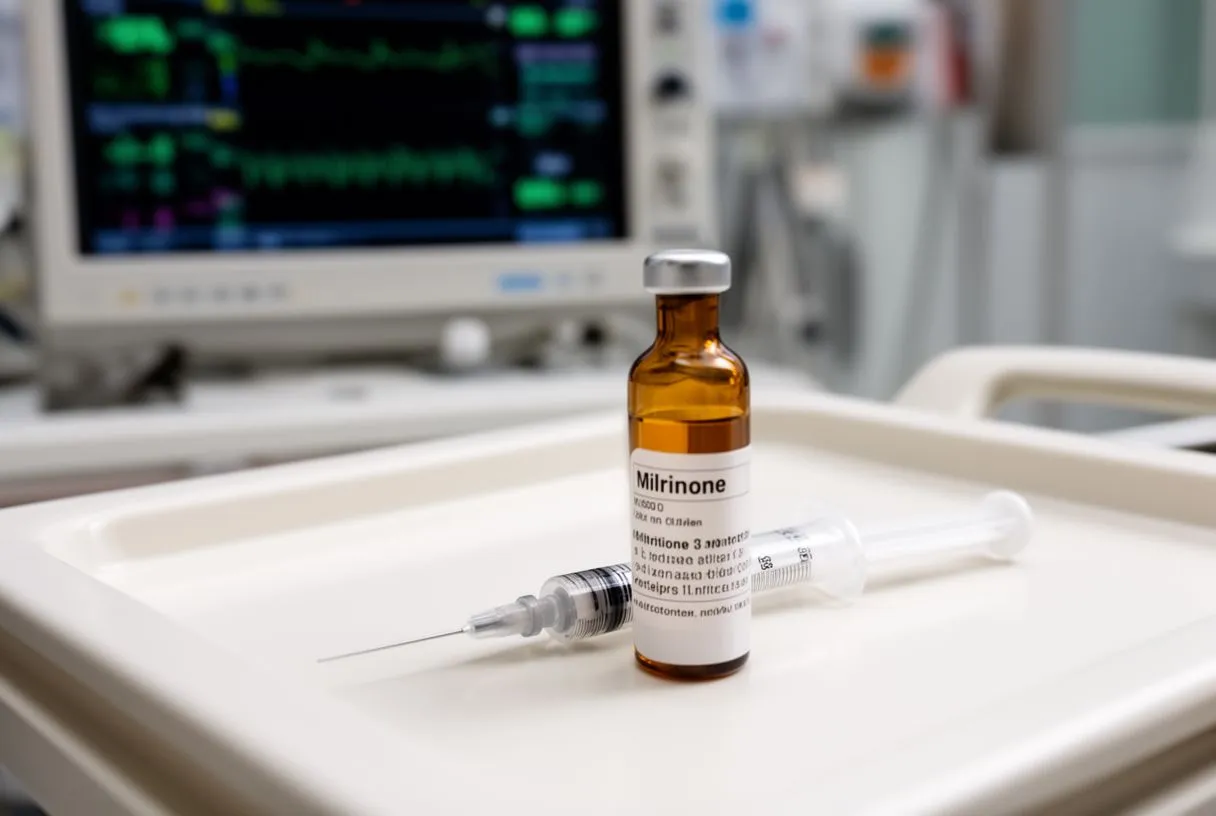
Milrinone After Cardiac Surgery: When It Helps
Milrinone is the other inotrope frequently named in cardiac recovery plans, particularly for specific patient profiles.
A different mechanism: Milrinone does not act on the same receptors as dobutamine. Instead, it increases calcium availability inside the heart cell through a separate pathway and simultaneously relaxes blood vessels. That dual action — stronger contraction plus easier flow — is why it is valued in certain situations.
Best-fit situations: Milrinone is often chosen for patients with pulmonary hypertension (high pressure in the lung arteries), stiff or thickened heart chambers, or those whose vessels respond poorly to other agents. It can also be combined with dobutamine when modest doses of each work better than a high dose of one.
Things the team watches: Because milrinone relaxes vessels, it can lower blood pressure, and it is cleared by the kidneys — so kidney function influences both dosing and how quickly it wears off. The ICU team tracks both closely.
Inotropes Side Effects After Heart Surgery
Inotropes are powerful medicines, and honest discussion of their downsides is part of good patient education. The ICU team weighs these risks against the clear benefit of supporting circulation.
Heart rhythm effects: Inotropes make the heart more electrically excitable. Fast rhythms, extra beats and occasionally more serious arrhythmias can occur, which is why every patient on an inotrope has continuous ECG monitoring.
Heart rate and workload: A stronger, faster heartbeat consumes more oxygen. The team balances the dose carefully so the heart gets the help it needs without being driven so hard that the newly operated muscle is strained.
Vessel and local effects: Some inotropes and vasopressors can leak from a peripheral intravenous line into surrounding tissue and irritate it. That is why these drugs are usually given through a central line — a catheter placed in a large vein — where leaking is far less likely.
Other considerations: Effects on blood pressure (either up or down), kidney function, and the ability to wean smoothly are all part of the daily assessment. The care team reviews each patient's response to these medications daily, adjusting the plan rather than following a fixed schedule.
How Long Are Inotropes Used After Heart Surgery? Weaning and Recovery
One of the most common questions families ask is simply: how long? The honest answer is that it varies, but there is a typical pattern.
Usual duration: Most patients are on inotropic support for hours to a few days. The infusions are reduced step by step — this is called weaning — as the heart demonstrates it can sustain adequate output without help. The pace is dictated by the patient's readings, not by the calendar.
When weaning takes longer: Patients with pre-existing heart weakness, longer or more complex operations, or kidney issues may need support for several extra days. Occasionally a patient transitions to oral medications that support the heart, continuing under cardiology follow-up after discharge.
What recovery looks like: Once inotropes are stopped and the ICU stay ends, most patients step down to a regular ward, begin walking within a day or two, and continue a structured recovery over weeks to months. Cardiac rehabilitation — a supervised programme of progressive exercise and education — plays a major role from this point onward.

Inotropes after heart surgery are a temporary, carefully managed bridge — not a complication in themselves. They give a stunned heart the strength to carry the patient through the most demanding first hours and days after the operation, and they are withdrawn as soon as the heart can stand on its own. If you or a family member is preparing for valve surgery, bypass surgery or another cardiac procedure, ask your surgical team beforehand whether inotropic support is likely, what monitoring to expect, and what the weaning plan looks like. At our consulting rooms in Guadalajara, Querétaro and Hermosillo, our team explains every step of a proposed operation in plain language, including the care that follows it — and the first contact is a free video consultation where we talk through your condition and exactly which studies are still needed. We encourage second opinions as a normal part of deciding about heart surgery. The most important step you can take is to discuss your own situation with a qualified cardiac team rather than face these decisions alone.






