Intra-Annular Valve Design in TAVR: What It Changes
Intra-annular valve TAVR changes sealing, blood flow, and long-term durability.
If you have been told you need a transcatheter aortic valve replacement — often shortened to TAVR — you may have heard your cardiology team mention the word "intra-annular." It sounds technical, but it describes something simple: where the new valve sits inside your heart. An intra-annular valve is a replacement aortic valve designed to sit down inside the ring of tissue (the valve annulus) where your original valve used to be, rather than floating above it. That single design choice affects how well the valve seals, how blood flows through it, and how it behaves over years. This guide explains what an intra-annular valve TAVR actually involves, how it compares with other valve designs, and what the differences mean for you as a patient.
What Is an Intra-Annular Valve in TAVR?
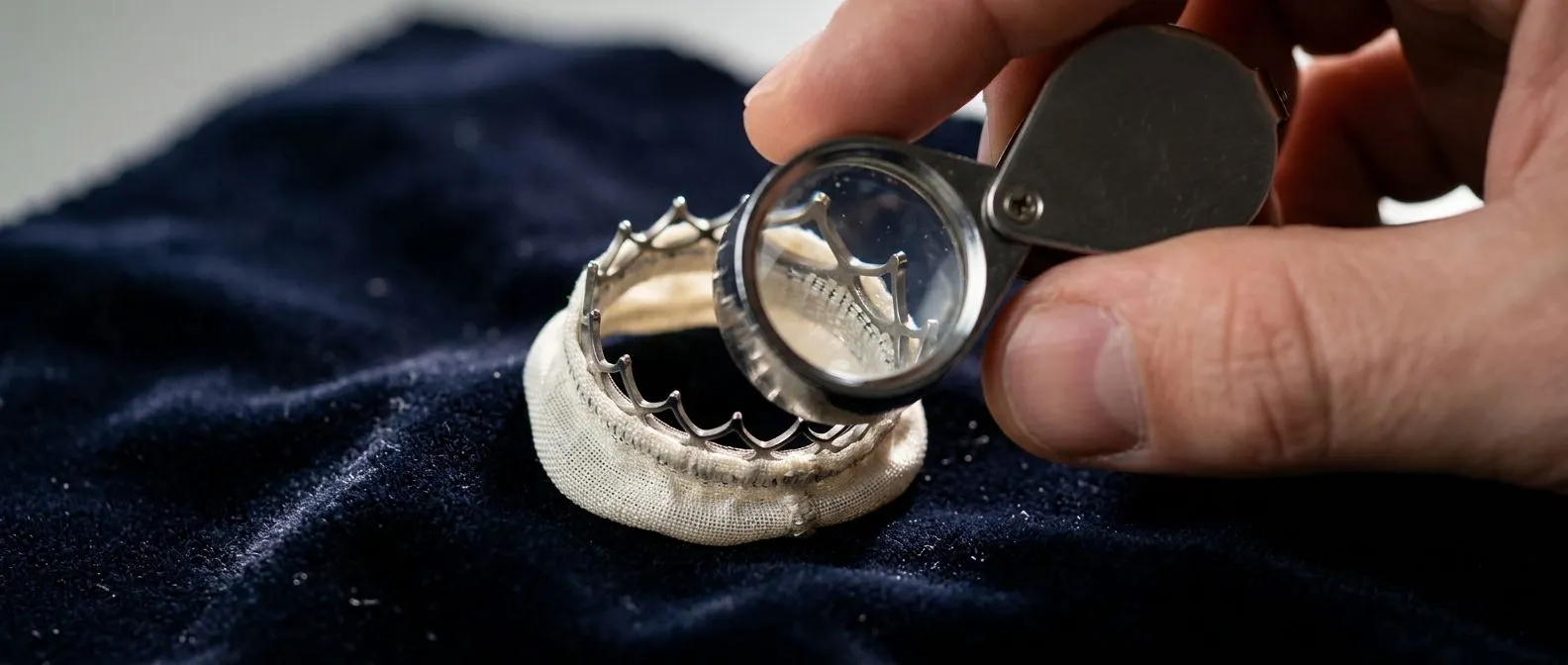
What the annulus is and why position matters. The aortic valve annulus is the fibrous ring at the base of the aorta where the valve leaflets attach. In TAVR, a replacement valve — usually built from bovine pericardial valve tissue or porcine valve tissue mounted inside a metal frame — is crimped onto a catheter, guided up through an artery in the groin, and expanded at the site of the diseased valve. Where that frame lands relative to the annulus is a deliberate design decision.
Intra-annular vs other positions. Some transcatheter valves are designed to sit with their sealing skirt and leaflets low, within the annulus itself. Others — supra-annular designs — place the leaflets above the annulus, inside the aorta. Neither is "correct"; each solves a different problem. An intra-annular design aims to reproduce the natural anatomy of the aortic valve, with leaflets opening and closing at the level your own leaflets once did.
Why designers care about this. The position of the valve influences the width of the outflow tract, the clearance between the new valve and the conduction system (the electrical wiring of the heart), and the contact between the valve's sealing skirt and the annular tissue. A design that seals inside the annulus can reduce the risk of paravalvular leak — blood escaping around the edge of the valve — but placement must be very precise. We will look at these trade-offs in detail below.
How Intra-Annular Valve TAVR Works Step by Step
The procedure itself is very similar to any TAVR, whatever the valve design. Understanding the steps helps you see where the "intra-annular" part comes in.
- Access: a thin tube (catheter) is usually inserted through the femoral artery in the groin — the most common route — or, less often, through the apex of the heart or the aorta.
- Planning: before the procedure, CT scans measure the annulus, the valve leaflets, and the arteries, so the right valve size can be chosen.
- Positioning: the crimped valve is advanced to the aortic valve and positioned under X-ray guidance, with the reference point for placement defined relative to the annulus.
- Release: the valve is either expanded by a balloon (balloon-expandable) or opens by itself (self-expanding), and the frame anchors itself in the annular region.
- Check: the team measures the new valve's function and checks for leaks before removing the catheter.
Where the intra-annular part matters. With an intra-annular design, the target position is lower: the sealing portion of the valve should sit flush with the annulus. If the valve sits too high, the skirt loses contact with the ring of tissue; too low, and it may obstruct the flow pathway or interfere with the conduction system below. Your team uses contrast injections and X-ray landmarks to confirm the exact placement before releasing the valve.
What you feel during the procedure. Most patients are lightly sedated or fully asleep; the procedure typically takes one to two hours, and many patients sit up the same day. We tell our patients that the sensations are usually far milder than they imagine — a needle at the groin, warmth when contrast is injected, and then rest.
Intra-Annular vs Supra-Annular TAVR: Valve Design Differences
The core difference: where the leaflets live. In an intra-annular design, both the sealing skirt and the leaflets sit at or below the level of the original valve ring. In a supra-annular design, the leaflets sit above the annulus, inside the aorta, while the frame anchors down at the annular level. The most visible consequence is in the leaflets themselves: supra-annular leaflets open in a wider space, which can reduce turbulence, while intra-annular leaflets sit in the same space your natural leaflets occupied.
What this means for coronary access. Because supra-annular leaflets sit higher, they can sit closer to the openings of the coronary arteries (the arteries that feed the heart muscle). If you ever need a future procedure — a valve-in-valve, where a new transcatheter valve is placed inside the old one, or a coronary stent — that leaflet position can matter. An intra-annular valve keeps the leaflets lower, which many teams consider a practical advantage for future access.
What this means for conduction. The conduction system that runs between the atria and ventricles passes just below the aortic valve. Valve frames that press down deeply into the annulus can press on that tissue, and some patients need a pacemaker after TAVR. The likelihood depends on many factors — the valve design, its depth of implantation, and your own anatomy. Your team weighs this risk alongside every other consideration when choosing a valve.
Types of TAVR Valves: Balloon-Expandable and Self-Expanding Designs
Balloon-expandable valves. These valves are mounted on a balloon and expanded to their final size in one controlled inflation. The frame is generally short, and the valve is designed for predictable, accurate placement — the balloon does not move once inflated. This suits an intra-annular positioning strategy, where a few millimetres decide whether the valve seals properly.
Self-expanding valves. These use a nitinol frame (a flexible metal alloy) that opens on its own as it is unsheathed. Self-expanding frames are more flexible, adapt to the annulus, and can be repositioned before final release in some designs — a meaningful safety net if the first position is not perfect. Many self-expanding valves are also sutures-free or sutureless in concept: the frame holds itself in place without surgical stitches. Designers describe some as a Lotus-style short self-apposing design, where the valve anchors along the annulus rather than deep into the left ventricle.
How they differ in practice.
- Predictability: balloon-expandable valves expand at a fixed size and position; self-expanding valves continue to adapt slightly after release.
- Repositionability: some self-expanding designs can be pulled back and repositioned before release; balloon-expandable ones cannot.
- Anatomy fit: heavily calcified annuli often suit balloon-expandable frames; flexible, asymmetric annuli may suit self-expanding ones.
Paravalvular Leak and Intra-Annular Valve Placement
What paravalvular leak is. A paravalvular leak is blood escaping between the outer edge of the new valve and the tissue around it — not through the valve, but around it. Small leaks are common and often harmless; larger ones matter. Research has consistently linked moderate or greater paravalvular leak after TAVR with worse long-term survival, which is why every valve design tries to reduce it.
Why intra-annular designs target it. A valve whose sealing skirt sits inside the annulus is in direct contact with the fibrous ring, a tissue that is usually calcified and firm. Contact with calcified annular tissue helps the skirt press outwards and seal. By contrast, a valve that sits higher may have part of its skirt in contact only with the aortic wall, which is thinner and less regular. This is one of the central arguments for an intra-annular valve TAVR approach — the design puts the sealing surface where the sealing is most reliable.
How the team checks it. During the procedure, your team performs X-ray and ultrasound checks to grade any leak. If a leak is significant, options include repositioning the valve (if the design allows), dilating it with a balloon, or in rare cases post-dilating with a larger balloon.
Best TAVR Valve for a Small Annulus
Why a small annulus changes the conversation. When the annulus is small, every millimetre of the valve frame takes up space in a narrow flow channel. A valve with a bulky frame above the annulus can narrow the outflow tract; a valve with a low-profile intra-annular design leaves more room for blood to flow. For this reason, when patients and families ask about the best TAVR valve for small annulus anatomy, the honest answer is: the one that fits the specific measurements of that patient's annulus, leaflets, and arteries — not a single brand name.
What your team actually measures. The decision rests on CT-derived measurements: the annulus diameter and area, the height of the coronary artery openings, the degree and distribution of calcium, the width of the aortic root, and the size of the access arteries. Valves come in a range of sizes, and the "over-sizing" rule — choosing a valve slightly larger than the annulus to secure a seal — must be balanced against the risk of over-expanding a small, heavily calcified ring.
How the choice is made. Every case at our consulting rooms in Guadalajara, Querétaro and Hermosillo is reviewed by the full multidisciplinary team against international practice guidelines before a recommendation is made, and you receive a clear proposal with the alternatives — the final decision is always yours. There is no universal "best" valve; there is the valve whose design and sizing range best match your anatomy and your goals.
TAVR Valve Durability and Structural Valve Deterioration
What durability means for a transcatheter valve. Structural valve deterioration is the gradual wearing of the valve tissue over the years — stiffening leaflets, calcium deposits, and eventually reduced function. It is the same process that affects surgical bioprosthetic valves, and it develops more slowly in younger, healthier tissue than in older ones. Design features — leaflet thickness, the stresses the frame places on the tissue, and how the valve seals — all influence how long a valve performs well.
How the annular position may help. An intra-annular design places the leaflets in the natural valve position, where the annular ring supports the leaflet attachment. Some engineers argue this reproduces the biomechanics of the native valve, spreading stress more evenly across the leaflets. Evidence on long-term outcomes is still accumulating for all transcatheter valve designs, and no design has been proven to last a specific number of years in a specific patient — that depends on your age, tissue biology, blood pressure control, and calcification metabolism.
What you can do about durability. The most reliable way to protect any bioprosthetic valve — transcatheter or surgical — is to control the factors that accelerate wear: blood pressure, cholesterol, smoking, and inflammation. Your cardiologist will schedule regular echocardiograms (ultrasound of the heart) to track valve function, typically annually or more often if anything changes. In our consultation, we take the time to explain what the studies actually show in plain words, so you understand what your follow-up schedule is and why.
TAVR Annular Fit Calculation: How Your Team Chooses a Valve
Why CT drives the decision. Before any TAVR, you will have a computed tomography (CT) scan of the heart and aorta. From it, the team measures the annular perimeter and area, the calcium load, the distance from the annulus to the coronary artery openings, and the size of the arteries used for access. TAVR annular fit calculation is the process of matching these measurements to the specific size range of each available valve design.
What "over-sizing" means. To ensure a seal, most teams choose a valve slightly larger than the measured annulus — the amount varies with valve design and annular calcification. Too little over-sizing risks a paravalvular leak; too much risks over-distending the annulus or pressing hard on the conduction system. This is why two patients with the same "annulus size" can still receive different valves and different sizes.
What you should ask.
- Which valve design are you planning, and why? Ask whether the choice is driven by your annulus, your calcification pattern, or access arteries.
- What is the planned over-sizing, and what if the valve does not seal? Good teams have a clear plan B.
- What is my pacemaker risk with this specific valve and placement depth?
What Recovery After Intra-Annular Valve TAVR Looks Like
Same procedure, same recovery pattern. The valve design does not change the recovery pathway. Most patients who have TAVR through the groin go home within a few days — often one or two — provided there are no complications. You will have a small puncture site at the groin, an overnight of monitoring, and a series of checks: heart rhythm, valve function on ultrasound, kidney function, and blood counts.
What the first weeks involve. For the first days you should avoid heavy lifting, driving (until your team clears you), and strenuous activity. Walking is encouraged almost immediately. Blood thinners or antiplatelet medicines are part of the routine after TAVR; your cardiologist will decide the exact regimen and its duration. Follow-up echocardiograms confirm the valve is working and check for any late leak.
When to call for help. Warning signs that need urgent attention include swelling or bleeding at the puncture site, sudden shortness of breath, fainting, a fast irregular heartbeat that does not settle, or fever. These are uncommon, but knowing them matters. Before you go home, ask for a written list of what to watch for and whom to call.
TAVR Procedure in Guadalajara: What to Ask Your Team
Choosing a team for a TAVR procedure in Guadalajara — or anywhere. The most important predictor of a good outcome is not the valve brand but the experience of the heart team: their case volume, their planning process, and how clearly they explain your options. When you consult a team, you should feel able to ask basic questions and receive plain answers — about the valve they plan, why they chose it, what the alternatives are, and what they would do if a problem occurred on the table.
Second opinions are normal. We encourage second opinions and treat seeking one as a normal part of deciding about heart surgery — no responsible cardiac team should be uncomfortable with a patient who wants to verify a recommendation. Bring your imaging and reports so the second team can review the same data rather than repeat every test.
How a consultation with us works. The first contact at our practice is a free video consultation: we get to know you, talk through your condition, and tell you which studies are still needed so that no unnecessary ones are ordered; a face-to-face visit follows when you decide to go ahead. Dr Alejandro Molina trained in cardiothoracic surgery at the Universidad de Guadalajara, in cardiac, minimally invasive, robotic and structural surgery at the University of Montreal, and in structural cardiology and TAVR at CHU Bordeaux, and our team performs conventional, minimally invasive, robotic and transcatheter procedures — recommending the less invasive route only where the evidence supports it for that patient.
In summary, an intra-annular valve TAVR is one of several thoughtful ways to replace the aortic valve through a catheter. The design places the valve down at the annulus — the same position your own valve occupied — which favours sealing, preserves the flow channel, and keeps the leaflets clear of the coronary arteries for the future. Supra-annular and other designs solve different problems, and there is no single best valve for everyone. What matters most is careful CT planning, an experienced multidisciplinary team, and a recommendation that fits your specific anatomy. If you have been told you need an aortic valve replacement, discuss your own situation with a qualified cardiac team rather than deciding alone — and consider booking a consultation to talk through which approach is right for you.
Knowing Your Heart: The Aortic Valve in TAVR
Where the valve sits. The aortic valve sits between the left ventricle — the main pumping chamber — and the aorta, the large artery that carries blood to the whole body. It has three leaflets that open with each heartbeat and snap shut in between, preventing blood from flowing backwards. In TAVR, the replacement valve reproduces this one-way function without open surgery.
What TAVR replaces. TAVR does not remove your diseased valve; it crimps the new valve inside the old one, pushing the calcified leaflets against the aortic wall. The annulus — the fibrous ring — is the anchor point. Whether the new valve's sealing skirt sits inside that ring (intra-annular) or its leaflets sit above it (supra-annular) is the core design difference discussed throughout this article.
Why it matters to you. When your team explains your valve choice, understanding the annulus helps you follow the reasoning. Ask them to show you your own CT images — seeing the ring, the calcium, and the proposed valve position makes an abstract decision concrete.