


Keyhole Valve Surgery: Recovery and Risks
Keyhole valve surgery recovery timeline and risks explained by Cirugía de Corazón.
If your cardiologist or surgeon has mentioned keyhole valve surgery, you probably have two questions in mind: how big is the operation, really, and how long until I feel like myself again? Both questions deserve honest answers. Keyhole valve surgery — also called minimally invasive valve surgery — replaces or repairs a heart valve through a small cut between the ribs instead of opening the chest through the breastbone. Recovery after keyhole valve surgery is generally shorter and easier than recovery from traditional open heart surgery, but it is still heart surgery, and it still follows a real healing timeline. This guide walks you through what the procedure involves, what the days and weeks afterward actually look like, what can go wrong and how often, and how to tell a straightforward recovery from one that needs your doctor's attention.
What Is Keyhole Valve Surgery?
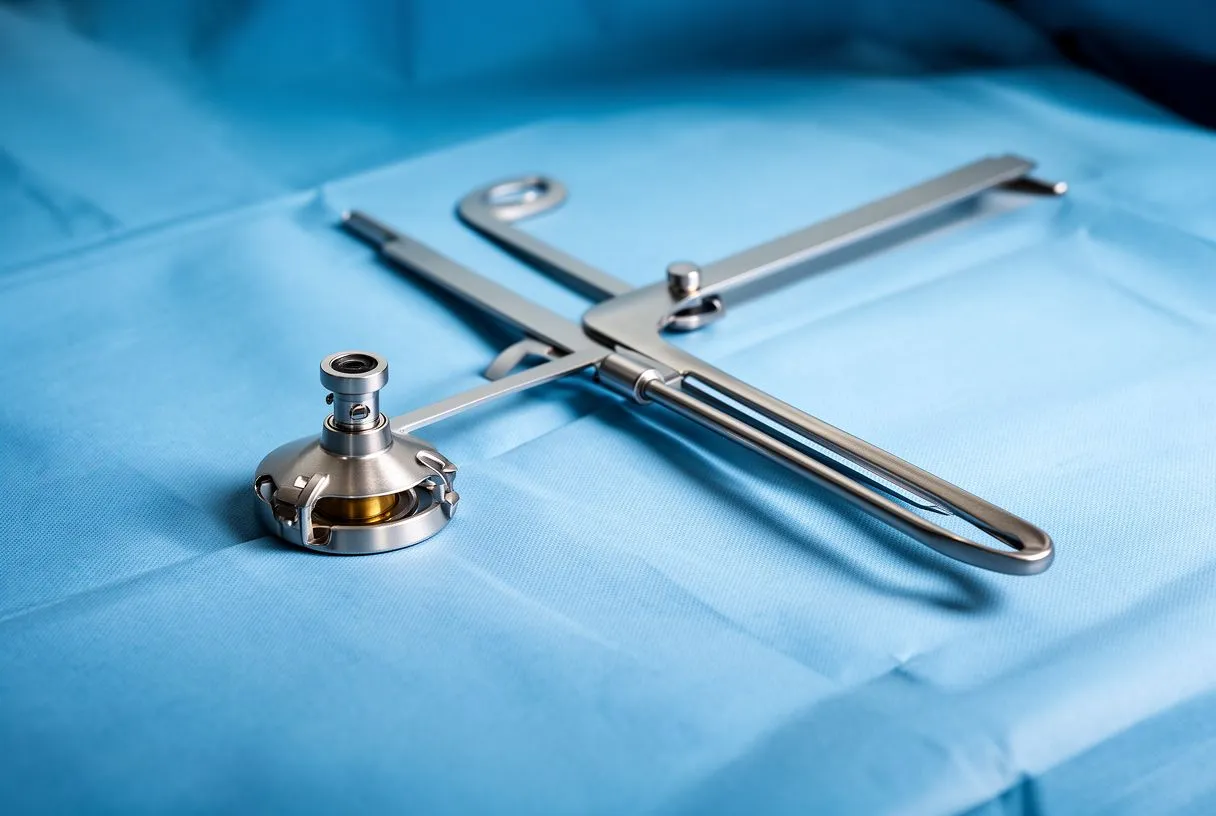
Keyhole valve surgery is the everyday name for minimally invasive heart valve surgery. Instead of a long incision down the middle of the chest that splits the breastbone, the surgeon works through a small incision — usually 5 to 8 centimetres — placed either under the right breast or at the top of the chest, depending on which valve needs attention. Long, thin instruments and a tiny camera are passed through this incision so the surgeon can see and repair the valve without a large opening.
The heart has four valves, and the two most often treated this way are the aortic valve, which controls blood leaving the heart to the body, and the mitral valve, which controls blood flowing between the two upper and lower chambers on the left side of the heart. When a mitral valve leaks — a condition related to Mitral Valve Prolapse in some patients — repair through a small right-chest incision is now a well-established approach. For the aortic valve, surgeons can choose between a surgical replacement through a keyhole incision or a catheter-based option called TAVR (transcatheter aortic valve replacement), where a new valve is delivered through a tube in the groin without opening the chest at all.
Which approach suits which patient? That depends on your valve problem, your age, your lung function, whether you have had chest surgery before, and how risky a full open operation would be for you. This is why the decision should never be made by one person: every case we see is reviewed by our multidisciplinary team against international practice guidelines before we recommend anything. Our work covers valve disease, coronary disease, the aorta and structural heart conditions, and we perform conventional, minimally invasive, robotic and transcatheter procedures, always recommending the less invasive route only where the evidence supports it for that specific patient.
How Does Keyhole Valve Surgery Work?
Under general anaesthesia, you are placed on a heart-lung machine, which takes over the work of the heart and lungs during the operation — just as in open surgery. The difference is how the surgeon gets there. Through the small incision between the ribs, soft tissue retractors create a working corridor to the heart. A camera gives a magnified, high-definition view of the valve, often better than the naked eye offers in an open operation.
Repair or replacement? The mitral valve can often be repaired rather than replaced, which preserves your own tissue and is associated with excellent long-term results when performed by experienced teams. The aortic valve, once it is badly narrowed or leaking, almost always needs replacing. The surgeon removes the diseased valve and sews in a substitute — either a tissue valve (from animal or human donor tissue) or a mechanical valve (made of durable synthetic materials). Options include a Stented Valve, the most common type, a Stentless Valve, a Sutureless Valve designed to be positioned quickly, a mechanical valve, a Porcine Valve, an Intra-annular Valve that sits within the valve ring, or a Supra-annular Valve that sits above it. The right choice depends on your anatomy, your age and whether you will take long-term blood thinners.
Once the valve work is done, the heart is restarted, the instruments are removed, and the small incision is closed. Because the breastbone is not cut, the chest wall keeps most of its strength, which is a big part of why recovery after keyhole valve surgery is faster — you will read more about that below.
Keyhole Surgery vs Open Heart Surgery: What Is the Difference?
The difference is not the operation inside the heart — the valve work is often identical. The difference is the road the surgeon takes to get there, and that road determines much of your recovery.
- Incision and bone: open surgery splits the breastbone, which is then wired together and takes roughly 8 to 12 weeks to knit solidly. Keyhole surgery leaves the breastbone intact, removing the biggest single cause of long restrictions after heart surgery.
- Movement and strength: with an intact breastbone you can drive, lift and return to work sooner. There are no sternal precautions — the rules about not lifting, pushing or twisting that dominate the first months after open surgery.
- Wound and comfort: a small incision between the ribs hurts less and heals with a lower chance of wound infection than a full breastbone incision, which matters greatly for patients with diabetes.
- Blood and breathing: smaller operations typically involve less blood loss, and many patients come off the breathing tube and out of intensive care sooner.
Open surgery still has real advantages in certain situations — complex anatomy, multiple valves needing attention, or combined bypass grafts — and it should not be seen as the "old, worse" option. The honest framing is: which approach gives the lowest risk and the best result for your situation? That answer comes from a proper review, not a general rule.
How Long Does Keyhole Heart Valve Surgery Take?
This is one of the most common questions patients ask, and the answer has two parts. The operation itself typically takes between 3 and 5 hours for a single valve, depending on the valve involved, whether it is a repair or a replacement, and the technique used. Minimally invasive mitral valve repair through a right-chest incision and keyhole aortic valve replacement both sit in this range; more complex cases can take longer.
Time in hospital afterwards? Most patients who have keyhole valve surgery spend one night in the intensive care unit or a monitored recovery area, then two to four more days on a regular ward before going home. Some go home sooner; some need longer if there are rhythm problems, fluid around the lungs, or simply slower early progress. Age, fitness before surgery and other conditions all influence this — two patients having the same operation can have very different hospital stays, and both can be normal.
So when you add it together: about half a day in the operating room, a few days in hospital, and then the real recovery — at home — which is covered in the next sections.
What Is Recovery After Keyhole Aortic Valve Surgery Like?
Recovery after keyhole valve surgery on the aortic valve follows a pattern you can plan around. The first two or three days are about waking up comfortably, getting the chest tubes out, sitting up, and starting to walk short distances in the corridor — usually the day after surgery. You may feel tired far beyond what the small incision suggests. That tiredness is the body healing from major surgery, not just from the cut, and it is expected.
Weeks one to four. Most patients walk several times a day, climb stairs carefully, manage light household tasks and feel steadily stronger. Driving is usually possible around two to four weeks after a keyhole operation, once you can brake in an emergency without hesitation and your surgeon has cleared you — compared with six weeks or more after breastbone-splitting surgery. Returning to desk work often happens within two to four weeks; physically demanding work takes longer.
Weeks four to eight. By this point most patients feel close to themselves. Formal cardiac rehabilitation — a supervised programme of graded exercise and education — is strongly recommended and usually starts within a few weeks of discharge. Patients who complete it consistently recover function faster and with more confidence than those who do not.
It is worth knowing that an alternative exists for many aortic valve patients: TAVR, the catheter-based valve replacement, which may allow going home within a day or two. In suitable candidates — including patients at low surgical risk — randomised trials have compared TAVR with surgical aortic valve replacement over long follow-up, with outcomes published in the European Heart Journal showing comparable results across eight years for carefully selected low-risk patients. Which option fits you depends on your valve anatomy, including the size and shape of the Valve Annulus, and this is exactly the kind of question our team weighs case by case before making a proposal. In the consultation we take the time to explain what the studies actually show, in plain words, and to answer every question before any decision is made — and the final decision is always yours.

What Is Keyhole Mitral Valve Surgery Recovery Like?
Recovery from keyhole mitral valve repair is broadly similar to the aortic timeline, with a few differences worth knowing. The incision sits under the right breast, and some patients notice chest wall soreness or a rib-bruising ache on that side for several weeks — more noticeable when coughing, laughing or lying on the right side. This settles with time and pain relief.
Why repair rather than replace matters. When the mitral valve can be repaired instead of replaced, you keep your own valve tissue, avoid a prosthesis, and usually avoid long-term blood thinners — a meaningful quality-of-life difference. Repair through a small right-chest incision is now a standard approach at experienced centres, and when the leak is caught before the heart becomes significantly enlarged, the results are durable and patients live normal lives.
What slows people down? In our experience the usual culprits are not complications but early over-activity — lifting something heavy in week two because you feel fine — and not attending cardiac rehabilitation. A written, staged plan for activity after discharge helps, and new symptoms are a reason to call your care team rather than push through. Feeling good early is wonderful; it is not permission to skip the plan.
Atrial fibrillation — a temporary irregular heart rhythm — is common in the first weeks after any valve operation and is managed with medication while it settles. Your team will monitor it; most cases resolve within two to three months.
Heart Valve Surgery Recovery at Home: What Should You Do?
Going home is a milestone, but recovery at home is where the real work happens. The first two weeks set the tone for everything that follows, and the rules are simple.
- Walk every day: several short walks daily, increasing gradually. Walking is the single best recovery tool you have — it rebuilds stamina, helps the lungs stay clear and lowers clot risk.
- Look after the incision: keep it clean and dry, and watch for redness, swelling, discharge or spreading pain — signs that need a phone call, not waiting.
- Lift nothing heavy: even with an intact breastbone, respect the healing tissue between the ribs. Your surgeon will tell you exactly when heavier lifting is safe.
- Take medication exactly as prescribed: this includes blood thinners if you have them, plus any blood pressure or rhythm medication. Never adjust doses on your own.
- Eat for healing: protein, vegetables, and steady hydration. Wound healing and energy levels both depend on good nutrition.
- Rest before you are exhausted: plan activity in the morning, accept afternoon naps, and expect the tiredness to fade gradually over several weeks — not days.
One caution deserves emphasis: constipation is very common after surgery because of pain medication and reduced movement, and straining on the toilet puts sudden pressure on the healing chest. Prevent it with fluids, fibre and, if needed, a mild laxative your doctor approves. It is a small thing that prevents a disproportionate number of painful return visits.
We also encourage every patient to bring a family member to the discharge conversation, because the details matter: which symptoms are normal, which need a call, which need urgent attention. A second pair of ears at that moment — and honestly, a second medical opinion at any major decision point — is something we see as a normal, healthy part of deciding about heart surgery, not a slight on the treating team.
Are There Risks With Keyhole Valve Surgery?
Yes, and you should hear them plainly. "Minimally invasive" describes the incision, not the seriousness — this is still surgery on the heart, performed on a heart-lung machine, with all the general risks that entails. The main risks include bleeding, stroke, infection, irregular heart rhythms, kidney strain, and the possibility that the keyhole approach must be converted to an open operation partway through if the anatomy or the situation demands it. There is also a learning-curve reality: keyhole techniques demand specific training, and outcomes are best at centres where the team does these operations regularly.
How common are complications? For carefully selected patients at experienced centres, minimally invasive valve surgery carries risks that are broadly comparable to — and for some outcomes, such as wound infection and blood transfusion, lower than — the open approach. Serious complications remain uncommon, but "uncommon" is not "never", and your surgical team should give you numbers based on their own results, not just published averages.
What raises your personal risk? Age, diabetes, lung disease, kidney disease, previous chest surgery, weakened heart muscle, and urgency of the operation all matter. There are also situations where transcatheter options carry their own specific concerns — for example, the small but real possibility of valve degeneration in a tissue valve over the years, and a Thrombotic Risk (clot formation on the valve) that requires careful anticoagulation management after certain procedures. When we review a case, we assess all of this explicitly: our team reviews every patient against international practice guidelines and gives you a clear proposal with the alternatives, including an honest statement of what each option's risks are for you personally. We would rather you hear the full picture from us than a reassuring half-picture from anyone.
When Is Keyhole Surgery Not the Right Choice?
Keyhole surgery is a superb option when it fits, and the wrong option when it does not. Situations where the open approach — or a catheter approach — may serve you better include severely diseased or calcified blood vessels that make the small-incision approach difficult, poor lung function that cannot tolerate single-lung ventilation, severe obesity that limits the working space between the ribs, previous right-chest surgery with scar tissue, and anatomy that makes valve access through a small incision impractical. Complex multi-valve disease or the need for combined bypass grafting across several vessels often favours the conventional approach as well.
How is this decided? Not by preference, and not by marketing. Surgical risk scores such as the EuroSCORE II help quantify individual risk, and anatomical imaging — a CT scan of the chest, an echocardiogram — shows whether the valve and the surrounding structures are reachable through a small incision. Then comes the part that matters most: a team with experience in all the options sitting down together. When Dr Molina trained in cardiothoracic surgery at the Universidad de Guadalajara, then in cardiac, minimally invasive, robotic and structural surgery at the University of Montreal, and in structural cardiology and TAVR at CHU Bordeaux, the central lesson was exactly this: the same patient can often be treated three different ways, and choosing well requires seeing all three honestly.
This is also where seeking a second opinion earns its place. If you have been told you need valve surgery and the approach has not been explained clearly — or you have been offered only one option with no discussion of alternatives — asking for another review is entirely reasonable. We encourage second opinions, including for patients already under our care. Five reasons to ask for a second opinion before high-risk surgery include confirming the diagnosis, confirming the treatment approach, understanding the alternatives, understanding the risks in your own case, and simply gaining the confidence to proceed. None of these are wasted; all of them make you a better decision-maker.
When Can You Get Back to Normal Life?
Here is the timeline most patients with a smooth recovery after keyhole valve surgery can expect, understanding that individual variation is normal and your own team's instructions always take priority:
- Days 1–4: out of hospital, walking in the house, managing stairs slowly.
- Weeks 1–2: daily walks outside, light tasks, driving usually allowed around weeks 2–4 once cleared.
- Weeks 3–4: desk work and normal daily routine for most patients.
- Weeks 6–8: gradual return to more demanding activity; cardiac rehabilitation completing.
- Months 3–6: full unrestricted activity for most patients, including exercise they enjoyed before surgery.
Compare that with open surgery, where breastbone healing typically restricts driving and lifting for six to twelve weeks and full recovery stretches over three months or more. The headline is real: keyhole techniques can genuinely compress recovery from roughly three months toward three to six weeks for many patients. But the compression only happens when the operation is well chosen and the recovery is followed properly — shortcuts at home undo the advantage.
Warning signs that need urgent attention: chest pain different from the expected incision soreness, new or worsening breathlessness at rest, fever over 38°C, a wound that is red, leaking or opening, sudden swelling of the legs, fainting, or a racing irregular heartbeat that does not settle. Any of these deserves an immediate call to your surgical team or emergency services — never a wait-and-see at home. Recovery Room monitoring in the hospital and your follow-up appointments afterward exist precisely to catch problems early, so keep every follow-up even when you feel completely well.
Keyhole valve surgery has changed what valve treatment looks like: a small incision, an intact breastbone, days in hospital instead of weeks, and a return to normal life measured in weeks rather than months. The key to a good outcome is not the incision, though — it is matching the right procedure to the right patient, which requires an experienced multidisciplinary team, honest discussion of all options including TAVR where appropriate, and a recovery plan you actually follow. If you have been diagnosed with a valve problem, or you are comparing surgical and transcatheter options, the most useful next step is a proper conversation with a qualified cardiac team about your own anatomy, your own risk profile and your own goals. Our team, led by Dr Alejandro Molina, offers a free initial video consultation in which we get to know you, talk through your condition, and tell you which studies are needed — and which are not — before any face-to-face visit. Ask your questions, request a second opinion if you have one, and make the decision with full information. That is what good heart care looks like, and it is yours to ask for.






