Minimally invasive heart surgery: 11 common questions
Get your minimally invasive heart surgery questions answered by Guadalajara specialists.
What it is, who it suits, how long it takes, what it costs, and how to find a surgeon trained in it. These are the minimally invasive heart surgery questions we hear most.
Eleven common questions about minimally invasive heart surgery: what it is, who it suits, how long it takes, what it costs, and how to find a surgeon trained in it.
1. What is minimally invasive cardiac surgery?
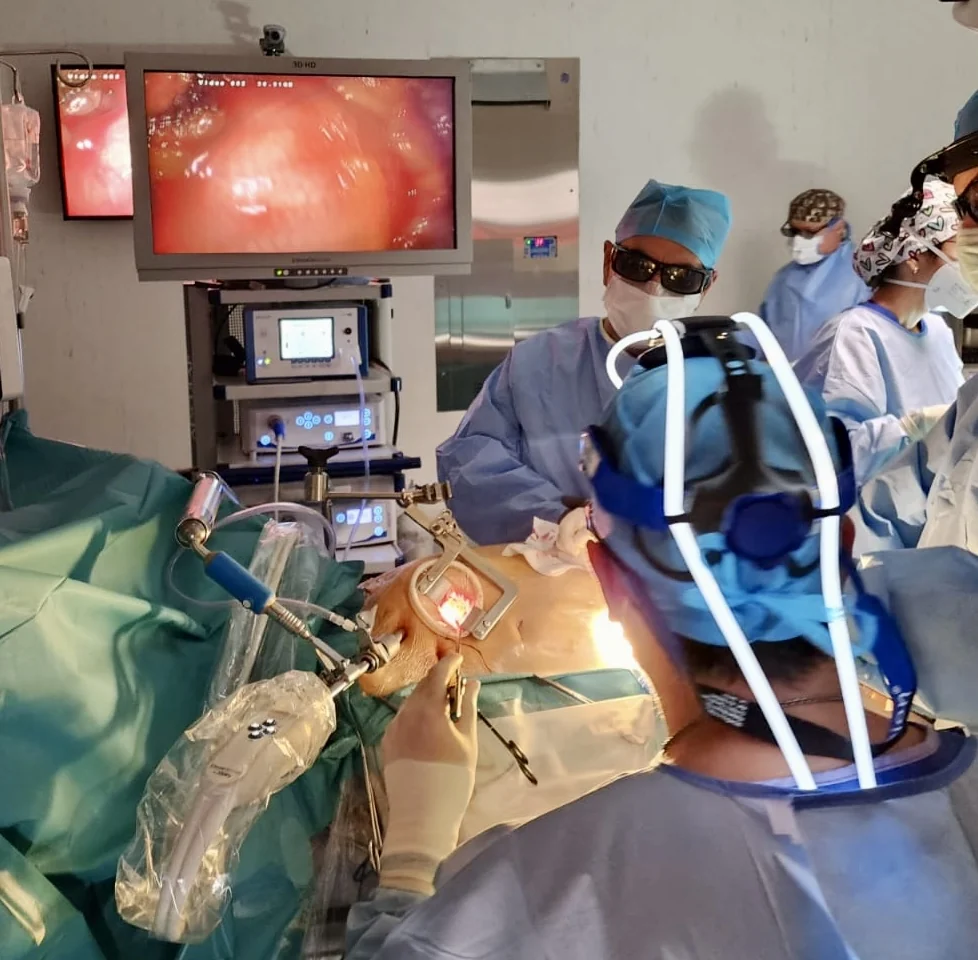
It is a surgical technique used to treat heart disease without a major incision in the chest, the sternotomy. Small incisions of approximately 5 cm are made and advanced technology is used to reach the heart.
2. What are the advantages?
Less postoperative pain, a faster recovery, a shorter hospital stay, a lower likelihood of infection, and a return to normal life much sooner than with conventional surgery.
3. Who are the ideal candidates?
Most conditions that would normally be treated with open-heart surgery can now be approached minimally invasively — valve disease, some tumours, congenital defects and others. Ideal candidates are studied with CT, catheterisation and echocardiography.
4. Which procedures are most commonly performed this way?
Repair or replacement of the heart valves are the most common. Also some congenital defects such as atrial septal defect and anomalous venous drainage, revascularisation or bypass procedures, tumours of the heart, and several others.
5. How is it carried out?
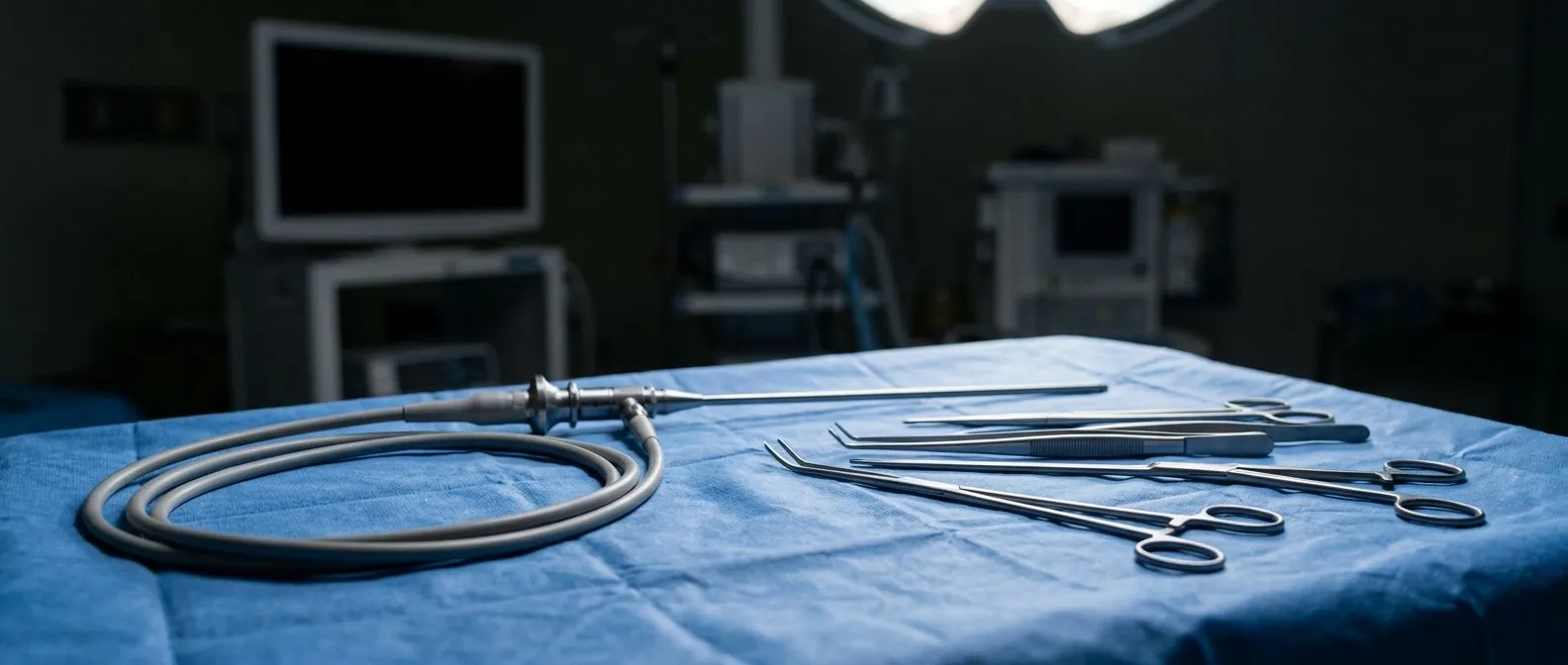
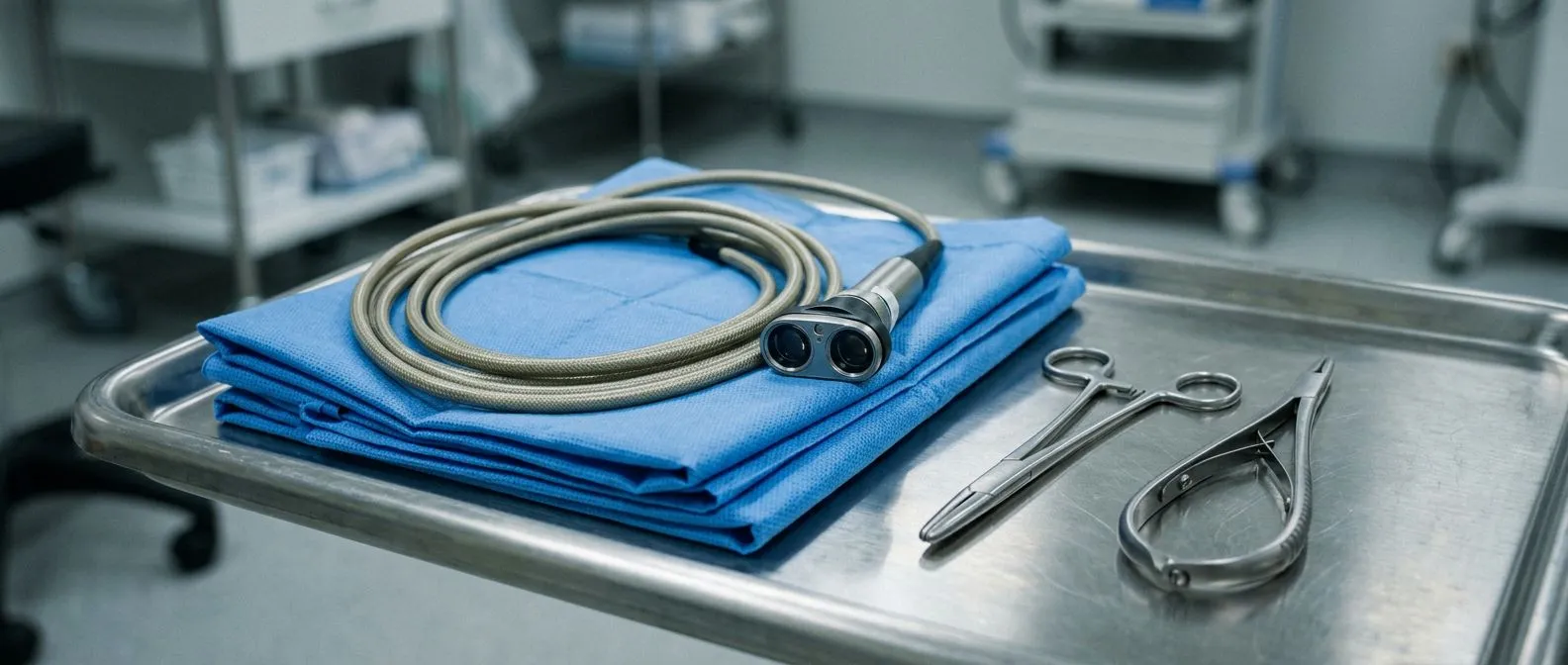
Small incisions of 5 cm are made in the chest, usually on the right side, and special instruments and a 3D camera are used to perform the surgery precisely through them.
6. How long does it typically take?
The duration depends on the specific procedure, but in general terms between 4 and 6 hours. This obviously varies from person to person according to the complexity of each case.
7. What is the average recovery time?
Recovery varies, but in general patients can return to normal activities faster — approximately 3 weeks — compared with open-heart surgery, which can require months. We cover this in our guide to life after heart surgery.
8. Are there risks?
As with any medical procedure there are potential risks: infection, bleeding, complications relating to the kidneys, neurological problems or arrhythmias. These risks are usually below 5%.
9. What does it cost in Mexico?
The cost varies with the specific procedure, the hospital and the geographical location. Average price ranges can run between 400,000 and 800,000 pesos in the private sector. These prices can vary with each case, as well as with prolonged stays in intensive care or complications.
10. How does it differ from open-heart surgery?
The main differences are the size of the incision, the recovery time, the risk of infection and the length of hospital stay. Minimally invasive surgery tends to offer a faster recovery, fewer postoperative complications, less pain and fewer blood transfusions.
11. Where can I find a surgeon experienced in this?
It is very important to know that fewer than 10% of cardiac surgeons are qualified to perform minimally invasive procedures. These are complex operations requiring years of special training, even after already being a certified open-heart surgeon. There are different types of surgeon and interventional cardiologist.
Make sure you have an open conversation about this with your surgeon before proceeding or making a decision. There can be advantages to asking for a second opinion if you have doubts.
Minimally invasive surgery is not for everyone.
More minimally invasive heart surgery questions: what to ask your surgeon
The eleven answers above cover the basics. Yet every patient arrives with a list of their own, and minimally invasive heart surgery raises questions that are personal to each case. We encourage you to write them down before your consultation. Bring a family member if you can. Two sets of ears remember more than one.
These are the questions we think every patient should feel free to ask, whether the operation is on a valve or on the coronary arteries:
- What exactly is wrong with my heart? Ask for the diagnosis in plain words, and how severe it is.
- Why do I need an operation now? Ask what is likely to happen if you wait, and what happens if you act.
- What are all my options? Medicines, catheter-based procedures, conventional surgery and minimally invasive surgery may all be possible. Ask why one is recommended over the others.
- Am I a candidate for the minimally invasive approach? Ask which studies were used to decide, and what would make the team change to a conventional incision.
- How often does the team perform this operation? Experience matters, especially with minimally invasive techniques.
- What are my personal risks? General figures help, but your age, your kidneys, your lungs and your other conditions change the picture.
- What will recovery look like for me? Ask about the hospital stay, pain control, driving, work and cardiac rehabilitation.
- Which medicines will I take afterwards, and for how long?
If you are facing coronary artery bypass surgery, add some questions about the grafts. Ask which arteries or veins will be used, how many bypasses are planned, and whether a stent could be an alternative in your case. A good team welcomes these questions. If the answers leave you uncertain, a second opinion is reasonable.
The tests that decide whether you are a candidate
Of all the minimally invasive heart surgery questions, "am I a candidate?" is the one the tests answer. As we mentioned in question 3, candidates are studied with CT, catheterisation and echocardiography. Each test answers a different question:
- Echocardiography shows how the valves and the heart muscle work. A transoesophageal echocardiogram, taken from the gullet under sedation, gives a more detailed view of the valves.
- CT angiography maps the chest, the aorta and the arteries of the pelvis and legs. This matters because minimally invasive surgery often connects the heart-lung machine through the vessels of the groin.
- Cardiac catheterisation shows the coronary arteries. It tells us whether there is coronary disease that also needs treatment.
Blood tests, lung function and a general assessment complete the picture. Sometimes the results show that a conventional incision is the safer choice. In that case we explain why. The goal is always the best result for you, not a particular technique.
Minimally invasive cardiac surgery recovery, step by step
Patients often ask us for a realistic picture of minimally invasive cardiac surgery recovery. The general pattern is predictable, although each person moves at their own pace. Your surgeon sets your individual plan.
- Intensive care. Most patients spend around a day in intensive care after the operation. The breathing tube is usually removed within hours.
- The ward. Walking starts early, often the day after surgery. Many patients go home within a few days, although some need longer.
- The first weeks at home. Tiredness is normal. Short, regular walks help more than long rests. The small incision usually hurts less than a full opening of the sternum.
- Back to normal life. As we said in question 7, many patients return to most normal activities in approximately three weeks. Heavier work and sport take longer, and your team will tell you when.
Heart surgery recovery time depends on more than the size of the incision. Age, fitness before the operation, other conditions such as diabetes or lung disease, and the type of procedure all play a part. A valve repair in a fit 50-year-old usually moves faster than a combined operation in an older patient with several conditions.
Because the breastbone is not divided, there are generally fewer lifting restrictions than after a sternotomy. Even so, follow the specific limits your team gives you. Driving is usually possible once you are off strong painkillers and can move freely, but ask before you drive.
Cardiac rehabilitation is one of the best things you can do for your recovery. It is a supervised programme of exercise, education and support, and we recommend it to most of our patients. Report any warning signs promptly. These include fever, redness or discharge from the wound, increasing breathlessness, a fast or irregular heartbeat, new swelling of the legs, or chest pain that feels different from wound discomfort. Our guide to life after heart surgery covers the months that follow.
Eating well after heart surgery
Appetite is often poor for the first week or two. That is normal. In the early days, focus on small, regular meals with enough protein to help the wounds heal. Eggs, fish, chicken, beans and dairy are good choices.
Over the longer term, the best diet after heart surgery is a heart-healthy one that you can keep up for life. For most patients that means:
- Plenty of vegetables, fruit, legumes and whole grains
- Fish, poultry and plant proteins more often than red and processed meat
- Olive oil, nuts and seeds in place of butter, lard and deep-fried food
- Less salt, which helps to control blood pressure and fluid
- Few sugary drinks, sweets and highly processed snacks
Some patients need specific advice. If you take warfarin, for example, large swings in how many green leafy vegetables you eat can affect your blood tests. Keep your intake steady and follow your team's guidance. If you have diabetes or kidney disease, a dietitian can tailor the plan to you.
Getting ready in the weeks before surgery
Good preparation makes recovery easier. If you smoke, stopping before surgery helps your lungs and your wounds. Stay as active as your condition allows, unless your team advises otherwise. Bring a complete list of your medicines to the pre-operative visit. Some, such as blood thinners, may need adjusting before the operation, but only your team should tell you how and when. Any dental problem should be checked first, because an infection in the mouth can reach a heart valve. Finally, plan for help at home during the first weeks.
Is heart surgery complicated?
Open-heart surgery is a major operation, and it is technically demanding. It involves general anaesthesia, usually the heart-lung machine, and a team of surgeons, anaesthetists, perfusionists and nurses working together. For the patient, though, most operations follow a well-established path, and most patients recover well.
The minimally invasive approach does not make the work inside the heart any simpler. The repair or replacement of the valve is the same operation. What changes is the access. The surgeon works through a small incision with long instruments and a camera. That is more demanding for the team, which is why specialised training matters so much. For the patient, the reward is a smaller wound and, for most people, a faster recovery.
Chest pain months or years after heart surgery
Some patients notice chest discomfort long after their operation. After bypass surgery in particular, people ask us whether chest pain two years later is normal. The honest answer is that it should always be checked.
Not every pain comes from the heart. Scar tissue, nerves healing around the incision, and muscle or rib strain can all cause discomfort that changes with movement or touch. However, coronary disease can progress after bypass surgery, and grafts can narrow over time. New angina is therefore possible, even years later.
Tell your cardiologist about any chest pain that comes on with effort, feels like your old angina, or appears with breathlessness. Seek emergency care at once for severe or persistent chest pain, especially with sweating, nausea or faintness.
Choosing a minimally invasive heart surgeon in Mexico
As we explained in question 11, few cardiac surgeons are trained in these techniques. When you look for a minimally invasive heart surgeon in Mexico, ask about specific training and how often the team performs the procedure you need. Ask whether the team can also offer conventional surgery and catheter-based options. That way the recommendation is not limited by what one specialist does.
Dr Alejandro Molina practises in Guadalajara, Querétaro and Hermosillo. Patients come to us for heart valve surgery in Guadalajara and for minimally invasive procedures in all three cities. If you live elsewhere, a video consultation is a good first step. Bring your studies and your own minimally invasive heart surgery questions, and we will go through them together.
About the author
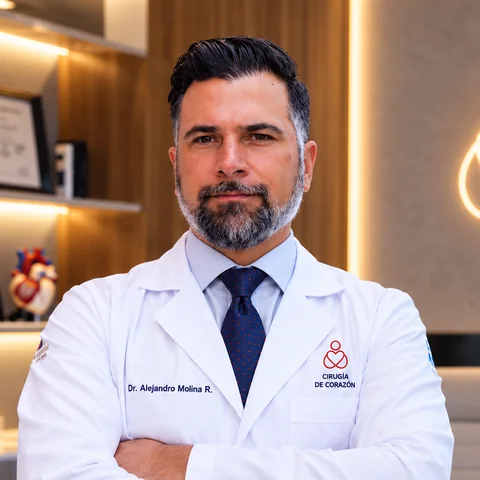
Dr Alejandro Molina is a cardiovascular surgeon practising in Guadalajara, Querétaro and Hermosillo. He trained in cardiothoracic surgery at the Universidad de Guadalajara, completed advanced training in cardiac surgery, minimally invasive surgery, robotic surgery and structural interventions at the University of Montreal, and a fellowship in structural cardiology and TAVR at CHU Bordeaux, France. He performed the first robotic mitral valve repair in the Ángeles Health System and the first robotic heart surgery in Guadalajara.
Medical degree: Universidad Autónoma de Guadalajara, Cédula Profesional 5757260 · Cardiothoracic surgery: Universidad de Guadalajara, Cédula de Especialidad 10768871 · Current certification, Consejo Nacional de Cirugía del Tórax, no. 447
Talk to a specialist
Request a free video consultation to clear up your questions and make a better-informed decision.