


Mitral Valve Prolapse: When It Needs Repair
Mitral valve prolapse repair becomes necessary when leakage worsens or heart strain appears.
If you have been told you have mitral valve prolapse, you probably left the appointment with more questions than answers. Perhaps you felt a fluttering in your chest, or a routine check-up picked up a heart murmur that led to an echocardiogram. The good news is that most people with this condition never need an operation. But for some, the valve leaks enough that mitral valve prolapse repair becomes the safest way to protect the heart muscle for the long term. This guide walks you through what the condition actually is, when it matters, and what the treatment options look like — including how repair works and what recovery honestly involves.
What Is Mitral Valve Prolapse?
The mitral valve sits between the two chambers on the left side of your heart. It has two thin leaflets that open to let blood flow from the upper chamber into the lower one, then close tightly so blood does not flow backwards. Knowing your heart: the mitral valve means understanding that this small structure handles a remarkable workload — every heartbeat, every day of your life.
What actually happens in prolapse: in mitral valve prolapse, one or both leaflets are slightly larger or floppier than they should be. When the lower chamber squeezes, the leaflet billows upward like a sail catching wind, sometimes pushing back into the upper chamber. If the leaflets still meet cleanly, the valve seals properly and the prolapse causes no leak at all. If they do not meet, blood escapes backwards — a condition called mitral regurgitation.
Why the leak matters: a leaking valve means part of every heartbeat does work that accomplishes nothing. Blood that should move forward into the body's circulation slides back into the upper chamber instead. Over months and years, this backflow makes the heart chambers enlarge and the heart muscle tire. This progression — not the prolapse itself — is what eventually leads doctors to discuss mitral valve repair surgery.
What Causes Mitral Valve Prolapse?
The structure of the valve itself: most cases come from a condition called myxomatous degeneration. That phrase simply means the tissue of the leaflets becomes stretchy and thickened over time, losing the firm structure that normally keeps them taut. The leaflets bulge, and the delicate chordae — the thin cords that tether them to the heart muscle like guy-ropes on a tent — can stretch or even snap.
Genetics and family history: research shows that mitral valve prolapse runs in families, and specific gene changes affecting connective tissue explain some cases. A detailed review published in Frontiers in Cardiovascular Medicine describes how inherited traits alter the valve's tissue structure and its pathophysiology, which is why a parent or sibling with the condition is one of the strongest clues. Conditions such as Marfan syndrome and Ehlers-Danlos syndrome, which affect connective tissue throughout the body, also increase the likelihood of prolapse.
Age and other contributors: prolapse is found in roughly a small percentage of the population and appears at any age, though the tissue changes tend to progress gradually across decades. It is not caused by lifestyle, stress, or anything you did wrong. Some people are simply born with valve tissue that becomes redundant over time.
Mitral Valve Prolapse Symptoms and When They Matter
Most people feel nothing: the majority of those with prolapse have no mitral valve prolapse symptoms at all, and the condition is often discovered by chance — a doctor hears a characteristic clicking sound through a stethoscope, or an echocardiogram ordered for another reason shows the leaflets billowing. A click followed by a murmur is the classic auscultation finding.
Symptoms worth reporting: when the valve does leak significantly, patients may notice palpitations — a sense of skipped beats or fluttering — unusual fatigue, breathlessness on activity that used to be easy, or a dull chest discomfort. Atrial fibrillation, an irregular rhythm in the upper chambers, can develop in some patients with long-standing leakage. Dizziness on standing has been reported, and while low blood pressure is not caused by the prolapse itself, some patients with autonomic features do describe it.
Why symptoms alone do not decide: here is something that surprises many patients: symptoms are unreliable guides in this condition. Some people with severe leakage feel almost nothing because the heart compensates quietly, while others with mild leakage feel a great deal. This is why the size and function of the heart on regular echocardiograms, not how you feel day to day, drive the timing of mitral valve prolapse surgery. In our consultations we take the time to explain what the studies actually show, in plain words, so that a patient can see for themselves how their heart is coping rather than relying on symptoms alone.
Is Mitral Valve Prolapse Serious?
The honest answer: for most people, no. Prolapse without significant leakage rarely threatens health and usually needs nothing more than periodic monitoring with an echocardiogram. Many people live their entire lives without the prolapse ever changing.
When it does become serious: the danger lies in progressive mitral regurgitation. As the leak worsens, the left ventricle — the main pumping chamber — gradually enlarges to accommodate the extra backward flow. The muscle can weaken before symptoms ever appear, which is why cardiologists watch specific measurements: the ventricle's size and its pumping fraction, the ejection fraction. Severe mitral regurgitation repair surgery is recommended before these thresholds are crossed, not after the muscle has already suffered.
Rare but real complications: in a minority of patients, one of the chordae can rupture, causing a sudden, dramatic worsening of the leak — this is an emergency that typically requires prompt surgery. Severe prolapse can also raise the risk of irregular rhythms and, very rarely, infection of the valve. Knowing these possibilities is not a reason to worry daily; it is a reason to keep the monitoring appointments your cardiologist sets.
When Do You Need Mitral Valve Prolapse Repair?
The standard triggers: international guidelines are clear about when to repair. Surgery is generally recommended when the leak is severe and any of the following appear on echocardiography: the left ventricle begins to enlarge beyond its normal limits, the ejection fraction drops below roughly 60%, the heart is failing to keep up and symptoms of breathlessness or reduced exercise capacity appear, or new atrial fibrillation develops. Even without these markers, severe primary regurgitation with flail leaflet — a leaflet that has lost its tether and whips back and forth — is an indication for repair.
- Severe regurgitation with early signs: leaking classified as severe plus any ventricular enlargement or falling ejection fraction points to repair soon rather than later.
- Symptoms that match the leak: breathlessness or fatigue clearly explained by severe regurgitation justifies surgery at any ventricular size.
- Flail leaflet or ruptured chorda: a leaflet that has lost its support almost always warrants repair, even if the heart still looks normal.
Why earlier can be better: there is growing acceptance among valve specialists that repairing a severely leaking valve before the heart enlarges protects long-term outcomes — the heart muscle that has never been stretched and weakened recovers better and lives longer. Timing is the single most important decision in this condition, and it deserves a specialist's judgement. Every case is reviewed by our multidisciplinary team against international practice guidelines before a recommendation is given, and the patient receives a clear proposal with the alternatives laid out — the final decision is always theirs.
Mitral Valve Repair vs Replacement: Which Is Better?
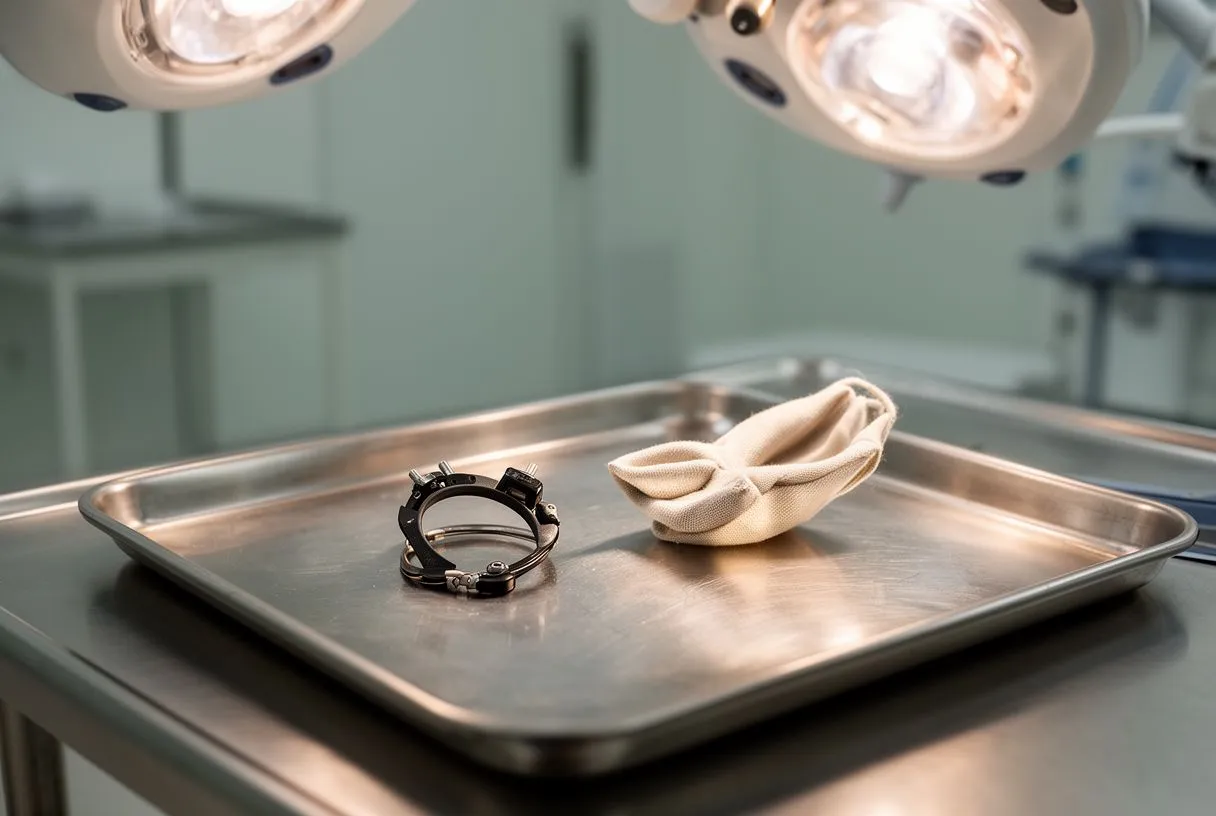
Repair is almost always preferred: when weighing mitral valve repair vs replacement, the evidence strongly favours repair whenever the valve tissue allows it. A repaired valve keeps your own tissue, which behaves more naturally than any artificial one, does not require lifelong blood-thinning medication in most cases, and carries lower long-term risks of infection and dysfunction. This is precisely why mitral valve prolapse is considered one of the most repairable valve conditions — the anatomy usually lends itself to it.
When replacement becomes necessary: sometimes the valve is too damaged — from severe destruction after infection, or tissue too diseased to reconstruct. In those cases, Mitral Valve Replacement with either a tissue (bioprosthetic) or mechanical valve is the right path. A Porcine Valve, made from pig tissue, is one common biological option, and patients should discuss how long each type lasts and what medication each requires. Replacement is not a failure; it is simply a different answer when repair is not possible.
The hardest valve to repair: patients sometimes ask which heart valve is the hardest to repair. The tricuspid valve, on the right side of the heart, is often cited because it is difficult to access and to measure — which is one reason Tricuspid Valve Repair tends to come later in a patient's journey than mitral work. The mitral valve, by contrast, is the valve surgeons have refined repair techniques for over decades, and results at experienced centres are excellent.
Minimally Invasive Mitral Valve Repair Options
Minimally invasive surgery: minimally invasive mitral valve repair avoids opening the full breastbone. Instead, the surgeon works through a small incision on the right side of the chest, often using a thoracoscope — a camera — and specialised instruments. The repair itself is the same operation as the conventional one: the leaflets are reconstructed and a supporting ring, an annuloplasty ring, is implanted around the valve. The annuloplasty procedure is the backbone of nearly every durable repair. Our team performs conventional, minimally invasive, robotic and transcatheter procedures, and we recommend the less invasive route only where the evidence supports it for that particular patient.
Robotic repair: robotic surgery takes minimally invasive further — the surgeon controls instruments seated at a console, with the robot translating precise hand movements through small ports. Dr Molina performed the first robotic mitral valve repair in the Ángeles Health System and the first robotic heart surgery in Guadalajara, so this is an approach our team knows from the inside, not from hearsay. Robotic repair can offer faster recovery and less pain, but it demands specific expertise and careful patient selection.
Transcatheter options: for patients who cannot tolerate surgery — because of age, frailty, or other illness — transcatheter approaches treat the valve without any chest incision at all. Edge-to-edge repair (TEER) for mitral regurgitation is the best-known example: a clip delivered through a vein in the leg grasps the leaking leaflets and reduces the backflow. There is also Valve-in-valve technology, where a new valve is placed inside a previously implanted one, and Transcatheter Mitral Valve Replacement for selected patients. These options suit a different group than surgical candidates and are discussed case by case.
What to Expect During Mitral Valve Prolapse Surgery
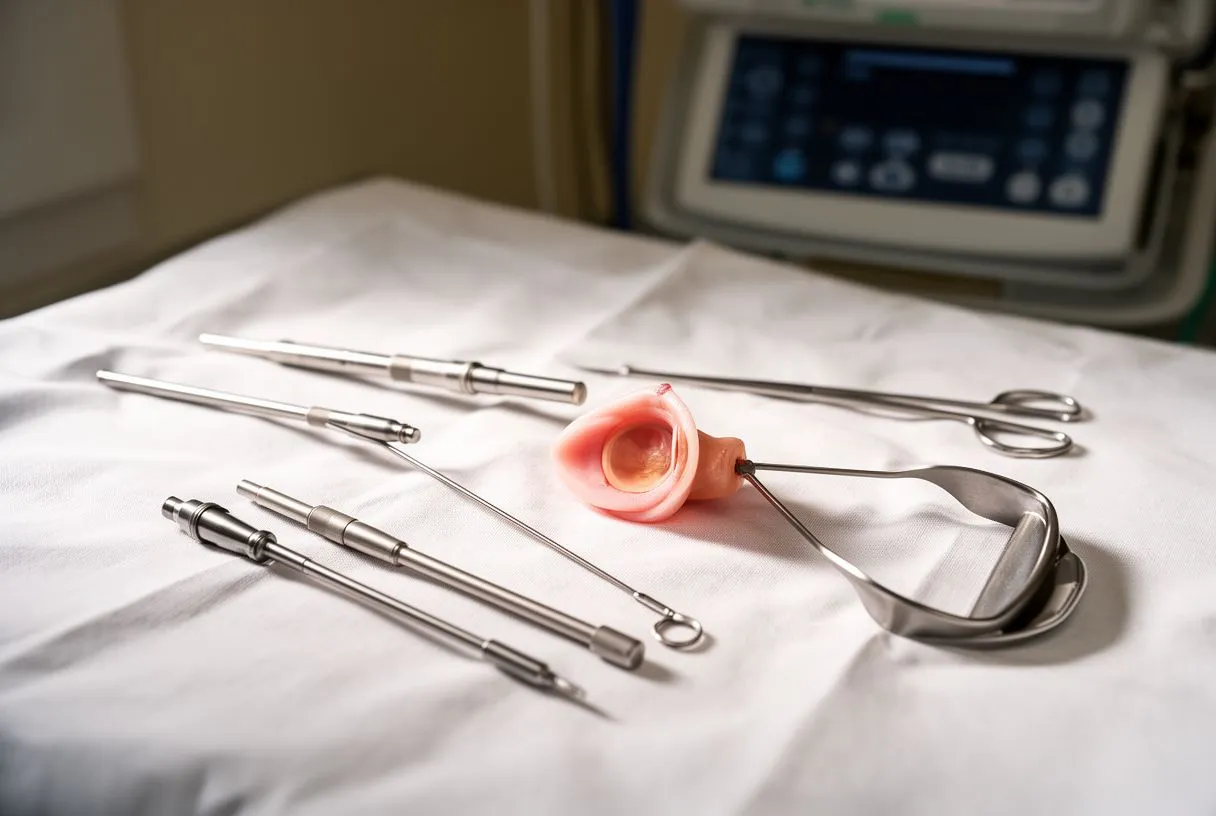
Before the operation: mitral valve prolapse surgery begins well before the operating room. You will have a detailed echocardiogram, often a transoesophageal one — a probe swallowed under light sedation that gives crystal-clear views of the valve from behind the heart. Blood tests, a heart-rhythm check and an assessment of overall fitness complete the picture. You will meet the anaesthetist and the surgeon, and every question you have should be answered before the day.
During the operation: you will be under general anaesthesia, and the heart-lung machine takes over circulation while the surgeon works on the still, resting heart. Through the chosen approach, the surgeon inspects the valve, identifies exactly why it leaks, and repairs it — tightening stretched chords, removing redundant leaflet tissue, implanting the annuloplasty ring. The operation typically takes several hours. The valve's behaviour is normally checked on the echocardiogram before the chest is closed, because the repair should be proven watertight before the operation ends.
Immediately afterwards: most patients wake in intensive care with a breathing tube that is usually removed within hours. You can expect a night or two in intensive care, then transfer to a regular ward. Walking usually begins within a day, and hospital discharge commonly comes within five to seven days for minimally invasive approaches. Soreness around the incision is normal; severe pain is not, and should be treated.
Mitral Valve Surgery Recovery Time and What It Really Feels Like
The first weeks: mitral valve surgery recovery time varies with the approach, but a realistic picture helps. For the first two weeks at home, you will be tired — the body is healing from a major operation, and fatigue is the rule, not a warning sign. Walking is encouraged from day one; lifting anything heavy, driving, and strenuous activity wait until your surgeon clears them, usually around four to six weeks for a minimally invasive repair.
The middle stretch: between weeks two and six, energy returns in stages. Many patients describe a pattern of two good days followed by one tired one. Cardiac rehabilitation — a supervised programme of gradually increasing exercise — is strongly worth attending where available. It rebuilds confidence as much as fitness. Sternum precautions matter only for patients who had conventional surgery through the breastbone; those who had a right-sided incision typically move more freely sooner.
The long term: a durable mitral valve repair means the heart is protected from the damage the leak would have caused, and most patients return to full normal life — work, travel, exercise, everything. You will need periodic echocardiograms to confirm the repair holds, but nothing about a well-done repair should limit your life. We encourage second opinions and treat seeking one as a normal part of deciding about heart surgery, because confidence in the plan is part of the recovery too.
Living Well With Mitral Valve Prolapse and Choosing Your Team
What to avoid if you have mitral valve prolapse: if your prolapse needs no surgery, daily life needs almost no restrictions. The sensible habits are the ones that protect every heart: keep blood pressure well controlled, stay active, avoid tobacco, and keep follow-up echocardiograms. If you have significant regurgitation, be prompt about dental care and tell your dentist about your valve. Regarding stress — can stress cause mitral valve prolapse to worsen? Stress does not change the valve's structure, but it can heighten palpitations and make symptoms feel more intrusive, so managing it is worthwhile for comfort even though it will not alter the prolapse itself.
Questions to ask a specialist: when mitral valve prolapse treatment options are being discussed, come armed. Useful questions include: how severe is my regurgitation, and what measurements drive your recommendation? Is my valve repairable, and what is your team's experience with repairs like mine? What approach would you choose — conventional, minimally invasive, robotic, or transcatheter — and why? What would happen if I waited a year? We encourage patients to bring written questions to the consultation; a decision this important deserves answers you fully understand.

Taking the next step: mitral valve prolapse is common, usually benign, and — when it does need treating — one of the most successfully treated valve conditions in modern cardiac surgery. The key is not to fear it but to monitor it properly and act at the right time. If you have been diagnosed, or you suspect symptoms that fit, the most useful thing you can do is discuss your specific situation with a qualified cardiac team rather than draw conclusions on your own. Dr Alejandro Molina's team sees patients in Guadalajara, Querétaro and Hermosillo, and the first contact is a free video consultation — a chance to talk through your echocardiogram, understand where you stand, and find out which studies, if any, are still needed before any decision is made.






