

Nitinol in Heart Valves and Stents: Why It Is Used
Nitinol heart valves use shape-memory alloy for better biocompatibility and self-expansion during minimally invasive procedures.
What Are Nitinol Heart Valves and Why They Are Used
When a cardiac team recommends a valve replacement or a stent, the conversation often turns to the materials inside these devices. Nitinol heart valves rely on a remarkable metal alloy — a near-equal mix of nickel and titanium — that behaves unlike any conventional metal. For patients facing aortic valve disease or narrowed coronary arteries, understanding why this particular material sits at the center of modern interventional cardiology can make treatment decisions feel less abstract and more grounded.
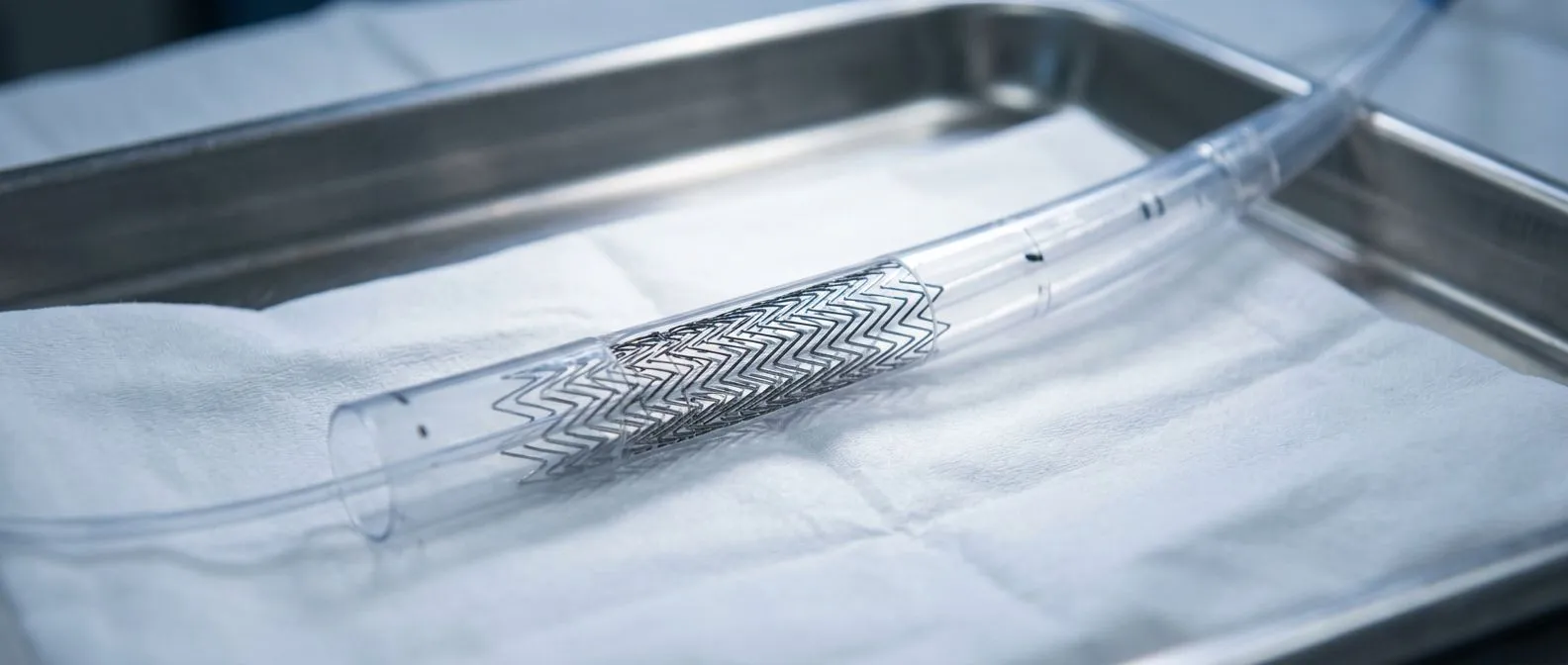
What gives nitinol its shape memory? The alloy undergoes a reversible phase change between two crystal structures: austenite (stable at body temperature) and martensite (formed under mechanical stress or cold). When warmed back to body temperature, a deformed nitinol structure returns to its pre-set shape. This is not merely a laboratory curiosity. Research catalogued by PubMed documents decades of clinical application where this property allows a device to be compressed into a catheter, delivered through a blood vessel, and then expand on its own once released at the target site.
For the patient, this means a collapsed valve frame — small enough to travel through the femoral artery in the groin — can be positioned at the aortic annulus and opened without the brute force of a balloon. The nitinol frame simply springs back to its manufactured diameter as it reaches body temperature. A balloon-expandable valve, by contrast, requires high-pressure inflation to crush a stainless-steel frame into place. Each approach has specific clinical scenarios where it excels, and the choice depends on calcium burden, annular dimensions, and vascular access quality.
How Does Nitinol Superelasticity Work in Cardiac Stents
Superelasticity is the property that separates nitinol from every other metal used in cardiovascular implants. When most metals are bent beyond their elastic limit, they deform permanently. Nitinol, however, can absorb strain up to roughly 8 percent and still spring back to its original shape — a threshold roughly twenty times greater than stainless steel. Inside a beating heart and pulsing arteries, this resilience is not a luxury; it is a structural necessity.
How does the alloy respond inside a living artery? Arteries are not rigid pipes. They flex with every heartbeat, compress with muscle movement, and bend at branch points. A nitinol stent deployed in a peripheral artery in the leg, for example, must withstand knee flexion thousands of times per day. The stent's martensitic transformation allows it to absorb these deformations without fatiguing. When the stress passes, the metal returns to its austenitic phase and the stent recovers its original diameter.
This behavior is distinct from shape memory, though the two share a molecular origin. Shape memory requires a temperature change to trigger recovery; superelasticity operates isothermally at body temperature. In practical terms, a nitinol stent self-expands the moment it exits the delivery sheath, conforming to the vessel wall without external pressure. The clinician controls placement but does not need to inflate a balloon to achieve apposition against the arterial lining.
Nitinol vs Stainless Steel in Cardiovascular Implants
The comparison between nitinol and stainless steel in cardiac devices is not a matter of one being universally superior. Each material suits specific anatomical and mechanical demands. Stainless steel — typically 316L or cobalt-chromium alloys — provides high radial strength and radiopacity, meaning it shows up clearly on fluoroscopy during deployment. Nitinol offers flexibility, conformability, and chronic outward force that maintains vessel patency over time.
- Radial strength: Stainless steel and cobalt-chromium resist collapse under external compression more effectively than nitinol, making them preferred for calcified coronary lesions where a balloon-expandable stent is deployed against hardened plaque.
- Flexibility and conformability: Nitinol bends with the vessel without kinking, which is why it dominates peripheral stenting and self-expanding valve frames.
- Chronic outward force: Nitinol continues to press gently outward against the vessel wall for the life of the implant, resisting recoil that can narrow the lumen over weeks or months.
- Delivery profile: Nitinol can be compressed into smaller catheter profiles than stainless steel, enabling delivery through tortuous or diseased access vessels.
Physicians managing high-risk percutaneous coronary intervention sometimes combine mechanical support strategies. A study on organoprotective effects of extracorporeal membrane oxygenation and intra-aortic balloon pump in high-risk percutaneous coronary intervention in patients with acute coronary syndrome illustrates the complexity of devices and support systems that interact during these procedures. Material selection is one variable among many — access route, hemodynamic support, lesion characteristics, and patient-specific anatomy all shape the final decision.
What Makes Nitinol Biocompatible for Heart Devices
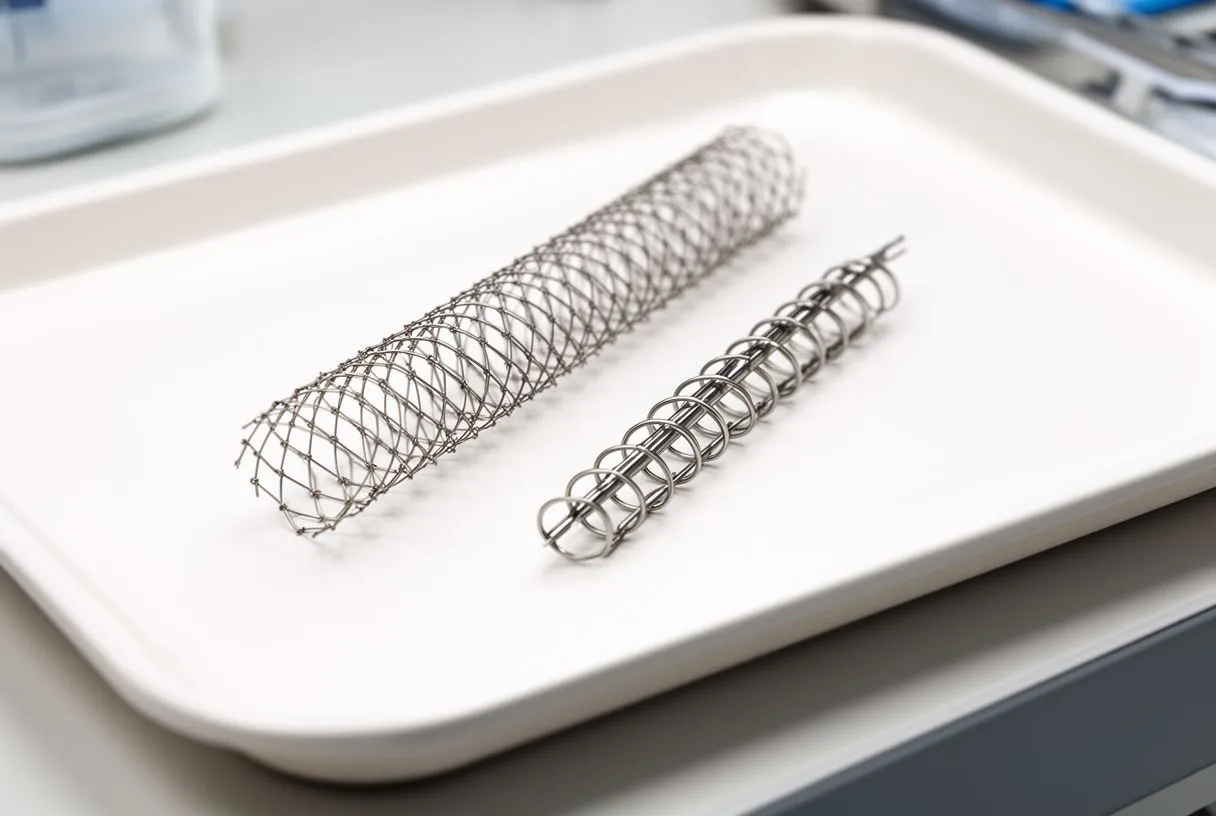
Biocompatibility — the ability of a material to coexist with living tissue without triggering harmful reactions — is a non-negotiable requirement for any cardiac implant. Nitinol achieves this through a naturally forming titanium oxide surface layer that develops within seconds of exposure to air or blood. This passivation layer acts as a barrier between the nickel in the alloy and the surrounding tissue, dramatically reducing ion release.
What about nickel allergy and ion release? Roughly 10 to 20 percent of the population has some degree of nickel sensitivity. This raises a legitimate question for anyone receiving a nickel-containing implant. Clinical evidence, including observations from management of patients with vascular Ehlers-Danlos syndrome and acute coronary syndrome, suggests that the titanium oxide layer keeps nickel release well below thresholds that typically provoke allergic responses. However, patients with documented severe nickel allergy should discuss this with their cardiac team before device implantation, as blood nickel levels do rise transiently in the days following deployment.
The long-term tissue response to nitinol is generally favorable. Endothelial cells — the inner lining of blood vessels — migrate across the stent struts and form a new cellular layer, essentially incorporating the device into the vessel wall. This process, called endothelialization, typically takes weeks to months. Once complete, the stent surface is covered by the patient's own cells, further isolating the metal from circulating blood and reducing thrombosis risk.
How Nitinol Self-Expanding Stents Support Arteries
Self-expanding nitinol stents address a fundamental problem that balloon-expandable designs cannot fully solve: vessels move. The superficial femoral artery, for instance, passes through the adductor canal in the thigh, a region of intense mechanical stress during walking and bending. A rigid stent in this location would fracture, and a balloon-expanded stent would be crushed by external compression from surrounding muscle and tendon.
Where are self-expanding stents most commonly deployed? Beyond peripheral arteries, nitinol self-expanding platforms anchor transcatheter aortic valves at the annulus, scaffold carotid arteries after plaque removal, and maintain patency in the iliac vessels supplying the legs. Each application exploits the same property: the stent applies continuous, gentle outward pressure that adapts to the vessel's natural taper and curvature. When an atheromatous plaque creates an eccentric narrowing, the stent conforms to the irregular lumen rather than forcing a perfect circle.
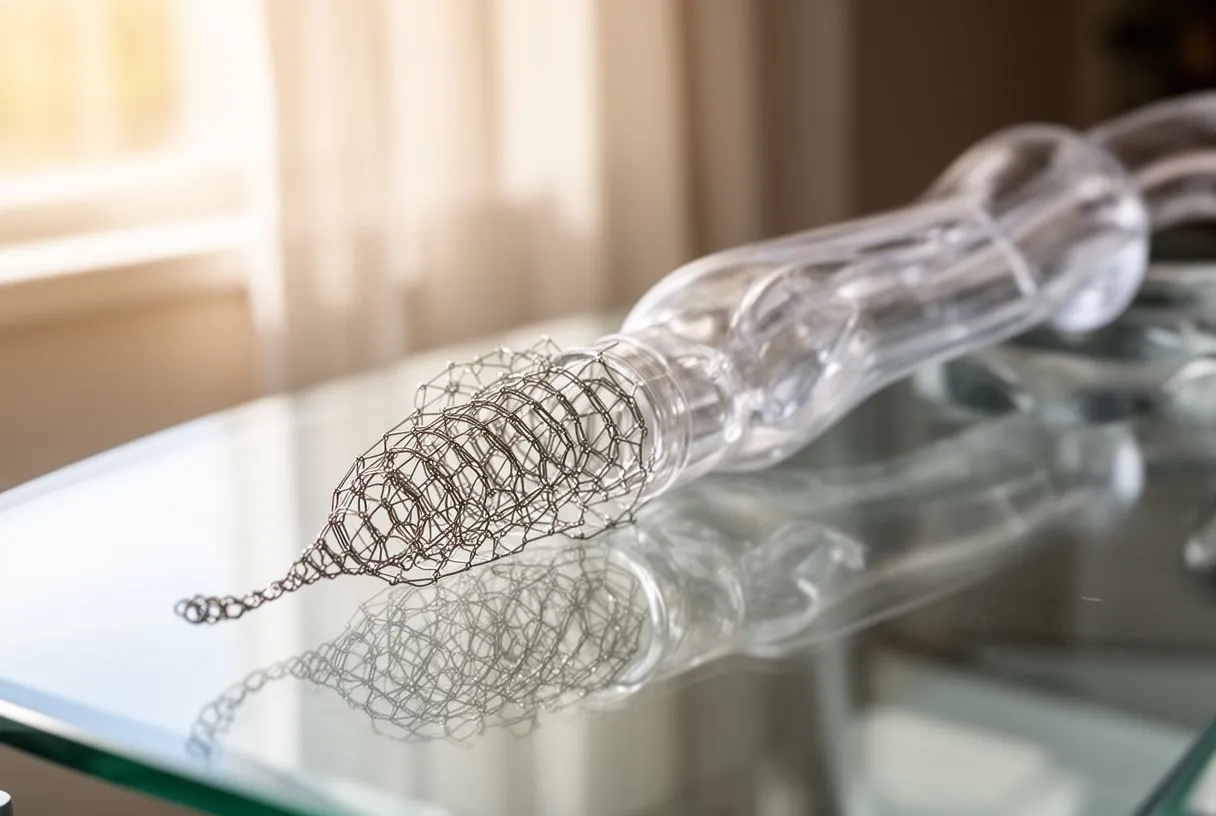
The deployment technique itself is relatively straightforward for the patient. After a guidewire crosses the lesion, the delivery catheter is advanced to the target. The outer sheath is retracted, exposing the compressed stent to body temperature. The nitinol frame expands progressively, and the operator can reposition it partially during early deployment if positioning needs adjustment. This is a significant advantage over balloon-expandable stents, which commit to their final position the moment the balloon deflates.
Nitinol TAVR Valves: What Patients Should Know
Transcatheter aortic valve replacement — commonly called TAVR — has transformed treatment of severe aortic stenosis for patients who are intermediate or high risk for open-heart surgery. Most TAVR valve platforms use a nitinol frame that self-expands at the native aortic valve position, replacing the function of the diseased valve leaflets without removing them. The old valve leaflets are pushed aside against the wall of the ascending aorta, and the new valve opens and closes within the nitinol scaffold.
Who qualifies for TAVR with a nitinol frame? Current guidelines consider TAVR for patients with symptomatic severe aortic stenosis, assessed by a heart team that includes interventional cardiologists and cardiac surgeons. Decision thresholds often reference the EuroSCORE II or STS risk scores, which estimate operative mortality for surgical aortic valve replacement. Patients with severe symptomatic stenosis and a predicted surgical mortality above approximately 4 percent may be directed toward a transcatheter approach, though anatomical suitability — including annular dimensions, calcium distribution, and vascular access — must be confirmed by CT imaging.
Recovery from TAVR is typically faster than from surgical valve replacement. Most patients are ambulatory within 24 hours and discharged in two to five days. Post-procedure management includes antithrombotic therapy — often aspirin alone or in combination with clopidogrel — and a structured surveillance schedule using echocardiography to monitor valve function and detect any complications such as paravalvular leak or conduction disturbances requiring pacemaker placement.
Nitinol Wire Stents and Arterial Support Mechanisms
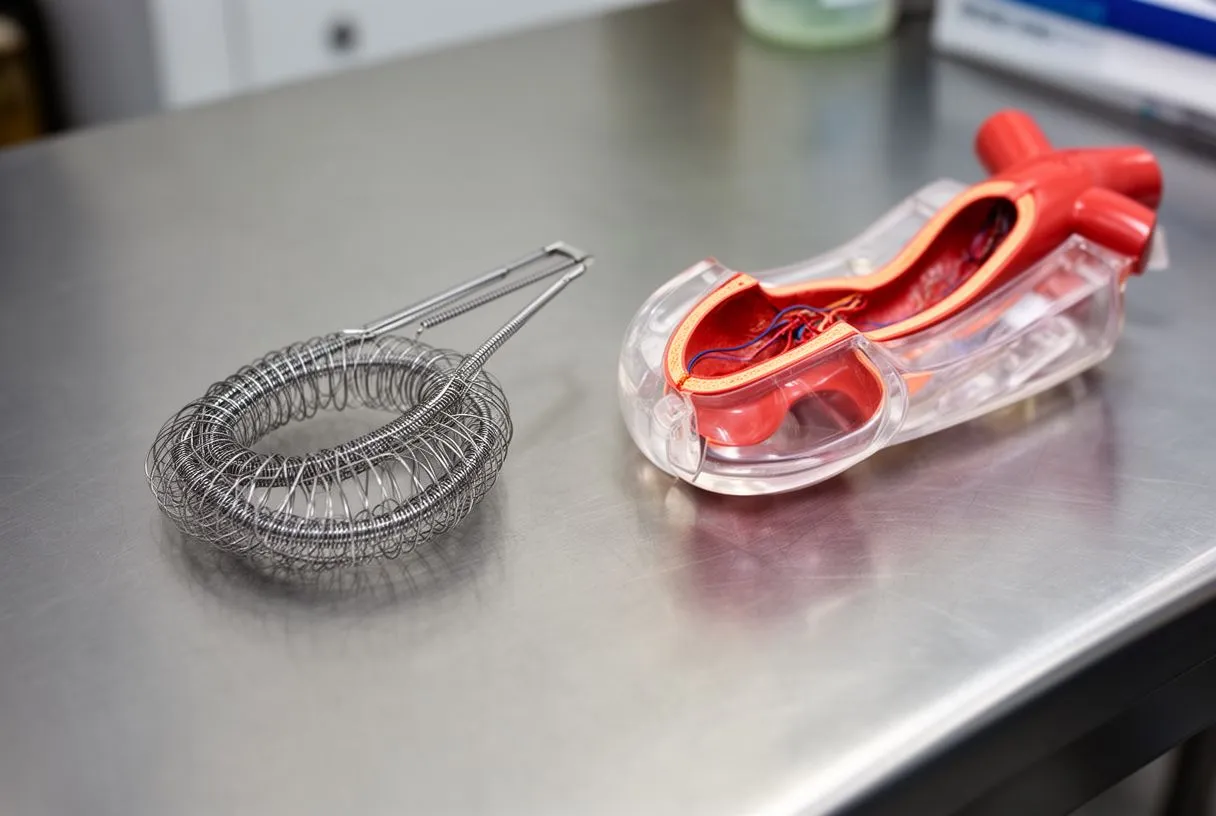
The engineering of a nitinol wire stent begins with laser cutting a pattern from a thin-walled nitinol tube, or weaving individual nitinol wires into a braided mesh. Each manufacturing approach produces different mechanical characteristics. Laser-cut stents offer precise control over strut geometry and radial force distribution, while braided wire designs provide extreme flexibility and conformability, particularly useful in tortuous peripheral anatomy.
- Laser-cut tube stents: Used in coronary and peripheral applications where predictable radial force and precise cell architecture matter. Common in self-expanding platforms for the superficial femoral and popliteal arteries.
- Braided wire stents: Deployed in highly mobile or branching vessels where flexibility outweighs the need for maximum radial strength. Often used in carotid and iliac locations.
- Hybrid designs: Combine closed-cell and open-cell segments to balance radial force, flexibility, and scaffolding against plaque prolapse.
Understanding how these stents interact with the vessel over time helps patients set realistic expectations. In the first weeks, mild inflammation at the stent site is normal as the artery heals from the intervention. The stent's chronic outward force keeps the lumen open during this period. Over months, the stent becomes embedded in the vessel wall through tissue ingrowth. Follow-up care includes auscultation — listening to blood flow with a stethoscope — and Doppler ultrasound to confirm patency and detect any restenosis before symptoms appear.
Are Nitinol Heart Valves Safe Long-Term
Safety data for nitinol heart valves has accumulated over more than a decade of clinical use. Large registries and randomized trials have tracked thousands of patients, reporting rates of stroke, pacemaker implantation, paravalvular leak, and valve dysfunction. The overall safety profile supports TAVR as a standard option for appropriately selected patients, with complication rates that compare favorably to surgical valve replacement in intermediate and high-risk populations.
What complications should patients watch for? Conduction disturbances — particularly new-onset atrial arrhythmias such as atrial flutter — and complete heart block requiring pacemaker placement are among the most common procedure-related issues, occurring in roughly 5 to 15 percent of TAVR patients depending on valve type and patient anatomy. Other concerns include stroke during deployment, vascular access complications, and late valve thrombosis, though antithrombotic protocols and improved delivery systems have reduced these events substantially.
Nickel sensitivity warrants a measured discussion rather than alarm. Blood nickel levels peak within the first week after nitinol device implantation and decline over subsequent weeks as the oxide layer stabilizes and endothelialization progresses. Reported allergic reactions to nitinol cardiac implants are rare in published literature, but patients with a known history of severe contact dermatitis to nickel should inform their heart team so this factor can be weighed alongside other clinical considerations.
Nitinol Heart Valve Durability and Patient Outcomes
Durability is one of the most pressing questions patients ask about nitinol heart valves, particularly younger recipients who may live decades with the implant. The valve frame itself — the nitinol scaffold — is engineered for fatigue resistance and has shown structural integrity in long-term studies. The more common durability concern involves the valve leaflets, typically made of bovine or porcine pericardial tissue, which calcify and degenerate over time at rates that depend on patient age, metabolic factors, and valve design.
How long do transcatheter valves last? Published durability data now extends beyond ten years for some valve platforms, with structural valve deterioration rates that parallel surgical bioprosthetic valves. Risk factors for accelerated degeneration include younger age at implant, renal insufficiency, and elevated levels of apolipoprotein B, which reflects atherogenic lipid burden and has been associated with faster bioprosthetic calcification. Patients with these factors may be counseled toward surgical replacement with mechanical valves, which offer indefinite durability but require lifelong anticoagulation.
When a transcatheter valve eventually fails, a repeat TAVR procedure — placing a new valve inside the old one — is increasingly performed in selected patients. This valve-in-valve approach avoids the risks of reoperative open-heart surgery, though it carries its own technical challenges related to coronary access and residual gradients. The decision to redo a transcatheter intervention versus convert to surgery depends on the patient's overall condition, the mechanism of valve failure, and the experience of the heart team.
What to Expect After Nitinol Cardiac Device Placement
Recovery after placement of a nitinol cardiac device — whether a coronary stent or a transcatheter valve — follows a predictable trajectory with key milestones. For stent recipients, the procedure itself takes 30 to 90 minutes under local anesthesia, often as a day case. Discharge typically occurs the same day or after overnight observation. Patients resume normal activities within a week, though strenuous exercise may be delayed depending on access site healing.
When should you call your cardiac team after discharge? New or worsening chest pain, shortness of breath beyond your pre-procedure baseline, fever, access-site swelling or bleeding, and signs of stroke — including sudden arm pain or weakness, facial drooping, or speech difficulty — all warrant immediate medical evaluation. For TAVR patients, the first follow-up echocardiogram usually occurs at 30 days, with subsequent visits at six months and annually thereafter. Some patients may have an arterial line placed during the procedure for continuous blood pressure monitoring; this is removed before discharge and leaves only a small dressing.
Long-term management focuses on preventing progression of the underlying disease that necessitated the device. This means aggressive risk factor control: blood pressure targets, lipid management, smoking cessation, and glycemic control for diabetic patients. Medications such as dual antiplatelet therapy after stenting or anticoagulation strategies after TAVR are tailored to each patient's bleeding and thrombosis risk. The device addresses a specific obstruction or valve failure, but it does not cure the vascular disease process. Every patient benefits from discussing their individual situation with a qualified cardiac team and booking a consultation to develop a personalized surveillance and prevention plan.






