


Off-Pump Bypass Versus On-Pump: Choosing the Approach
Off-pump bypass vs on-pump: compare beating heart and traditional CABG techniques, recovery, and outcomes.
What is off-pump bypass vs on-pump surgery?
When you or a loved one faces heart surgery, the clinical terminology can feel overwhelming. One of the most common decisions in coronary revascularization involves choosing between off-pump bypass and traditional on-pump surgery. Both approaches aim to restore blood flow to the heart muscle, but they accomplish this through distinctly different surgical techniques. Understanding these differences is the first step in having an informed conversation with your cardiac team.
Coronary artery disease happens when Atheromatous Plaque—a mixture of cholesterol, calcium, and cellular waste—builds up inside the arteries. This buildup restricts oxygen-rich blood from reaching the heart. During a physical exam, your doctor might detect unusual sounds through Auscultation, listening to your heart with a stethoscope, which can hint at compromised blood flow. The decision to perform surgery, and which method to use, depends on how many vessels are blocked, their location, and your overall health profile.
The core difference between these techniques lies in how the heart is managed during the operation. Traditional on-pump coronary bypass uses a heart-lung machine to take over the heart's pumping function, allowing the surgeon to work on a still, motionless field. In contrast, off-pump bypass is performed while the heart continues to beat. Each approach has distinct benefits and considerations, and the right choice is highly personalized based on your specific cardiac anatomy and risk factors.
How does on-pump coronary bypass work?
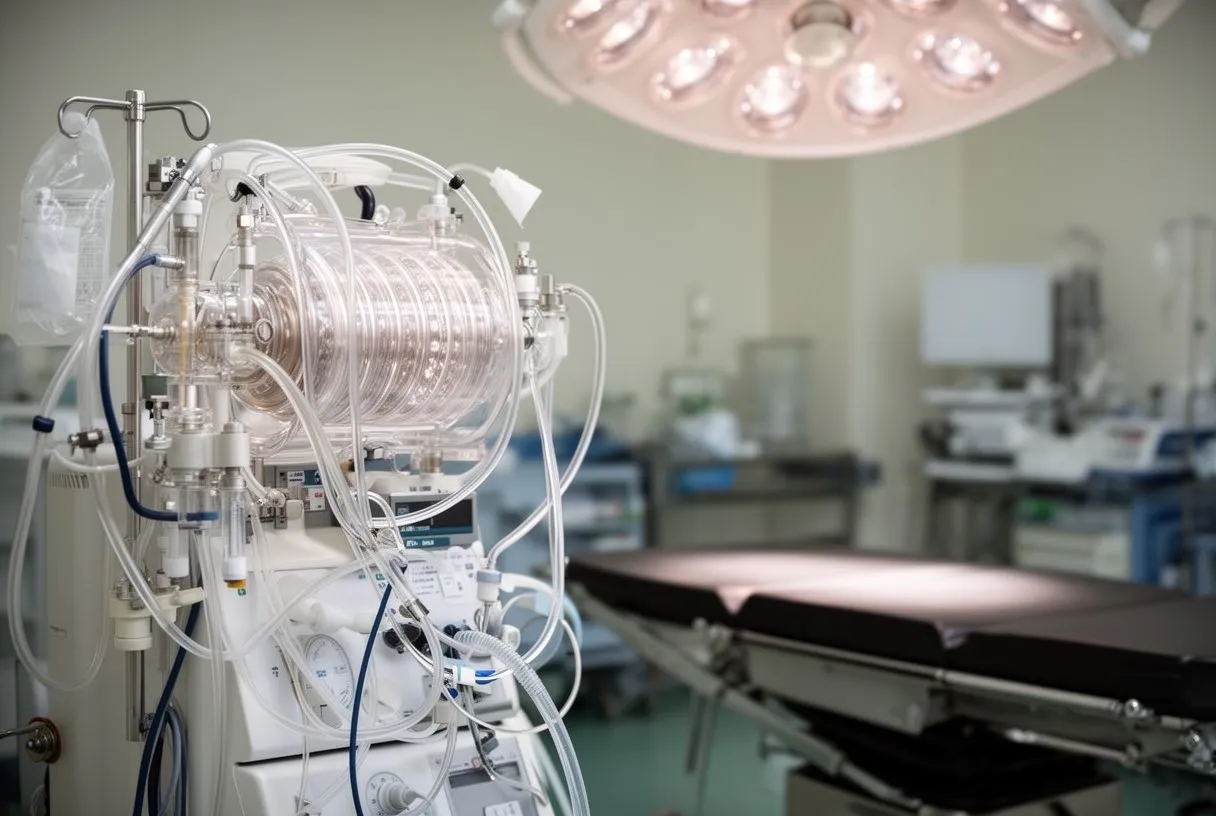
Traditional on-pump bypass is considered the standard approach for multi-vessel coronary artery disease. During this procedure, the surgeon connects you to a cardiopulmonary bypass machine, commonly known as a heart-lung machine. This machine temporarily takes over the function of your heart and lungs, oxygenating your blood and circulating it throughout your body. This allows the surgeon to stop your heart safely, creating a completely still and bloodless environment to attach the new bypass vessels with extreme precision.
To connect the heart-lung machine, the surgical team places an Arterial Cannula into your aorta and a venous tube into the right Atrium. An Arterial Line is also placed to continuously monitor your blood pressure during the operation. The surgeon then applies a special solution to the Ascending Aorta and the heart to stop it from beating. Because the machine handles circulation, the surgeon has a stable platform to sew the bypass grafts into place, ensuring robust blood flow to the heart muscle.
Because the heart and lungs are completely bypassed, this technique allows for complex repairs that might be difficult on a moving heart. According to MedlinePlus, coronary artery bypass grafting is one of the most common and effective procedures for treating severe coronary artery disease. For patients with complex blockages or those requiring simultaneous valve repairs, the on-pump approach provides the controlled environment necessary for a successful outcome.
How does off-pump bypass work on a beating heart?
Off-pump bypass, often called beating heart surgery, achieves the same goal of rerouting blood around blocked arteries but without stopping the heart. Instead of using a heart-lung machine, the surgeon uses specialized tools called stabilizers. These devices gently press on the specific area of the heart where the surgeon is working, holding that small section still while the rest of the heart continues to beat and pump blood to the body.
Because the heart never stops, the body continues to circulate its own Autologous Blood without the need for external oxygenation. The surgeon harvests healthy blood vessels, often using an Arterial Graft taken from the chest wall (an Autograft) or veins from the leg. These vessels are then meticulously sewn onto the beating heart to bypass the blockages. This technique demands advanced surgical skill, as the surgeon must operate on a surface that is constantly moving.
This approach eliminates the need to manipulate the aorta extensively, which can be advantageous for patients with severe aortic calcification. Research from the Global Burden of Disease Study 2016 highlights the massive impact of cardiovascular diseases globally, underscoring the importance of tailoring surgical approaches to individual patient risk profiles to minimize complications. For certain patients, avoiding the heart-lung machine reduces systemic inflammation and complications related to artificial circulation.
Who is a candidate for beating heart surgery?
Determining whether you are a candidate for off-pump bypass involves a thorough evaluation of your overall health and the specific characteristics of your coronary artery disease. Surgeons often recommend this approach for patients who have a higher risk of complications from the heart-lung machine. This includes individuals with severe lung disease, kidney dysfunction, or a high risk of stroke due to advanced age or atherosclerosis in the aorta.
High-risk aortic conditions: Patients with heavy calcium buildup in the aorta are frequently considered for off-pump techniques because the on-pump method requires placing clamps on the aorta, which can dislodge calcium debris. Prior stroke history: Avoiding the heart-lung machine can lower the risk of micro-emboli traveling to the brain. Severe systemic disease: Those with compromised organ function may tolerate beating heart surgery better, as their own physiological mechanisms remain intact.
- Calcified Aorta: Off-pump avoids cross-clamping, reducing stroke risk.
- Lung Disease: Avoiding mechanical ventilation support during bypass can aid recovery.
- Renal Impairment: Lower risk of postoperative kidney failure compared to on-pump.
However, off-pump bypass is not suitable for everyone. If you present with an Atypical Infarction that has severely damaged the heart muscle, or if you have conditions like Atrial Flutter that make the heart rhythm unstable, an on-pump approach might be safer. The heart must be strong enough to tolerate the manipulation required for stabilizing the surgical site while still maintaining adequate blood pressure.
What are the risks of on-pump bypass surgery?
While on-pump coronary bypass is highly effective and performed successfully thousands of times each year, the use of the heart-lung machine introduces specific physiological changes and risks. The machine alters how blood flows, which can trigger a systemic inflammatory response as the blood comes into contact with the artificial surfaces of the bypass circuit. This inflammation can temporarily affect organ function throughout the body.
One of the primary concerns with on-pump surgery is the potential for cognitive issues post-operatively, often referred to as "pump head." Microscopic emboli can be generated when the aorta is clamped or from the bypass machine itself, potentially traveling to the brain. Additionally, the heart-lung machine can affect the kidneys, leading to acute renal failure in susceptible patients. These risks are carefully weighed against the benefits of a perfectly still surgical field.
Patients with elevated risk markers, such as high levels of Apolipoprotein B in their blood work, often have more diffuse and complex disease. The risks associated with cardiovascular burdens are well-documented; the Global Burden of Disease Study 2010 outlines how various risk factors compound surgical challenges. Your surgical team will use advanced diagnostic tools to ensure the risks of on-pump surgery are minimized for your specific situation.
Off-pump bypass recovery time and expectations
One of the most common questions patients ask is about the recovery timeline. Off-pump bypass often leads to a slightly shorter initial recovery period in the hospital. Because the heart-lung machine is not used, the body avoids the inflammatory response and fluid shifts associated with mechanical circulation. Patients often spend less time on a ventilator and may be moved out of the intensive care unit a bit sooner.
Ventilation time: Patients typically breathe on their own more quickly without the lung inflammation caused by the bypass machine. Blood loss: Off-pump surgery generally results in less bleeding, reducing the need for blood transfusions. Kidney function: The risk of postoperative renal dysfunction is often lower, making recovery smoother for those with pre-existing kidney issues.
Despite these potential advantages, the fundamental recovery from heart surgery remains significant. You will still need to manage your incisions, which might cause some Arm Pain if an arterial graft was harvested from your arm, or leg discomfort if a vein was used. Your cardiologist will likely prescribe Aspirin to prevent clots and monitor your progress through a structured cardiac rehabilitation program, regardless of whether your surgery was off-pump or on-pump.
On-pump vs off-pump outcomes: what does the evidence show?
The medical community has extensively studied on-pump vs off-pump outcomes to determine which method provides superior long-term results. Large-scale clinical trials have shown that both approaches yield excellent survival rates and significant relief of symptoms like angina. The choice between the two often comes down to the specific subset of patients being studied and the surgeon's expertise.
Studies generally indicate that on-pump surgery might have a higher rate of complete revascularization—meaning all intended blockages are successfully bypassed. Because the heart is still and the field is bloodless, attaching grafts to small arteries on the back of the heart is technically easier. Off-pump bypass can sometimes be more challenging for these hard-to-reach vessels, potentially leading to a slightly lower rate of complete revascularization in less experienced hands.
However, for high-risk patients, off-pump bypass consistently demonstrates a reduction in perioperative complications, particularly concerning stroke and kidney injury. The long-term patency—the rate at which the bypass grafts remain open—appears similar between the two techniques when performed by experienced surgeons. Ultimately, the evidence suggests that the best outcomes are achieved when the surgical approach is tailored to the individual patient's anatomy and risk profile.

When is CABG without a heart-lung machine preferred?
There are specific clinical scenarios where CABG without a heart-lung machine is strongly preferred. If a patient has severe atherosclerosis in the aorta—often called a "porcelain aorta"—the surgeon will actively avoid manipulating it to prevent showering the brain with calcified debris. In these cases, off-pump bypass allows the surgeon to perform the necessary grafting without placing clamps on the diseased aorta.
This approach is also favored when managing patients who have complex medical histories. For instance, a patient who previously had a Balloon Angioplasty that failed, or someone with severe chronic obstructive pulmonary disease (COPD), will benefit from avoiding the cardiopulmonary bypass circuit. The management of anticoagulation is also different; while patients on certain novel medications (studied in trials like ARISTOTLE) need careful bridging, the off-pump technique generally requires less intensive heparin dosing during the operation.
- Porcelain Aorta: Prevents dislodgement of calcium plaques.
- Severe COPD: Avoids extra strain on compromised lungs.
- High Stroke Risk: Minimizes micro-emboli to the brain.
Ultimately, the decision to use off-pump bypass is a clinical judgment made by the surgeon in the operating room. The anatomy might look different on imaging than it does in reality, and the surgical team must be prepared to adapt their approach to ensure the safest possible procedure.
Preparing for heart bypass surgery options
Preparation for heart bypass surgery involves a comprehensive series of tests and consultations, regardless of whether you are scheduled for an on-pump or off-pump procedure. Your cardiac team will conduct a thorough evaluation, including angiograms to map your blockages, echocardiograms to check heart function, and pulmonary tests to ensure your lungs can handle the stress of surgery. These diagnostics are crucial for finalizing the surgical plan.
In the days leading up to surgery, you will receive specific instructions regarding medications and fasting. It is essential to discuss all your current prescriptions with your team. For example, if you have a history of severe arrhythmias and wear an Automated External Defibrillator patch or have an internal defibrillator, the team must coordinate the device management during the operation. In very rare, highly specialized cases, techniques like Awake ECMO might be discussed for certain respiratory or cardiac support, though this is not standard for typical bypass surgery.
Mentally preparing for surgery is just as important as the physical preparation. Understanding the timeline, knowing what to expect when you wake up in the intensive care unit, and having a clear plan for your return home will help reduce anxiety. We encourage patients to bring a list of questions to their final pre-operative consultation to ensure they feel completely confident in their surgical plan.
Choosing the right cardiac surgery methods comparison
Making the final decision between these cardiac surgery methods is a collaborative process between you, your cardiologist, and your cardiac surgeon. The "best" method does not exist in a vacuum; rather, it is the approach that offers the lowest risk for your specific situation. Whether you require a straightforward bypass or a combined procedure—such as a bypass alongside a Balloon Aortic Valvuloplasty or the insertion of a Balloon-expandable Valve for transcatheter aortic valve replacement (TAVR)—the surgical strategy is highly individualized.
Your surgeon’s experience is a critical factor. Surgeons who frequently perform off-pump bypass are highly skilled at managing the beating heart, which translates to better outcomes for their patients. They will review your imaging, your comorbidities, and the complexity of your disease to recommend the safest path. Trusting their expertise while staying informed about your options empowers you to make confident healthcare decisions.
In summary, both off-pump bypass and on-pump coronary bypass are life-saving techniques that effectively restore blood flow to the heart. The differences in heart-lung machine use, recovery times, and specific risk profiles mean that each method serves a distinct purpose. We encourage you to discuss your specific diagnosis and surgical options with a qualified cardiac team. To explore your personalized care options, we invite you to book a consultation with our experts at Cirugía de Corazón.






