
Paravalvular Leak After Valve Replacement: Signs and Fixes
Paravalvular leak treatment options explained by Guadalajara heart specialists.
As a cardiac surgeon, some of the most anxious conversations I have are with patients who had a successful valve replacement months or years ago and now notice something has changed — new breathlessness, a murmur their cardiologist hears, or a follow-up echo that shows blood leaking around the new valve. A paravalvular leak is exactly what it sounds like: blood escaping through a gap between the replacement valve and your own tissue, rather than through the valve itself. It is one of the most discussed complications after both surgical valve replacement and transcatheter procedures like TAVR. The encouraging news is that most leaks are small, cause no symptoms, and simply need monitoring. For those that do need fixing, paravalvular leak treatment has advanced enormously — today many leaks can be closed through a catheter in the groin, without opening the chest again. This guide walks you through what these leaks are, the warning signs, how they are found, and every repair option on the table.
What Is a Paravalvular Leak?
The basic anatomy. When you receive a replacement heart valve — whether a tissue valve or a mechanical one — it is seated inside the ring (the annulus) where your old valve used to sit. The ideal result is a snug, complete seal all the way around. A paravalvular leak occurs when blood finds a channel between the sewing ring of the prosthesis and your own heart tissue. This is different from a leak through the valve itself, which would be a problem with the valve leaflets. Paravalvular regurgitation, the term your echo report may use, simply describes blood flowing backward through this gap.
How common is it? Small paravalvular leaks are surprisingly common. They are detected frequently after transcatheter aortic valve replacement (TAVR), where the valve is crimped onto a catheter and expanded in place, and less often after conventional surgical aortic valve replacement, where the surgeon sews the valve in directly. The large majority are trivial or mild, cause no symptoms, and never require intervention. Studies of TAVR valves, such as the PREDICT PVL study published in Open Heart, have worked to identify which patients and valve types are most likely to develop significant leaks — precisely so they can be prevented or caught early.
Why the size matters so much. The clinical picture depends far less on the fact that a leak exists than on how big it is and where it sits. A pinpoint leak with a trivial jet of backward flow is a footnote in your echo report. A moderate or severe leak forces the heart to pump the same blood twice — once forward, once backward through the gap — which over time stretches and tires the heart muscle. That is when paravalvular leak treatment becomes a real conversation.
What Are the Symptoms of a Paravalvular Leak After Valve Replacement?
Breathlessness that returns. The classic symptom is shortness of breath creeping back after you had been doing well. You may notice it on stairs or hills first, then at lower levels of activity. If you had a valve replaced precisely because breathlessness was your original problem, this return of the same symptom can be unsettling — but it is also the single most useful clue that something needs checking.
Other signs to watch for. Symptoms vary with the valve involved and the severity of the leak. Beyond breathlessness, families should watch for:
- New fatigue: feeling drained by activities that had become easy again after surgery.
- Fluid retention: swollen ankles or legs, or waking breathless when lying flat — signs the heart is struggling to keep up.
- A new murmur: often found incidentally when a doctor listens to your chest, before you feel anything at all.
- Anemia or dark urine: in rare cases, a leak can shear red blood cells as blood forces through the gap, causing hemolysis — a telltale sign that needs prompt attention.
When there are no symptoms. Many small leaks are silent. They are discovered on routine surveillance echocardiograms — the ultrasound scans that every valve replacement patient should have regularly. This is exactly why we keep those follow-up appointments even when you feel perfectly well: a leak found early, while still small, gives you far more options than one found after symptoms have developed.
Why Do Paravalvular Leaks Happen?
Heavy calcium and awkward anatomy. One of the leading causes is calcification. If the annulus is heavily laden with calcium deposits, it can be difficult to achieve a smooth, even seal — whether the valve is sewn in or expanded by a balloon. Irregular calcium creates gaps and ridges. The PREDICT PVL study of a self-expanding transcatheter valve confirmed that annular calcification and valve sizing are among the strongest predictors of a leak after transcatheter implantation, which is why detailed imaging before the procedure matters so much.
Sizing and technique. Choosing the right valve size is a fine balance. Too large risks tearing the annulus; too small leaves a gap. In TAVR, the ratio between the valve's size and the annulus — called oversizing — is deliberately chosen to maximize the seal, and the PREDICT PVL study linked undersizing to higher rates of leak. Some researchers are now using 3D printing of the patient's aortic root, based on CT scans, to rehearse valve selection and predict where a leak might occur — work published in the Journal of Cardiothoracic Surgery shows this technology can help anticipate problem areas before the valve is even placed.
Infection and degeneration. A less common but important cause is infection of the prosthetic valve (prosthetic valve endocarditis), which can erode the tissue around the valve and open a channel. Suture failure or tissue degeneration at the annulus can also produce a late leak, sometimes years after a technically perfect operation. None of these are the patient's fault in any way — they are anatomy and biology.
How Is a Paravalvular Leak Diagnosed?
Echocardiography first. The cornerstone of paravalvular leak diagnosis is the echocardiogram. Transthoracic echo (the scan from your chest) shows backward flow and lets the cardiologist grade the leak as trivial, mild, moderate, or severe. Because prosthetic materials can shadow the ultrasound beam, a transesophageal echo (TEE) — where a probe is passed into the esophagus for a closer, unobstructed view — is often needed to locate the leak precisely and measure its size.
CT and 3D imaging. Before any closure procedure, a cardiac CT scan maps the leak in three dimensions: its exact location around the valve ring, its width, its depth, and the tissue between it and the chambers on either side. Increasingly, three-dimensional printing and advanced modeling are used to plan the approach, especially for leaks in difficult positions like the aortic root.
What happens at our clinic. In our practice, every case is reviewed by the team against international guidelines before anything is recommended. We take the time to explain what the studies actually show, in plain words, and to answer every question before any decision is made. Our team reviews each case against international practice guidelines, and the final decision is always the patient's.
How Serious Is a Paravalvular Leak?
The grading system. Leaks are graded by severity: trivial, mild, moderate, or severe. Trivial and mild leaks — the overwhelming majority — generally require no treatment at all, just surveillance. Moderate and severe leaks are the ones that shorten the life of the heart muscle if left alone, because the heart is doing double duty with every beat.
Left untreated. An untreated significant leak can lead to heart failure symptoms, enlargement of the heart chambers, abnormal heart rhythms, anemia from red blood cell destruction (hemolysis), and in the worst cases the need for urgent intervention. This is not a reason for panic — it is a reason for the regular echo surveillance that every valve patient should already have.
Does it affect life expectancy? Patients often ask about life expectancy with valve regurgitation, and the honest answer is that it depends on severity, the underlying valve, and how well the heart is otherwise. Mild regurgitation does not meaningfully shorten life when followed appropriately. Significant regurgitation is treatable, and treating it early — before the heart has been strained for years — gives the best long-term outlook. We tell every patient the same thing: the earlier we see you, the more options you have, and the less urgent everything becomes.
What Are the Treatment Options for a Paravalvular Leak?
Watchful waiting. For trivial and mild leaks without symptoms, the standard of care is simply surveillance: a repeat echocardiogram at intervals your cardiologist sets, typically annually. No procedure, no medication beyond what you already take for your valve. Most patients in this category never need anything else.
Medication for symptoms. When a leak is moderate and the patient is not yet ready for a procedure, medications can ease the workload — drugs that lower blood pressure and reduce the backward flow, and diuretics to control fluid retention. This is management, not a cure; it buys comfort and time while the team decides on definitive repair.
The decision framework. When we discuss heart valve leak repair options with a patient, the reasoning comes down to a few core questions:
- How severe is the leak? Moderate or severe leaks with symptoms or signs of heart strain justify repair; mild ones usually do not.
- Is the heart showing effects? Enlargement of the pumping chambers, rising pressures, or reduced pumping function tilt the balance toward intervention.
- What did the original valve surgery look like? The approach to a leak after TAVR differs from one after a surgical mitral or aortic valve replacement.
- What does the patient want? We lay out every option with its risks and benefits, encourage second opinions, and the decision rests with the patient.
What Is Transcatheter Paravalvular Leak Closure?
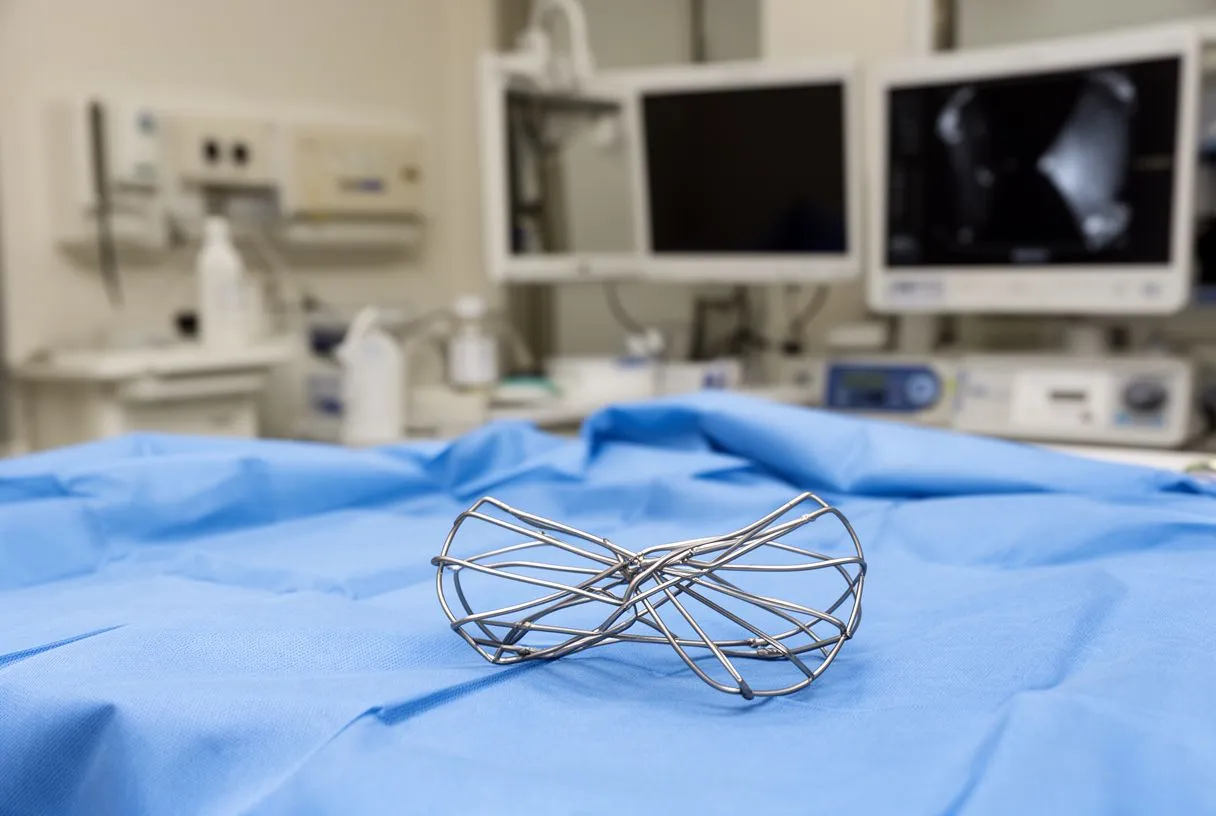
How the procedure works. Transcatheter paravalvular leak closure is the least invasive way to fix a significant leak. The team threads a thin tube (catheter) from an artery or vein in the groin up to the heart, crosses the leak channel, and deploys a small device — usually an occluder, similar in principle to devices used to close holes in the heart — that plugs the gap and seals it. No chest incision, no heart-lung machine, and the valve itself stays untouched.
Advantages of the catheter route. For suitable leaks, the appeal is obvious: a shorter hospital stay, no reopening of the chest, and a far gentler recovery than redo surgery. The main limitations are the leak's anatomy. Some leaks sit in positions that are difficult or impossible to reach safely with a catheter — for instance, certain leaks around the mitral valve, which is harder to approach than the aortic valve. Very wide or very irregular leaks may also need more than one device, or may not be closable this way at all.
Who is a candidate. Candidacy depends on the leak's location, size, and the availability of a safe access route. In our clinic, we perform both conventional and transcatheter procedures, and we recommend the less invasive route only where the evidence supports it for that specific patient's anatomy. Our multidisciplinary team reviews each case together, and if a transcatheter closure is not the right tool for your leak, we will say so plainly and explain why.
When Is Paravalvular Leak Surgery the Better Choice?
Redo surgery. When a catheter cannot safely reach or seal the leak, or when the leak is large and complex, surgical repair becomes the option. This means another operation — reopening the chest, going back on the heart-lung machine, and either repairing the leak directly or replacing the valve entirely. Redo surgery carries higher risk than a first operation, because scar tissue makes the dissection more demanding, and this is weighed carefully in every case using risk scores such as EuroSCORE II.
Valve-in-valve alternatives. Sometimes the leak is a symptom of a valve that has failed more broadly, and a valve-in-valve procedure — placing a new transcatheter valve inside the old one — solves both problems at once. This approach is now well established for failing surgical bioprosthetic valves. When the leak is around a transcatheter valve itself, options include a second transcatheter valve, or in some cases a valve-in-valve procedure combined with closure.
Our experience with complex valves. We perform conventional, minimally invasive, robotic and transcatheter procedures across the full range of valve disease, and Dr Molina trained in structural cardiology and TAVR at CHU Bordeaux, one of the most experienced structural heart centers in Europe. That experience matters most in exactly these situations: leaks that are not straightforward, where the choice between a catheter and a scalpel is a genuine judgment call.
What Is Recovery Like After Paravalvular Leak Repair?
After transcatheter closure. Most patients who undergo catheter-based leak closure go home the same day or the next day. You will have a small puncture in the groin, pressure applied there, and a few hours of lying flat. Soreness at the access site is common; the heart itself does not feel the procedure. Most people are back to normal activities within a week or two, and a follow-up echo confirms the leak is sealed.
After redo surgery. Recovery from a surgical repair is more demanding — typically several days in hospital, then weeks of gradually returning activity, with the chest bone needing around six to eight weeks to heal. Cardiac rehabilitation, a supervised program of exercise and education, is strongly recommended and helps enormously.
What we check afterward. Watch for warning signs at home: fever, spreading redness at the access site, sudden breathlessness, or fainting — any of these warrants a call.
How Do You Live Well After Valve Replacement?
Keep your surveillance schedule. The single most important habit after any valve replacement is keeping your echo appointments. Leaks that develop are almost always caught this way, before they cause symptoms. A valve replacement is not a one-time event — it is a partnership between you and your heart team over the years.
Guard against infection. Because infection can cause a leak to form, dental hygiene and prompt treatment of any infection anywhere in the body matter more for valve patients than for others. Follow your cardiologist's guidance about antibiotics before dental procedures where it applies to you.
Know your normal — and when to call. Learn what "well" feels like for you after your valve surgery, and take seriously the return of old symptoms: breathlessness, fatigue, swelling, palpitations. If any of these appear, ask for an echo rather than waiting for the next scheduled one. And if you are unsure whether your symptoms warrant attention, that uncertainty is itself a reason to talk to a heart team. Our first contact is a free video consultation: we get to know you, talk through what you are experiencing, and tell you which studies are actually needed — so no unnecessary ones are ordered. Consulting rooms in Guadalajara, Querétaro and Hermosillo are available for face-to-face follow-up when you decide to go ahead. The most important step is simply to discuss your situation with a qualified cardiac team — never self-diagnose, and never wait until symptoms force the issue.

Paravalvular leak treatment, in summary, is a spectrum — from watchful waiting for the many small leaks that never need intervention, through medications to ease symptoms, to catheter-based closure and redo surgery for the significant ones. The key to the best outcome is early detection through regular echo surveillance, and a heart team that explains every option clearly before you decide anything. If you have had a valve replacement and something has changed — a new murmur, returning breathlessness, a concerning echo — book a consultation rather than worrying alone. The right team, at the right time, makes all the difference.