

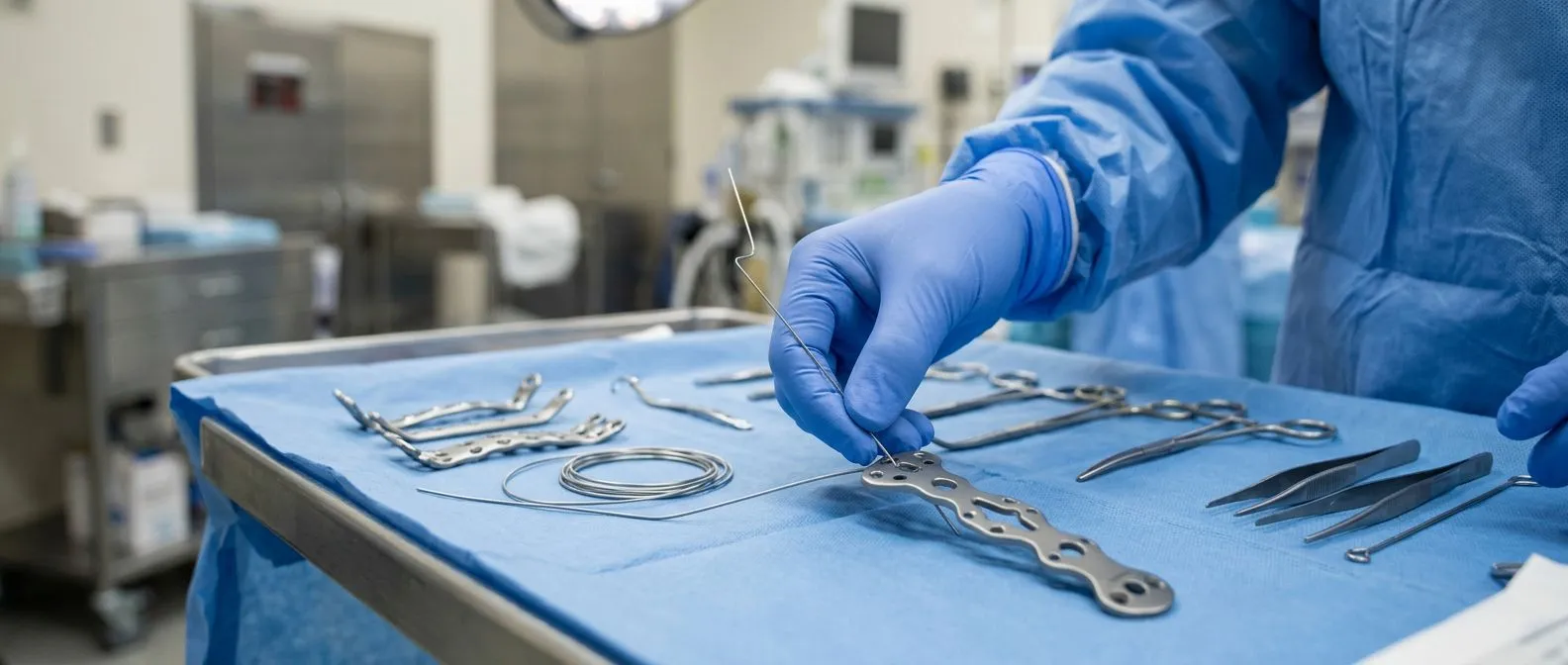
Redo Cardiac Surgery: When a Second Operation Is Needed
Redo cardiac surgery second operation may be needed when valves fail or grafts narrow.
If you or a family member have already had one open-heart operation, hearing that another one may be needed can feel overwhelming. This guide explains redo cardiac surgery second operation decisions in plain language: why a second operation is sometimes required, what makes it different from the first, what the risks really are, and what recovery looks like. Nothing here replaces a conversation with a cardiac team — but understanding the territory makes every decision calmer and better informed.
What Is Redo Cardiac Surgery and When Is a Second Operation Needed?
Redo cardiac surgery is any heart operation performed in a patient who has had heart surgery before. It includes redo heart surgery through the same chest incision, as well as less invasive approaches such as catheter-based procedures. The heart itself does not "wear out" from the first operation — rather, a repaired valve may stop working well, a bypass graft may narrow over the years, or a new problem may appear that the first operation could not have predicted.
Why the word "redo" changes everything. The first operation creates scar tissue inside the chest. That scar binds the heart, the aorta, and the breastbone to surrounding structures. During a second operation, the surgeon must separate the heart from the breastbone carefully before the heart-lung machine can take over, because scar tissue can hide the very structures that need protecting. This extra step is the single biggest difference between a first and second cardiac operation.
It is more common than you might think. Modern valve repairs and bypass grafts last many years, but not forever. As more people survive their first heart operation and live longer, second operations have become a routine part of cardiac surgery rather than an exceptional event. A well-planned redo is a normal procedure for an experienced team — it is demanding, but it is not experimental.
Every case we see is reviewed by our multidisciplinary team against international practice guidelines before any recommendation is made, so that a second operation is only proposed when the evidence genuinely supports it for that patient.
What Are the Most Common Reasons for Second Heart Surgery?
The reasons for second heart surgery usually fall into a few predictable groups. Knowing the category your situation belongs to helps you ask better questions and understand the proposed plan.
Progressive valve disease. A valve that was repaired or replaced years ago can deteriorate. Biological tissue valves, in particular, slowly stiffen over ten to fifteen years. A mechanical valve can leak around its edges if tissue grows abnormally. When a valve fails, symptoms return: breathlessness on ordinary activity, swelling of the ankles, or fatigue that no longer matches your medication.
Coronary disease that has advanced. Bypass grafts are not immune to the same cholesterol process that blocked the original arteries. A vein graft can narrow over time even while the other grafts stay open. New blockages can also form in arteries that were healthy at the first operation.
Problems the first operation could not address. Sometimes a second operation treats something new entirely — an aortic aneurysm that has grown, an infection of a previous prosthetic material, or a congenital issue that becomes significant in adulthood. In some of these situations, a catheter-based option can avoid opening the chest at all. For narrowed mitral valves in selected patients, percutaneous transvenous balloon mitral commissurotomy — a balloon procedure passed through a vein — has been performed successfully as an alternative to open operation in specialized centers, with results reported in single-center series such as one published in Heart Views.
Why Does Repeat Bypass Surgery Become Necessary?
Coronary artery bypass redo — operating again on bypassed heart arteries — is one of the most common forms of second heart surgery. It happens for reasons that are worth understanding in detail, because the timing often depends on choices made long after the first operation.
Graft disease over time. Vein grafts taken from the leg naturally develop narrowing after a decade or more. Arterial grafts, such as the internal mammary artery taken from inside the chest wall, usually stay open much longer. When a graft narrows, the heart muscle beyond it may again be starved of blood, producing chest pain or breathlessness.
New blockages in other arteries. Coronary artery disease is a whole-body process. Even arteries that were clear at the first operation can narrow later. Whether the answer is a new bypass, a stent, or medication depends on where the blockage is and how much heart muscle depends on it.
What you control matters. Not every recurrence is avoidable, but many are delayed by the things patients do daily:
- Quit smoking completely. Smoking is the single strongest accelerant of graft narrowing and new artery disease.
- Take prescribed medication consistently. Cholesterol-lowering, blood pressure, and anti-platelet medicines are what keep grafts open between check-ups.
- Keep every follow-up appointment. Graft narrowing is often silent; it is found on testing before it causes symptoms.
In our consultations we take the time to explain what the studies actually show — which grafts are affected, what the imaging means in plain words — and to answer every question before any decision is made.

What Is a Valve Replacement Redo and How Is It Done?
Valve replacement redo means removing or working around a previously implanted or repaired heart valve. It is one of the most technically interesting areas of modern cardiac surgery because the options have multiplied in recent years.
Why biological valves need attention. Tissue valves made from animal or human tissue offer freedom from lifelong blood thinners, but they calcify gradually. A tissue valve in the aortic position commonly needs attention after a decade or more in older patients, sometimes sooner in younger ones. This is not a failure of the first operation — it is the expected lifespan of the material.
The TAVR alternative. Transcatheter aortic valve replacement, known as TAVR, allows a new valve to be delivered through a catheter, usually from an artery in the groin, and placed inside the old failing valve. For many patients with a failing tissue valve, TAVR avoids opening the chest entirely — a genuine advantage when scar tissue from previous surgery makes reentry riskier. The choice between surgical redo valve replacement and TAVR depends on valve type, anatomy, age, and overall health, and it should be weighed case by case.
When surgery is still the better answer. Some situations favor an operation: valve infection, leakage around a prosthesis, valves too small for a catheter valve, or anatomy that does not suit a transcatheter approach. A mechanical valve replacement redo also remains a durable, well-understood option.
Our team performs conventional, minimally invasive, robotic, and transcatheter procedures, and we recommend the less invasive route only where the evidence supports it for that specific patient.
Is Redo Heart Surgery Dangerous? Understanding the Real Risks
This is the question families ask most often, and it deserves a straight answer: redo heart surgery carries higher risks than a first operation, but for most patients those risks are manageable and outweighed by the benefit of treating the underlying problem. The danger is real but not random — it concentrates in specific, predictable areas.
Scar tissue and injury risk. The main second heart surgery risks come from separating scar tissue. The right ventricle — the lower pumping chamber that sits just behind the breastbone — and previous bypass grafts can be adherent to the bone. Experienced redo surgeons plan the exposure precisely and, in some centers, prepare for the rare possibility of starting heart-lung support through groin vessels before opening the chest.
Bleeding and transfusion. Dissecting scar tissue creates more raw surfaces than a first operation, so bleeding and the need for transfusion are somewhat more likely. Blood banks and cell-saver equipment — which recovers the patient's own blood during surgery — are standard preparations for this reason.
Other recognized complications. Stroke, kidney injury, infection of the breastbone, and irregular heart rhythms are known redo cardiac surgery complications across the specialty. Their likelihood varies enormously with age, lung function, kidney function, diabetes, and urgency of the operation. Elective, well-planned redo operations in reasonably healthy patients carry far lower risk than emergency ones. For a general overview of what open-heart surgery involves and its recovery, MedlinePlus offers accessible, clinician-reviewed information.
What Do Survival Rates and Risk Scores Say About Redo Cardiac Surgery?
You may have searched for redo surgery survival rate figures and found confusing numbers. The honest explanation is that published results vary widely by patient profile, urgency, and procedure type — which is exactly why surgeons use individualized risk scoring rather than quoting averages.
EuroSCORE II and similar tools. Before recommending a second operation, teams calculate a predicted risk using models such as EuroSCORE II, which factors in age, previous surgery, lung and kidney function, urgency, and the type of procedure. A result is not a fate — it is a starting point for comparing options. The same clinical problem may be answered by surgery, by TAVR, or by medication, and the risk score helps decide which route offers the lowest risk for your situation.
Why outcomes have improved. Better imaging, groin-first cannulation strategies, improved myocardial protection — the methods for keeping the heart muscle safe while it is stopped — and standardized protocols have steadily improved redo outcomes. Research on rigor and reproducibility in cardioprotection studies, summarized in practical guidelines published in Basic Research in Cardiology, reflects how much attention the field now pays to protecting the heart muscle during operations.
Read statistics the right way. A published survival rate describes a mixed group of patients — some emergencies, some frail, some elective. Your own numbers come from your risk score, your imaging, and your team's experience. Ask for your individualized figures, not just the average.
What to Expect During a Second Heart Operation
Knowing the sequence of a second operation reduces fear of the unknown. The overall flow resembles a first operation, but each step has redo-specific details.
Preparation and imaging. Before surgery you will have a CT scan of the chest. This is essential in redo cases: it maps exactly where the heart, aorta, and grafts sit relative to the breastbone, letting the surgical team plan the safest entry. Blood tests, lung function, and a heart ultrasound complete the picture.
The operation itself. You will be fully asleep. The team opens the chest through or near the original incision, carefully freeing scar tissue, then connects the heart-lung machine — the pump that takes over circulation so the heart can be operated on in a still, blood-free field. Depending on the procedure, the heart may be stopped and restarted, or in some minimally invasive and catheter approaches, the chest may never be fully opened at all.
What does it feel like to wake up from heart surgery? You will wake in the intensive care unit with a breathing tube still in place, which is removed within hours once you are awake enough to breathe on your own. Most patients remember mild soreness, a feeling of being very tired, and nurses encouraging them to breathe deeply — not pain in the dramatic sense, because modern pain control manages the discomfort well. Confusion or vivid dreams in the first day are common and usually settle.
Dr Molina trained in cardiac, minimally invasive, robotic, and structural surgery at the University of Montreal and in structural cardiology and TAVR at CHU Bordeaux, and he performed the first robotic mitral valve repair in the Ángeles Health System and the first robotic heart surgery in Guadalajara — experience that shapes how we plan and execute every redo case.
How Long Does Cardiac Reoperation Recovery Take?
Cardiac reoperation recovery follows broadly the same milestones as first-time surgery, usually with a similar timeline — though scar tissue, age, and the reason for the operation can make some stages a little slower.
The first six weeks. The breastbone needs about six to eight weeks to knit. During this window you will walk daily, gradually increasing distance, and avoid lifting, pushing, or driving. Simple routines matter: sleeping propped up at first, keeping the incision clean and dry, and watching for redness or discharge.
Can I shower after open-heart surgery? Yes — most teams allow gentle showers once the incision is sealed, typically within a few days of leaving hospital. Use lukewarm water, let soap and water run over the incision without scrubbing, and pat dry. Avoid baths, pools, and hot tubs until your surgeon confirms the wound is fully healed, usually around the four-week mark.
The three-to-six-month phase. Energy returns in waves. Cardiac rehabilitation — a supervised program of gradual exercise — is one of the strongest predictors of a good long-term outcome and is worth attending even when you feel fine. This is also when mood deserves attention: what are the signs of depression after open-heart surgery? Persistent low mood, loss of interest in things you usually enjoy, sleep disturbance beyond physical discomfort, and hopelessness are recognized after any major cardiac operation, and they respond well to treatment. Tell your team if any of these appear; they are a normal, treatable part of recovery, not a weakness.
What is life like after CABG surgery? For most patients who follow rehabilitation and medication plans, life returns to near-normal: walking, work, travel, and hobbies resume. The same applies after a repeat bypass. Is it normal to have chest pain two years after open-heart surgery? Occasional brief twinges from the healing chest wall can persist, but new, pressure-like chest pain — especially with exertion — should always be reported, because grafts and arteries can narrow silently. Regular follow-up reviews matter because grafts and valves can change quietly; checking the studies at each visit is more reliable than relying on symptoms alone.
How Soon Can You Have a Second Heart Surgery?
The question of how soon a second heart operation can be performed depends entirely on why it is needed. There is no single waiting rule — the deciding factor is the problem the surgery will treat.
Urgent situations move fast. A valve infection, a failing graft causing ongoing heart muscle injury, or a threatening aortic problem may need operation within days. In these cases the team balances the added technical difficulty of operating on recently scarred tissue against the risk of waiting, and often proceeds when the heart-lung support options are ready.
Elective cases are scheduled deliberately. A slowly failing tissue valve or a gradually narrowing graft usually allows weeks to months of planning. That time is used well: optimizing blood sugar, lung health, anemia, and blood pressure measurably lowers operative risk. A deliberately scheduled redo is almost always safer than a rushed one.
Typical intervals. Many second operations happen years after the first — when a tissue valve has aged or graft disease has developed. When a repeat operation is needed soon after the first, teams usually prefer to wait for initial recovery and wound healing unless the clinical situation does not permit it. Your cardiac team should explain plainly where your situation sits between these poles.
What Does Redo Cardiac Surgery Cost in Mexico and How Do You Choose a Team?
Cost is a legitimate part of the decision, especially for international patients considering treatment in Mexico, and it should be discussed openly rather than discovered in a final bill.
What drives the cost of a second operation. Redo procedures typically cost more than first-time equivalents because they take longer, require additional imaging such as chest CT, and need specialized blood products and monitoring. The final figure depends on the procedure type, whether a catheter-based option avoids open surgery, the hospital, and the length of stay.
Choosing the best hospital for redo cardiac surgery means choosing the team, not the building. The questions that matter are practical:
- Redo volume and planning. Ask how many second operations the team performs and how they plan exposure — a preoperative chest CT and a clear cannulation strategy are signs of a disciplined approach.
- Multidisciplinary review. The safest teams review every case together — surgeon, cardiologist, imaging specialist — before recommending surgery, and they present alternatives rather than a single path.
- Second opinions welcomed. A confident team encourages you to seek another opinion; hesitation around that request is itself information.
- Transparent costing. Ask for a written estimate covering hospital stay, intensive care, blood products, and rehabilitation, and ask what insurance or international payment arrangements apply.
We encourage second opinions and treat seeking one as a normal part of deciding about heart surgery, and our first contact is a free video consultation where we get to know the patient, talk through the condition, and identify which studies are still needed so no unnecessary ones are ordered.
When a patient decides to go ahead, a face-to-face visit at our consulting rooms in Guadalajara, Querétaro, or Hermosillo follows — and Dr Molina, whose cardiothoracic training began at the Universidad de Guadalajara, personally reviews each plan with the patient and family.
Bringing it all together. Redo cardiac surgery second operation decisions are serious, but they are also well-mapped territory: predictable reasons, individualized risk scoring, planned exposure to manage scar tissue, and recovery timelines that closely mirror first-time surgery. The recurring themes are planning, honest risk discussion, and choosing a team that presents you with real alternatives — including less invasive ones where the evidence supports them — and leaves the final decision in your hands. If a second heart operation has been mentioned for you or a loved one, the most useful next step is not more internet searching but a conversation with a qualified cardiac team that reviews your specific studies. Book a consultation, bring every question you have, and make the decision with full information and no pressure.






