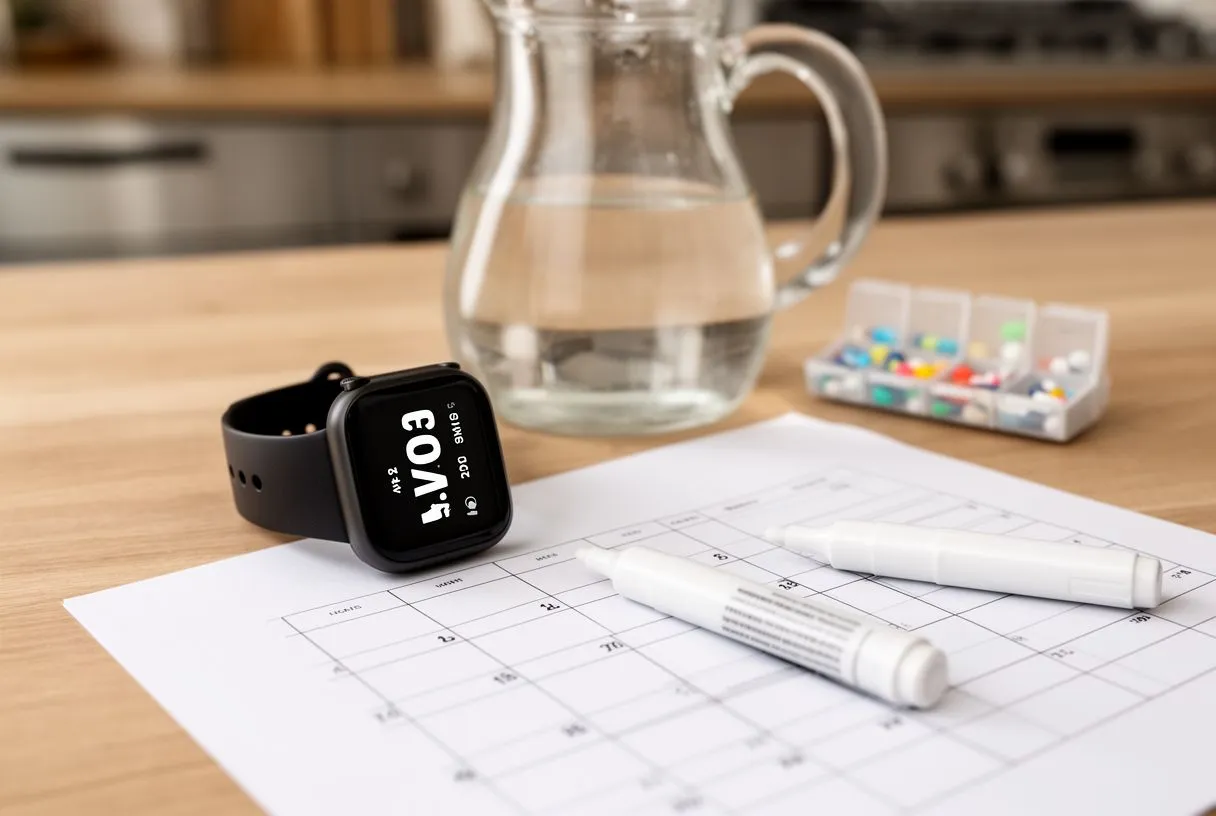
Weight Gain From Fluid in Heart Failure: Daily Weighing
Weight gain from fluid heart failure is an early warning sign.
What Is Weight Gain From Fluid in Heart Failure?
Weight gain from fluid heart failure is one of the earliest and most reliable signals that the body is holding on to water it cannot get rid of. In heart failure, the heart muscle does not pump as efficiently as it should. Blood backs up in the veins, pressure rises inside small blood vessels, and liquid is pushed out into the surrounding tissues — the ankles, legs, abdomen and lungs. Each litre of retained fluid adds roughly a kilogram (2.2 pounds) to the scale, so the number you see each morning is not just about food or activity. It is a direct reading of how your heart is coping.
Why the scale tells the truth first. Fluid builds up silently before you can see or feel it. Tissue can absorb litres of extra water before swelling becomes obvious, which means waiting for visible oedema (swelling caused by trapped fluid) is waiting too long. A daily weight reading catches the change days earlier, when it is far easier to correct with a medication adjustment than it is after decompensation — the medical word for when a stable condition slips into crisis.
What normal fluctuation looks like. Everyone's weight moves a little from day to day. A heavy salty dinner, a change in weather, or constipation can shift the reading by a few hundred grams. In heart failure the concern is not a single odd number but a steady upward trend across two or three days. That distinction — one reading versus a pattern — is the whole logic behind daily weighing, and it is why heart teams around the world put it at the centre of home monitoring plans.
When a weight log is reviewed, the goal is not perfection. We are looking for direction. A clear, honest record tells us more about how your heart is doing than most blood tests can.
Can Sudden Fluid Retention Cause Weight Gain?
Yes — and in heart failure it is one of the classic warning signs. Sudden weight gain heart failure patients report usually appears over 24 to 72 hours, not over weeks. The body's fluid balance is normally managed precisely by the kidneys, but when the heart's pumping weakens, the kidneys receive less blood flow and interpret this as dehydration. They respond by holding on to sodium and water, which adds volume to the circulation that the struggling heart then cannot move forward. The result is rapid retention that shows up on the scale before it shows up anywhere else.
How fast is too fast? Most heart failure guidelines flag a gain of more than 2 kilograms (about 4.4 pounds) in three days, or roughly 1 kilogram per day, as a threshold worth acting on. At that rate the fluid is not staying in the bloodstream usefully — it is leaking into tissues and, in the worst cases, backing up into the lungs themselves.
What drives sudden retention. Several common triggers can push a stable patient over the line:
- Too much salt: a single high-sodium meal can trigger days of fluid retention because the body dilutes the salt by holding water.
- Missed diuretics: skipping a water pill, or running out without realising it, removes the main escape route for fluid.
- Illness or infection: fever and inflammation can destabilise the heart and shift fluid balance within hours.
- Large fluid intake: drinking far more than prescribed in a short window adds volume a weak heart cannot handle.
The reassuring part is that sudden retention is usually reversible if it is caught early. This is precisely what the daily weigh-in exists for. A jump of two kilos in two days can often be managed with a temporary diuretic change agreed with the treating doctor, sometimes avoiding an emergency admission.
Do You Gain Weight From Liquids You Drink?
You do, and the question matters more in heart failure than anywhere else. Every liquid you take in — water, tea, soup, juice — has weight, and a healthy body passes most of it through within hours. In heart failure, that clearance slows or stops. A litre of water retained is a litre on the scale, and unlike fat gain, fluid gain can appear almost overnight and disappear just as quickly once the right treatment is in place.
Why fluid weight and fat weight feel different. Fat gain is gradual and comes with looser clothing over months. Fluid gain is fast, often accompanied by tight shoes, a swollen abdomen, or a ring that suddenly won't come off the finger. If you gained 2 kg in a day, this is not normal in the ordinary sense — but it is common and well understood in heart failure, and it deserves a call to your team rather than a wait-and-see approach.
Fluid restriction basics. Many heart failure patients are asked to limit total fluids — often somewhere around 1.5 to 2 litres per day, though the exact figure must be set by your own cardiologist. That count includes everything liquid: coffee, broth, milk, even the water that melts from ice. Soups count fully. Learning to count fluids accurately is a skill, and we take time in the consultation to walk patients through exactly how to do it, because guessing is where most retention problems begin.
Why Daily Weighing Catches Heart Failure Decompensation Early
The scale is the single most sensitive early-warning device a heart failure patient owns. Research and international guidelines consistently show that weight changes precede visible symptoms by two to five days. That gap is where the medicine works best: a small diuretic increase at home, guided by the log, can absorb fluid before it reaches the lungs and forces an admission.
The physiology in one paragraph. Rising fluid pressure in the legs, abdomen and lungs stretches tissue and triggers vague symptoms — fatigue, a bloated feeling, mild breathlessness. By the time breathlessness becomes obvious at rest, the lungs may already hold litres of fluid. The scale, by contrast, registers each retained 500 ml immediately. It moves days before symptoms do.
Why written logs beat memory. Patients who weigh themselves but don't record the numbers consistently miss trends. A log — even a simple notebook or phone note with date, time and number — turns scattered readings into a line the whole team can read. When we review a patient's record, we can see whether the weight is stable, drifting, or spiking, and that shape decides what we do next.
How to Do a Daily Weight Check for Heart Failure
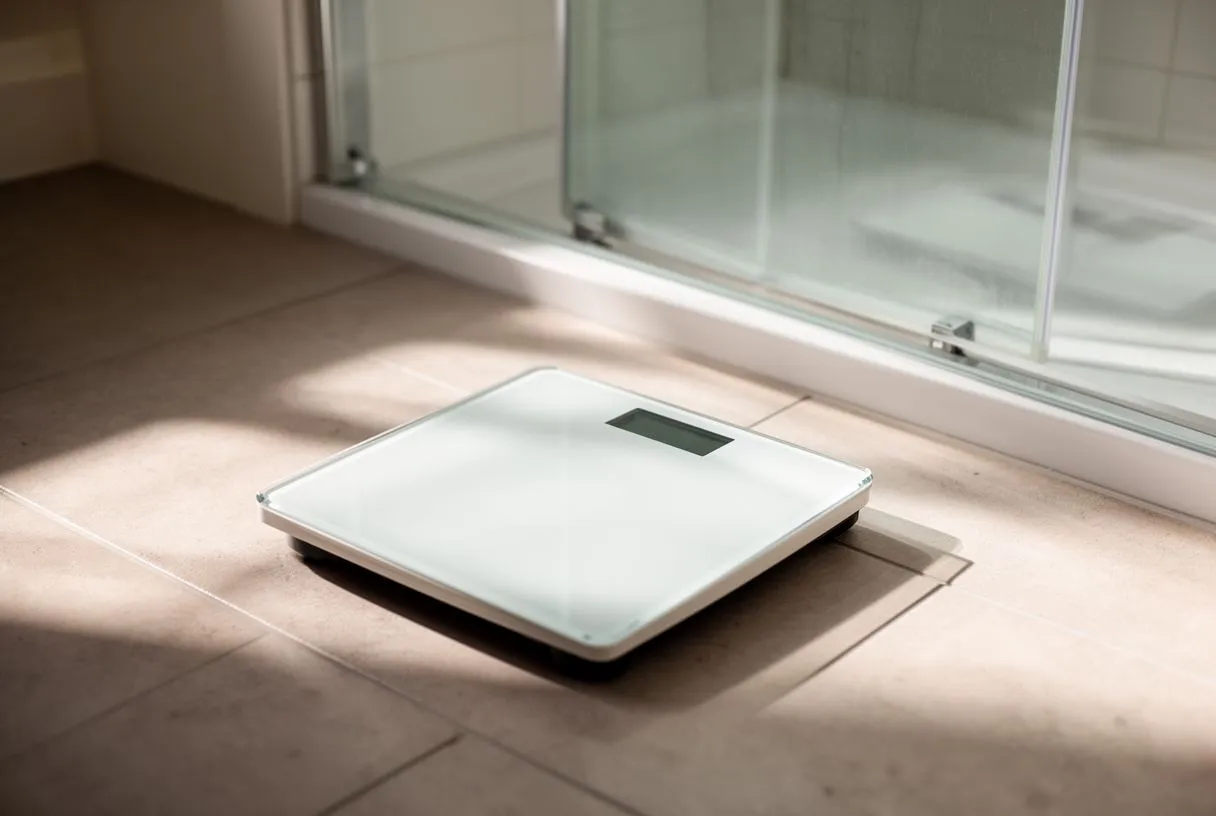
The value of a daily weight check heart failure patients rely on depends entirely on consistency. A number taken under different conditions each day is not comparable, and inconsistent readings hide real trends. The technique below is the one used across most heart failure programmes, and it takes under two minutes.
- Same time every morning: first thing after waking and after using the bathroom, before eating or drinking anything.
- Same scale, same place: on a hard, flat floor — never carpet — and the same digital scale each day, not switching between bathroom and kitchen scales.
- Same minimal clothing: whatever you wear, wear the same thing so the readings are comparable.
- Record it immediately: write the number down or log it in a phone app before you forget. Daily weight record is a medical tool, not a diary entry.
Setting your personal thresholds. At the start of treatment, patients usually agree specific trigger numbers with their doctor: typically a call if weight rises by more than 2 kg (about 4 pounds) in three days, or 1 kg (about 2 pounds) in a single day. These personalised thresholds are written into the patient's heart failure action plan weight log, so nobody has to guess what counts as a problem.
Dr Molina and our team find that the patients who do best are the ones who treat the scale like a clinical instrument — same conditions, same recording, every day — rather than a casual morning glance. The reading itself takes less than a minute. The habit saves hospitalisations.
Heart Failure Weight Gain of 3 Pounds: When to Act
The classic teaching threshold for heart failure weight gain 3 pounds in a day, or 5 pounds in a week, is a call-your-team signal — not a panic signal, but a real one. This rule of thumb comes from decades of heart failure programmes and is echoed by patient-facing guidance from major heart organisations. It works because it is simple: a number that crosses a line you agreed with your doctor in advance is easier to act on than a vague feeling of being worse.
What the gain means physically. Three pounds of overnight or two-day gain is almost certainly water, not fat. Three pounds of fat requires eating roughly 10,500 extra calories — nobody does that by accident. Fluid, on the other hand, can accumulate that quickly from a salty meal, a skipped diuretic, or the natural drift of a worsening heart. The speed of the gain tells you what it is.
What to do when the threshold is crossed. Call the number your team gave you — do not simply double your own diuretic dose without asking, because the right adjustment depends on your kidney function, blood pressure and potassium. Describe what you're seeing: the number, the days, and any symptoms such as increased breathlessness or swelling. When a log crosses the threshold, it is worth contacting the treating doctor the same day, because catching retention early is far safer than treating it late.
Water Retention Heart Failure Signs Beyond the Scale
While the scale is the earliest detector, water retention heart failure symptoms eventually appear in the body itself. Knowing the full picture helps you interpret the scale rather than replacing it.
- Ankle swelling: rapid weight gain swollen ankles is the signature combination — press a thumb into the skin over the shinbone for a few seconds; a lingering dent is called pitting oedema and means fluid is trapped in the tissue.
- Breathlessness lying flat: if you now need two or three pillows to sleep comfortably, fluid may be gathering in the lungs overnight — one of the most important early signs of worsening.
- Abdominal swelling: fluid can collect in the abdomen, causing bloating, early fullness at meals, and a tight belt — sudden bloating heart failure patients describe often follows exactly this pattern.
- Waking breathless at night: waking suddenly gasping an hour or two after falling asleep means fluid is shifting into the lungs and needs urgent attention.
Where fluid accumulates first depends on which side of the heart is failing. Left-sided failure tends to push fluid into the lungs, producing breathlessness. Right-sided failure tends to push fluid into the body, producing swelling in the legs, liver congestion and abdominal distension. Many patients have both. Understanding which pattern is yours helps your team interpret your reports — and it is one of the first things we map out for each patient when we explain their condition in plain words.
Every patient's fluid pattern is different. Some gain weight first, others feel breathless first, some notice swelling alone. That is why we sit with each patient in the consultation and explain what their own studies show, so the action plan matches their actual pattern rather than a textbook one.

Shortness of Breath and Weight Gain: What They Mean Together
Shortness of breath weight gain together is the combination that most reliably predicts worsening heart failure. Each sign alone is worth attention; the two together mean fluid is moving from the tissues into the lungs, and the situation is shifting from manageable to urgent.
Why the two travel together. As total body fluid rises, the heart's pumping pressure pushes fluid into the lung tissue. The lungs stiffen, and breathing becomes laboured — first on exertion, then at rest, then lying flat. When a patient reports both a climbing weight and new breathlessness, the fluid has almost certainly reached the chest.
What the pattern tells your team. The timing matters as much as the symptoms. Breathlessness that develops over days alongside a steady weight climb points to gradual decompensation that can often be handled with a medication adjustment. Breathlessness that arrives suddenly — waking gasping, unable to speak in full sentences — is an emergency that needs immediate attention at an emergency department, not a phone call.
Red flags that need immediate care. Go to emergency services rather than waiting if you experience breathlessness at rest that does not ease, coughing pink or frothy sputum, chest pain, or confusion and fainting. These signs mean the lungs are filling and the heart cannot compensate. Everything else — a rising weight with mild swelling, or breathlessness only on stairs — belongs in a conversation with your cardiac team the same day, which is exactly what the daily log is designed to enable.
When You Need a Diuretic Adjustment for Weight Gain
A diuretic — often called a water pill — helps the kidneys pass excess salt and water out in the urine. When the daily log shows a persistent rise, the need diuretic weight gain question comes up: should the dose change? The answer is yes, sometimes, but only with your medical team's involvement, because the correct dose depends on your kidney function, blood pressure, potassium level and overall condition.
How the adjustment works. The usual approach is a short, temporary increase in dose for two or three days when the log shows a threshold crossing, followed by a return to the baseline dose once the weight is back to your target. Some patients follow a pre-agreed flexible plan, where their team has already authorised specific increases for specific triggers. This structured approach, sometimes called a self-adjustment protocol, is part of modern heart failure home monitoring daily practice and has been shown to reduce hospital admissions in well-selected patients.
Why you shouldn't self-adjust blindly. Diuretics are powerful. Taken too much, they can cause dehydration, low blood pressure, dizziness, falls and dangerous electrolyte shifts. Taken too little, they allow fluid to accumulate. The balance is individual, and it changes with illness, kidney function, and other medications. This is one of the clearest cases where a quick call to your treating doctor beats a guess.
How to Cut Water Weight Safely With Heart Failure
Learning how to cut water weight safely with heart failure means working with your treatment plan, not against it. The goal is not to lose weight as fast as possible, but to bring fluid back to your target range without straining the kidneys or the circulation.
- Cut sodium hard: aim for the level your cardiologist sets — commonly under 2 grams of sodium per day in heart failure — and read labels, since bread, processed foods and restaurant meals carry most of the hidden salt.
- Respect your fluid limit: if your team has set one, count everything that pours, including soup and the liquid in medications.
- Follow your diuretic plan exactly: take it at the time prescribed and never skip doses; if you miss one, ask your team rather than doubling up.
- Stay as active as your team allows: gentle movement helps circulation and supports fluid mobilisation in the legs.
- Use compression stockings if prescribed: they reduce fluid pooling in the legs during the day.
What to avoid. Over-the-counter water pills and "detox" teas are not safe substitutes for prescribed diuretics and can interact dangerously with heart failure medications. Non-steroidal anti-inflammatory painkillers — ibuprofen, naproxen — also cause the body to retain sodium and water, and many heart failure patients are not aware of this. If you gained 2 kg in a day and are tempted to fix it with a pharmacy product, the safer move is a call to your team.
Building a Heart Failure Action Plan Around Your Weight
A heart failure action plan weight log is the backbone of living well with this condition. The best plans are simple enough to follow every day and specific enough to remove guesswork when the numbers move. Most good plans share the same core structure.
What a complete plan contains. Your plan should include your daily weight target and the thresholds you agreed with your doctor, what to do when you cross them, the symptoms that warrant an urgent call, the symptoms that warrant emergency care, and a current list of your medications with doses. Written down, reviewed at each visit, and adjusted as your condition changes. We review every plan with the full multidisciplinary team before a recommendation is finalised, and the patient always receives a clear written proposal with the alternatives — the final decision is always theirs.
When to bring in a second opinion. If your weight keeps drifting upward despite following the plan, or your symptoms are gradually worsening over weeks, that is a normal and legitimate reason to seek a second opinion. We encourage second opinions and treat them as a normal part of deciding about heart surgery — a good team will always welcome them. If you would like that kind of review, we offer a free video consultation where we get to know you, talk through your condition, and tell you which studies are actually needed before anything is ordered.
Weight gain from fluid in heart failure is frightening when it appears, but it is also one of the most treatable warning signs in cardiology — provided it is caught early. The daily weigh-in is the tool that makes that possible. If you have noticed a rising weight, new swelling, or breathlessness that is changing, bring your numbers to a qualified cardiac team and let them help you build the plan that fits your own situation. You don't have to manage this alone.