Wound Infection After Heart Surgery: Signs and Treatment
Wound infection after heart surgery: the warning signs, the types from superficial to deep sternal, and how each is treated.
What is wound infection after heart surgery?
Wound infection after heart surgery is a complication in which bacteria or other microbes enter the surgical incision and multiply in the tissues around it. For patients who undergo operations such as coronary artery bypass grafting or valve replacement, the main incision runs down the centre of the chest through the sternum (the breastbone), and this large wound is the most common site where an infection can develop. A smaller incision, used for minimally invasive approaches or for a balloon angioplasty access site, can also become infected, though far less often.
Most infections are superficial — confined to the skin and the fatty tissue just beneath it — and respond quickly to oral antibiotics and careful local care. A smaller fraction reach deeper structures, involving the bone of the sternum itself or the wires holding it together, and these deep infections demand surgical review and longer hospital care. Distinguishing between the two early is the central task of the surgical team in the first weeks after discharge.
Several factors raise the baseline risk: diabetes, obesity, chronic obstructive pulmonary disease, smoking, and prolonged operative time. Surgeons use validated scoring tools such as EuroSCORE II to estimate overall operative risk and tailor preventive measures accordingly. Understanding what a wound infection is — and what it is not — helps families respond calmly if redness or drainage appears at home, rather than dismissing it or panicking.
Heart surgery infection symptoms to watch for
Redness that spreads outward from the incision: a narrow rim of pink skin next to a healing cut is normal for the first week, but redness that expands day by day, feels warm, or extends more than a centimetre beyond the suture line suggests inflammation that may be infectious. Document the edge with a photograph each morning so you can compare progression objectively.
Persistent or worsening pain at the wound site: chest discomfort from the sternotomy itself is expected and gradually improves. Pain that suddenly increases after a period of improvement, pain that throbs, or pain that wakes you at night should prompt a call to your surgical team. The same applies to an arm pain that develops near a radial harvest incision used for an arterial graft.
Systemic signs matter as much as local ones. Fever above 38°C (100.4°F), chills, a racing heart, or generally feeling unwell can indicate that microbes have moved beyond the skin. Drainage that changes from clear or slightly blood-tinged to thick, yellow, green, or foul-smelling is a red flag. If any of these heart surgery infection symptoms appear, contact your cardiac centre the same day rather than waiting for the scheduled follow-up. Early evaluation is the single most important factor in keeping a minor problem minor, as guidelines from the American Heart Association consistently emphasise.
Types of surgical site infection in heart surgery
Surgical site infections are classified by the depth of tissue involved, and this classification drives both treatment and prognosis. A superficial incisional infection involves only the skin and subcutaneous tissue above the fascia — the tough connective tissue layer — and usually presents within the first week. It accounts for the majority of cases and carries the lowest morbidity.
A deep incisional infection reaches the fascial or muscle layers, and in sternotomy patients it often means the bone itself is involved. When infection reaches the sternum or the space behind it, clinicians call it mediastinitis, a serious condition that extends hospital stay and requires combined surgical and antibiotic management. A study registered on ClinicalTrials.gov illustrates how peri-interventional medication choices in valve patients intersect with infection risk, underscoring why antibiotic prophylaxis is calibrated so carefully.
- Superficial: skin and fat only; treated with oral or topical antibiotics and local wound care.
- Deep incisional: fascia, muscle, or bone involved; usually needs intravenous antibiotics and sometimes surgical cleaning.
- Organ or space infection: mediastinitis or infection around a graft; managed in hospital with a multidisciplinary team.
Knowing these categories helps patients understand why two people with "an infection" may have very different treatment paths — one sent home with tablets, the other readmitted for weeks of intravenous therapy.
Superficial wound infection after heart surgery
Superficial wound infection after heart surgery is the most common form and, fortunately, the most straightforward to manage. It typically appears between the fourth and tenth postoperative day as localised redness, mild swelling, and a small amount of cloudy drainage from one segment of the incision. The skin around the sutures or staples may feel warm, and there can be a tender spot where a stitch is working its way to the surface.
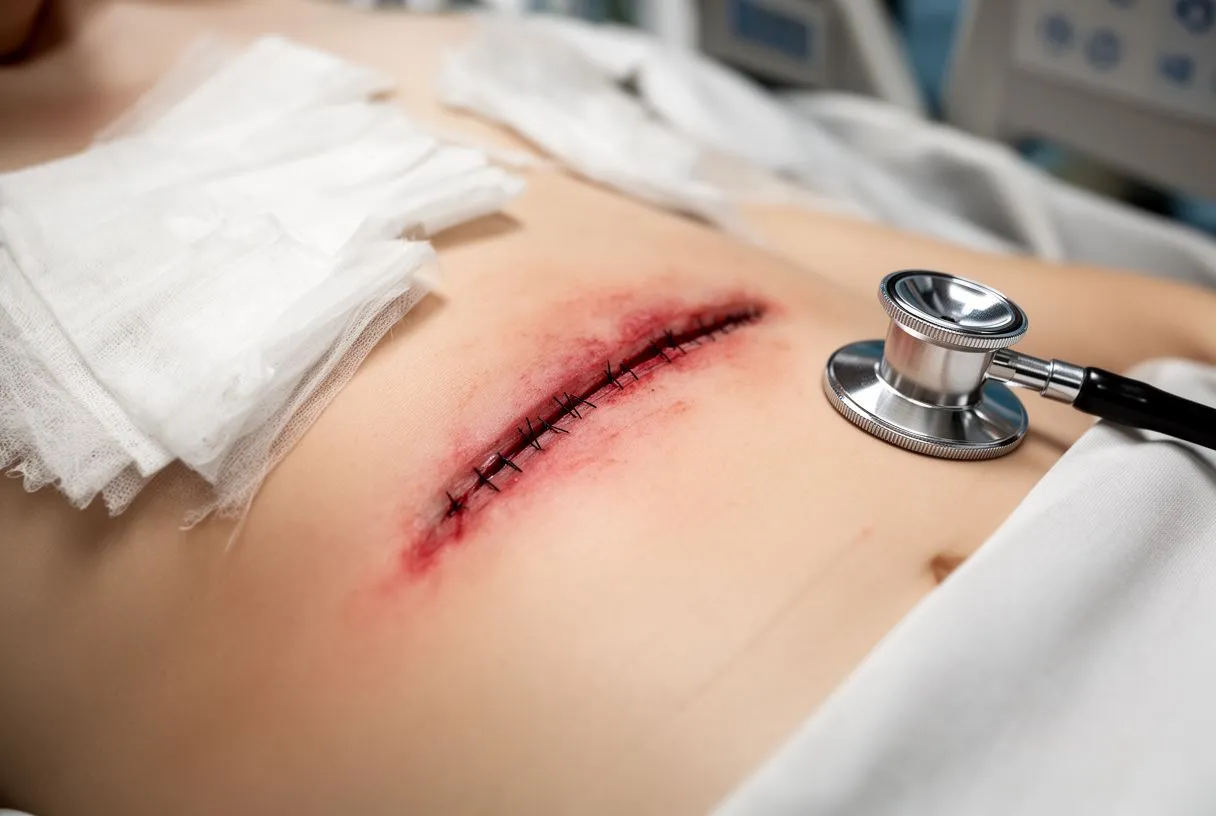
Most superficial infections are caused by skin organisms such as Staphylococcus species that enter during dressing changes or through tiny gaps in the wound edge. Treatment usually begins with a targeted oral antibiotic chosen by the surgical team after a wound swab, combined with instructions to keep the area clean and dry. In some cases a few sutures are removed to allow trapped fluid to drain, and the wound is packed lightly with sterile dressing material until it heals by secondary intention.
Patients often ask whether a superficial infection will delay their overall recovery. In the great majority of cases it does not — the infection settles within one to two weeks of starting antibiotics, and the underlying cardiac repair is unaffected. The key is prompt reporting; a superficial infection that is ignored can deepen, so every new symptom deserves a phone call to the surgical nurse or coordinator rather than a "wait and see" approach.
Deep sternal wound infection explained
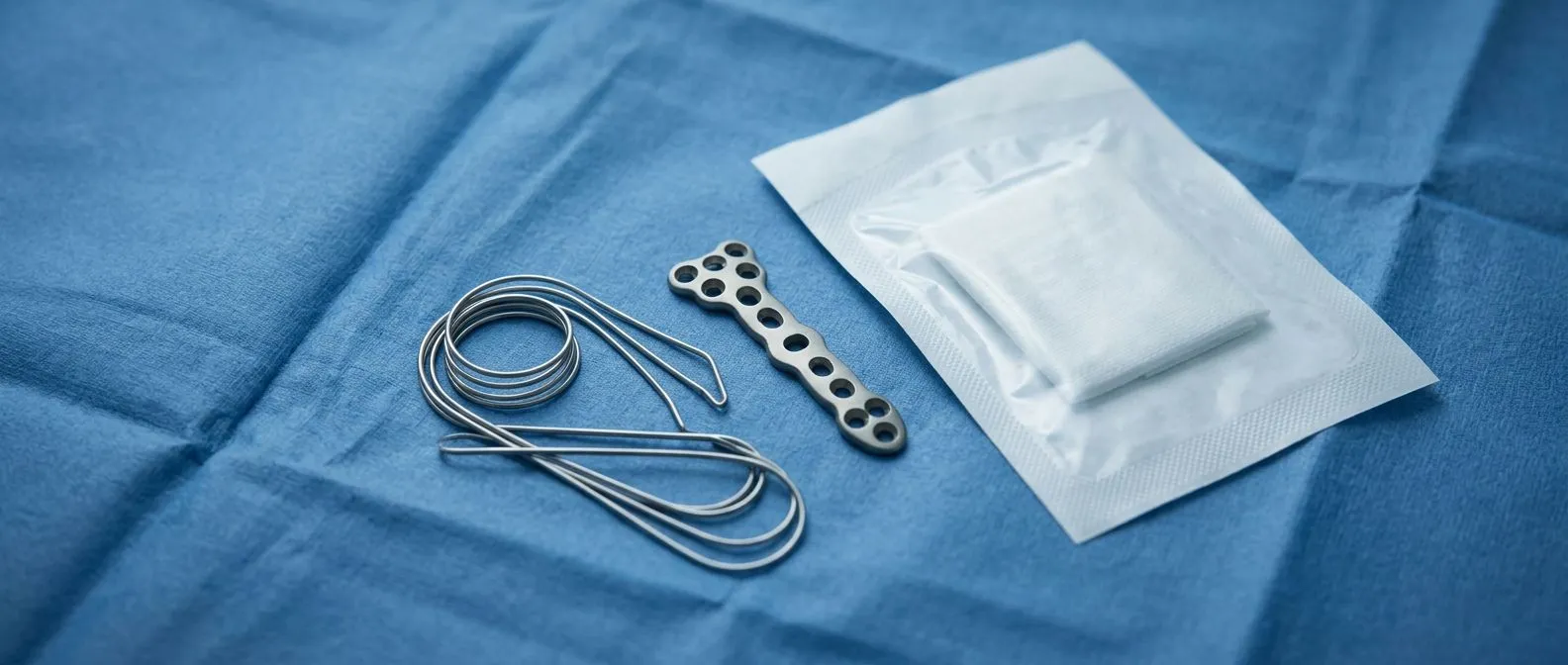
Deep sternal wound infection is a more serious condition in which microbes reach the bone of the sternum or the wires that hold it together after sternotomy. It occurs in a small percentage of cardiac surgery patients but accounts for the largest share of infection-related prolonged hospital stays. Symptoms tend to appear later than superficial infections — sometimes two to three weeks after surgery — and can include wound breakdown, drainage of clear fluid that may be streaked, persistent fever, and a "clicking" sensation when the chest moves.
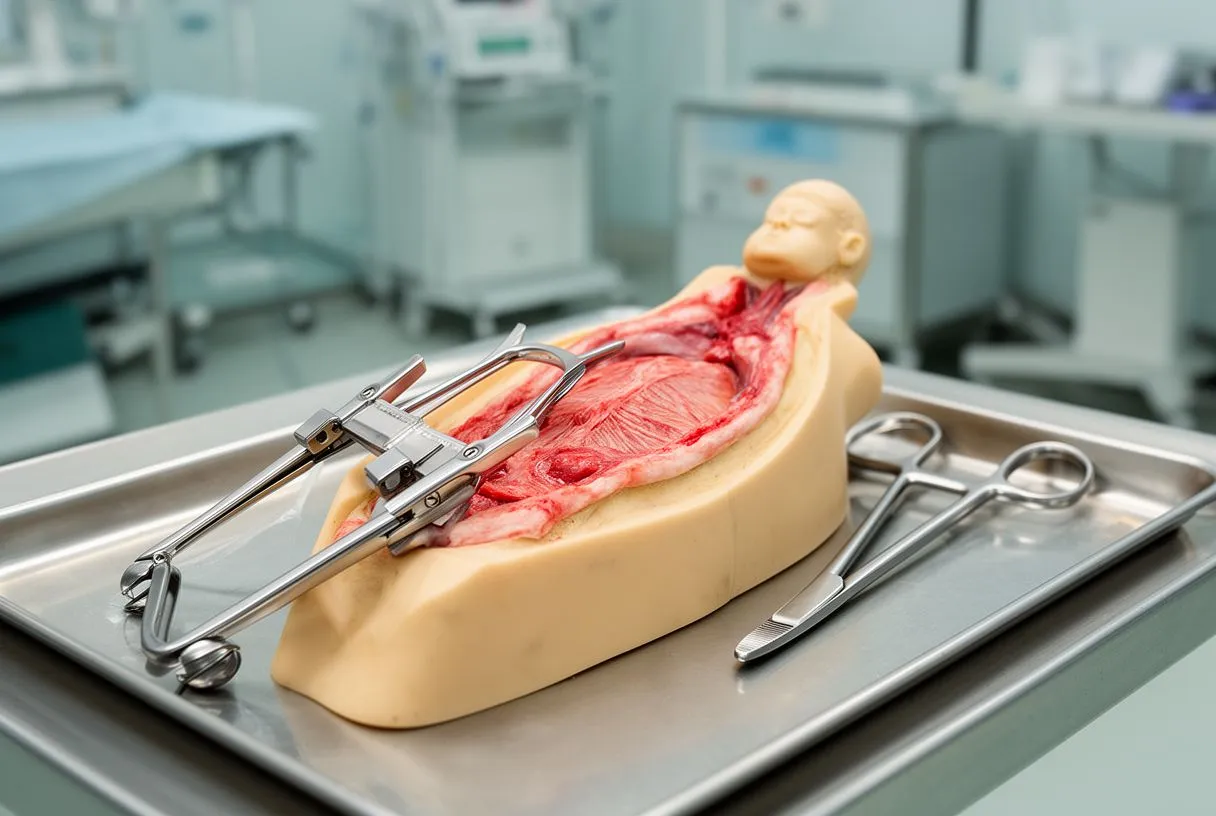
Diagnosis combines clinical examination, blood tests showing elevated inflammatory markers, and imaging such as a CT scan of the chest. Treatment is rarely antibiotics alone. Most patients require a return to the operating room for debridement — surgical removal of infected bone and tissue — followed by reconstruction. Depending on the extent, surgeons may use muscle flaps from the chest wall to cover the defect and restore a healthy blood supply to the area.
Because the stakes are higher, cardiac centres maintain protocols to prevent deep infection from the outset: prophylactic antibiotics timed before incision, meticulous skin preparation, and glucose control in diabetic patients. International registries continue to refine these protocols, and recent literature, including work indexed on PubMed, continues to examine how patient-specific factors and procedural choices interact to shape infection outcomes.
Infected sternum after surgery: what happens anatomically?
To understand an infected sternum after surgery, it helps to visualise the anatomy. The sternum is a flat bone in the centre of the chest that protects the heart and great vessels. During conventional heart surgery the surgeon divides the sternum lengthwise with a saw to reach the heart, then closes it at the end with stainless-steel wires that act like internal splints. The bone edges knit together over six to eight weeks, much like a broken rib.
When bacteria reach the bone — a condition called osteomyelitis of the sternum — the infection disrupts this healing. The blood supply to infected bone is relatively poor compared with soft tissue, which is why antibiotics alone may not suffice; microbes can hide in small pockets of dead bone that drugs cannot penetrate. The wires, though inert, can also become coated with a bacterial film, and in deep cases the surgeon will remove them to eliminate this reservoir.
Nearby structures add complexity. The ascending aorta and the atrium lie directly behind the sternum, and infection that tracks posteriorly can threaten these structures or a recently placed arterial graft. This anatomical intimacy is precisely why sternal infections are taken so seriously and why early, aggressive management — rather than prolonged observation — is the standard of care.
Treatment for wound infection after surgery
Treatment for wound infection after surgery follows a tiered approach that matches the depth and severity of the problem. The first step is always clinical assessment by the surgical team — never self-treatment with leftover antibiotics or over-the-counter ointments, which can mask signs and breed resistance.
Superficial infections: oral antibiotics for one to two weeks, wound cleaning, and sometimes removal of one or two sutures to release trapped fluid. Most patients manage this at home with weekly review.
Deep infections: admission to hospital, intravenous antibiotics guided by wound cultures, and surgical debridement. Reconstruction may involve a plastic surgery colleague who moves healthy muscle — often the pectoralis — to cover the cleaned sternum. Recovery is measured in weeks rather than days.
- Step 1 — Recognise: photograph the wound daily; note changes in redness, drainage, or pain.
- Step 2 — Report: call your cardiac coordinator at the first sign of concern; do not wait for the scheduled appointment.
- Step 3 — Review: attend the clinic for wound assessment, swab, and a treatment plan tailored to the organism identified.
- Step 4 — Recover: complete the full antibiotic course, keep the wound dry, and attend all follow-up visits until healing is confirmed.
For patients who have undergone valve procedures such as transcatheter aortic valve replacement, known as TAVR, the risk profile differs because the access site is usually in the groin rather than the chest. Still, any new fever or wound issue in the first month warrants prompt evaluation, since infection near a newly placed valve — even a balloon-expandable valve — carries specific concerns that the implanting team must assess.
Post cardiac surgery wound care at home
Post cardiac surgery wound care at home is where prevention and early detection meet. The fundamentals are simple but require consistency: keep the incision clean with mild soap and water, pat it dry, avoid soaking in baths or pools until the surgeon clears you, and inspect the wound daily in good light. A handheld mirror or a family member's help is useful for seeing the lower end of a sternotomy incision.
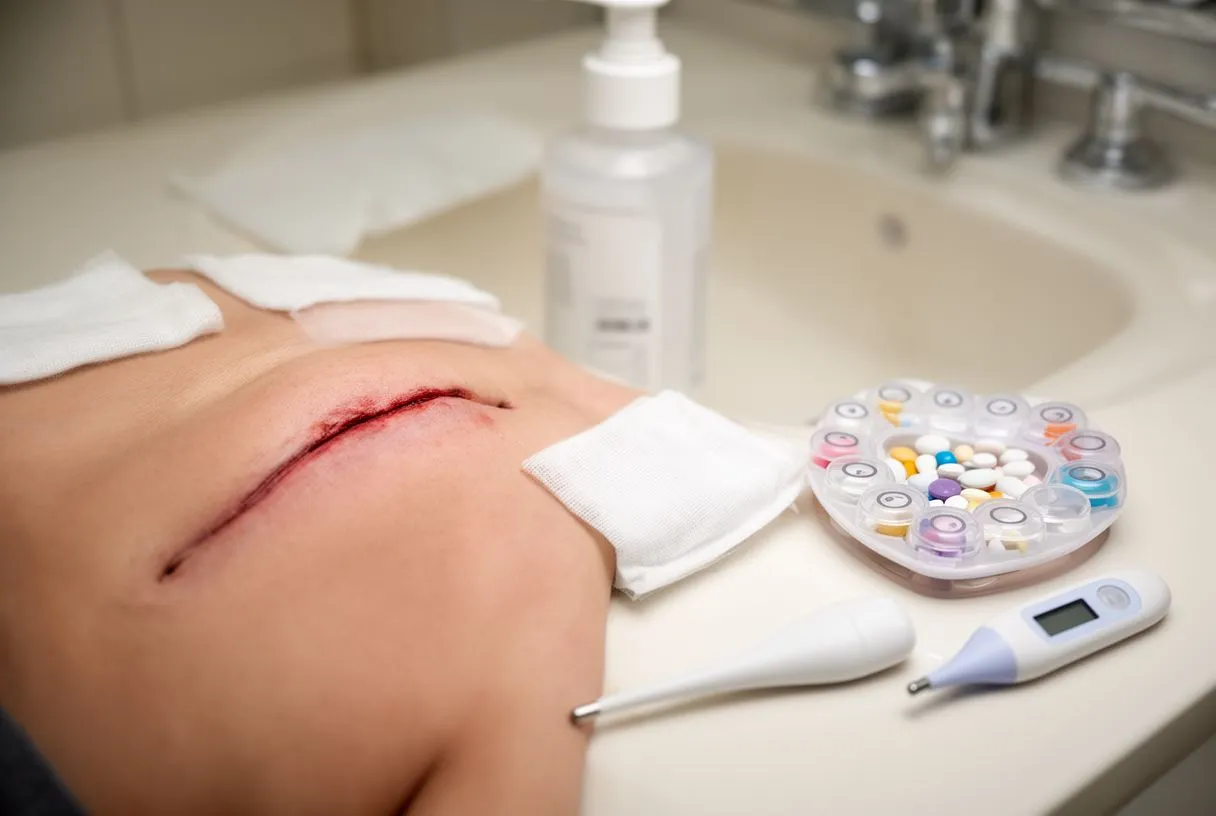
Discharge instructions usually advise leaving the original dressing in place for a specified number of days, then showering without scrubbing the wound. Covering the incision with a light, sterile dressing can protect it from clothing friction, but occlusive coverings that trap moisture should be avoided unless the team specifically recommends them. Hand hygiene before and after touching the area is one of the most under-appreciated preventive measures; most wound contamination comes from the patient's own skin flora or from hands.
Activity matters as much as dressing technique. Lifting restrictions — usually nothing heavier than five kilograms for six weeks — protect the healing sternum from stress that could widen tiny gaps where bacteria might enter. A supportive chest binder or front-closure bra can reduce movement-related discomfort. Patients who have had an arterial line or arterial cannula removed from the wrist should watch that puncture site for redness too, since it is a small but real entry point.
When to worry about surgical incision
Knowing when to worry about a surgical incision — and when to stay calm — is one of the most valuable skills for a recovering cardiac patient. Normal healing includes mild itching as nerves regenerate, a firm ridge under the scar called a "healing ridge" that softens over months, and small dry scabs that fall off on their own. None of these are cause for alarm.
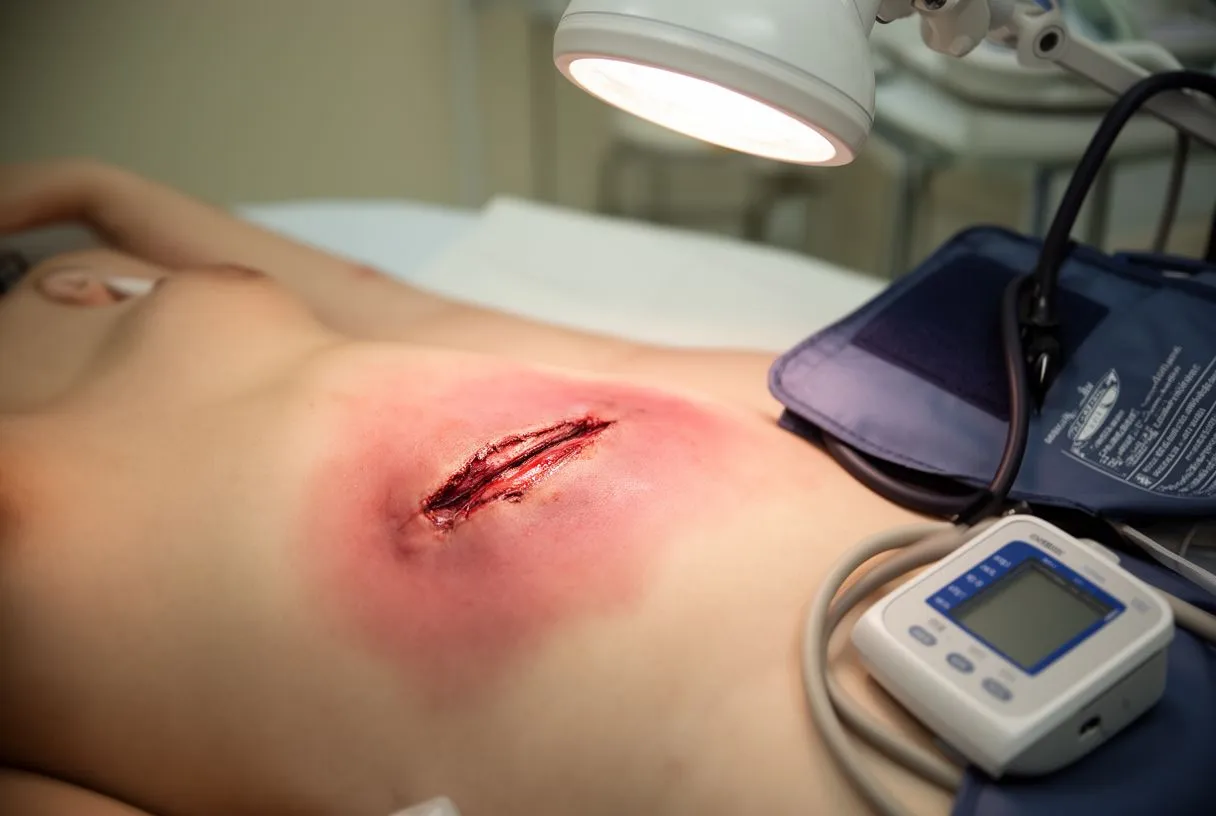
Warning signs that warrant same-day contact include: spreading redness beyond two centimetres from the incision, drainage that is thick, green, or smells offensive, reopening of the wound edges, fever above 38°C, shaking chills, a sudden increase in chest pain, or a sensation of the sternum moving or clicking when you breathe or cough. A persistent cough from atrial flutter or fluid on the lungs can strain the healing bone, so report any new respiratory symptoms promptly.
Do not hesitate to call because you are unsure. Cardiac surgical teams expect these calls and would far rather reassure a worried patient over the phone than see a deep infection present late. If you cannot reach your coordinator, go to the nearest emergency department and tell them you recently had heart surgery.
Heart surgery wound healing and recovery reality
Heart surgery wound healing follows a predictable biological timeline, and understanding it tempers anxiety. The first phase, inflammation, lasts about a week and brings the redness and slight swelling that are normal. The second phase, proliferation, spans two to six weeks as the body lays down collagen and the skin closes fully. The third phase, remodelling, continues for up to a year, during which the scar softens, flattens, and fades from red to pale.
Quality of life after a wound infection — even a deep one — is generally good once treatment is complete. Patients sometimes fear that an infection means the heart repair has failed, but in most cases the valve or bypass work is entirely intact; the complication was local to the wound. Long-term outcomes depend more on underlying cardiac health, adherence to medications such as aspirin where prescribed, and management of conditions like diabetes than on the infection itself.
If you or a family member are preparing for cardiac surgery or recovering from one and have any concerns about your incision, the most reassuring step is a direct conversation with a qualified cardiac team. Dr Alejandro Molina and the team at Cirugía de Corazón, with practices in Guadalajara, Querétaro, and Hermosillo, are available to review your wound, answer your questions, and guide your recovery. Book a consultation rather than self-diagnosing — a brief examination and an honest discussion are worth far more than any article, including this one.