Acute Respiratory Distress Syndrome After Heart Surgery
Acute respiratory distress syndrome heart surgery explained by Guadalajara specialists.
Acute respiratory distress syndrome after heart surgery is one of the most feared lung complications in the intensive care unit. It happens when the lungs become inflamed and fill with fluid, making it very hard for blood to pick up oxygen. Families often hear the word "ARDS" for the first time in a waiting room, and it is natural to feel frightened. This guide explains, in plain language, what the condition is, why it can follow cardiac surgery, how it is treated, and what recovery realistically looks like — so you can ask better questions and make calmer decisions.
What Is Acute Respiratory Distress Syndrome After Heart Surgery?
A reaction, not a disease of the lungs alone. Acute respiratory distress syndrome is the body's own inflammatory response that damages the tiny air sacs (alveoli) where oxygen passes into the blood. When it develops after cardiac surgery, the inflammation is usually triggered by the operation itself: the heart-lung machine, blood transfusions, infection, or the stress of major surgery. The air sacs leak fluid, stiffen, and collapse in patches, so the patient needs more and more oxygen support to maintain safe levels.
How doctors define it. Specialists use agreed criteria: the breathing difficulty must begin within a week of the trigger, imaging must show fluid on both sides of the chest, and the low oxygen must not be fully explained by heart failure alone. In cardiac patients this last point matters, because the heart itself may be struggling — and that overlap is one reason the condition is easy to miss early.
Why it matters to surgical patients. Acute lung injury after a cardiac procedure is uncommon, but it is among the most serious pulmonary complications of open heart surgery, because it prolongs time on the ventilator, lengthens intensive care stays, and places extra strain on a heart that has just been operated on. Understanding it early — what it is, and what it is not — helps families follow the team's decisions with far less alarm.
Why Do the Lungs Fail After Open Heart Surgery?
The heart-lung machine. During conventional bypass or valve surgery, a machine takes over circulation while the heart is stopped. Blood contacts the artificial surfaces of the circuit, and this activates inflammatory cells that can travel to the lungs. This systemic inflammatory response is one of the best-described mechanisms behind acute respiratory distress syndrome after cardiac surgery, and it is a key reason some teams favor approaches that avoid or shorten the time on the pump.
The mechanics of breathing during surgery. While the chest is open, the lungs are held still and partially collapsed for hours. Afterward, fluid shifts, pain-related shallow breathing, and residual anesthesia all reduce how much the lungs re-inflate. Areas that stay collapsed can seed the inflammation that becomes ARDS following coronary artery bypass or valve procedures.
Other triggers. Blood transfusions, severe blood loss, a chest infection before or after surgery, and aspiration can each set the process in motion. In some patients the heart itself contributes: low cardiac output syndrome — a state in which the freshly operated heart cannot pump enough to perfuse the organs — reduces oxygen delivery to the lungs and other tissues, and that circulatory failure and the lung injury feed each other.
What Are the Signs of Respiratory Compromise After Cardiac Surgery?
In the intensive care unit. Most patients are on a ventilator in the first hours, so early signs are numbers on monitors rather than complaints. The team watches the oxygen level in the blood, how much pressure and oxygen concentration the ventilator needs, and whether the lungs are becoming stiffer on each breath. Falling oxygen despite rising support is the classic warning pattern.
Once the breathing tube is out. After extubation, the signs become human: faster breathing than expected, a feeling of not getting enough air even with the oxygen mask on, restlessness or new confusion from low oxygen, and crackling sounds when the chest is listened to. These are the everyday lung complication signs after surgery that nurses are specifically trained to detect.
Why timing matters. Respiratory complications of open heart surgery usually declare themselves within the first two to four days. When the team catches the trend early — before the oxygen level collapses — there are many more options available, from positioning and diuretics to advanced respiratory support. When you visit a loved one and everything looks calm, that calm usually reflects hours of quiet monitoring behind the scenes.
What Is Severe ARDS and How Is It Diagnosed?
The three grades. Doctors classify the condition as mild, moderate, or severe, based on how low the oxygen falls relative to the amount of oxygen being delivered — a ratio called PaO₂/FiO₂. Severe ARDS means the lungs are so injured that even high concentrations of oxygen and significant ventilator pressure cannot fully correct the blood oxygen, and it is at this stage that teams consider advanced support such as ECMO.
What the tests show. A chest X-ray or CT scan shows white, patchy shadows on both sides — fluid and collapsed lung, not infection alone. Blood gases confirm the oxygen problem. Echocardiography is done to make sure the left side of the heart is not the main cause, because fluid in the lungs from a failing heart (pulmonary edema) can look identical on an X-ray and is treated differently. This distinction matters enormously in cardiac patients, who can have both problems at once.
How the diagnosis is made at the bedside. Falling oxygen after cardiac surgery needs careful joint assessment, because the treatment that helps a failing lung can harm a failing heart, and vice versa. We find that explaining this overlap to families in plain words, with the actual images on the screen, removes most of the confusion in those first difficult days.
Which ARDS Risk Factors Matter Before Bypass Surgery?
Conditions you bring to the operating table. The strongest ARDS risk factors for bypass surgery are chronic lung disease such as COPD or emphysema, active smoking, poorly controlled diabetes, obesity, and pre-existing kidney impairment. Metabolic syndrome — the combination of abdominal obesity, high blood pressure, high blood sugar, and abnormal cholesterol — raises the inflammatory baseline of the whole body, which is why it appears repeatedly in studies of postoperative lung complications.
Factors in the operation itself. Long duration on the heart-lung machine, urgent or emergency operations, heavy transfusion, and reoperations all raise the risk. Emergency surgery for an acute myocardial infarction — a heart attack — or for acute aortic syndrome carries more risk than planned surgery, partly because there is no time to stabilize the patient first.
What we actually measure. Before recommending any operation, we calculate a validated surgical risk score and review the chest imaging and breathing tests as a multidisciplinary team against international guidelines. If the risk profile is high, that does not mean surgery is refused — it means we choose the approach (beating-heart bypass, minimally invasive access, or transcatheter options) and the perioperative plan that gives the lowest risk for that specific patient, and we explain the reasoning openly.
How Is Heart Surgery Breathing Problems Treatment Carried Out in the ICU?
Ventilation that protects the lung. The foundation of heart surgery breathing problems treatment in the ICU is so-called protective ventilation: small breath volumes, moderate pressure, and careful use of positive pressure at the end of each breath (PEEP) to keep air sacs open. Pushing a stiff lung with big breaths makes the injury worse, so the ventilator settings are deliberately gentle even when the oxygen numbers look alarming.
Treating the causes around the lungs. If the trigger is infection, antibiotics are started. If fluid overload is drowning the air sacs, diuretics and, if needed, dialysis remove fluid. If the heart is not pumping strongly — a situation that can follow a perioperative event such as Takotsubo syndrome, the temporary stress-induced stunning of the heart muscle — medications and devices that support the circulation are used, because no ventilator setting can compensate for a heart that cannot deliver blood.
Prone positioning and patience. Turning the patient face-down (prone positioning) redistributes blood flow through the injured lungs and is one of the most effective measures in moderate-to-severe cases. Patients usually spend 12 to 16 hours prone at a time, cared for by a team that repositions them safely. Deep sources on acute respiratory distress syndrome, such as the comprehensive review published by Nature, describe how these supportive measures — protective ventilation, fluid balance, and prone positioning — remain the backbone of care while the lungs heal on their own time.
When Is ECMO Needed for Postcardiotomy Acute Respiratory Failure?
What ECMO is. ECMO stands for extracorporeal membrane oxygenation — a machine outside the body that draws blood, adds oxygen to it, removes carbon dioxide, and returns it. It takes over the work of the lungs (and, in some configurations, part of the heart's work) while they recover. It is reserved for postcardiotomy acute respiratory failure and circulatory failure that cannot be managed with a ventilator and medications alone.
When the team reaches for it. The usual thresholds are severe oxygen levels that keep falling despite optimal ventilator settings, or a heart that is too weak to maintain circulation after the operation. In high-risk patients whose hearts are already compromised, studies of combined ECMO and intra-aortic balloon pump support during complex procedures — including research published by Reanimatology — have examined whether mechanical circulatory support can protect organs like the kidneys and lungs when the heart is pushed to its limits.
Honest limits. ECMO is life-support, not a cure: it buys days for the lungs to recover while the underlying problem is treated. It carries real risks, including bleeding and clotting around the cannulas, and the decision to start it is made with the family fully informed. That decision should only be reached when the care team agrees it is the right step and the family receives a clear explanation of why, and of what the alternatives are.
What Does Pulmonary Rehabilitation Post Heart Surgery Look Like?
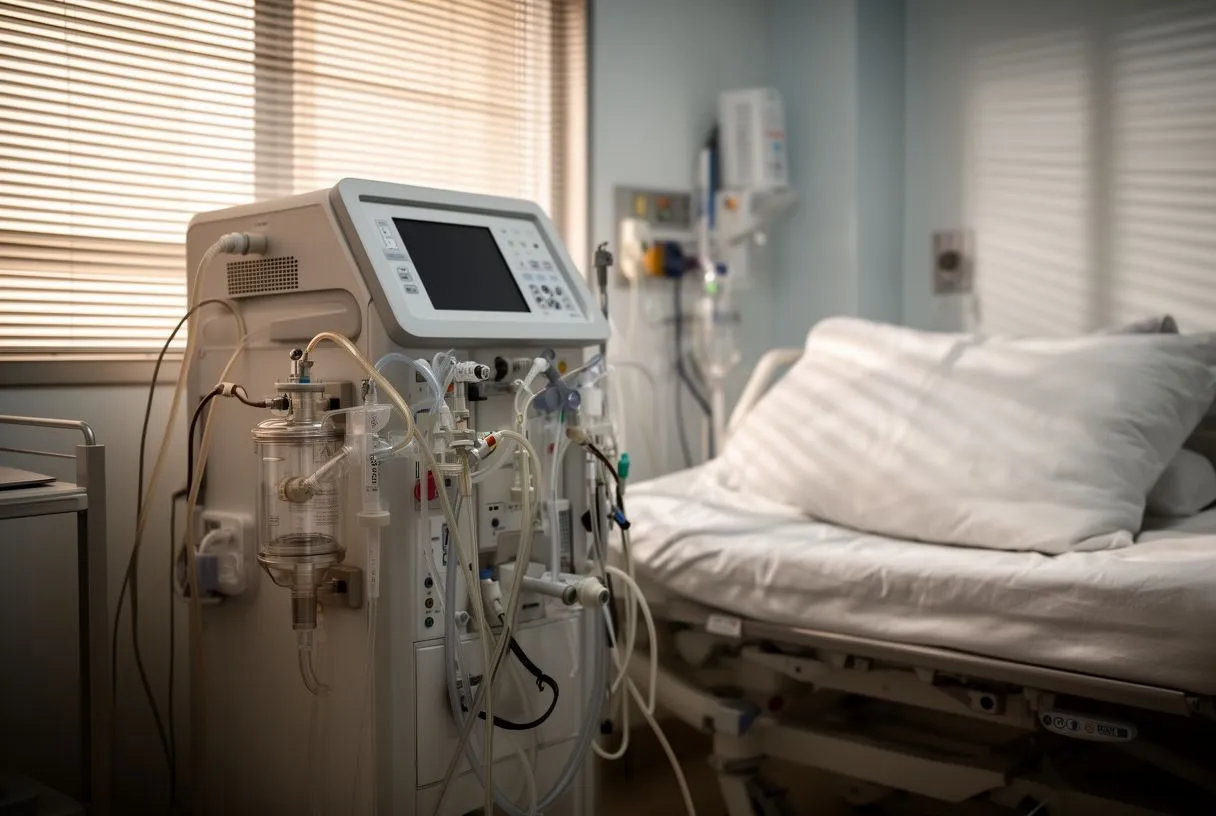
The first days: getting the lungs moving again. Once the breathing tube is out, recovery becomes active work. Breathing exercises with a small incentive device, deep breaths held for a few seconds, coughing supported by a pillow pressed against the chest, and sitting upright for meals all re-expand the air sacs. In the first weeks, pulmonary rehabilitation post heart surgery is less about fitness and more about preventing collapse, fluid, and infection in the healing lungs.
Building from there. Over the following weeks, walking programs and gradually increasing activity rebuild endurance. Patients recovering from a significant lung injury may notice breathlessness lasting longer than they expected — that is normal, because lung tissue heals over weeks to months. The heart surgery recovery respiratory therapy plan is usually supervised by physiotherapists who progress the exercises as the body allows, never by pushing through severe symptoms.
What recovery realistically involves. Most patients who survive ARDS after cardiac surgery leave the hospital breathing on their own, but many report persistent fatigue and reduced exercise tolerance for months. Pulmonary rehabilitation, gentle and consistent, is the part of recovery families can most directly support — accompanying walks, keeping track of progress, and celebrating the slow gains. Recovery is a marathon measured in months, not days.
How Can ARDS Prevention in Cardiac Patients Work Before Surgery?
Optimize what can be optimized. ARDS prevention in cardiac patients starts weeks before the operation. Quitting smoking even a few weeks ahead lowers airway inflammation and speeds lung recovery. Treating chest infections before surgery, controlling blood sugar, and adjusting blood-thinning medications under guidance all reduce the risk factors that are modifiable. Patients on medications for heart failure may have them tuned before surgery to arrive at the operating table in the best possible balance.
Choosing the surgical approach deliberately. Not every heart operation requires opening the chest and using the heart-lung machine. For suitable patients, minimally invasive and robotic techniques, or transcatheter valve procedures such as TAVR, reduce the surgical trauma and the time — or the need — for full cardiopulmonary bypass. Less invasive does not automatically mean safer for every patient; it means lower risk only where the evidence supports it for that person's specific anatomy and condition.
Minimizing transfusion and time on the pump. Surgeons also prevent lung injury by technique: keeping the heart-lung machine time short, limiting transfusions, protecting the heart with careful cardioplegia, and using surgical approaches that avoid unnecessary dissection around the lungs. Dr Molina performed the first robotic mitral valve repair in the Ángeles Health System and the first robotic heart surgery in Guadalajara, and our team brings that experience to the question of which approach minimizes the inflammatory burden for each individual patient.
Which Lung Complication Signs After Surgery Mean You Should Call for Help?
The clear warning signs. Once you are home, some symptoms deserve an urgent call or an emergency visit rather than waiting for the next appointment:
- Sudden breathlessness at rest: struggling to breathe while sitting still, or waking at night gasping, needs same-day evaluation.
- Fever with a new cough: a fever above 38 °C together with coughing up discolored or bloody mucus can signal a chest infection that needs prompt treatment.
- One-sided leg swelling with chest pain on breathing: this combination can indicate a clot traveling to the lungs, which is an emergency.
- Persistently falling oxygen readings: if you have been given a home pulse oximeter and readings drop consistently below your care team's instructed threshold, call them rather than waiting.
Less urgent, but still mention them. Gradual breathlessness on stairs, a lingering dry cough, or new ankle swelling that improves with rest and elevation should be reported at your follow-up visit. These can reflect fluid shifts, deconditioning, or the early stages of heart or lung problems — all of which are much easier to address early. Some patients also develop acute heart failure or acute kidney injury during a complicated recovery; your follow-up blood tests and symptom review are how these are caught.
Have your questions ready. Before every follow-up appointment, write down what you want to ask — about breathing, medications, activity, or warning signs. In our consulting rooms in Guadalajara, Querétaro and Hermosillo, we take the time in consultation to explain what the studies actually show, in plain words, and to answer every question before any decision; we encourage second opinions and treat them as a normal part of deciding about heart surgery. Your first contact with us is a free video consultation, where we get to know you, talk through your condition, and tell you which studies are genuinely still needed so no unnecessary ones are ordered.

Acute respiratory distress syndrome after heart surgery is serious, but it is not mysterious: it is a recognized lung injury with known triggers, a structured treatment pathway, and a recovery phase that rewards patience and rehabilitation. The most powerful things a patient and family can do are on the preventive side — prepare the lungs before surgery, choose a surgical approach suited to the individual, and know the warning signs afterward. If you or a family member are facing heart surgery and worried about lung complications, bring those worries to a qualified cardiac team rather than trying to self-assess the risk. Every case deserves a clear, honest conversation — and the final decision about any operation should always be yours, made with the full picture in front of you.