Stress Cardiomyopathy: Recovery Time and Outlook
Stress cardiomyopathy recovery typically takes weeks to months.
Stress cardiomyopathy recovery is usually far faster than most people expect when they first hear the words "heart failure" in an emergency room. The condition — also called takotsubo cardiomyopathy or broken heart syndrome — temporarily weakens the heart muscle after a surge of stress hormones, often following emotional shock, severe illness, or intense physical strain. The encouraging news is that the heart muscle usually regains its strength, and most people return to normal life. The less-discussed news is that recovery follows a real timeline, needs proper follow-up, and carries a small number of complications worth understanding. This guide walks you through what happens to the heart, what the weeks and months after diagnosis typically look like, and how to protect your long-term outlook.
What Is Stress Cardiomyopathy?
Stress-induced heart failure is what doctors call the temporary pumping weakness that defines this condition. Under sudden emotional or physical stress, hormones such as adrenaline flood the bloodstream and "stun" the heart muscle. The left ventricle — the main pumping chamber — balloons outward at its tip while the base squeezes harder than normal. The shape reminded Japanese imaging pioneers of an octopus trap, which is where the name takotsubo comes from.
Because the heart cannot pump effectively during the acute phase, blood can back up into the lungs, causing breathlessness, and the patient may genuinely be in heart failure for days or weeks. The key difference from other forms of cardiomyopathy is reversibility: in most patients the stunned muscle recovers, whereas cardiomyopathies caused by scarring or genetic disease tend to be permanent or progressive.
Researchers believe oxidative stress inside the heart cells plays a central role in this temporary stunning — a mechanism the Nrf2/HO-1 antioxidant system, studied across species, is thought to help regulate (Role of Nrf2/HO-1 system in development, oxidative stress response and diseases). In plain terms, the stress surge injures the muscle cells chemically rather than cutting off their blood supply, and that injury heals.
How Is Broken Heart Syndrome Different From a Heart Attack?
The symptoms feel nearly identical, which is why almost everyone with this condition is first treated as a suspected heart attack. Chest pressure, breathlessness, and sometimes collapse bring the patient to emergency care. The distinction is made in the catheterisation laboratory: a heart attack shows a blocked coronary artery, while in stress cardiomyopathy the arteries are open and the characteristic ballooning appears on the left ventriculogram and echocardiogram.
How a heart attack is treated, and why the difference matters: a blocked artery needs rapid reopening — stents, and in severe cases surgery, because the principle of "time is muscle" means every delay kills heart tissue permanently. With broken heart syndrome there is no blockage to reopen, so treatment shifts to supporting the heart while it recovers: medications that reduce the workload, careful fluid management, and monitoring for complications.
One related question families often ask is the link between post-traumatic stress and cardiovascular disease. Chronic stress conditions such as PTSD keep stress hormones elevated over months and years, and research has associated them with higher cardiovascular risk over time. A single acute shock triggers takotsubo; ongoing unmanaged stress shapes heart health in a slower, quieter way — one more reason recovery plans address stress as seriously as they address the heart itself.
Stress Cardiomyopathy Recovery Time: What Timeline Should You Expect?
The short answer: most hearts recover within one to three months. Many patients show clear improvement in pumping function within the first few weeks, and the majority reach near-normal or normal function by the two-to-three-month mark. Some recover even faster. Your cardiologist confirms recovery with a repeat echocardiogram — an ultrasound of the heart — rather than by how you feel alone.
The first days matter most. The acute phase, usually spent in a coronary care unit or recovery room setting, is when the heart is at its weakest and when complications such as very low blood pressure or heart rhythm disturbances are most likely. Once the heart stabilises and pumping function begins to climb, most patients go home within a few days to two weeks, depending on severity and whether another illness triggered the episode.
Full recovery is not the finish line. Follow-up imaging, medication review, and attention to the underlying trigger continue for months. Large observational research — including long-term registry work published by The Lancet — has shown that although the heart recovers, patients with takotsubo carry a small but real long-term risk compared with the general population, which is why ongoing follow-up is part of every sensible recovery plan.
What Are the Stages of Takotsubo Cardiomyopathy Recovery?
Weeks 1 to 2: stabilisation. The heart is supported with medication while pumping function begins to return. Breathlessness and fatigue improve noticeably. Most patients transition from hospital to home during this window, moving gently and avoiding exertion.
Weeks 3 to 8: rebuilding. Energy returns in steps. Walking distances grow, stairs become easier, and the fog of early fatigue lifts. A repeat echocardiogram around the one-to-three-month mark documents how far pumping function has recovered — this scan, not symptoms, is what guides decisions about returning to work and activity.
Months 3 to 6 and beyond: consolidation. By now most hearts have reached their new baseline. This stage is about locking in habits — activity, stress management, follow-up scans — and addressing whatever triggered the episode in the first place. Everyone recovers at their own pace; these stages describe the typical pattern, not a guarantee.
Which Symptoms Are Normal During Stress Cardiomyopathy Recovery?
Fatigue is the most universal symptom. For weeks, simple tasks may tire you out in a way that feels disproportionate. This is normal while the heart rebuilds its pumping reserve — but it should steadily improve, not worsen.
Mild breathlessness on exertion and occasional palpitations are common early in recovery. A fluttering or skipped-beat sensation can occur as the heart's electrical system settles. These usually fade as function returns.
Certain symptoms are never "just part of recovery" and need urgent attention:
- Chest pain that is new, severe, or lasting more than a few minutes: treat it as an emergency and call for help — it must be evaluated, not waited out.
- Breathlessness at rest or waking you from sleep: this can signal fluid building up in the lungs and needs same-day medical review.
- Fainting, near-fainting, or a racing heartbeat that does not settle: rhythm disturbances are a known complication and should be assessed promptly.
- Swelling of the ankles or legs with rapid weight gain: fluid retention can mean the heart is struggling again.

Can Complications Affect Stress Cardiomyopathy Prognosis?
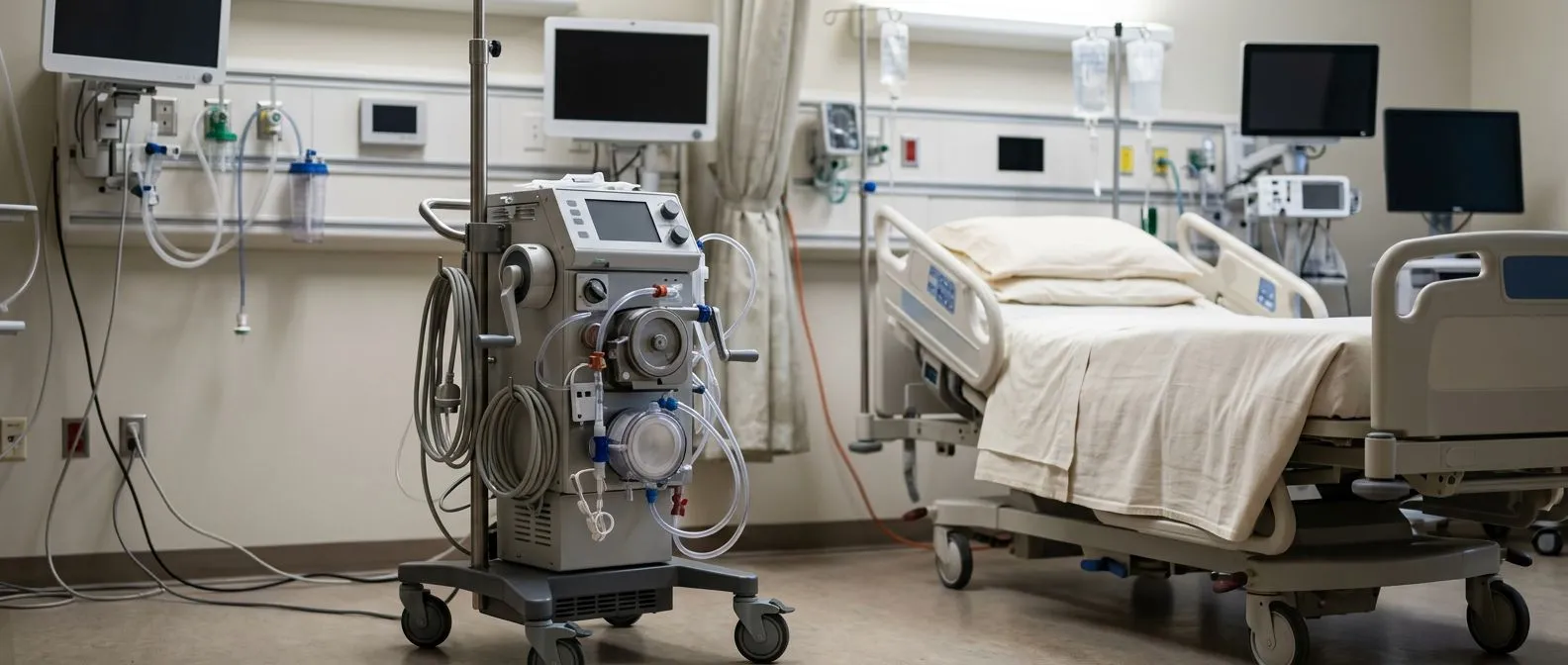
Most people recover fully, which is why the overall prognosis is good. However, the prognosis is not the same for everyone, and a few complications during the acute phase can change the picture. In the first days, the weakened heart can go into cardiogenic shock — meaning it cannot pump enough blood to the body — or develop serious rhythm problems. When these occur, intensive support may be needed, sometimes including temporary mechanical circulatory support such as ECMO, a machine that takes over oxygenating and circulating the blood when the heart cannot manage alone.
Other recognised complications include blood clots forming inside the ballooned ventricle (prevented with anticoagulant medication in higher-risk cases), mitral valve leakage caused by the distorted heart shape, and, rarely, rupture of the ventricular wall — a surgical emergency. The odds of these fall sharply once pumping function begins to recover.
Recurrence is possible. A minority of patients experience another episode, sometimes years later. This is why identifying and managing the trigger — a grief reaction, an acute illness, uncontrolled anxiety — is treated as genuinely medical work, not an afterthought. In our practice, every case is reviewed by the multidisciplinary team against international practice guidelines before any recommendation is made, and the patient receives a clear proposal with the alternatives, with the final decision always theirs.
Why Does Follow-Up Care Matter After Stress Cardiomyopathy?
Follow-up care is how recovery is confirmed, not assumed. A typical schedule includes an echocardiogram at one to three months to document pumping function, then periodic reviews for at least the first year. Blood tests may monitor kidney function and medication effects. If symptoms persist beyond three months, or the echocardiogram shows incomplete recovery, further testing such as a Stress Echocardiogram or cardiac MRI may be ordered to look for other causes.
Follow-up also catches the hidden partner conditions. Takotsubo episodes are often triggered by acute illness — severe infection, major surgery, neurological events — and some patients turn out to have underlying coronary or valve disease that contributed to the picture. A careful follow-up review often changes the plan for the better, which is why, in consultation, our team explains in plain words what the studies actually show before any decision.
Bring your questions to every appointment. Good follow-up is a conversation: what activities are safe now, what warning symptoms to watch for, whether medications can be adjusted. A useful checklist for your follow-up visits:
- Your symptom diary: energy levels, breathlessness, palpitations, sleep — written down beats remembered.
- Your current medication list: including anything bought over the counter.
- Three written questions: about activity, work, and anything that worries you — they get answered, not forgotten.

Can Exercise and Cardiac Rehabilitation Help Recovery?
Yes — but progressively and under guidance. For the first few weeks the heart is still recovering, so heavy exertion is off the table. Once follow-up imaging confirms that pumping function has recovered and your cardiologist clears you, gradual activity becomes part of the treatment. Many patients benefit from a structured cardiac rehabilitation programme: supervised, monitored exercise sessions that rebuild fitness safely while teaching stress management and heart-healthy habits.
Start small and listen to the signals. Walking is usually the first exercise permitted — short, comfortable distances that grow week by week. The talk test is a good rule: you should be able to hold a conversation while moving. Stop and report any chest discomfort, unusual breathlessness, or palpitations rather than pushing through.
Stress management is exercise for the nervous system. Because emotional stress triggered the episode, recovery plans increasingly include breathing practice, paced relaxation, sleep protection, and, where appropriate, psychological support. In the first months after a frightening cardiac event, some people also experience anxiety or post-traumatic stress symptoms around hospitals and medical settings — naming this early and addressing it is part of good cardiac care, not a separate problem.
What Role Do Medications and Diet Play in Long-Term Outlook?
Medications bridge the heart through its weakest weeks. During recovery, doctors commonly prescribe beta-blockers to calm the heart's response to stress hormones, ACE inhibitors or ARBs to reduce the heart's workload, and sometimes diuretics if fluid builds up. As function recovers, some medications are tapered or stopped at follow-up; the exact regimen depends on the individual and on whether other conditions such as high blood pressure are present. Take medications exactly as prescribed and never stop them on your own — your cardiologist will tell you when and how to adjust.
Diet supports the same goals the medication does. A heart-healthy pattern — vegetables, fruit, whole grains, lean protein, less salt and ultra-processed food — helps control blood pressure and weight, both of which shape the heart's workload over years. No specific diet reverses takotsubo, but sensible eating lowers the risk of the problems that complicate the long-term outlook. Alcohol moderation matters too, since heavy drinking is itself a recognised trigger.
Think of recovery in three pillars: medication, movement, and stress control. Each one reinforces the others, and skipping one weakens the whole plan. The pillar most patients underestimate is the third — deliberately managing stress after an episode caused by stress is not optional; it is the strategy most likely to prevent a recurrence.
When Should You See a Stress Cardiomyopathy Specialist?
See a specialist if recovery is not on track, or if you want certainty about your outlook. Warning signs that warrant specialist review include symptoms that persist beyond three months, an echocardiogram showing incomplete recovery, episodes that keep recurring, or a trigger that was never clearly identified. A specialist team can also clarify whether the episode truly was takotsubo or whether another cardiomyopathy needs different long-term management.
What a specialist consultation should look like: a careful history of the episode and its trigger, review of all imaging and tests, a plain-language explanation of what the findings mean, and a concrete plan for monitoring and prevention. If any procedure — conventional, minimally invasive, robotic, or transcatheter — were ever needed for a related problem such as valve disease, the right team recommends the less invasive route only where the evidence supports it for that specific patient.
Our multidisciplinary team, led by Dr Alejandro Molina, reviews every case against international practice guidelines before a recommendation is given, and we actively encourage second opinions — seeking one is a normal, sensible part of deciding about heart care, not a sign of distrust. The first contact is a free video consultation: we get to know the patient, talk through the condition, and identify which studies are still needed so no unnecessary ones are ordered; a face-to-face visit at our consulting rooms follows when the patient decides to go ahead.
Stress cardiomyopathy recovery follows a pattern most patients find genuinely encouraging: a frightening acute phase, a supported few weeks of healing, and — for the great majority — a heart that regains its strength within two to three months. The takotsubo cardiomyopathy recovery timeline is not identical for everyone, and the small risks of complications and recurrence are exactly why follow-up imaging, sensible medication use, cardiac rehabilitation, and honest stress management matter long after the echo looks normal. If you or someone close to you has been through this episode, the most useful next step is a conversation with a qualified cardiac team about your own timeline, your own triggers, and your own outlook — book a consultation rather than trying to self-diagnose, and bring every question you have.