Cabrol Technique in Aortic Root Surgery: When It Is Used
Cabrol technique aortic root surgery is used when standard coronary reimplantation is too risky.
When the aortic root — the very first segment of the body's main artery, where the aortic valve sits — becomes diseased, surgeons often replace it with a tube graft and reattach the coronary arteries. Most of the time this is done with a standard approach. But in some patients, the anatomy makes that standard approach impossible or unsafe. The cabrol technique aortic root surgery option exists precisely for those cases, and this guide explains what it is, when it is used, and what recovery looks like.
What Is the Cabrol Technique in Aortic Root Surgery?
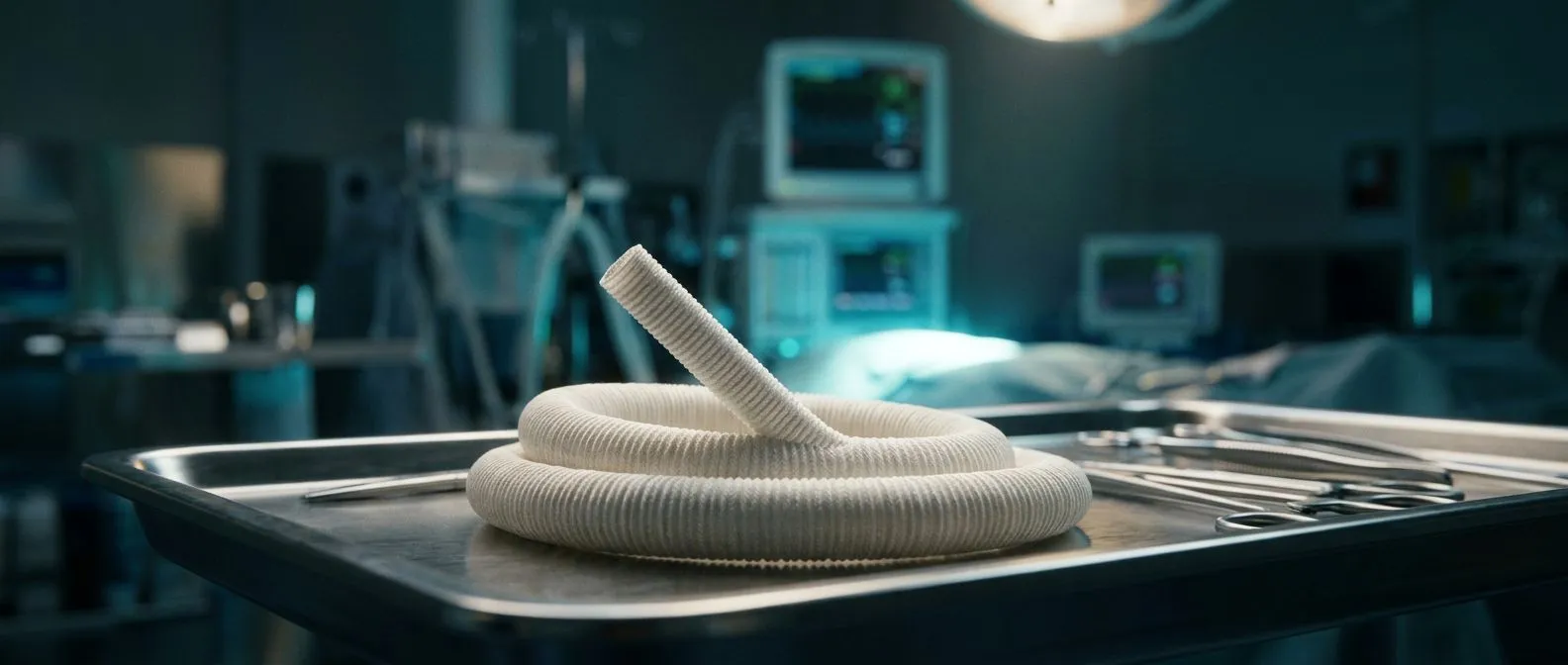
The Cabrol technique is a specialized form of aortic root replacement in which the surgeon uses a short segment of extra graft material as a side conduit to reconnect the coronary arteries to the main aortic graft. Instead of sewing the coronary arteries directly into the graft, the surgeon creates a loop of graft that runs around the outside of the new aortic root, like a small bypass road around a town.
Why a loop instead of a direct connection? In a standard aortic root replacement, the two coronary arteries — the left and right coronary arteries, which feed the heart muscle itself — are detached from the diseased aortic wall and sewn back into small openings in the new graft. When scar tissue, infection, calcification, or an unusual coronary position makes that direct sewing too risky, the Cabrol approach gives the surgeon a way to restore blood flow without forcing fragile tissue into a direct stitch.
The basic idea in plain terms. Think of the main graft as a new highway. The coronary arteries are the driveways that need to connect to it. If the driveways cannot be moved to the highway directly, the Cabrol technique builds a small connector road that loops around and links them safely. This technique was described by the French surgeon Christian Cabrol in the early 1980s, and it remains an important tool for complex aortic root surgery today.
Why Is It Called the Cabrol Procedure?
Named techniques in medicine usually honor the surgeon who first described them. The Cabrol procedure heart valve operation was developed by Professor Christian Cabrol and colleagues at the Pitié-Salpêtrière Hospital in Paris, who reported the approach in the 1980s as a solution for patients in whom standard coronary reattachment was not feasible.
The original problem it solved. Early aortic root replacement operations had a stubborn complication: when coronary arteries were sewn directly into a graft, the tiny connections could leak, kink, or tear, especially in patients with fragile or scarred tissue. Cabrol's answer was to place a small graft between the two coronary openings, creating a ring around the aortic root, and then connect that ring to the main graft with a single side-to-side join. This spread the stress over a larger, sturdier connection.
How it evolved. Over the decades, surgeons modified the original design — shortening the conduit, changing the angle of the connections, and adapting it for infected fields and reoperations. The operation spread through major aortic centers worldwide, and today reviews of the technique's evolution and current applications describe it as a valuable option for a specific, difficult subset of patients rather than a routine first choice.
When Do Surgeons Use the Cabrol Technique?
The cabrol technique indications are specific. It is not the default operation for an aortic root problem — most patients do better with a standard approach. Surgeons reach for the Cabrol method in a defined set of circumstances:
- Reoperative surgery: when a patient has already had aortic root surgery and dense scar tissue surrounds the coronary arteries, making direct reattachment dangerous.
- Active or recent infection: when infection of the graft or valve (endocarditis) has destroyed tissue around the coronary openings, the loop graft can be placed through cleaner tissue.
- Unusual coronary anatomy: when the coronary arteries arise from an abnormal position or sit very low or far from where the graft will sit, a direct connection may kink or pull.
- Severe calcification: when calcium has hardened the tissue where the coronary arteries must be sewn, standard stitches simply cannot hold.
Aneurysm and dissection contexts. The cabrol technique aneurysm repair scenario usually involves a thoracic aortic aneurysm — a ballooning of the aorta above the heart — or a Type A Aortic Dissection, a tear in the aorta's inner lining that requires emergency surgery. In these emergencies, the coronary arteries may be displaced or the tissue torn, and the loop technique can save a situation that a standard approach cannot. In our practice, every complex root case is reviewed by the whole multidisciplinary team against international guidelines before we decide which technique fits that specific patient's anatomy.
Cabrol Technique vs Bentall Procedure: What Is the Difference?
This is one of the most common questions patients ask, because the Bentall procedure is the standard aortic root replacement operation. The comparison cabrol technique vs bentall comes down to one thing: how the coronary arteries are reattached.
The Bentall procedure. In a Bentall, the surgeon replaces the aortic valve, the aortic root, and the ascending aorta with a single graft containing a valve. The coronary arteries are detached with a small button of tissue around each opening and sewn directly into the graft — this is the "button Bentall" or cabrol vs button bentall comparison, and it is the most common root replacement in the world. The name honors the British surgeon Hugh Bentall, who described it in 1968.
Where Cabrol differs. The Cabrol keeps the same overall replacement — diseased valve and root removed, graft placed — but replaces the two direct coronary buttons with a loop graft. Life expectancy after a well-executed root replacement is generally good for either approach, and MedlinePlus notes that aortic aneurysm repair outcomes depend heavily on the patient's overall condition and the experience of the surgical team.
Which is better? Neither in the abstract. For a straightforward first-time root replacement, the Bentall is faster and has a long track record. For a scarred, infected, or anatomically difficult root, the Cabrol can be the lower-risk choice for that situation. The right answer is always anatomy-specific, not technique-specific.
How the Cabrol Graft Aortic Root Repair Works, Step by Step
Understanding the mechanics helps patients and families know what is being asked of the surgical team. The cabrol graft aortic root repair follows several stages:
- Exposure and bypass: the operation is performed through the breastbone (sternum) under general anesthesia, with the heart-lung machine taking over circulation so the heart can be stopped and worked on still.
- Removing the diseased root: the aneurysmal or infected aortic root is cut away, along with the damaged valve, while the coronary arteries are carefully detached.
- Placing the main graft: a polyester tube graft with a valve — or a valve-sparing configuration in selected patients — is sewn to the aortic annulus, the ring of tissue where the valve sits.
- Building the Cabrol loop: a short additional graft is run between the two coronary openings and joined to the main graft with a side-to-side connection.
The final connections. The surgeon checks that the loop is not stretched, kinked, or compressed when the heart fills and the chest closes. The whole construct must move with every heartbeat. I have found that the quality of these small coronary connections is what separates a durable result from a troubled one — they are the most delicate part of the operation.
What Is the Modified Cabrol Technique?
The original design has been refined. The modified cabrol technique places the loop graft in a different plane — often running behind the aorta rather than around the front — and uses shorter conduit segments to reduce the chance of kinking. The so-called neo-modified Cabrol, described in recent surgical literature, adjusts the geometry further for patients with small or unusual coronary openings.
Why the modifications matter. Early experience with the Cabrol showed that the loop could sometimes kink or press against the lungs and chest wall, especially when the loop ran anteriorly. Moving the conduit behind the aortic root and shortening it reduced these problems. Surgeons also learned that the tension on the loop changes with patient anatomy, so the modern versions are tailored rather than standardized.
Choosing among variants. The decision between the original, modified, and neo-modified versions depends on coronary height, the presence of infection, and whether the operation is a first operation or a redo. In our team's consultations, we explain which version we are considering and why in plain words, so the patient can weigh the alternatives with us before deciding.
Why Does Coronary Reimplantation Matter So Much?
The cabrol technique coronary reimplantation step is the reason the technique exists at all. When the aortic root is replaced, the heart muscle's own blood supply must be restored — otherwise the heart cannot function. Every root replacement, whatever its name, rises or falls on this connection.
What can go wrong. The coronary arteries are small, thin-walled vessels. Sewing them directly into a graft can cause leaks at the suture line, twisting of the vessel, or late narrowing. A problem at a coronary connection may not show up on the operating table; it can surface hours or days later as reduced heart muscle blood flow. This is why surgeons are meticulous about the geometry of these connections.
How the loop helps. The Cabrol design distributes stress. Instead of a fragile button being pulled directly by the graft, the loop graft acts as a flexible bridge that absorbs motion and tension. In our team's planning, we map the coronary positions on imaging before surgery and choose the connection style that minimizes tension for that specific patient's anatomy.
What Are the Complications and Risks of Cabrol Surgery?
Candid discussion of risk matters more than reassurance. Cabrol surgery complications fall into the general risks of major cardiac surgery and some specific to the technique.
General cardiac surgery risks. These include bleeding, infection, stroke, kidney strain, irregular heart rhythms, and the risks of anesthesia. The risk level depends on age, other conditions, whether the operation is urgent, and whether it is a reoperation. Reoperative and infected-field cases — the settings where Cabrol is most often used — carry higher baseline risk than first-time surgery.
Technique-specific risks. The loop graft can kink, compress, or narrow over time, which can reduce blood flow to the heart muscle. Late narrowing at the graft-to-main-graft connection has been reported, and some patients have needed catheter-based intervention on these connections years later. Serious bleeding from the suture lines is a risk in the early days after surgery.
How these risks are managed. Careful surgical planning, intraoperative measurement of flow, and lifelong follow-up imaging. We tell every patient that no operation is risk-free, and that our job is to recommend the lowest-risk option for their situation — which is why the team reviews each case against current international practice guidelines before proposing anything.
How Long Does Recovery After Aortic Root Surgery Take?
Patients and families usually want a timeline. Recovery after aortic root surgery follows a predictable arc, though the starting point matters: emergency dissection surgery, for example, usually means a longer road than planned surgery.
The first weeks. Most patients spend one to two days in intensive care, then several more days on the ward. The breastbone takes about six to eight weeks to knit, so lifting, driving, and most arm-heavy activity are restricted during that window. Walking is encouraged early and increases steadily.
Three to six months. Most people are back to everyday activity by around three months, with full recovery and return to work — including physically demanding work — closer to six. Cardiac rehabilitation, a supervised exercise and education program, is strongly recommended and measurably improves recovery quality.
What helps recovery go well. Attending rehabilitation sessions, taking medications exactly as prescribed, controlling blood pressure, and keeping follow-up imaging appointments. In our practice, the first contact is a free video consultation in which we get to know the patient and outline exactly which studies are needed — so that during recovery planning, no one is ordering unnecessary tests or missing necessary ones.
Cabrol Technique Patient Outcomes and Choosing Your Care
Reported cabrol technique patient outcomes in experienced aortic centers are encouraging for a technique reserved for difficult anatomy: the majority of patients in published case series keep the graft working well for many years, and case reports exist of Cabrol grafts functioning two decades after implantation — including documented rescue surgery performed 19 years after a composite root and hemiarch replacement, which shows both the durability and the possibility of late reoperation.
What the evidence says about technique choice. Because the Cabrol is used in the hardest cases — infection, redo surgery, unusual anatomy — direct comparisons with the standard Bentall are difficult. Modern surgical literature, including detailed work on coronary and cusp geometry in complex root operations such as studies of commissural geometry and cusp fusion in bicuspid valve repair, has shown that tailoring the reconstruction to each patient's anatomy is what drives good outcomes. We perform conventional, minimally invasive, robotic, and transcatheter procedures, and we recommend the less invasive route only where the evidence supports it for that particular patient.
Questions worth asking any surgical team. Before committing to any aortic root surgery options you are offered, consider asking:
- Why this technique for me? The answer should reference your specific anatomy, not habit.
- What is your center's experience with this approach? Volume and familiarity matter for complex reconstructions.
- What follow-up will I need, and for how long? Cabrol grafts require lifelong imaging surveillance.
A word about second opinions. Complex aortic root surgery is exactly the kind of decision where an independent view adds real value. We encourage second opinions and treat seeking one as a normal part of deciding about heart surgery. Our team — cardiac surgeons led by Dr Alejandro Molina, with consulting rooms in Guadalajara, Querétaro and Hermosillo — reviews every complex case together before making a recommendation, and the final decision always belongs to the patient.
The takeaway. The cabrol technique aortic root surgery approach is not the operation most patients with aortic root disease will have — but for those with scarred, infected, or unusually shaped coronary anatomy, it can be the difference between a workable repair and no repair at all. If you or a family member have been told you need aortic root replacement, bring your imaging, ask which technique is proposed and why, and make sure the recommendation comes from a team that explains it in words you understand. The right next step is a conversation with a qualified cardiac team — book a consultation rather than trying to self-diagnose from the internet.