


Cardiac Xenotransplantation: Pig Hearts in Humans
Cardiac xenotransplantation progress is transforming heart failure treatment.
If you or someone in your family has been told the heart is failing, you may have read headlines about surgeons transplanting pig hearts into people. That field is called cardiac xenotransplantation, and cardiac xenotransplantation progress has moved faster in the last few years than in the previous three decades combined. This guide explains, in plain language, what xenotransplantation is, why scientists are pursuing it, what actually happened in the first human cases, and what a patient with heart failure can realistically expect today — because for now, the proven options are still conventional transplants, valve procedures, and medical therapy.
What Is Cardiac Xenotransplantation?
Xenotransplantation means transplanting a living organ, tissue, or cells from one species into another — in this case, from a pig into a human. The word itself comes from the Greek xenos, meaning "foreign." A pig heart placed in a person is called a heart xenograft, and the whole field exists because the human need for donor hearts far exceeds the supply.
Why pigs, and not chimpanzees or baboons? Pigs are the practical choice for pig heart human compatibility research for several reasons. Their hearts are close to human hearts in size and pumping physiology, they reproduce quickly and in large numbers, and they can be raised in controlled, disease-free facilities. Pigs also raise fewer ethical objections than primates, since pigs are already raised for food in most societies.
The central scientific problem is the immune system. A human immune system treats a pig heart as an invader and attacks it far more aggressively than it would attack a human donor heart. Almost all of the modern work in cardiac xenotransplantation progress is really about calming that immune response, either by editing the pig or by treating the patient — usually both. A Cardiac Xenotransplantation: A Narrative Review summarizes this landscape well for readers who want the technical detail.
Why Is Xenotransplantation Done?
Simply put: too many patients, too few hearts. Every year, thousands of people are listed for a heart transplant, and a large fraction of them will never receive one. End-stage heart failure — when the heart can no longer pump enough blood for the body, despite the best medication — is fatal without a transplant or a mechanical support device.
That gap is why researchers describe xenotransplantation as a potential heart transplant waiting list alternative. A pig heart could, in principle, be produced on schedule, screened for infections, and transplanted without waiting months or years for a human donor to die. For a patient whose condition is deteriorating faster than the waiting list moves, that difference in timing can be the difference between life and death.
It is worth being clear about what this means for a patient today. Xenotransplantation is not yet an established treatment you can request. It exists in early, tightly regulated experimental cases. When our team reviews a patient with advanced heart failure, we work from international practice guidelines and the options that are actually proven — medication optimization, conventional or minimally invasive surgery, or referral for transplant evaluation — and we lay out the alternatives so the patient can decide. The experimental path is something we follow closely, but no one should plan their care around it yet.
Baby Fae and the History of Pig Heart Transplants
Baby Fae heart transplant history is where most stories of this field begin. In 1984, surgeon Leonard Bailey transplanted a baboon heart into Stephanie Fae Beauclair, a newborn born with a fatal heart defect called hypoplastic left heart syndrome. She lived 21 days before her body rejected the organ. The case was controversial — partly because a baboon was chosen rather than a more compatible species, and partly because of how consent was obtained — but it proved something important: a human infant could temporarily survive with a non-human heart.
Earlier attempts reached even further back. In 1963 and 1964, surgeons transplanted chimpanzee and baboon organs into human patients; the longest any of those recipients lived was a matter of days. In the 1990s, a handful of patients received baboon livers and a pig heart as "bridge" organs while waiting for human donors. None lasted long. The immune barrier simply overwhelmed every attempt.
What changed? Three things converged in the 2000s and 2010s: powerful new immunosuppressive drugs, gene-editing technology that could modify the pig itself, and better understanding of the specific molecules that trigger rejection. That combination is what turned xenotransplantation from a recurring tragedy into a credible research program.
How Genetically Modified Pig Hearts Are Made With CRISPR
Xenotransplantation CRISPR editing is the technological heart of the modern breakthrough. CRISPR is a gene-editing tool that works like molecular scissors, allowing scientists to cut out specific genes and insert others with precision. Companies now breed pigs whose genomes have been deliberately altered to make their organs more "human-like" to our immune systems.
The edits generally fall into three groups:
- Removing pig antigens: the most important is a sugar called Gal (alpha-gal), which every human naturally carries antibodies against. Pigs with that gene knocked out no longer trigger the immediate, explosive rejection reaction called hyperacute rejection.
- Adding human genes: inserted human genes produce proteins that regulate blood clotting and calm inflammation, addressing the abnormal clotting that has plagued pig organs in primates.
- Deleting viral risk: edits target porcine endogenous retroviruses, embedded viral DNA in the pig genome, to reduce any theoretical risk of pig infections passing to humans.
The result is a donor animal with ten or more genetic modifications, raised in sterile pathogen-free facilities from birth. These genetically modified pig hearts are screened extensively before use. The editing itself has been validated in years of experiments transplanting pig hearts into baboons, where edited organs survived for many months — the scientific foundation that made human cases possible.
Pig Heart Transplant Updates: What the First Patients Taught Us
Pig heart transplant updates centers on two landmark cases at the University of Maryland. In January 2022, David Bennett, a 57-year-old man who was ineligible for a conventional transplant or a standard mechanical pump, received a heart from a genetically edited pig. His heart functioned well for about seven weeks. He died in March 2022, and the autopsy found no classic rejection of the pig heart — the contributing factors identified included pig cytomegalovirus detected in the graft and the use of an antibody treatment that may have weakened his response to the infection.
In September 2023, Lawrence Faucette, a 58-year-old man with severe heart disease also ineligible for a standard transplant, received a second edited pig heart. His case added lessons about managing the immune response differently, including antibody removal before the transplant. He survived about six weeks. Both patients knew they were receiving an experimental organ with no guarantee, under compassionate-use provisions when no other option remained.
These were not failures in the usual sense. They proved a pig heart can support a human circulation for weeks and that the immediate rejection barrier — the one that killed every recipient before 2022 — had been crossed. They also taught the field exactly what to fix next: stricter virus screening, better immunosuppression protocols, and closer monitoring. Every step of cardiac xenotransplantation progress since has built on those two cases.
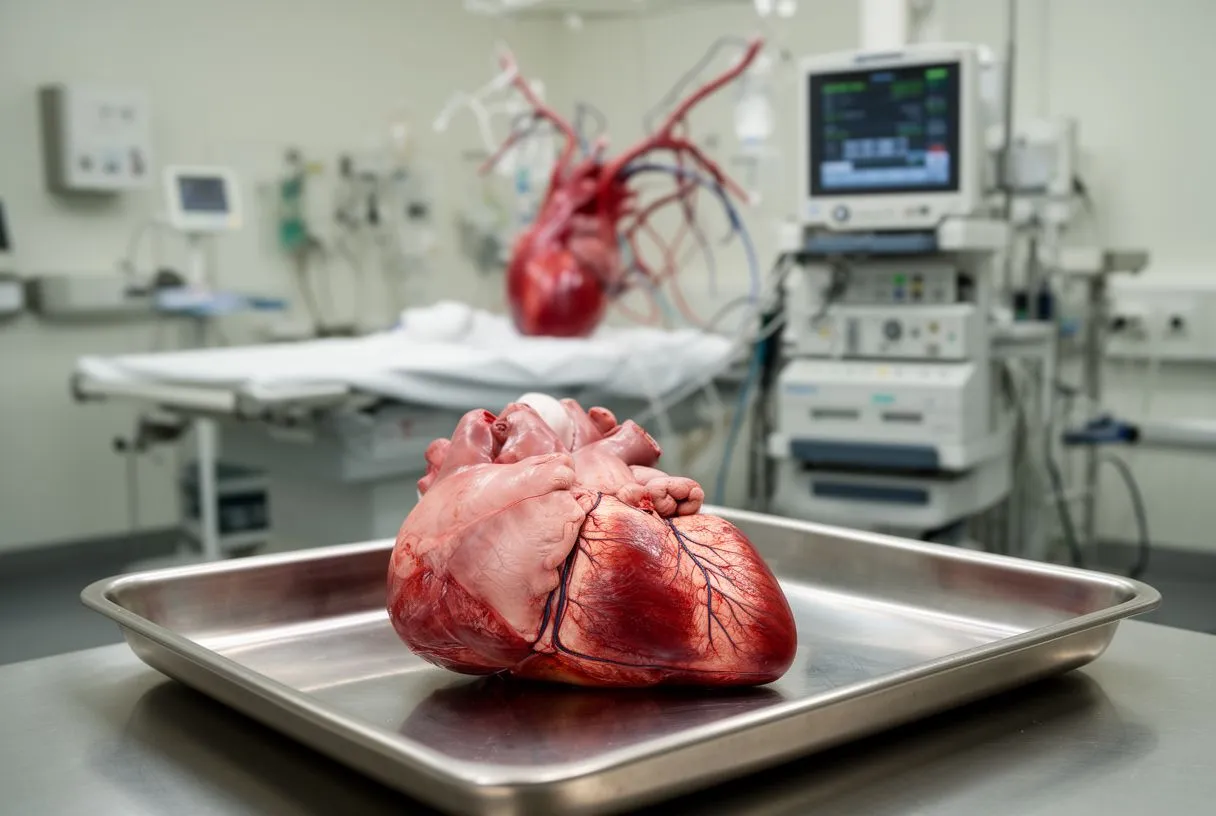
Heart Xenograft Rejection and Survival Rates
Heart xenograft rejection is the defining challenge of the field, and it comes in several forms. Hyperacute rejection, driven by pre-existing antibodies against the alpha-gal sugar, destroys the organ within minutes to hours — this is largely solved by gene editing. Acute vascular rejection follows days to weeks later, as the immune system attacks the blood vessels of the graft. Beyond that, researchers watch closely for two other threats: abnormal clotting inside the graft's vessels, and infections, because transplant recipients take drugs that suppress their immune defenses.
What are the realistic xenotransplantation survival rates? The honest answer is that there are no established rates yet. The published baboon experiments showed pig hearts functioning for many months, and the first two human recipients survived about six to seven weeks. That is a starting point, not a track record. For comparison, a well-matched human donor heart today gives many recipients one to two decades of life — which is the benchmark any xenotransplant must eventually meet.
It is also worth understanding xenotransplantation immunosuppression, the medication regimen that keeps the immune system from attacking the new heart. It combines several drug classes, plus antibody therapies before and after surgery, and it is more intensive than regimens used for human-to-human transplants. Suppression cuts both ways: it protects the graft but leaves the patient vulnerable to infection, which is precisely what complicated the first cases.
Xenotransplantation Clinical Trials 2024 and FDA Approval
Where does the science stand now? As of the most recent reports, formal xenotransplantation clinical trials 2024-era programs are moving from case-by-case compassionate use toward structured studies. The U.S. Food and Drug Administration, which regulates all xenotransplantation in the United States, has signaled that small early-phase clinical trials could begin once sponsors demonstrate sufficient safety data from animal studies. No xenotransplantation FDA approval for routine clinical use exists yet — approval would mean the therapy is cleared as an established treatment, which is still some distance away.
In the meantime, a small number of additional cases have proceeded under expanded-access rules, including patients who received pig hearts at institutions in the United States. Several recipients of pig kidneys — the parallel program in xenotransplantation — have lived for months with functioning organs, which has given the cardiac field useful information about long-term immunosuppression in xenograft recipients.
The National Institutes of Health supports much of the underlying research, and its overview of National Institutes of Health programs on xenotransplantation describes the safety and ethical frameworks that govern this work. The realistic sequence from here is: a small first-in-trial cohort of perhaps a handful of patients, careful multi-year follow-up, and only then any question of wider availability. For patients in 2024 and the next few years, this remains a research frontier, not a treatment option.

Porcine Heart Valve Xenotransplantation: Already Part of Everyday Care
Here is something many patients do not realize: a form of xenotransplantation is already routine, and it has been for decades. Porcine heart valve xenotransplantation refers to bioprosthetic valves — valves taken from pig heart tissue, chemically treated so they no longer trigger immune rejection, and sewn into a human patient's heart to replace a diseased valve. Hundreds of thousands of people worldwide live with pig-tissue valves.
These valves work because they are not living organs. The treatment removes the cells and antigens that provoke rejection, leaving only the structural tissue. Their main limitation is durability: tissue valves gradually wear out, typically over ten to twenty years, which is why they are often chosen for older patients or those who cannot take long-term blood thinners. Mechanical valves, made of synthetic materials, last a lifetime but require permanent anticoagulation medication.
Our team performs valve replacement conventionally, minimally invasive, robotically, or via transcatheter approaches such as TAVR (transcatheter aortic valve replacement), depending on the patient's anatomy and overall condition. We recommend the less invasive route only where the evidence supports it for that specific patient, and in the consultation we take the time to explain what the studies actually show, in plain words, before any decision is made. Dr Molina performed the first robotic mitral valve repair in the Ángeles Health System and the first robotic heart surgery in Guadalajara, so patients in western Mexico have access to the full range of valve approaches close to home.
Xenotransplantation Ethical Concerns
Xenotransplantation ethical concerns are taken seriously by regulators, and they go beyond the question of using animals for organs. The main issues fall into a few clear categories, each with real safeguards already in place or under development.
- Animal welfare: donor pigs are raised in sterile facilities with dedicated care, and oversight bodies require justification for animal use. Critics also question breeding animals specifically to be sacrificed for organs.
- Infection risk to the community: because transplant patients carry pig tissue and immunosuppression, regulators require lifelong infection monitoring — not just of the patient, but in some frameworks of close contacts — to catch any cross-species infection early.
- Fairness and consent: experimental organs should go to patients who fully understand the risks and have no better established option, and the technology should not widen inequalities in access to care.
Religious and cultural perspectives also matter, particularly for an international patient population. Most major religious authorities have issued guidance on porcine tissue, and many permit its use when medically necessary — but this is a personal and family conversation worth having early. The regulatory requirement for informed consent in xenotransplantation is among the strictest in medicine, precisely because the risks are unknown and, in the case of infection monitoring, extend beyond the individual patient.

The Future Timeline and What Heart Patients Can Do Today
What is a realistic xenotransplantation future timeline? The most credible expert projections describe early-phase clinical trials in the next few years, conditional on animal data continuing to improve. Broader availability, if the trials succeed, is plausibly a decade or more away. In parallel, other technologies compete for the same goal: researchers are exploring regenerative approaches, and a broad review of Stem cell-based therapy for human diseases in Signal Transduction and Targeted Therapy describes how cell-based strategies aim to repair heart tissue rather than replace it. Fully lab-grown or bioengineered human hearts remain even further off.
Patients also ask how xenotransplants compare with mechanical heart vs xenotransplant options. Mechanical pumps — ventricular assist devices, or VADs — are available today and keep many patients alive for years as a bridge to transplant or as destination therapy. Their trade-offs are the external power source, the driveline infection risk, and clotting complications. A pig heart, if it ever works long-term, would beat inside the chest without a power cable — but today it offers weeks of function, while a modern VAD offers years.
So what should a person with advanced heart failure actually do? The proven heart failure treatment options remain the ones to build on first: optimized medication, procedures for valve and coronary disease when they help, evaluation for transplant listing, and mechanical support where appropriate. Xenotransplantation cost Mexico and elsewhere is likewise unknowable while the therapy is experimental — no pricing exists for something that is not yet an offered service, and anyone quoting figures is speculating. Our multidisciplinary team, led by Dr Alejandro Molina with consulting rooms in Guadalajara, Querétaro and Hermosillo, reviews every case against international practice guidelines before recommending anything, and we begin with a free video consultation so patients learn which studies are truly needed before ordering any.
The most important takeaway is perspective. Cardiac xenotransplantation progress is real and encouraging, and the first human cases crossed a barrier medicine had chased for sixty years. But if your heart is failing now, your decisions should rest on evidence that already exists — and on a cardiac team that will explain every option honestly. We encourage second opinions and treat seeking one as a normal part of deciding about heart surgery. If you have questions about your own situation, book a consultation with a qualified cardiac team rather than self-diagnosing; the right next step is a conversation, not a headline.






