Heart xenotransplantation: the future, or have we lost our minds?
Explore heart xenotransplantation from 1964 to the first success in 2022, including the science, ethics, and future of animal-to-human heart transplants.
Transplanting an animal heart into a human being — the history from 1964 to the first real success in 2022, the immunological barrier, and the ethical debate.
Transplanting a heart from an animal into a human being. The origins, the immunological barrier, the first genuinely successful case in 2022, and the ethical debate that surrounds all of it.
Heart xenotransplantation means transplanting a heart from an animal into a human being. Yes, you read that correctly — from an animal into a human being.
The origin of the problem? It is simple. There are not enough organs to transplant into the people who need them.
The simple act of writing about this gives me goosebumps, and produces a certain fascination and at the same time a degree of fear. It is true that doctors, researchers and scientists have always sought to push the limits of the possible in the search to save lives and relieve human suffering — but this progress of science has never been free of public judgement, of scrutiny, and of a heavy cloak of criticism carrying the question: do they think they are gods?
It has been that way since the beginning of time: some pushing and constantly changing the definition of science fiction, others criticising and questioning behind shields of wisdom, humanism, religion, ethics or plain common sense. Historically many scientists paid the highest price in the search for truth. Despite all of it, the human race is living through a fascinating era, enjoying wide benefits in public health, a higher life expectancy and new alternatives for treating disease and cheating death.
Do you think we have gone too far?
Including the controversies and ethical debates surrounding xenotransplantation, it is undeniable that human beings have managed to push the limits of the impossible towards the possible. From the first human heart transplants in the 1960s to the exciting advances in xenotransplantation today, human beings have demonstrated an astonishing capacity to innovate and overcome the most complex challenges.
Heart transplantation has been a revolutionary procedure in modern medicine and has saved countless lives. There is, however, a shortage of human organ donors, and many people die while waiting on the transplant list. This is where heart xenotransplantation arises.
At first glance this may sound like science fiction, but scientific advances have led to several successful xenotransplants in laboratory animals and, recently, the first successful animal-to-human xenotransplant. Could heart xenotransplantation be the answer to the organ donor crisis and the solution to the shortage of hearts for transplantation?
From its origins this process has faced many challenges because of the risks of infection, rejection and other medical problems that can arise in the patient. Despite the difficulties, heart xenotransplantation is an option being actively explored today, given the shortage of human heart donors and the high demand for transplants.

The origins of heart xenotransplantation
Heart xenotransplantation has been explored since the 1960s, but the first attempts were unsuccessful because of a lack of understanding about the mechanisms of immunological rejection and the need for greater understanding of tissue compatibility.
In the 1980s the technique of immunosuppression — preventing the body from attacking the transplanted organ — was developed, and significant advances were made in understanding the mechanisms of rejection, which allowed more studies of heart xenotransplantation to be carried out.
The challenges
The greatest challenge in heart xenotransplantation is immunological rejection, in which the patient's immune system rejects the transplanted heart because of differences in tissues, genes and antigens between humans and animals.
There are also risks of infection, because of the possibility of transmitting diseases from animals to humans, as well as problems of compatibility in size and anatomy between the animal heart and the human patient.
A little history
James Hardy performed the first cardiac xenotransplant from a chimpanzee in 1964, in a dying patient for whom no brain-dead human donor could be identified. The heart did not prove sufficient to support the circulation and the patient died within a few hours.
The first successful heart xenotransplant was carried out in 1984, when the surgeon Leonard Bailey transplanted the heart of a newborn baboon into a 12-day-old girl known as Baby Fae. The baboon heart functioned for 21 days before the child died of clotting problems. Although the transplant was considered a success in terms of short-term survival, it also raised ethical and legal concerns, and the procedure was heavily criticised and abandoned entirely.
The first genuinely successful xenotransplant
In January 2022 the world woke to the news that a new era of modern medicine had begun. We learned of the first successful case of a man with terminal heart failure who received, on compassionate grounds and as a last resort, a heart from an animal donor.
Personally I think this news did not receive the attention it deserved. It should have been treated as what it was: an event that altered world medicine forever. Perhaps between the COVID-19 pandemic and general low spirits we were not emotionally ready for the magnitude of it. But now we are — take a few seconds to absorb the real meaning of this.
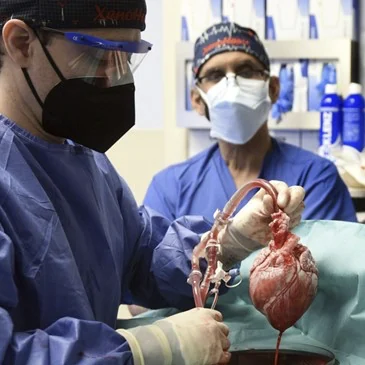
The patient, David Bennett, aged 57, understood the risks thoroughly. He knew it was an experimental therapy, but he genuinely had no other option: it was that or certain death. In the end, what would you have done?
The details of the procedure were explained to him, he was shown the results of years and years of research, he was told about the encouraging advances in medicine; all the risks were also explained to him in detail, and he signed paper after paper authorising the procedure. Finally, one day, he went into theatre, was given the anaesthetic, closed his eyes and surely thought: "perhaps I will never wake up."
To his surprise, to that of his medical team at the University of Maryland in the United States, led by the surgeon Dr Bartley Griffith, and to that of the whole world — including the researchers who spent years innovating to make this possible — the surgery was a success and Mr Bennett woke up.
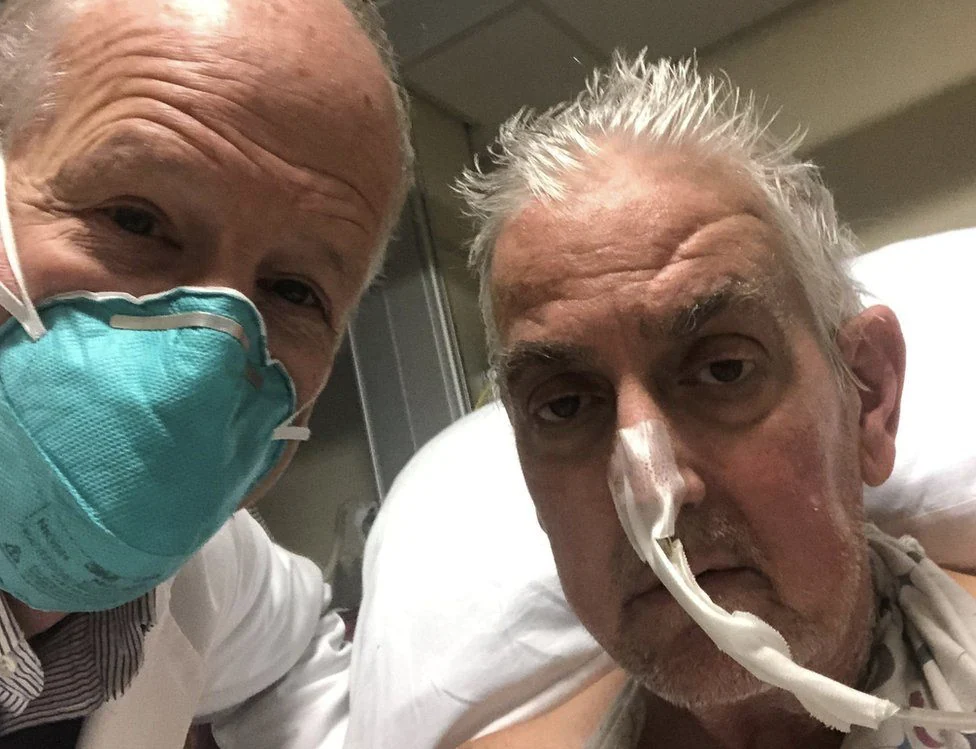
The heart functioned properly over the following eight weeks, with no evidence of organ rejection. Unfortunately Mr Bennett deteriorated two months after the surgery and died. The reasons for his death were investigated, since it appears a viral infection killed him rather than acute rejection of the transplanted heart.
The future of heart xenotransplantation
Heart xenotransplantation still faces many challenges, but advances in understanding tissue compatibility and the development of new immunosuppression techniques are improving the chances of success. Clinical studies are being carried out around the world, and more are expected in future.
It is important to bear in mind that xenotransplantation raises ethical and legal concerns, particularly regarding the use of animals for medical purposes. Ethical research must be carried out and measures taken to guarantee the welfare of the animals used in these studies.
One of the greatest challenges is the need to overcome the immunological barrier between the animal donor and the human recipient. Humans and animals have very different immune systems, and when an organ is transplanted from an animal into a human being, the recipient's immune system recognises it as foreign and attacks it.
To overcome this problem, researchers have used genetic engineering techniques to modify the DNA of donor animals and make their organs more compatible with human beings. In particular, changes have been made to the genes producing certain proteins on the surface of cells, called antigens, which the human immune system recognises as foreign. By making the animals' antigens more similar to those of humans, the hope is to reduce the recipient's immune response and avoid rejection of the transplanted organ.
Genetic engineering techniques have been used to produce animals lacking certain genes that trigger immune responses in human recipients. Animals have also been created that produce specific human proteins in their cells, which reduces the likelihood of rejection by the human immune system.
Although much remains to be done in this field, advances in genetic engineering offer the possibility of developing donor animals personalised for each patient, which could revolutionise organ transplantation in future.
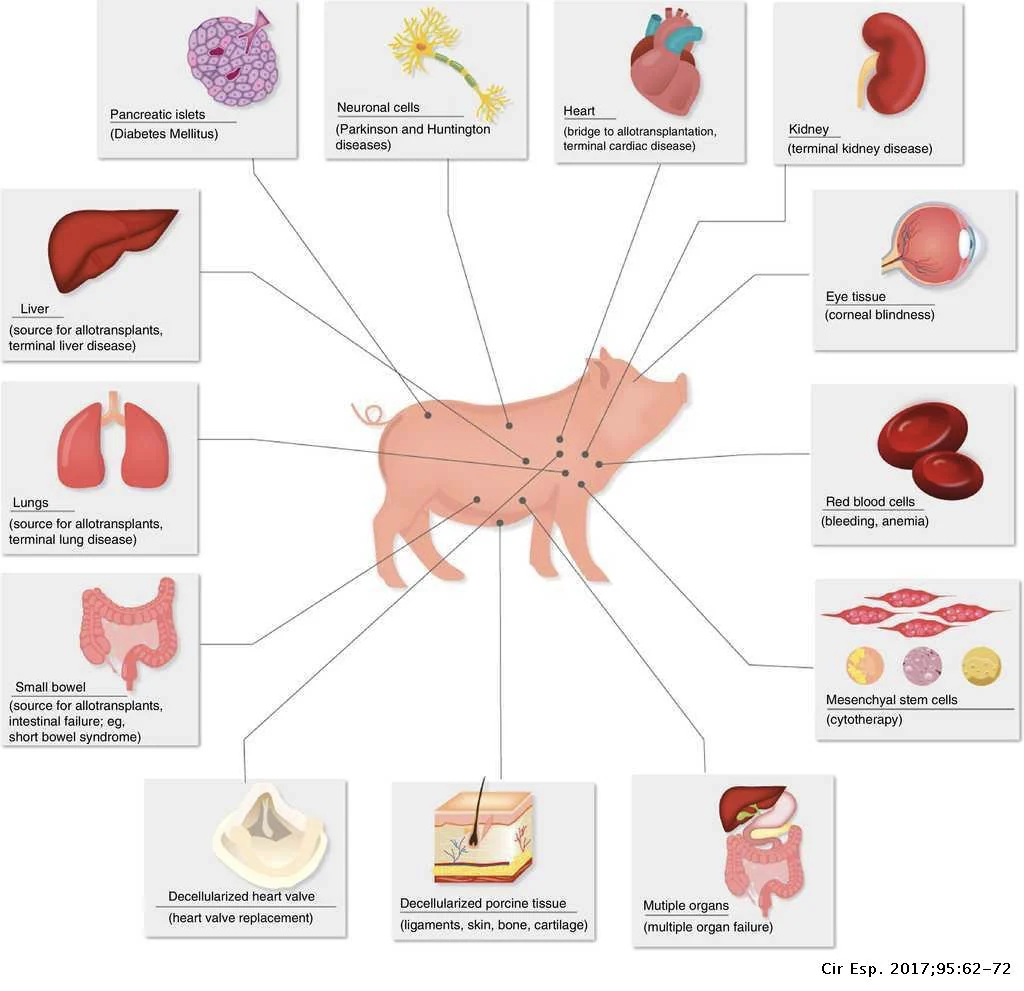
New immunosuppression techniques have also been developed to prevent rejection of the transplanted organ. Patients receiving a xenotransplant need an aggressive regimen of immunosuppressive drugs to stop the immune system attacking the transplanted heart. These medicines can increase the risk of infections and other serious side effects.
The published evidence
Several studies have investigated heart xenotransplantation and its possibilities.
One of the most prominent was published in Nature in 2018, where researchers reported the transplantation of a heart from a genetically modified pig into a baboon. The baboon survived 195 days after the transplant, a record in heart xenotransplantation.
Another interesting study was published in Circulation Research in 2020, in which researchers reported the use of a new type of immunosuppressant to prolong the survival of a transplanted heart in a pig-to-baboon model. The transplanted heart survived more than six months, raising hopes that this technique could be a promising option for reducing immunological rejection and prolonging the working life of a xenotransplanted heart.
Mr Bennett's case was published in the journal of the American College of Cardiology in March 2022, and in multiple medical journals around the world reporting this cornerstone in heart transplantation.
Debate and ethics
Despite the advances and successes, there is intense debate in the medical community and in society at large around the ethics of this procedure. Many ask whether it is ethical and just to use animals as a source of organs to save human lives. Critics argue that using animals as an organ source is a form of animal exploitation and that this is unacceptable in a society that values animal welfare.
There is also concern about the possibility of transmitting diseases from animals to humans, which could have serious consequences for public health.
Defenders of xenotransplantation argue, on the other hand, that human lives are being saved, which is a moral imperative. They also point out that genetic manipulation of donor animals could reduce the risk of disease transmission and make the procedure safer.
Either way it is a complex debate addressing fundamental questions about the rights of animals and moral responsibility towards human beings.
Where are we heading?
In my opinion, Mr Bennett is a hero who has written his name into the history of medicine, as have the group of doctors and researchers at the University of Maryland who made this possible. It was decades of effort and hard work. They opened a door that can potentially help thousands of people worldwide.
You may or may not agree with this new step in animal-to-human transplantation; what is very probable is that this technology has arrived to stay. As the technique develops and the medical community adopts it as a viable option, we will surely see exponential growth in its use.
The problem is real. According to figures from the World Health Organization, fewer than 10% of people who need a heart transplant receive one in time. Those figures are from developed countries; the problem is plainly more serious in countries such as Mexico and across Latin America.
Science will therefore go on looking for innovative ways to help these people who die waiting for a transplant — whether through xenotransplantation, organ cloning, 3D printing, tissue bioengineering, or any other new method that can save lives.
There is a very valid and current ethical, moral and human debate on this subject. The near future will surely go on surprising us.
And you — what do you think? Would you undergo a procedure like this, or let a relative do so? Difficult, isn't it? There are no right answers. Only your own.

About the author
Dr Alejandro Molina is a cardiovascular surgeon practising in Guadalajara, Querétaro and Hermosillo. He trained in cardiothoracic surgery at the Universidad de Guadalajara, completed advanced training in cardiac surgery, minimally invasive surgery, robotic surgery and structural interventions at the University of Montreal, and a fellowship in structural cardiology and TAVR at CHU Bordeaux, France. He performed the first robotic mitral valve repair in the Ángeles Health System and the first robotic heart surgery in Guadalajara.
Medical degree: Universidad Autónoma de Guadalajara, Cédula Profesional 5757260 · Cardiothoracic surgery: Universidad de Guadalajara, Cédula de Especialidad 10768871 · Current certification, Consejo Nacional de Cirugía del Tórax, no. 447
Talk to a specialist
Request a free video consultation to clear up your questions and make a better-informed decision.