


Cold Sweat and Chest Pain: A Heart Attack Warning
Cold sweat heart attack signs paired with chest pain demand immediate action.
A cold sweat heart attack warning can appear before any other symptom makes the danger obvious. You might feel suddenly wet, chilled, and nauseated while your chest tightens—signals your body sends when the heart muscle begins to starve for oxygen. Understanding these paired symptoms matters because speed saves heart tissue. Every minute of delayed care increases permanent damage to the myocardium, the muscular wall that pumps blood through your body. At Cirugía de Corazón, we treat patients from Guadalajara, Querétaro, Hermosillo, and beyond who initially dismissed their symptoms as stress or indigestion, only to learn later that their body had been signaling a cardiac emergency.
The connection between cold sweat and chest pain runs deeper than discomfort. When a coronary artery narrows from atheromatous plaque—the waxy, fatty deposits that build up inside vessel walls—the heart struggles to receive enough oxygen-rich blood. Your nervous system responds by triggering a fight-or-flight reaction, diverting blood to essential organs and activating sweat glands. The result is a cold, clammy perspiration that feels different from the heat of exercise or anxiety. Recognizing this distinctive symptom, especially alongside pressure or pain in the chest, can mean the difference between walking out of a hospital and long-term disability.
This guide explains how cold sweat and chest pain function as warning signs, why they appear together, and what actions protect you or someone you love. We draw on established clinical understanding of acute coronary syndromes, not on invented statistics or reassuring generalities. If you recognize yourself in these descriptions, please contact a qualified cardiac team rather than waiting to see if symptoms pass.
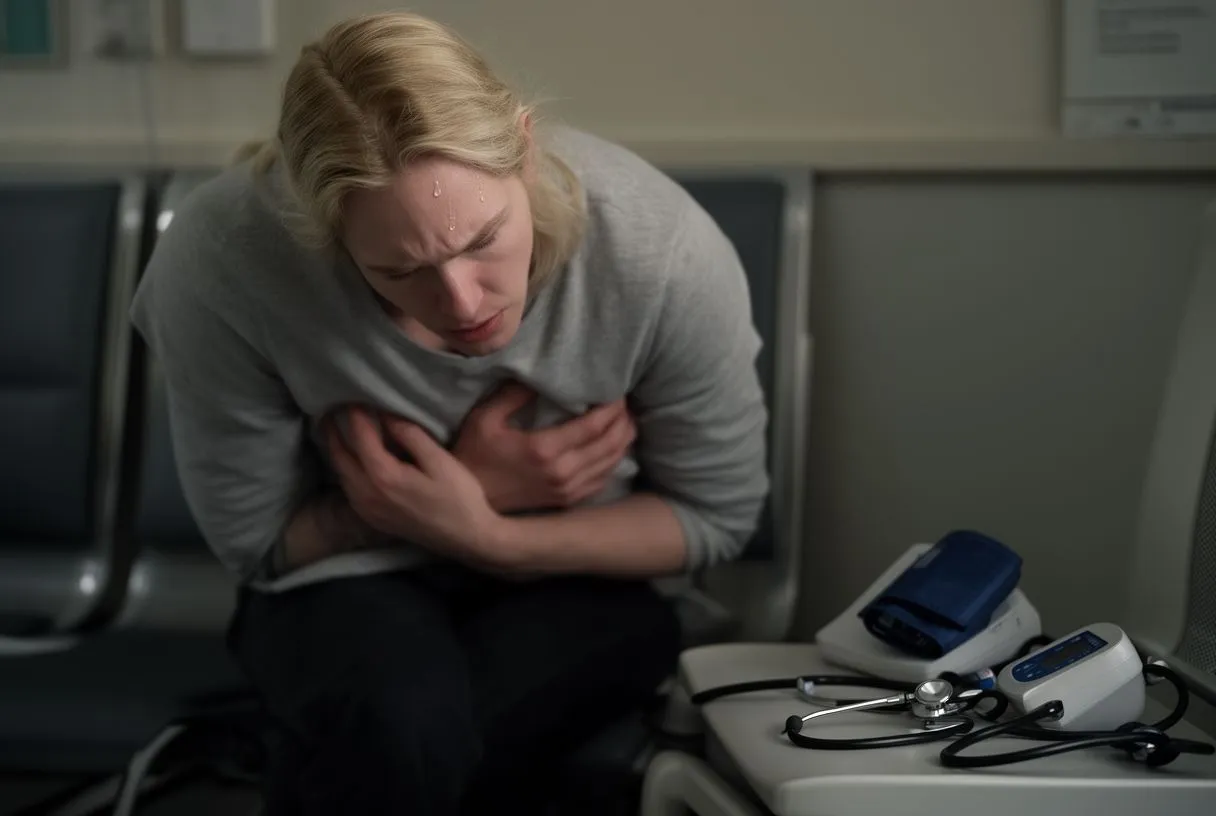
What Are Cold Sweat Heart Attack Warning Signs?
A cold sweat heart attack warning sign is your body's alarm system activating under myocardial ischemia—when heart muscle tissue receives insufficient oxygen. Unlike the warm sweat of physical exertion, this perspiration feels clammy against your skin and often arrives suddenly, without environmental heat or emotional trigger. You may notice your palms and forehead dampening while your core temperature drops, a paradoxical combination that confuses many people into attributing it to flu or anxiety.
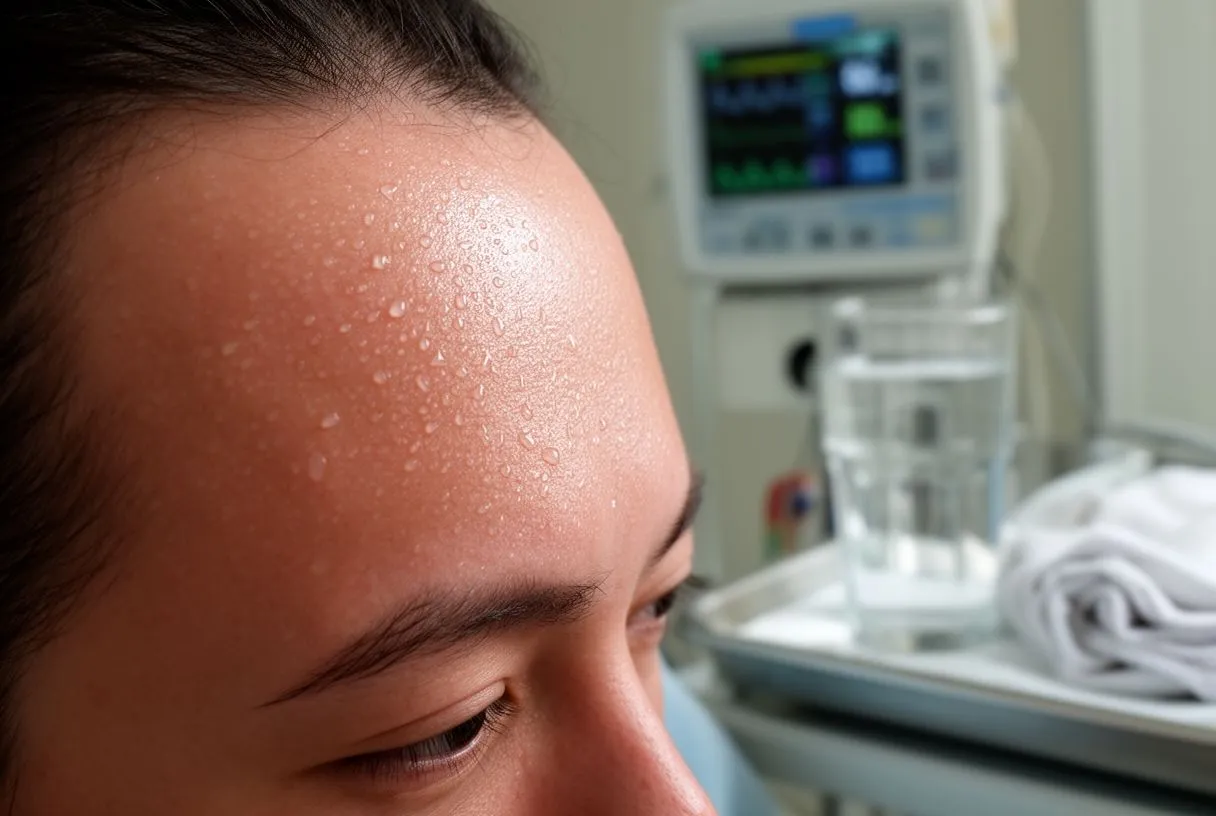
Diaphoresis versus normal sweating: Clinicians call excessive sweating due to medical causes diaphoresis. During a heart attack, this occurs because the sympathetic nervous system floods the body with stress hormones after detecting cardiac distress. The sweat glands receive overstimulated signals, producing moisture that evaporates quickly and chills the skin. Patients often describe the sensation as "breaking out in a cold sweat" that soaks clothing within minutes, distinct from gradual perspiration during a workout.
Where symptoms cluster: Cold sweat rarely appears alone as a heart warning. It typically accompanies other cardiac emergency symptoms that together form a recognizable pattern. Chest discomfort may spread to the arm—often the left arm, though right arm pain occurs too—travel to the jaw, or settle between the shoulder blades. Nausea, lightheadedness, and shortness of breath frequently join the presentation. The The Lancet has published extensive research on how symptom clusters predict acute coronary events more reliably than any single indicator.
Recognizing the full constellation matters because individual symptoms mislead. A patient with diabetes may experience reduced chest pain due to neuropathy, making the cold sweat even more significant as a warning flag. Women, older adults, and people with chronic conditions often present with atypical patterns that delay diagnosis unless both patients and clinicians understand the broader picture.
How Cold Sweat and Chest Pain Work Together
Cold sweat and chest pain operate through interconnected physiological pathways when coronary blood flow becomes critically restricted. The chest pain—technically angina when exertional, or infarction pain when prolonged—originates from lactic acid buildup in oxygen-starved heart muscle. Nerve fibers carry these distress signals to the brain, which interprets them as pressure, squeezing, burning, or crushing sensations typically centered behind the breastbone.
The autonomic cascade: Simultaneously, the brain's hypothalamus activates the autonomic nervous system, specifically its sympathetic branch. This triggers two parallel responses: it accelerates heart rate and constricts peripheral blood vessels to preserve circulation for vital organs, and it stimulates eccrine sweat glands through cholinergic nerves. The resulting sweat emerges on skin that has simultaneously lost surface blood flow, creating the characteristic cold, clammy quality. Your body is essentially rerouting resources to protect the heart while displaying external evidence of internal crisis.
The ascending aorta, the large vessel arching upward from the heart's left ventricle, plays a central role in this emergency response. When coronary arteries branching from the aortic root fail to deliver adequate blood, the heart's pumping efficiency drops. Baroreceptors in the aortic arch detect falling blood pressure and signal even stronger sympathetic activation, potentially intensifying both sweating and the sensation of impending doom that many heart attack survivors report. This explains why cold sweat often worsens as chest pain persists rather than improving with rest.
Types of Chest Pain and Sweating in Cardiac Emergencies
Not all chest pain and sweating combinations indicate the same cardiac emergency. Understanding the variations helps you communicate accurately with emergency responders and guides clinical decision-making once you reach care.
Stable angina produces predictable chest pressure during exertion or emotional stress, relieved by rest or nitroglycerin. Sweating may accompany severe episodes but typically resolves with the pain. Unstable angina—more dangerous—occurs unpredictably, at rest, with increasing frequency or severity. Here, cold sweat often persists even as pain fluctuates, signaling that atheromatous plaque has ruptured and partially obstructed the artery without yet causing complete thrombosis.
STEMI versus NSTEMI presentations: When complete blockage occurs, producing ST-elevation myocardial infarction (STEMI), symptoms typically explode suddenly: crushing chest pain, profuse cold sweat, nausea, and a sense of catastrophic illness. Non-ST-elevation MI (NSTEMI) may unfold more gradually, with intermittent discomfort and episodic sweating that patients mistakenly attribute to other causes. Atypical infarction—more common in women, diabetics, and elderly patients—may present primarily as shortness of breath, fatigue, or jaw pain with minimal chest discomfort, making the accompanying cold sweat a critical diagnostic clue.
- Classic presentation: Substernal pressure with radiation to left arm, jaw, or back; diaphoresis; nausea; dyspnea. Most commonly seen in men under 65 with established risk factors.
- Atypical presentation: Dyspnea, fatigue, indigestion-like discomfort, or isolated arm/jaw pain with minimal chest symptoms. Cold sweat may be the most prominent cardiac symptom. More frequent in women and patients with diabetes.
Cold Sweat Before Heart Attack: Early Warnings
Some patients experience a cold sweat heart attack warning hours or even days before the major event. These prodromal symptoms deserve attention because they offer a window for preventive intervention that can abort or mitigate impending infarction.
Recurrent episodes with exertion: Episodes of cold sweat and chest pressure that resolve with rest—particularly if new or worsening over weeks—often signal progressive coronary narrowing. The 2016 ESC Guidelines for the Diagnosis and Treatment of Acute and Chronic Heart Failure emphasize that any new angina pattern warrants urgent cardiology assessment, even between acute episodes. Your heart is essentially practicing for a crisis it cannot sustain indefinitely.
Nocturnal symptoms: Waking from sleep with cold sweat, breathlessness, or chest discomfort suggests severe coronary insufficiency. When horizontal positioning increases venous return to the heart, a struggling myocardium cannot accommodate the additional volume without distress. These episodes, sometimes called angina decubitus, indicate high-risk anatomy that demands prompt coronary angiography to map blockages and guide revascularization strategy.
Other warning patterns include disproportionate fatigue with ordinary activities, new indigestion unresponsive to antacids, and unexplained anxiety or sense of foreboding. The latter may reflect your autonomic nervous system's subliminal detection of cardiac dysfunction before conscious recognition of pain develops. Trusting these signals—especially if you carry risk factors—can precipitate life-saving care.
Cold Clammy Sweat Heart Attack Risk Factors
Certain conditions and behaviors substantially increase the likelihood that cold clammy sweat signals genuine cardiac danger rather than benign causes. Knowing your risk profile helps interpret ambiguous symptoms and determines urgency of evaluation.
Primary risk factors include age (men over 45, women over 55), tobacco use, hypertension, elevated LDL cholesterol with high apolipoprotein B levels, diabetes, obesity, and family history of premature coronary disease. Apolipoprotein B—abbreviated ApoB—represents the protein component of several atherogenic lipoprotein particles; higher circulating levels correlate strongly with atheromatous plaque burden regardless of measured LDL alone. Sedentary lifestyle, chronic kidney disease, and inflammatory conditions such as rheumatoid arthritis or lupus add independent risk.
Modifiable versus fixed risks: You cannot change age or family history, but you can address modifiable factors through sustained behavioral change. Smoking cessation provides the single greatest impact, reducing coronary risk by approximately 50% within 1-2 years. Blood pressure control below 130/80 mmHg (per most guidelines for high-risk patients), statin therapy to lower ApoB-containing particles, and structured exercise programs all demonstrably reduce event rates. Even modest weight loss—5-10% of body weight—improves metabolic parameters when maintained.
Risk is usually assessed with tools like the EuroSCORE II for surgical candidates, combined with coronary calcium scoring and functional stress testing for appropriate patients. Risk awareness should empower action, not paralyze you with fear.
When to Call 911: Chest Pain, Shortness of Breath
Determining when chest pain and sweating demand emergency services rather than outpatient evaluation challenges even experienced clinicians without testing. Several rules guide safe decision-making for patients and families.
Call emergency services immediately if: chest pressure lasts more than 15-20 minutes without relief; pain radiates to arm, jaw, back, or shoulder; cold sweat accompanies significant discomfort; shortness of breath occurs at rest; you experience fainting, severe nausea, or palpitations; or symptoms occur in someone with known coronary disease. Do not drive yourself—call an ambulance. Emergency medical teams can perform electrocardiography within minutes, establish intravenous access, and administer aspirin, nitrates, and other time-critical medications. More importantly, they activate cardiac catheterization teams while en route, compressing the "door-to-balloon" interval that determines myocardial salvage.
The aspirin question: If you have no allergy, bleeding disorder, or recent gastrointestinal bleeding, chewing a non-enteric-coated aspirin (160-325 mg) while awaiting emergency services provides antiplatelet protection that may limit clot propagation. Do not substitute this for calling emergency services—both actions complement each other. Aspirin reduces mortality in acute coronary syndrome by inhibiting platelet aggregation at the site of plaque rupture.
Cold Sweat, Dizziness, Chest Pain: Atypical Symptoms
Women, elderly patients, and those with diabetes or prior stroke frequently present with atypical cardiac symptoms that obscure the diagnosis. Understanding these patterns prevents dangerous dismissal of genuine emergencies.
Gender differences in presentation: Women more commonly describe pressure or tightness rather than crushing pain, with prominent fatigue, sleep disturbance, and anxiety preceding the event. Shortness of breath often dominates over chest symptoms. Cold sweat may appear without recognized chest discomfort, misdiagnosed as menopausal hot flash reversal or panic attack. The auscultation findings—sounds heard through a stethoscope—may reveal mitral regurgitation murmur from papillary muscle dysfunction even when pain seems atypical.
Diabetic autonomic neuropathy damages the nerves that carry cardiac pain signals, producing "silent" ischemia or symptoms limited to breathlessness, nausea, or sudden fatigue. In these patients, any unexplained cold sweat with malaise warrants high suspicion and low threshold for electrocardiographic evaluation. Atrial flutter or other arrhythmias may also present with similar autonomic symptoms when rapid heart rates compromise coronary perfusion.
The Heat Shock Protein A12B Protects Vascular Endothelial Cells Against Sepsis-Induced Acute Lung Injury in Mice illustrates broader research into vascular endothelial protection that informs understanding of how coronary endothelium dysfunction initiates acute events. While this particular study addresses sepsis mechanisms, the underlying science of endothelial injury and repair illuminates why risk factor modification protects against plaque instability.

Aspirin and Automated External Defibrillator First Response
Community preparedness bridges the gap between symptom onset and professional care. Two interventions—aspirin administration and automated external defibrillator (AED) deployment—save lives when applied correctly during cardiac emergencies.
As noted, chewing aspirin during suspected acute coronary syndrome provides immediate antiplatelet effects. The medication inhibits cyclooxygenase-1, blocking thromboxane A2 synthesis and preventing platelet activation at the ruptured plaque site. This effect begins within minutes of buccal absorption. Enteric-coated formulations should be chewed rather than swallowed whole to accelerate absorption. Contraindications include active bleeding, recent hemorrhagic stroke, known aspirin allergy, and certain bleeding disorders—when uncertain, emergency medical dispatchers can guide this decision.
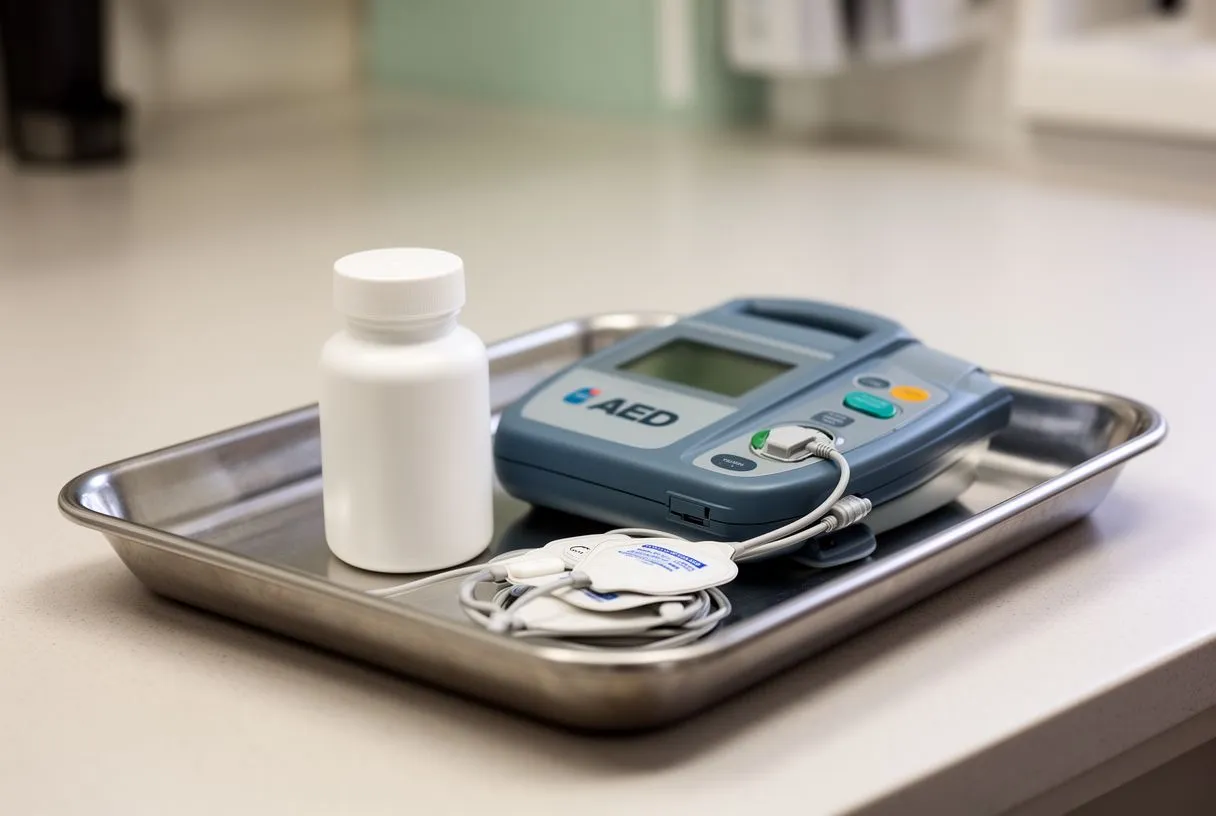
AED deployment for sudden collapse: Ventricular fibrillation causes many sudden cardiac deaths complicating acute infarction. An automated external defibrillator—available in airports, malls, gyms, and increasingly public spaces—analyzes rhythm and delivers shocks if appropriate. No training is required; devices provide voice instructions. If someone collapses with cold sweat, chest pain history, and unresponsiveness, call emergency services, begin chest compressions, and send someone for an AED immediately. Each minute without defibrillation reduces survival by 7-10%.
For patients traveling to Mexico for cardiac care from the United States, Canada, or elsewhere, we recommend carrying current medication lists, recent electrocardiograms, and contact information for your home cardiologist.
Recovery After Cardiac Emergency: What to Expect
Surviving the acute event begins a longer journey of cardiac rehabilitation and risk factor modification. Understanding realistic recovery timelines helps patients and families plan appropriately.
Hospitalization typically lasts 2-5 days for uncomplicated MI treated with primary percutaneous coronary intervention (balloon angioplasty with stenting). During this period, clinicians monitor for arrhythmias, assess residual left ventricular function through echocardiography, and titrate medications including dual antiplatelet therapy, statins, beta-blockers, and ACE inhibitors as indicated. An arterial line may monitor blood pressure continuously in the intensive care unit, and temporary pacing capability addresses bradyarrhythmias if the right coronary artery supply to the conduction system was affected.
Cardiac rehabilitation phases: Phase I occurs during hospitalization, with progressive ambulation and patient education. Phase II, beginning 2-6 weeks post-discharge, provides supervised exercise training, nutritional counseling, and psychosocial support over 12-36 sessions. Phase III maintains lifelong exercise habits independently. Participation in structured rehabilitation reduces mortality by 20-30% beyond medications alone—comparable to the benefit of statin therapy. Most patients return to desk work within 4-6 weeks and full activities including driving by 6-8 weeks, though individual timelines vary with ejection fraction recovery and complication occurrence.
Surgical patients—those requiring coronary artery bypass grafting rather than angioplasty—face longer initial recovery. An arterial graft, typically the left internal mammary artery to the left anterior descending coronary artery, provides superior long-term patency compared to saphenous vein autograft from the leg. Modern approaches including off-pump surgery and minimal access techniques reduce recovery time for appropriate candidates. Our surgical team discusses revascularization strategy based on anatomy, comorbidities, and patient preference, never presenting one approach as universally superior.
Heart Attack Warning Signs and Next Steps
Cold sweat heart attack warnings demand recognition, rapid response, and reflective prevention. The body communicates distress through unmistakable signals when we learn to interpret them: the clammy skin that accompanies coronary ischemia, the chest pressure that refuses to dissipate, the breathlessness that escalates without exertion. Delaying response to preserve pride, avoid inconvenience, or self-diagnose wastes the narrow window for myocardial salvage.
Your next steps depend on your current situation. If you are experiencing symptoms now—cold sweat, chest discomfort, radiation to arm or jaw, breathlessness—stop reading and call emergency services. No further information outweighs immediate professional evaluation. For those reviewing this guide preventively, we recommend scheduling a cardiology consultation to assess your individual risk, particularly if you carry any of the major risk factors discussed or have experienced unexplained episodes of cold sweat, dizziness, or chest discomfort even if brief.
At Cirugía de Corazón, Dr Alejandro Molina leads a multidisciplinary team of cardiac surgeons with consulting rooms in Guadalajara, Querétaro and Hermosillo, and the first contact is a free video consultation. The team's work covers valve disease, coronary disease, the aorta and structural heart, including surgical revascularization and transcatheter aortic valve replacement (TAVR), and every case is reviewed against international guidelines. Our practice emphasizes transparent discussion of risks, realistic recovery expectations, and shared decision-making that respects your values alongside clinical data.
Book a consultation to discuss your cardiac health, understand your personal risk, or evaluate symptoms that concern you. Early evaluation of warning signs—before crisis occurs—represents the most effective strategy we know for living fully with heart disease or preventing it entirely.






