Dual Antiplatelet Therapy After a Stent: How Long
Dual antiplatelet therapy after stent typically lasts 6–12 months depending on stent type and bleeding risk.
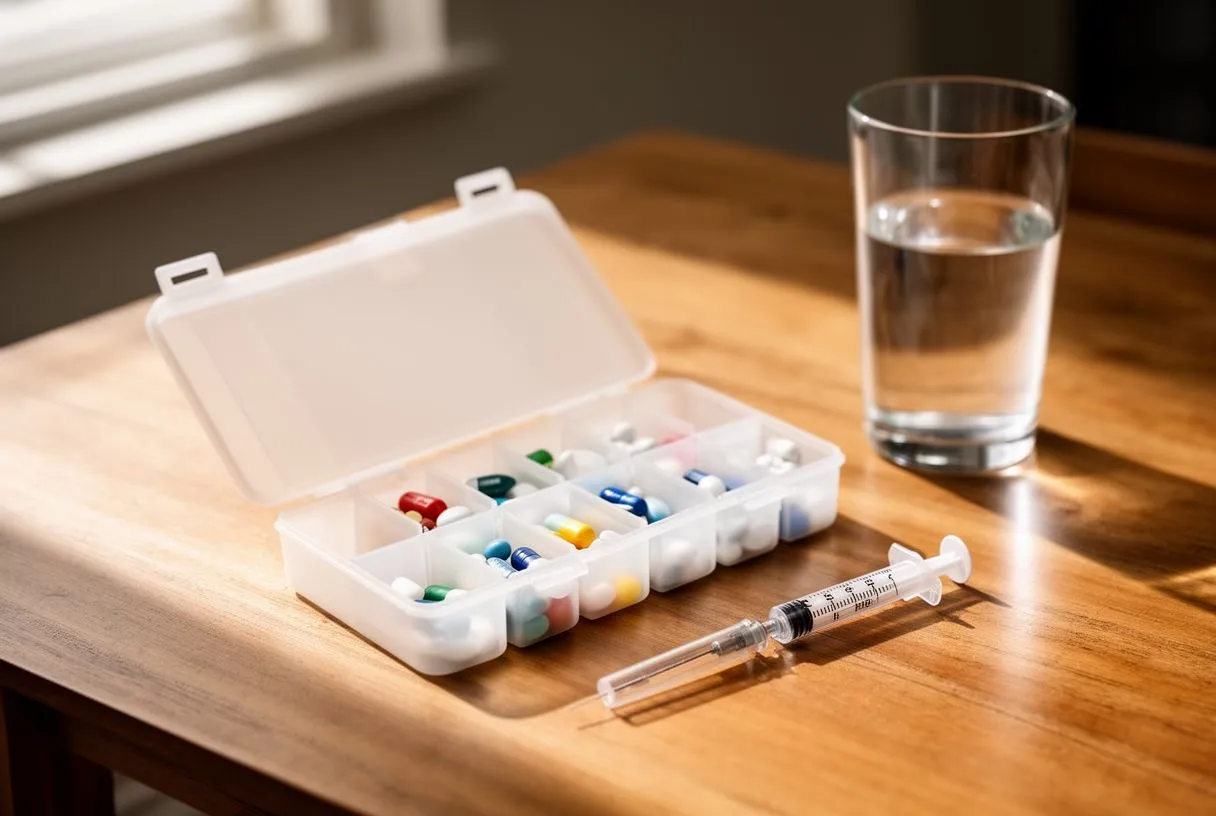
If you or a family member has just had a stent placed in a coronary artery — a small mesh tube that holds an artery open after it was narrowed by cholesterol plaque — you have almost certainly been handed a prescription for two blood-thinning tablets at once. That combination is called dual antiplatelet therapy after stent placement, and it is the single most important medication plan of your recovery. One of the most common questions we hear is simple: how long do I need to keep taking both? The answer depends on the type of stent you received, your bleeding risk, and other conditions you may have. This guide walks through what the therapy does, how long it typically lasts, what happens if it is stopped early, and how to live safely on it while you heal.
What Is Dual Antiplatelet Therapy After a Stent?
Dual antiplatelet therapy — often shortened to DAPT — means taking two different antiplatelet medications at the same time. Antiplatelet drugs make your platelets, the tiny blood cells that form clots, less sticky and less likely to clump together. They are different from anticoagulants (sometimes called blood thinners like warfarin), which work on a completely separate clotting system.
When a coronary stent is placed during angioplasty — the procedure where a balloon-tipped catheter opens a blocked heart artery — the stent is a foreign body inside your vessel. Your body naturally wants to cover it with platelets and clot. That is useful in the long run, when a smooth layer of your own cells grows over the stent, but dangerous in the first weeks and months, when a clot forming on bare stent metal can suddenly block the artery again.
Which two drugs are involved? One is almost always low-dose aspirin. The second is a P2Y12 inhibitor — usually clopidogrel, sometimes ticagrelor or prasugrel — which blocks a different activation pathway on the platelet surface. Blocking two pathways at once is what makes the therapy "dual," and it is far more effective at preventing stent clots than either drug alone.
Why Antiplatelet Therapy Is Needed After Angioplasty
Why is antiplatelet therapy given such a central role after a stent? Because the main risk in the months following your procedure is stent thrombosis — a clot forming inside the stent that blocks the artery abruptly, often causing a heart attack. The evidence is unambiguous: antiplatelet therapy is what keeps that risk low.
In the first days after placement, the stent surface is highly thrombogenic, meaning it attracts clot formation readily. Over months, a natural layer of endothelial cells — the smooth lining cells that coat healthy arteries — grows over the stent, and it becomes far less likely to trigger clots. The purpose of dual therapy is to bridge that healing window safely.
Not all stents carry the same risk. Older bare-metal stents healed quickly but had higher rates of re-narrowing. Modern drug-eluting stents — the standard today — release a medication that prevents scar tissue from growing back into the artery, which dramatically reduces the need for repeat procedures. That same anti-scarring coating slightly delays the healing process, which is one reason a longer course of dual antiplatelet therapy became the norm for drug-eluting stents.
Every case we treat is reviewed by our multidisciplinary team against international practice guidelines before a recommendation is given, and that includes checking whether the stent type and the patient's bleeding profile call for a standard or shortened course of DAPT.
Is Aspirin and Clopidogrel Dual Antiplatelet Therapy?
Yes — aspirin and clopidogrel is the classic dual antiplatelet combination, and it remains the most commonly prescribed pair after coronary stent placement. If your discharge papers list "aspirin 81 mg" and "clopidogrel 75 mg," you are on standard DAPT.
Aspirin works by permanently disabling an enzyme called COX-1, which platelets use to produce thromboxane A2, one of their key activation signals. Because platelets cannot make new enzymes, a single daily tablet keeps this pathway switched off for the life of the platelet — around seven to ten days.
Clopidogrel works differently. It is a prodrug, meaning your liver must convert it into its active form. Once activated, it permanently blocks the P2Y12 receptor on the platelet surface. This is why some people respond less well to it — genetic variations in liver enzymes can make clopidogrel less effective in a minority of patients, and cardiologists sometimes switch to ticagrelor or prasugrel in those situations.
How Long Does Dual Antiplatelet Therapy Last After a Stent?
This is the question at the heart of this article, and the honest answer is: it depends on your stent and your individual risk. There is no single number that applies to everyone, but there are well-established patterns.
Typical durations today. For most patients receiving a second-generation drug-eluting stent, the current guideline range is between 6 and 12 months of dual antiplatelet therapy, after which clopidogrel (or its equivalent) is stopped and aspirin alone continues, usually for life. For patients at high bleeding risk, some guidelines support a shorter course — as little as 3 months — while patients at high risk of clotting may benefit from a longer course, sometimes beyond a year. The American Heart Association journals have published extensive analyses on how duration should be tailored to each patient's balance of clotting and bleeding risk.
Bare-metal stents are different. If a bare-metal stent was used — still occasionally chosen for patients who cannot take long-term antiplatelet therapy, for example before certain surgeries — the dual therapy period is shorter, typically around one month, because these stents heal over faster. You can read more about this in our section on long-term antiplatelet therapy.
Why the range exists. Large clinical trials have compared shorter and longer durations. They consistently show that longer dual therapy reduces stent clots and heart attacks but increases serious bleeding, while shorter therapy does the reverse. The art of modern cardiology is placing you on the right point of that spectrum. In our consultations we take the time to explain what the studies actually show, in plain words, so patients can weigh that trade-off with full information.

Why Is Clopidogrel Preferred Over Aspirin?
People sometimes ask why clopidogrel is the drug that gets added, or why the combination matters at all — why not simply double the aspirin? The answer lies in how platelets are activated. They have multiple switches, and aspirin only turns off one of them.
Platelets can be activated by collagen exposed in a damaged vessel wall, by ADP released from other platelets, by thrombin, and by thromboxane A2. Aspirin blocks only the thromboxane pathway. Clopidogrel blocks the ADP pathway. Blocking both together produces a far greater reduction in clot formation than increasing the dose of either drug — and without the stomach-damaging effects of higher aspirin doses.
Why not just one drug forever? After a stent, a single antiplatelet drug leaves the other activation pathway fully open, and studies of aspirin alone after drug-eluting stents show clearly higher rates of stent thrombosis. The two-drug window exists precisely because that early healing period demands maximum protection. Once the stent has been covered by your own cells, one drug — aspirin — is enough.
It is worth noting that aspirin remains essential even after clopidogrel is stopped. For most stent patients, low-dose aspirin continues indefinitely, because the underlying coronary artery disease that led to the stent is a lifelong condition.
Bleeding Risk vs Stent Thrombosis: The Balancing Act
Every decision about antiplatelet therapy length is a trade between two risks that pull in opposite directions. On one side is stent thrombosis — rare but catastrophic, often presenting as a major heart attack. On the other is bleeding, more common, usually less dramatic, but occasionally serious, particularly bleeding from the stomach or brain.
Factors that tilt toward a shorter course. A history of gastrointestinal bleeding, advanced age, kidney disease needing renal replacement therapy (dialysis), planned non-cardiac surgery, anemia, or the need for long-term anticoagulation for another condition all push cardiologists toward the shorter end of the DAPT range.
Factors that tilt toward a longer course. Diabetes, kidney impairment without dialysis, a stent placed in the main left coronary artery, complex or long stents, a procedure that required extra scaffolding, or previous stent thrombosis all increase clotting risk and may justify extending dual therapy.
- Higher bleeding risk: favor 3 to 6 months of dual therapy, then aspirin alone
- Average risk: 6 to 12 months of dual therapy is the most common standard
- Higher clotting risk: up to 12 months or slightly beyond, always reassessed at follow-up
None of these are automatic rules. The decision is individualized, and guidelines explicitly allow flexibility. What never varies is the rule against stopping the medication on your own — the next section explains why.
Triple Therapy After a Stent With Atrial Fibrillation
A particularly tricky situation arises when a patient has both a recent stent and atrial fibrillation — an irregular heart rhythm that requires an anticoagulant like warfarin or a direct oral anticoagulant (rivaroxaban, apixaban) to prevent strokes. Adding an anticoagulant on top of two antiplatelet drugs creates what doctors call triple therapy, and it carries a substantially higher bleeding risk.
For this reason, modern guidelines have moved firmly toward minimizing the overlap. The typical approach now is a very short period of triple therapy — often days to weeks, rarely more than a month — followed by one antiplatelet drug (usually clopidogrel) plus the anticoagulant, rather than two antiplatelets plus anticoagulation for a full DAPT course.
What this means for you. If you take a blood thinner for atrial fibrillation and then need a stent, your cardiologist should design a shortened, carefully timed plan rather than simply stacking all three drugs for a year. If no one has explained this to you, it is a question worth asking at your next visit. Our multidisciplinary team reviews exactly these overlapping-medication situations before any recommendation is made, because the right answer depends on both the rhythm problem and the stent.
What Happens If You Stop Antiplatelet Medication Early?
This may be the most important section of this article. Stopping dual antiplatelet therapy early — particularly within the first month after a drug-eluting stent — is one of the strongest known triggers for stent thrombosis. This complication is not gradual. It typically arrives as an acute heart attack, and it can be fatal in a significant proportion of cases before the patient ever reaches the hospital.
Common reasons people stop early — and why they are dangerous.
- Cost concerns: generic clopidogrel is inexpensive in Mexico, so cost should rarely force a stop — talk to your doctor before ever skipping doses
- Dental or minor procedures: most dental work, endoscopy, and minor surgery do NOT require stopping antiplatelet therapy — always check with your cardiologist first, never the assumption
- Feeling fine: the medication works silently; feeling well is not a reason to stop, it is a sign it is working
- Easy bruising or nosebleeds: these are usually manageable — report them rather than stopping the drug
Research on lesions that show late healing problems after stents — including studies of peri-stent contrast staining patterns — has shown that incomplete stent healing can persist for years and that these findings correlate with late clotting events. One such analysis, published in the Journal of the American Heart Association, examined long-term outcomes in patients with focal and segmental peri-stent contrast staining and found these lesions carry meaningful clinical risk even years after placement. This is precisely why the second antiplatelet drug matters so much in the first months, and why aspirin must continue afterward.
If you need surgery — for example a hip replacement or gallbladder removal — your surgeon and cardiologist should coordinate. Sometimes dual therapy is safely paused with clopidogrel stopped 5 days ahead while aspirin continues, and restarted promptly afterward. That decision belongs to your medical team, not to you alone, and never to a surgical schedule default. We encourage second opinions and treat seeking one as a normal part of deciding about heart surgery, and that applies equally to decisions about pausing your medication.
What Follow-Up Care After Stent Placement Looks Like
Good cardiology follow-up after stent placement is not a formality — it is where your DAPT duration gets decided, adjusted, and eventually concluded. Most patients are seen within a few weeks of the procedure, then at regular intervals through the first year.
At follow-up visits, your cardiologist checks several things: how well you are tolerating the medication, whether you have had any bleeding or bruising, whether your other risk factors (blood pressure, cholesterol, diabetes, smoking) are being controlled, and whether your DAPT course should be shortened, maintained, or extended based on how your recovery is going.
Warning signs that need urgent attention. Contact your cardiologist promptly — or go to emergency care — for any of these:
- Chest pain or pressure that returns after having been quiet since your procedure
- Black, tarry stools or vomiting blood — signs of gastrointestinal bleeding
- A sudden severe headache or any neurological symptom while on antiplatelet therapy
- Unusual shortness of breath or swelling, which can signal other cardiac issues
The first contact with our team is a free video consultation: we get to know the patient, talk through the condition, and identify which studies are genuinely still needed so no unnecessary ones are ordered. For patients traveling to Guadalajara, Querétaro, or Hermosillo from elsewhere in Mexico or from abroad, that first video call also lets us structure the in-person visit efficiently, so travel is not wasted on duplicate testing.
Living Well on Antiplatelet Therapy Long-Term
Once your dual therapy ends and you transition to aspirin alone — or to whatever long-term regimen your cardiologist has designed — the goal shifts from protecting the healing stent to protecting your whole cardiovascular system. The stent solved one blockage; the underlying disease process is managed for life.
Antiplatelet therapy after a stent works best as part of a bigger picture: statin therapy to keep cholesterol low, blood pressure control, diabetes management, daily movement, not smoking, and a heart-healthy diet. Studies consistently show that patients who combine their medication plan with these lifestyle measures do markedly better over the years than those relying on tablets alone.
Practical tips while on dual therapy. Use a soft toothbrush and an electric razor to reduce minor bleeding. Take your tablets at the same time each day, ideally with food. Carry a current medication list, and tell any dentist, surgeon, or new doctor that you are on antiplatelet therapy. If you miss a dose of clopidogrel, take it the same day if you remember in time — but never take two the next day.
On the cost of medication. Generic clopidogrel and generic aspirin are widely available and affordable in Mexican pharmacies, so medication cost should rarely be a barrier to completing the recommended course.
Research comparing outcomes after treatment of complex blocked arteries also supports the durability of modern approaches. A study published in International Journal of General Medicine examined percutaneous coronary intervention for in-stent restenosis chronic total occlusion — reopening arteries that had closed inside a previously placed stent — and found that procedural success and long-term outcomes in experienced centers were comparable to treating de novo (never-stented) blockages. In other words, even complicated re-narrowing can be treated successfully, which should be genuinely reassuring for stent patients worried about the long term.
Key Takeaways About Dual Antiplatelet Therapy After a Stent
Dual antiplatelet therapy after a stent is a time-limited partnership of aspirin plus a second drug like clopidogrel, designed to bridge the vulnerable healing window while your artery grows its own lining over the stent. For most patients on modern drug-eluting stents, the dual phase lasts 6 to 12 months; bleeding risk, clotting risk, and other medications all influence where you personally land in that range.
The rules that never change: never stop either medication on your own, always clear dental work and surgery with your cardiologist, report bleeding symptoms rather than simply quitting the drug, and continue aspirin long-term even after the second medication ends. If you also take an anticoagulant for atrial fibrillation, insist on a carefully designed shortened triple-therapy plan rather than a full overlap.
Every patient's situation is different, and the right duration for you is a decision made with a cardiac team that knows your anatomy, your other conditions, and your full medication list. If you have questions about your stent, your recovery plan, or whether your current antiplatelet regimen fits international guidelines, we invite you to book a consultation with our team in Guadalajara, Querétaro, or Hermosillo — and we always welcome a second opinion. Your heart deserves a considered answer, not a guess.