
Dyslipidaemia Treatment: Bringing Blood Fats Under Control
Dyslipidaemia treatment: the medicines, lifestyle changes and therapies that bring blood fats and cholesterol under control.
What Is Dyslipidaemia and Why It Matters
Dyslipidaemia is the medical term for an unhealthy balance of fats circulating in your bloodstream — chiefly LDL cholesterol, triglycerides, and HDL cholesterol. When LDL (often called "bad" cholesterol) and triglycerides rise while HDL (the "good" cholesterol) falls, fatty deposits begin to line the inner wall of arteries. Over years these deposits, known as atheromatous plaque, narrow vessels that feed the heart muscle and the brain. Effective dyslipidaemia treatment aims to interrupt that process before it produces symptoms, because the first sign of untreated disease is too often a heart attack or stroke.
What patients actually feel: in the great majority of cases, dyslipidaemia is silent. There is no pain, no shortness of breath, no warning on auscultation (the stethoscope exam) until disease is advanced. Families first hear the word "cholesterol" during routine blood work, after a relative's hospital admission, or when a cardiac surgeon flags it as a risk factor before an operation such as balloon angioplasty or surgery on the ascending aorta. That surprise is why we frame dyslipidaemia treatment as a long conversation, not a one-off prescription.
Why the numbers matter more than the symptoms: clinical decisions rest on measured thresholds. A guideline LDL target, an aortic diameter above 5.5 cm, a EuroSCORE II estimate — each drives a recommendation. The same logic applies to blood fats: treatment intensity is matched to total cardiovascular risk, not to how a patient feels on a given day. Bringing blood fats under control is therefore as much about disciplined monitoring as it is about medication.

How Dyslipidaemia Treatment Works
Dyslipidaemia treatment operates on two fronts at once: it reduces the supply of harmful lipids entering the bloodstream, and it accelerates the clearance of those already circulating. The first front is addressed by diet, weight management, and correcting metabolic drivers such as poorly controlled diabetes; the second by medication that acts on the liver, the intestine, or specialised receptors. A coherent plan combines both, because no single intervention reliably returns an abnormal lipid profile to target on its own.
European guidelines from escardio.org frame the approach around total cardiovascular risk rather than cholesterol alone. A patient with previous heart surgery, an arterial graft, or documented atheromatous plaque is classified as very high risk and assigned aggressive lipid targets. A younger patient with isolated mild LDL elevation and no family history may be managed with lifestyle measures first. The same lipid number means different things in different bodies, and treatment must reflect that.
How results are measured: a fasting lipid panel reports total cholesterol, LDL cholesterol, HDL cholesterol, and triglycerides. Increasingly, advanced markers such as apolipoprotein B — a protein attached to every damaging cholesterol particle — add precision when standard results are borderline. Treatment success is judged by the trend across panels, not by a single value, and the plan is adjusted every few months until targets are met and then maintained.
Types of Cholesterol-Lowering Drugs
Modern dyslipidaemia treatment draws on several drug families that act on distinct points in lipid metabolism. Statins remain the backbone, but they are frequently combined with other agents when targets are ambitious. Understanding what each class does helps patients grasp why their physician may add, rather than substitute, a second medication.
Statins: reduce cholesterol synthesis in the liver and modestly raise HDL. Ezetimibe: blocks absorption of cholesterol from the small intestine, complementing statins nicely. PCSK9 inhibitors: injectable monoclonal antibodies that dramatically lower LDL by freeing more receptors to clear it from blood. Fibrates: the first choice when triglycerides dominate the picture. Bile-acid sequestrants and niacin: now niche options, reserved for specific combinations. Omega-3 fatty acids: prescription-grade preparations used as adjunct therapy for very high triglycerides.
Choice between these options depends on the dominant abnormality, the patient's other conditions, and tolerability. A patient who has undergone balloon aortic valvuloplasty or received a balloon-expandable valve has the same lipid goals as any high-risk individual, and the medication plan is built around those goals rather than around the valve history itself. Combination therapy is common, expected, and not a sign that the first drug failed.
Statin Therapy and LDL Lowering
Statin therapy is the most studied and most prescribed element of dyslipidaemia treatment, and for good reason. By inhibiting an enzyme involved in hepatic cholesterol production, statins lower LDL cholesterol predictably — typically by 30 to 50 percent depending on intensity — and reduce cardiovascular events across a wide range of baseline risk. They also stabilise existing atheromatous plaque, making it less likely to rupture and cause sudden blockage.
Intensity matters more than the specific molecule. High-intensity regimens aim for at least 50 percent LDL reduction; moderate-intensity for 30 to 50 percent. Patients with previous coronary events, diabetes with end-organ damage, or markedly elevated risk scores are usually directed toward high-intensity therapy from the outset. Statins are generally well tolerated, but muscle aches, mild liver enzyme elevation, and — rarely — new-onset diabetes are recognised effects that a clinician monitors for and manages.
What if a statin alone is not enough? Adding ezetimibe typically yields a further 15 to 20 percent LDL drop. If even that is insufficient, PCSK9 inhibitors can produce reductions of 50 percent or more on top of existing therapy. The point of escalation is reaching the agreed target, not defending any particular drug. Patients should never discontinue a statin unilaterally because they feel well; the very reason they feel well is that the medication is working.

Best Dyslipidaemia Diet for Blood Fat Control
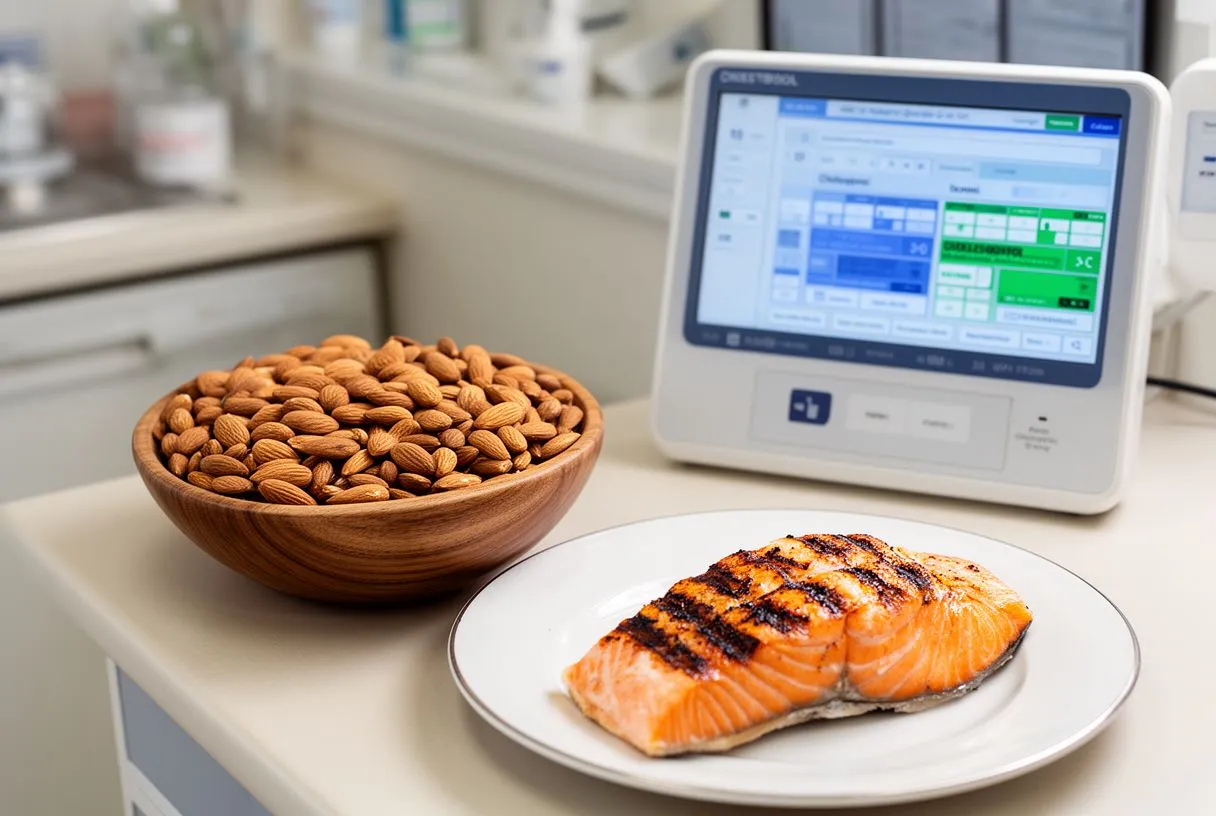
Medication is only half of dyslipidaemia treatment; what reaches the liver through daily meals is the other half. A diet that supports blood fat control is not exotic or punishing. It is built around vegetables, fruit, legumes, whole grains, fish, and unsaturated oils, with red and processed meats, fried foods, refined carbohydrates, and sugary drinks taking a much smaller place. The pattern resembles the traditional Mediterranean approach, which has consistent evidence behind it.
Saturated versus trans fats: saturated fat in fatty meats, butter, full-fat dairy, and tropical oils raises LDL most directly, and is the single dietary element with the strongest link to cholesterol levels. Industrially produced trans fats — now banned or restricted in many countries — are even more harmful, raising LDL and lowering HDL simultaneously. Reading labels for partially hydrogenated oils remains worthwhile. Replacing saturated fat with polyunsaturated and monounsaturated sources (olive oil, nuts, seeds, avocado) is the central dietary move.
Soluble fibre and plant sterols: oats, beans, lentils, and certain fruits provide soluble fibre that binds cholesterol in the gut and reduces its reabsorption. Plant sterols and stanols, available in fortified foods or supplements, can lower LDL by around 7 to 10 percent when consumed consistently. These effects are modest individually but meaningful when layered together. A realistic diet plan accumulates benefits rather than relying on a single "superfood", and it is sustainable only when it fits the family table and the local market.
Triglyceride Reduction Strategies
Triglycerides are the storage form of fat in the blood, and they respond more sharply to lifestyle than LDL does. Elevated triglycerides often reflect refined carbohydrate intake, alcohol, poorly controlled diabetes, or underactive thyroid. Dyslipidaemia treatment that focuses on triglycerides therefore begins upstream — sugar, alcohol, weight, and glycaemic control — before reaching for specific medication.
Lifestyle first: cutting added sugars and refined starches, limiting alcohol, and increasing physical activity can lower triglycerides substantially within weeks. Weight loss of even 5 to 10 percent produces visible improvement. When metabolic drivers are corrected and triglycerides remain very high (above 5.6 mmol/L or 500 mg/dL), the risk of pancreatitis becomes the dominant concern, and medication is added urgently to prevent it, not only to lower cardiovascular risk. Research on biomarker patterns in cardiovascular disease, such as that summarised in Screening of Multiple Biomarkers Associated With Ischemic Stroke in Atrial Fibrillation, reinforces how multiple lipid and inflammatory markers interact.
Fibrates are the first-line drug class for high triglycerides, with prescription omega-3 fatty acids as a common adjunct. Statins still have a role when cardiovascular risk is high, even if LDL is not the main problem, because the goal is total event reduction. Combining a fibrate with a statin requires care — the pair can interact and increase muscle-related side effects — so the choice of molecule and dose is tailored by the prescribing physician, not standardised.
HDL Cholesterol Improvement Approaches
HDL cholesterol is often described as protective because it transports cholesterol away from peripheral tissues back to the liver for disposal. However, modern dyslipidaemia treatment no longer treats raising HDL as a primary goal in itself. Trials of drugs that artificially raised HDL failed to reduce events, suggesting that function matters more than the absolute number on the panel.
What actually moves HDL: regular aerobic exercise, smoking cessation, and replacing trans fats with unsaturated fats each produce modest, genuine rises in HDL. Weight loss in overweight individuals helps. Moderate alcohol intake is associated with higher HDL, but the risks of recommending alcohol for this purpose outweigh any lipid benefit, and clinicians do not advise starting to drink for HDL. Some medications, including fibrates and niacin, raise HDL as a secondary effect, though this is not usually the reason they are prescribed.
The practical message for patients is to focus on lowering LDL and triglycerides and managing overall risk, and to let HDL improve as a by-product of a healthier pattern. Obsessing over a single HDL value is a distraction; the whole profile, the blood pressure, the smoking status, and any existing disease such as atrial flutter or enlargement of the atrium together determine risk. A low HDL is a signal to look broadly, not a target to chase in isolation.
Are Dyslipidaemia Medications Safe
Safety is the question families ask first, and it deserves a candid answer. Statins and other lipid-lowering drugs have been used by tens of millions of people over decades, and their overall safety record is strong. Serious adverse effects are rare, and the most common complaints — muscle aches and mild digestive upset — are usually manageable through dose adjustment, switching molecules, or addressing other contributors such as low vitamin D or drug interactions.
What to watch for: persistent unexplained muscle pain, dark urine, or new weakness should prompt a prompt conversation with the prescribing team, not quiet discontinuation. Liver enzymes are checked after starting therapy and periodically thereafter. For patients on combination therapy, especially a statin with a fibrate, awareness of interaction risk is part of the shared plan. Pregnancy precludes most lipid-lowering drugs, so women planning conception must review their regimen in advance.
For many patients, the more accurate question is not whether the medication is safe in isolation, but whether the untreated disease is safe. Atherosclerosis is silent, progressive, and potentially lethal; the comparative risk of medication is far smaller. That does not mean medications are trivial — it means the conversation should weigh both sides honestly. A patient who has had a balloon-expandable valve implanted, for example, faces the same lifetime lipid target as any high-risk individual and benefits from the same protective therapy.
Lipid Profile Management and Cholesterol Targets
Lipid profile management is the discipline of matching treatment intensity to risk and then tracking results until targets are met. Modern targets are lower than they were a decade ago, especially for patients with established disease. A very-high-risk patient — for instance, someone with a previous heart attack, peripheral arterial disease, or a significantly calcified aortic valve — is often directed toward an LDL below 1.4 mmol/L (55 mg/dL), with at least a 50 percent reduction from baseline.
How the plan is built: the physician records the baseline panel, estimates total risk, sets an LDL target, and chooses initial therapy. A repeat panel is taken at six to twelve weeks. If the target is missed, therapy is intensified — a higher statin dose, the addition of ezetimibe, or in selected cases a PCSK9 inhibitor. The rhythm is methodical and patient: titrate, retest, confirm. Targets are not wishful numbers; they are thresholds below which event rates fall measurably in large populations.
Adjunctive medication also features in complex patients. Anticoagulation decisions for those with coexisting atrial fibrillation — addressed, for example, in discussions such as Rivaroxaban in stroke prevention in patients with non-valvular atrial fibrillation: what facts are important for the clinician? — sit alongside lipid management rather than replacing it. Aspirin may be added for secondary prevention in selected patients, but it is never a substitute for lipid control. Each element of the plan addresses a specific layer of risk, and together they compound.

Heart Disease Prevention and Long-Term Outlook
The long-term goal of dyslipidaemia treatment is not a perfect laboratory value; it is the prevention of heart attacks, strokes, and the procedures they make necessary. Patients who sustain their lipid targets over years reduce their risk substantially, and that benefit accrues quietly in the background of ordinary life. There is no dramatic moment of "cure", only the steady absence of events that would otherwise have occurred.
Prevention is also about what the patient does between clinic visits. Adherence to medication, honest reporting of side effects, regular activity, attention to diet, blood pressure control, and avoidance of smoking together outweigh any single decision made by a physician. Families play a central role: shared meals, shared walks, and shared reminders turn an individual regimen into a household habit, which is the form most likely to last.
If you or a family member has been told your cholesterol is high, or you are preparing for or recovering from a cardiac procedure, the next step is a structured conversation with a qualified cardiac team. A lipid panel, a review of total cardiovascular risk, and a plan tailored to your situation — not a generic number — are the foundation of durable dyslipidaemia treatment. We invite you to book a consultation with the team at Cirugía de Corazón so that your numbers, your history, and your options can be discussed in person rather than self-interpreted from a laboratory report.