Elderly Cardiac Surgery: Is Heart Surgery Safe in Later Life
Understand elderly cardiac surgery safety: real risks versus outcomes, minimally invasive options, and recovery expectations for seniors.
The safety of elderly cardiac surgery is one of the most common worries we hear when families first contact us. A father of 78 has a tight aortic valve and needs treatment, but his children are afraid the operation will be too much for him. If you are asking that question for yourself or a loved one, this guide will walk you through what the evidence actually shows, what the risks are, and how modern surgical options have changed the answer. Elderly cardiac surgery safety depends far more on overall health than on age alone.
Elderly Cardiac Surgery Safety: Is Heart Surgery Safe for Seniors?
Age alone does not decide safety. What matters most is the overall health of the patient, not the number of birthdays. Recent studies, including a consecutive series of 100 patients aged 85 and older, show that carefully selected elderly patients can undergo cardiac surgery with acceptable outcomes. Survival and quality of life after elective cardiac surgery in elderly patients depend on factors such as heart strength, lung function, kidney health, and how independent the patient is before surgery.
Success rates are encouraging. Heartening news about cardiac surgery in the elderly continues to come from surgical registries: outcomes in patients in their seventies and eighties have improved steadily over the last two decades. Better anaesthesia, better heart-lung machines, and minimally invasive techniques have all contributed to lower risk.
The right question is not "how old" but "how fit." In our team, every case is reviewed by the multidisciplinary team against international practice guidelines before any recommendation is made, and the patient receives a clear proposal with the alternatives, with the final decision always theirs. We also actively encourage second opinions; we treat seeking one as a normal, healthy part of deciding about heart surgery.
What Is Elderly Cardiac Surgery?
Defining the term. Elderly cardiac surgery refers to any operation on the heart or the great vessels performed in patients usually aged 70 or above. The most common procedures are coronary artery bypass surgery (a "bypass" redirects blood around blocked arteries in the heart) and valve replacement, most often the aortic valve, which is the main outflow valve of the heart.
Why elderly patients need it. The heart and arteries age with the body. Arteries stiffen and can narrow, valves calcify, and the heart muscle itself may weaken. These changes can produce chest pain, breathlessness, fainting, or heart failure, which is the heart's inability to pump enough blood for the body's needs.
How decisions are structured. The decision to operate is driven by symptoms and anatomy, not by age alone. Doctors use tools such as the EuroSCORE II, a scoring system that estimates each patient's individual surgical risk, and guideline thresholds such as an aortic diameter greater than 5.5 cm for aneurysm repair. These numbers help teams compare the risk of surgery against the risk of doing nothing.
Is There an Age Limit for Heart Surgery?
Strictly speaking, no. Modern guidelines do not set a hard age limit for heart surgery. What matters is what doctors call "biological age": fitness, frailty, and other illnesses. Patients in their late eighties and even nineties have undergone successful heart surgery when the benefit outweighs the risk.
Frailty matters more than age. Frailty is a medical term for reduced physical reserve — weakness, slow walking speed, unintended weight loss, and easy exhaustion. A strong, active 85-year-old is often a far better surgical candidate than a frail 68-year-old. Frailty screening is now a standard part of pre-surgical evaluation.
Mental sharpness and independence matter too. Surgeons also assess cognition (memory and thinking) and whether the patient lives independently. These factors strongly influence both recovery speed and long-term Quality of Life after the operation, which is often the most important outcome for patients in this age group.
What Are the Main Cardiac Surgery Risks Elderly Patients Face?
Being honest about the risks. Cardiac surgery complications in elderly patients are real and should be discussed openly. The main risks include bleeding, infection of the chest wound, irregular heart rhythms (especially atrial fibrillation, a fast and irregular heartbeat), stroke, kidney injury, and prolonged healing.
How risks are measured. Each patient receives a personalised risk estimate. The EuroSCORE II and similar tools combine age, kidney function, lung function, and the urgency of the operation to produce a percentage risk. Knowing this number helps families weigh the decision with clear eyes.
Some risks are manageable. Most complications are treatable, and many are preventable. Careful control of blood sugar and blood pressure, early mobilisation, and lung exercises after surgery all reduce the risk of serious complications. Older patients who follow a structured rehabilitation plan generally recover more safely.
What Are the Minimally Invasive Heart Surgery Options for Elderly Patients?
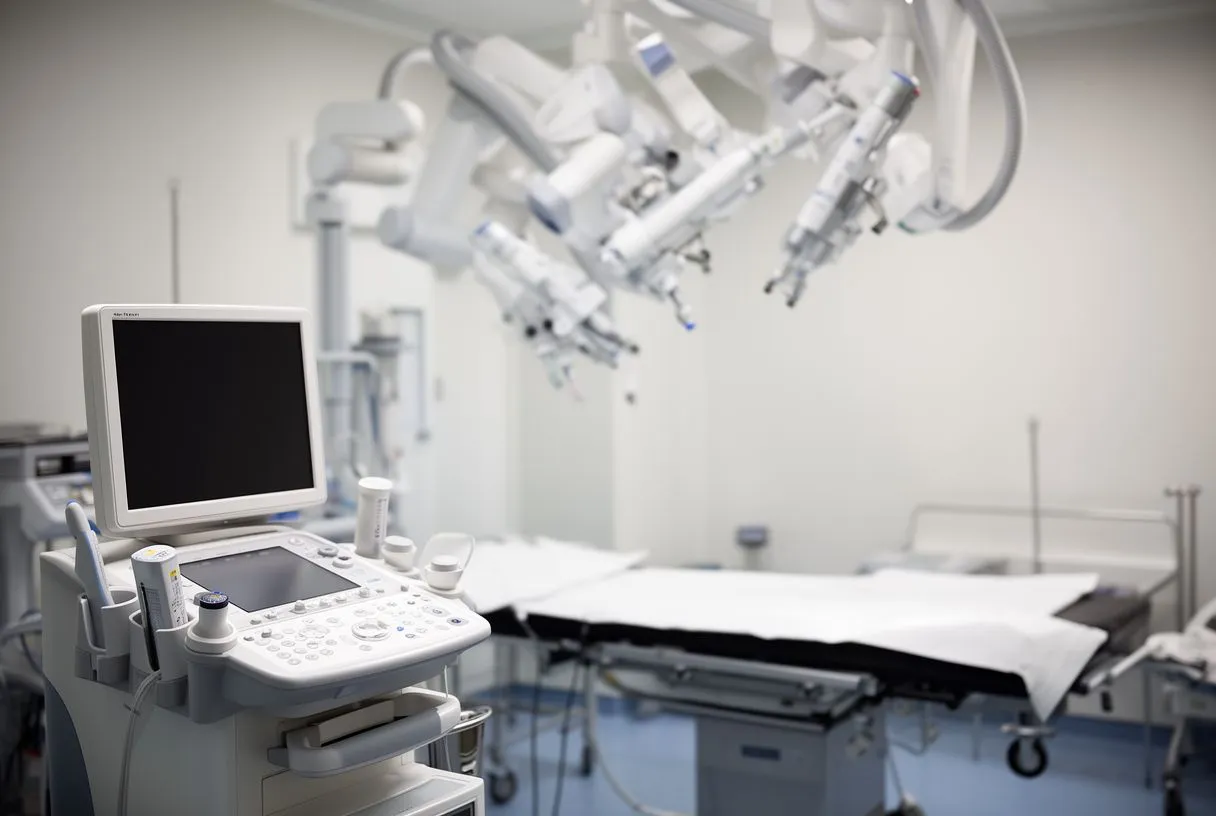
Smaller incisions, faster recovery. Minimally invasive heart surgery for elderly patients avoids opening the full breastbone. Instead, the surgeon works through small incisions between the ribs, often with the help of a robotic system. The benefits are real: less pain, less blood loss, a lower risk of wound infection, and a shorter stay in hospital.
The trade-offs to know. Not every patient or every procedure suits a minimally invasive approach. The technique depends on the exact anatomy, and in some cases conventional surgery is safer. When we explain what the studies actually show, we do so in plain words and answer every question before any decision is made — and we recommend the less invasive route only where the evidence supports it for that specific patient.
Dr Molina's own practice. Our team performs conventional, minimally invasive, robotic and transcatheter procedures. Dr Alejandro Molina performed the first robotic mitral valve repair in the Ángeles Health System and the first robotic heart surgery in Guadalajara, and he trained in minimally invasive and robotic surgery at the University of Montreal and in structural cardiology and TAVR at CHU Bordeaux. That experience matters when the least invasive option must be chosen carefully.
What Are Elderly Bypass Surgery Outcomes Really Like?
What bypass surgery actually does. Coronary artery bypass surgery takes a healthy vessel, usually from the leg or chest wall, and creates a new route for blood to flow around a blocked coronary artery. It is one of the most studied and best understood operations in medicine.
Outcomes in elderly patients. Elderly bypass surgery outcomes have improved substantially. Modern series show good survival rates in patients in their seventies and eighties, and many report meaningful relief from chest pain and breathlessness. The key is careful patient selection — operating on the right people, at the right time, for the right reasons.
Quality of life after bypass. Quality of life after elective cardiac surgery in elderly patients is a strong theme in the research: most patients report better daily function and less pain after recovering from surgery. From our experience, older patients who were limited by chest pain before surgery often tell us afterwards that they have regained their independence. That is the outcome we aim for.
How Does Heart Valve Replacement Work for Elderly Patients (TAVR)?
What TAVR is. TAVR — transcatheter aortic valve replacement — is a way to replace a narrowed aortic valve without opening the chest. A new valve is delivered through a thin tube, usually inserted through an artery in the groin, and expanded inside the old valve. There is no need to stop the heart or use a heart-lung machine in most cases.
Why TAVR suits elderly patients. For patients with severe aortic stenosis (a critically narrowed aortic valve) who are considered high risk for conventional surgery, TAVR has become a first-line option. The procedure is shorter, hospital stays are shorter, and recovery is usually much faster than open surgery.
Choosing between TAVR and surgery. The choice depends on the patient's anatomy, the valve they have, and their overall risk. That is why we review every case as a multidisciplinary team before proposing a single route. The evidence from the ENGAGE AF–TIMI 48 trial, which studied elderly patients on anticoagulation therapy, further shows that treatment decisions in older patients must be tailored carefully to their individual situation. Efficacy and Safety of Edoxaban in Elderly Patients With Atrial Fibrillation in the ENGAGE AF–TIMI 48 Trial
What Is the Recovery Time After Cardiac Surgery for Elderly Patients?
Recovery in stages. The recovery time for cardiac surgery in elderly patients typically follows a predictable path. Most patients spend one to two nights in intensive care, then a few more days on a normal hospital ward. Full recovery usually takes six to twelve weeks, and older patients may need a little longer.
- Week 1: gradual mobilisation, breathing exercises, wound care, pain control.
- Weeks 2–4: light activity at home, short walks, no lifting or driving.
- Weeks 6–12: cardiac rehabilitation, gradual return to normal daily activity.
Mind the mind. A point families sometimes miss: depression after open-heart surgery is more common in older patients than many realise. Signs and symptoms include low mood, loss of interest in usual activities, poor sleep, and withdrawal from family. Telling your care team early makes a real difference, and support is available.
Day-to-day practicalities. Families often ask about everyday recovery details. Can I shower after open-heart surgery? In general, yes — with warm, not hot, water and after your team confirms the wound is healing well. Gentle routines like this help patients feel normal again and support recovery.
What Are the Alternatives to Heart Surgery for Elderly Patients?
Medication is not a lesser option — it is a valid one. Heart surgery alternatives for elderly patients exist and should be discussed honestly. Many conditions can be managed with medication: blood thinners for irregular rhythms, statins and blood pressure medicines for coronary disease, and diuretics (fluid-removing medicines) for heart failure.
Catheter-based options. Some treatments avoid full surgery without being open surgery either. TAVR, as discussed above, is one. Other catheter-based procedures can treat certain valve problems or structural heart conditions without a chest incision.
Choosing the right path. The best choice depends on the patient's symptoms, anatomy, and goals. If a patient's main goal is to live comfortably at home rather than to be cured, medication may be the wiser route. If a patient is fit and their condition is clearly progressive, surgery or TAVR may offer the better long-term outcome. Every decision should be weighed against international practice guidelines.
When Is Heart Surgery Too Risky?
Very few absolute limits. It is rare for a patient to be judged too old for any treatment. But there are situations where surgery is genuinely too risky, or where the benefit is too small to justify the risk. These include severe and irreversible lung disease, advanced kidney failure on dialysis, severe frailty with loss of independence, and advanced dementia.
The patient decides. When surgery is proposed, the patient receives a clear written proposal with all the alternatives, and the final decision is always theirs. A good cardiac team will never pressure anyone into an operation, especially in later life. We say plainly: if surgery is not the right answer for you, we will tell you so.
The value of a second opinion. If you are unsure about a recommendation — or worried that surgery is being suggested too quickly — seek another view. We actively encourage second opinions and treat them as a normal part of deciding about heart surgery. The first contact with our team is a free video consultation: we get to know the patient, talk through the condition, and say which studies are still needed so no unnecessary ones are ordered. A face-to-face visit at our consulting rooms in Guadalajara, Querétaro or Hermosillo follows when the patient decides to go ahead.
Where the decision lands. The safety of elderly cardiac surgery is genuinely better today than it has ever been, and for many patients the operation restores years of active life. But the right answer depends entirely on the individual patient — their heart, their health, and their goals. If you or a loved one is facing this decision, talk it through with a qualified cardiac team, and consider booking a consultation rather than trying to decide alone. We are a multidisciplinary team of cardiac surgeons led by Dr Alejandro Molina, with consulting rooms in Guadalajara, Querétaro and Hermosillo, and we are here to help you make the right decision for your situation.