Frozen Elephant Trunk Procedure for the Aortic Arch
Elephant trunk procedure aortic arch repair explained by Guadalajara specialists.
What Is the Elephant Trunk Procedure for the Aortic Arch?
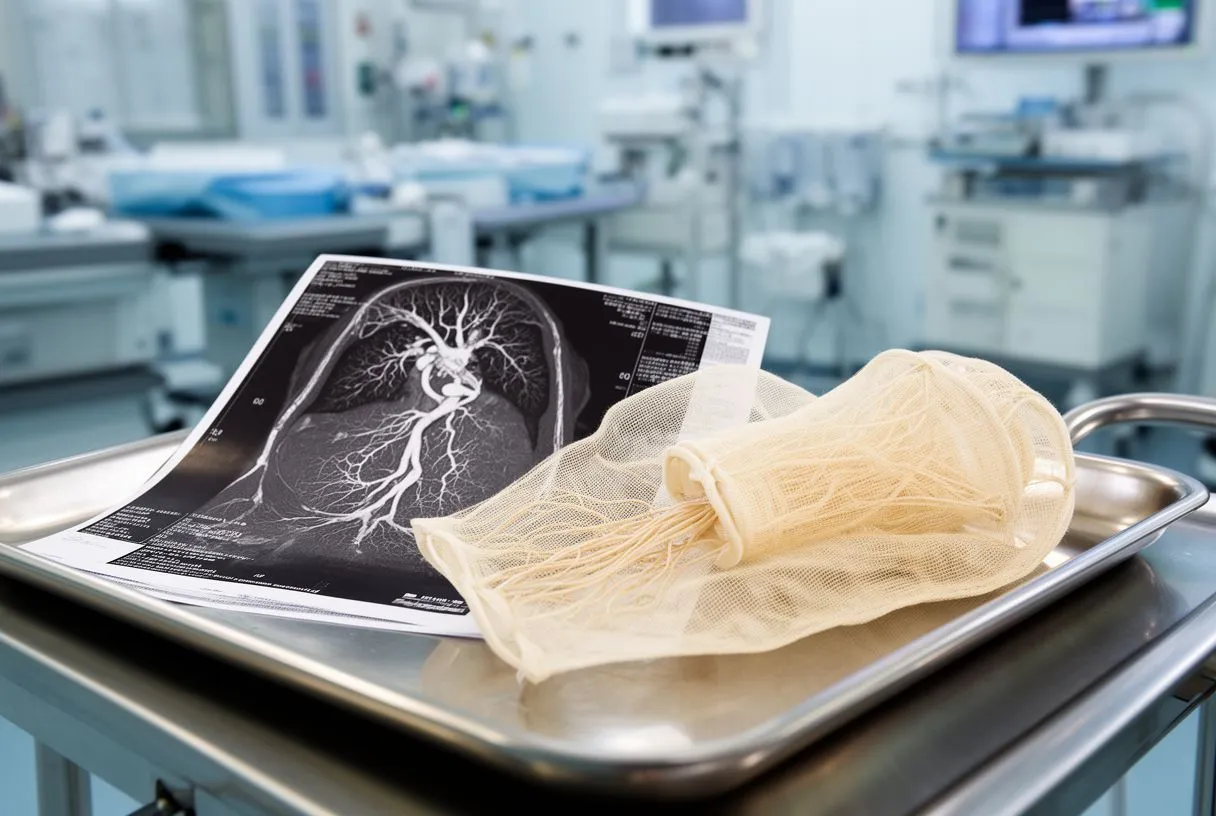
The elephant trunk procedure for the aortic arch is a two-stage operation that lets surgeons repair the entire aorta in phases. The aorta is the body's largest artery, and it runs from the heart through the chest and into the abdomen. When disease affects both the arch — the curved top section — and the descending portion below it, replacing everything at once would be too dangerous. The elephant trunk technique breaks that repair into safer, planned steps.
In the first stage, the surgeon replaces the aortic arch and leaves a spare length of graft — a fabric tube — dangling into the descending aorta. That dangling graft looks like an elephant's trunk, which is how the procedure got its name. In the second stage, the surgeon attaches that graft to a replacement of the descending aorta, or a stent graft is placed into it. This staged approach was first described by Dr. Hazim Safi and Dr. Denton Cooley in 1983, and versions of it have saved countless lives since.
Why the name matters to you. If you or a family member has been told you need an aortic arch repair, the term can sound alarming. In reality, it is a carefully planned, staged strategy — not a single overwhelming operation. Understanding how the two stages work together helps you ask the right questions and make confident decisions about your care.
Why Aortic Arch Replacement Surgery Is Needed
Most patients who need an aortic arch replacement surgery have one of three conditions. The first is a Thoracic Aortic Aneurysm — a permanent ballooning and widening of the aorta in the chest. As the wall stretches, it thins, and the risk of Aortic Rupture grows with size. Guidelines generally recommend surgery when the ascending aorta or arch reaches 5.5 cm, and earlier for some genetic conditions, according to the American Heart Association.
The second is Type A Aortic Dissection, a true cardiovascular emergency where the inner lining of the aorta tears and blood splits the wall into layers. The most common cause of death in aortic dissection is rupture of that weakened outer wall — bleeding into the chest or the sac around the heart. This is the scenario John Ritter, the American actor, died of in 2003, from a Type A dissection. The third is a Penetrating Aortic Ulcer, where an atherosclerotic plaque erodes deep into the aortic wall and can trigger dissection or rupture.
Abdominal Aortic Aneurysm connections. Some patients first discover disease in the belly. When an Abdominal Aortic Aneurysm and an arch problem coexist, or when a previous dissection has unzipped the entire aorta, a staged plan that treats the arch first and the rest later is often the safest roadmap. Each stage is a distinct operation with its own recovery, which is demanding but far safer than one marathon repair.
Types of Elephant Trunk Aortic Repair: Standard vs Frozen
The classic, or standard, elephant trunk aortic repair is a true two-stage affair. Stage one replaces the arch and leaves the graft hanging freely. Stage two happens weeks to months later and replaces the descending aorta through an incision on the left side of the chest. The gap between stages gives the body time to recover, but it carries a well-known danger: the unprotected descending aorta remains at risk of rupture between operations.
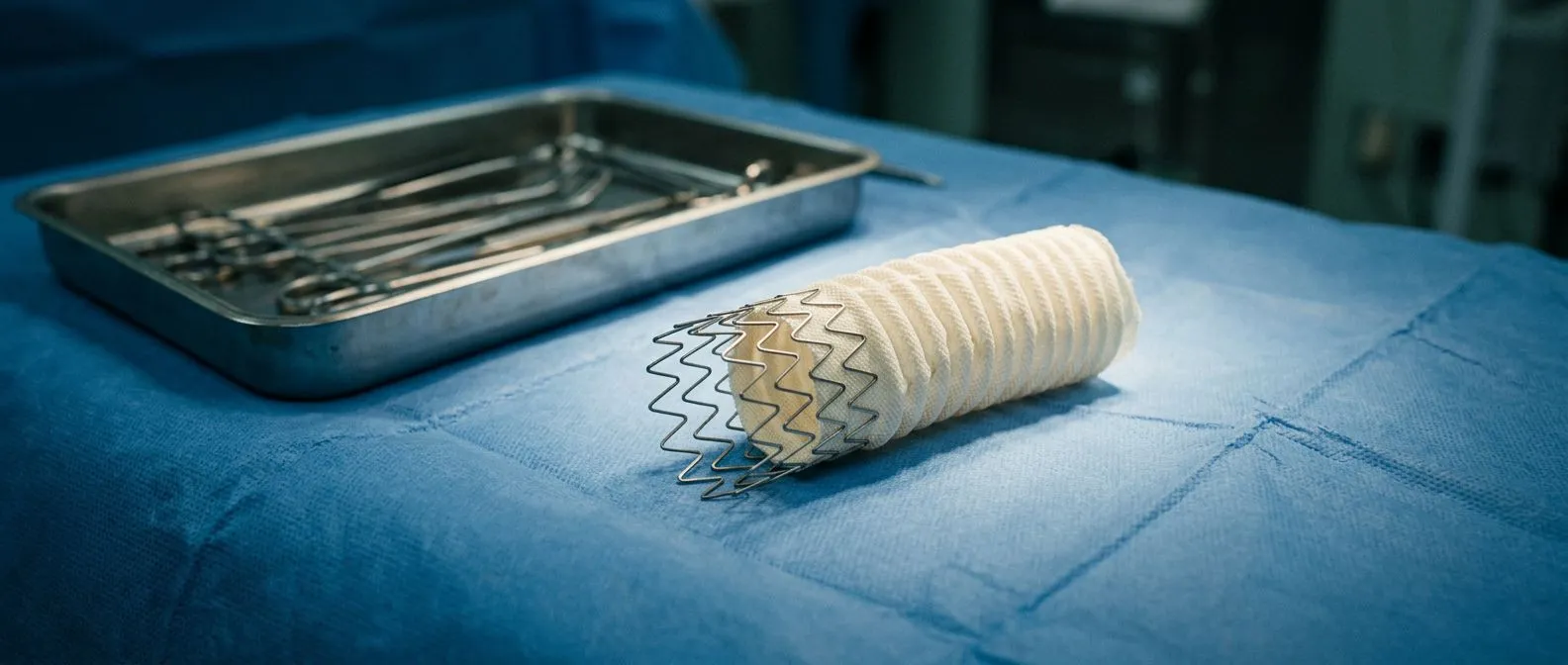
The frozen elephant trunk solves that problem by combining both stages into one. The surgeon replaces the arch and, at the same moment, deploys a covered stent graft — a fabric-lined metal scaffold — into the descending aorta, fixed in place by the balloon inflation that "freezes" it. This hybrid elephant trunk procedure is now widely used for complex dissections and extensive aneurysms, and it is the approach most specialised centres prefer today.
- Standard elephant trunk: two separate operations, weeks apart, with the descending aorta briefly left untreated between stages.
- Frozen elephant trunk: one operation, arch replacement plus stent graft deployed together, removing the vulnerable waiting period.
- The trade-off: the frozen technique is more technically demanding and has its own specific risks, which we will cover below.
In our practice, every case is reviewed by the multidisciplinary team against international practice guidelines before a recommendation is given, and the choice between a standard and a frozen approach is always weighed for that specific patient. Our team has reviewed and treated both standard and frozen elephant trunk cases, and we explain to each patient exactly which approach fits their anatomy and why.
How the Frozen Elephant Trunk Procedure Works
The operation is performed under general anaesthesia, using a heart-lung machine that takes over circulation while the heart is stopped. Because the brain must be protected while the Aortic Cross-clamp is applied and the arch is opened, the team lowers the body temperature and uses circulatory arrest — temporarily stopping blood flow to the body — while blood continues to reach the brain through separate cannulas. This is called selective cerebral perfusion.
What the surgeon actually does. Through an incision in the chest, the diseased arch is removed and replaced with a fabric graft. A special device — a combined stent graft and arch prosthesis — is then deployed into the descending aorta, sealing the entry point of a dissection or the aneurysm below. If the aortic valve is leaking, a condition called Aortic Insufficiency, the valve can be repaired or replaced at the same sitting. When the aortic root itself is diseased — an Aortic Root Aneurysm — an Aortic Root Replacement may be combined, and the Aortic Annulus — the valve's foundation ring — is measured carefully so the correct valve size is chosen.
The role of the distal anastomosis. The connection between the new arch graft and the stent graft must be exact, because that junction carries the full force of blood flow for the rest of the patient's life. Surgeons describe this learning curve honestly: outcomes improve with case volume and experience, as documented in studies of total arch replacement techniques for aortic dissection.
In our practice, Dr Molina trained in cardiac, minimally invasive, robotic and structural surgery at the University of Montreal, and in structural cardiology and TAVR at CHU Bordeaux. Our team applies that same structured training to aortic work, and we review each patient's imaging as a group before proposing any arch repair.
Who Is a Candidate for the Elephant Trunk Operation?
Not every aortic problem needs this operation. The elephant trunk operation is reserved for specific anatomy. Good candidates typically include patients whose disease affects the arch and the descending aorta together, patients with an extensive Type B Aortic Dissection where the tear begins further down but the arch is involved, and patients who have had previous descending aortic surgery where the arch remains dilated.
Circumstances that favour the frozen version. When the descending aorta is fragile — in acute or chronic dissection — the frozen elephant trunk is often chosen because it seals the tear immediately. When the aorta is simply very large from an aneurysm, either approach can work, and the team decides based on the patient's overall health, kidney function, and how well they would tolerate one long operation versus two shorter ones.
Factors we consider at the first visit. In the consultation we take the time to explain what the studies actually show, in plain words, and to answer every question before any decision. Typical considerations include:
- The size of the aneurysm and whether it crosses guideline thresholds.
- Whether the aortic valve or the aortic root is also involved.
- The patient's age, brain and kidney health, and overall fitness for a long operation.
- The exact shape of the aorta on CT imaging — no two arches are identical.
The final decision is always the patient's, and we encourage second opinions and treat seeking one as a normal part of deciding about heart surgery.

What Are the Risks of the Frozen Elephant Trunk Procedure?
Any operation on the aortic arch is major surgery, and honesty about risk is essential. The most serious risks of the frozen elephant trunk include stroke, spinal cord injury leading to paralysis or partial weakness of the legs, kidney injury, bleeding that requires re-operation, and heart rhythm problems. The risk of spinal cord injury exists because the arteries feeding the spinal cord arise from the descending aorta that the stent graft now covers.
How these risks are managed. Centres use several protective measures: careful blood pressure control, monitoring of spinal cord signals during surgery, drainage of spinal fluid afterwards, and keeping blood pressure deliberately higher in the first days to help the spinal cord. published literature on frozen elephant trunk techniques reports stroke rates and spinal cord injury rates that vary with patient selection and centre experience — which is why choosing an experienced team matters more than the technique name.
Risks of the waiting period in the standard approach. In the standard two-stage elephant trunk, the interval between operations carries a risk of rupture of the untreated descending aorta, and this risk is real. This is the main reason the frozen technique was developed: it removes the danger of the in-between period, at the cost of a longer single operation. Each approach trades one risk for another, and no single answer is right for every patient.
In our consultations we walk patients through the specific risks of their own anatomy, not averages — because a risk printed on a page means very little until it is attached to one person's situation.
Elephant Trunk Procedure Recovery Time
Recovery from an aortic arch operation is measured in months, not weeks. Most patients spend two to seven days in intensive care, then a further five to ten days on the ward, before going home. Early limitations are normal: tiredness that lasts for six to eight weeks, a sore chest and shoulder from the incision, and difficulty concentrating — often called "brain fog" — which typically resolves over the first few months.
Life after discharge. Walking is the main therapy. Most patients are encouraged to walk a little more each day, and formal cardiac rehabilitation — a supervised programme of graded exercise and education — is strongly recommended for the first three months. Driving is usually permitted once the surgeon clears it, commonly around four to six weeks. Lifting anything heavier than a few kilograms is restricted for about eight weeks while the breastbone heals.
Long-term follow-up. Recovery from arch surgery is not finished at three months. Lifelong surveillance with CT or MR imaging is the rule, because the remaining aorta — and sometimes the graft itself — needs monitoring. If you have had a dissection, controlling blood pressure with medication for life is essential. Structured follow-up imaging helps catch any change in the aorta early rather than at a crisis.
What Is the Success Rate of Frozen Elephant Trunk Surgery?
Survival and long-term outcomes after frozen elephant trunk surgery depend heavily on the reason for surgery and the patient's condition before it. For elective cases — planned operations on aneurysms — the published literature on the frozen elephant trunk procedure, including its indications and outcomes, reports generally favourable results in experienced centres. For emergency surgery on acute Type A dissection, the stakes are higher and the risks greater, because the patient is often already unstable.
What "success" means for patients. Success is more than leaving the operating room. It means the descending aorta remains stable, no further aneurysm develops, no reintervention is needed, and the patient returns to a normal life. Many patients after arch repair live full, active lives for decades — life expectancy after surgery for aortic dissection is largely determined by blood pressure control, whether the patient smokes, and how faithfully follow-up scans are done. For comparison, patients who undergo EVAR — endovascular aneurysm repair, a stent-based treatment for abdominal aneurysms — also require lifelong surveillance, and their long-term outlook depends on similar factors.
Where the technique continues to evolve. Surgical experience with complex arch techniques has grown steadily over the years, as documented in large published series of total arch replacement. Centres with higher volumes report better outcomes — one more reason to seek a team that does this operation regularly rather than occasionally.
Costs vary widely depending on the hospital, the implants used, the length of the intensive care stay, and whether the operation is elective or emergency. It is fair to ask any team for a written estimate covering surgeon fees, hospital fees, implants, and a realistic allowance for the length of stay.
Travel and insurance considerations. International patients should plan for a stay of at least two to three weeks after a major cardiac operation before flying home, and should confirm with their insurer what part of the care is covered. Many Mexican private hospitals and cardiac teams work with international patients regularly and can provide documentation for insurance claims.
How we work with international patients. The first contact is a free video consultation: we get to know the patient, talk through the condition, and say which studies are still needed so no unnecessary ones are ordered. A face-to-face visit at the consulting rooms follows when the patient decides to go ahead. We are a multidisciplinary team of cardiac surgeons led by Dr Alejandro Molina, with consulting rooms in Guadalajara, Querétaro and Hermosillo, and we regularly prepare patients for major aortic surgery from their first remote consultation.
When to Get Elephant Trunk Surgery and Choosing a Specialist
Deciding when to get elephant trunk surgery comes down to two questions: has the aorta reached the threshold where surgery is safer than waiting, and is the patient's overall condition good enough to tolerate it. If a CT scan shows an aneurysm of the arch at or above 5.5 cm, or if a dissection has involved the whole aorta, the window to act has usually arrived. Waiting beyond that point does not make the operation safer — it makes it riskier.
Questions to ask any aortic team. Before committing, ask directly: how many arch replacements does this team perform each year; what is the team's experience with the frozen elephant trunk specifically; what brain and spinal cord protection is used; and what will lifelong follow-up look like. A confident team will answer every one of these without hesitation, and will welcome a second opinion rather than resist it.
Minimally invasive and hybrid options. Some patients' anatomy allows a less invasive route — endovascular stent grafts through small groin incisions, or hybrid approaches that combine open and endovascular steps. We perform conventional, minimally invasive, robotic and transcatheter procedures, and we recommend the less invasive route only where the evidence supports it for that patient. Dr Molina performed the first robotic mitral valve repair in the Ángeles Health System and the first robotic heart surgery in Guadalajara, and the team also trained at Jena, Bad Berka and Buffalo. We will always tell you plainly when an open operation is the right one and when a less invasive option is genuinely safer for you.
The elephant trunk procedure for the aortic arch — whether standard or frozen — remains one of the most demanding but effective operations in cardiac surgery, giving patients with complex aortic disease a real long-term future. The keys are good patient selection, an experienced multidisciplinary team, and lifelong follow-up with imaging and blood pressure control. If you or a family member have been told you have an aortic aneurysm or a dissection, do not wait for symptoms to force a decision. Book a consultation with a qualified cardiac team, bring your imaging, ask every question you have, and let the final decision rest with you once you have the full picture.