Heart Attack in Women: Different Symptoms, Same Urgency
Heart attack symptoms in women often differ from men's.
What Are Heart Attack Symptoms in Women?
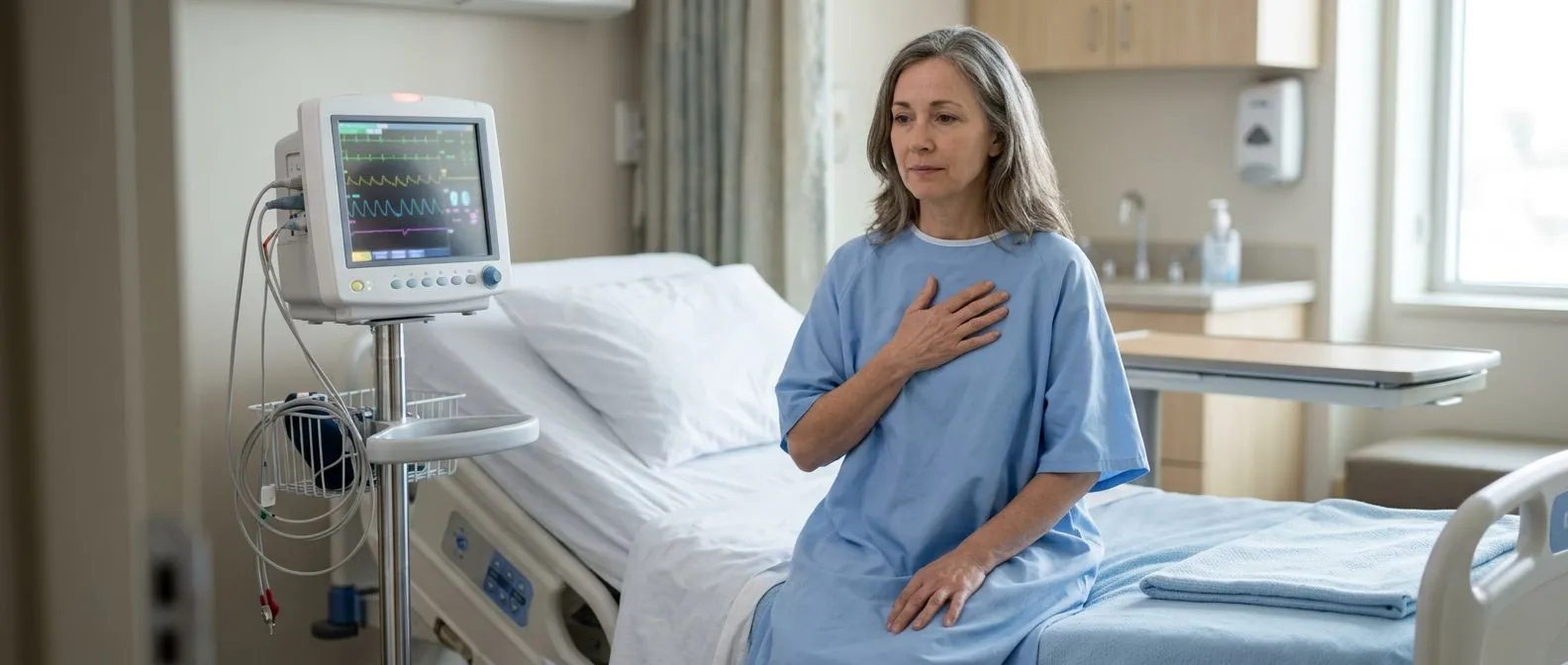
Heart attack symptoms in women often look nothing like the dramatic, clutch-the-chest scenes portrayed in films. While chest pressure remains the most common signal across both sexes, women frequently describe a broader, more diffuse pattern of discomfort that can unfold over hours or even days rather than striking like lightning. This difference in presentation means that many women — and sometimes the people around them — do not immediately recognize the emergency, delaying treatment that every minute counts toward.
A heart attack occurs when blood flow to part of the heart muscle is abruptly blocked, most often by a ruptured atheromatous plaque inside a coronary artery. The resulting deprivation of oxygen begins to damage heart tissue within minutes. In women, the blockage does not always involve the largest coronary vessels; microvascular disease — dysfunction in the heart's smallest arteries — can produce the same tissue stress through a different mechanism, which is one reason symptoms diverge from the classic male pattern.
Beyond chest pain — what else counts as a symptom? Women commonly report shortness of breath, nausea or vomiting, cold sweats, lightheadedness, and pain or discomfort in the jaw, neck, back, or arm. These sensations may appear without any chest pain at all, which is why clinicians refer to them as atypical — not because they are rare, but because they fall outside the textbook male template. Recognizing this wider symptom map is the single most important step in shortening the time between onset and treatment.
How Heart Attack in Women Differs From Men
Men typically describe a heavy, crushing weight in the center of the chest that may radiate down the left arm. Women, by contrast, are more likely to experience a constellation of subtler signals: upper-back pressure, a squeezing sensation in the jaw, breathlessness without exertion, or profound fatigue that arrived without explanation. The distinction is not absolute — some women present with classic crushing chest pain and some men show atypical patterns — but the statistical tendency is clear and clinically significant.
One anatomical explanation involves plaque distribution. When a ruptured atheromatous plaque lodges in a major coronary artery, the resulting blockage tends to produce sharp, localized chest pain. When microvascular dysfunction predominates — more frequently documented in women — the oxygen shortfall spreads diffusely across the heart wall, generating discomfort that patients struggle to localize to a single point. Research summarized by Verywell Health confirms that women are also more likely than men to experience a spontaneous coronary artery dissection, a tear in the artery wall that can trigger a heart attack without conventional plaque rupture.
Biological and hormonal factors at play. Estrogen appears to exert a protective effect on coronary endothelial function before menopause, which partly explains why women's heart attacks tend to occur later in life than men's. After menopause, that protection wanes, and the risk profile shifts. Conditions such as atrial flutter and other arrhythmias, inflammatory disorders, and pregnancy-related complications like pre-eclampsia further elevate a woman's baseline cardiovascular risk, shaping both the likelihood and the presentation of a heart attack.
Early Warning Signs of Heart Attack in Women
Many women recall, in retrospect, that warning signs preceded their heart attack by days or even weeks. These prodromal symptoms are easy to dismiss because they masquerade as stress, a minor flu, or simply the exhaustion of a busy life. Unusual fatigue that does not resolve with rest is one of the most frequently reported early signals — not the tiredness of a long day, but a pervasive, disproportionate exhaustion that makes ordinary tasks feel like climbing a mountain.
Sleep disturbance and unexplained anxiety. Women who later suffered a heart attack have described disrupted sleep patterns in the weeks before the event — waking at odd hours without an obvious cause, or a sense of restless unease that they could not attribute to anything specific. Shortness of breath with mild exertion, such as climbing a single flight of stairs that previously caused no trouble, is another warning that warrants attention. Indigestion-like discomfort that does not respond to antacids should also prompt consideration, particularly if it coincides with any of the other signals described here.
The value of recognizing these early signs cannot be overstated. A heart attack is a progressive event: the longer the artery stays blocked, the more heart muscle dies. When a woman identifies a prodromal pattern and contacts a cardiac team before the artery fully occludes, the window for intervention — whether with clot-busting medication, balloon angioplasty, or surgical revascularization — widens considerably. The goal is not to generate anxiety about every twinge, but to build awareness of patterns that deviate from your personal baseline.

Atypical Heart Attack Symptoms Women Experience
The word atypical in clinical medicine means something other than the most common textbook presentation. It does not mean rare. For women, atypical heart attack symptoms are common enough that cardiologists now routinely screen for them. Jaw pain that seems to come from a dental problem, back pain mistaken for a muscle strain, nausea attributed to food poisoning — each of these can be the sole manifestation of an acute cardiac event, and each can delay a correct diagnosis.
Pain locations that surprise patients. Discomfort may settle between the shoulder blades, travel up the neck, or create a vague aching in one or both arms. Arm pain need not be sharp or severe; some women describe a numbness or tingling that spread gradually, without any obvious injury. Others feel an oppressive tightness in the throat, as though a hand were squeezing gently but persistently. These sensations reflect the shared nerve pathways that relay signals from the heart to the brain — the body's wiring makes it difficult to pinpoint the source, so the brain maps the discomfort onto nearby structures like the jaw, shoulders, or upper back.
Clinical recognition of atypical infarction — a heart attack whose symptoms deviate from the expected pattern — has improved over the past two decades, yet gaps remain. A study examining intramural haematoma of the thoracic aorta, published in the Journal of Cardiothoracic Surgery, illustrates how acute aortic syndromes can also present with atypical chest pain, creating diagnostic overlap that demands careful imaging and specialist evaluation. The lesson for patients and families is straightforward: if a new, unexplained symptom involves the upper body and does not resolve within a few minutes, treat it as a potential cardiac signal until a physician says otherwise.
Silent Heart Attack in Women: What It Means
A silent heart attack produces so little discomfort, or discomfort so unlike what people associate with a cardiac event, that the person experiencing it never realizes one is occurring. The damage is real — heart muscle dies and scar tissue forms — but the episode passes unnoticed until an electrocardiogram or imaging study reveals the evidence weeks, months, or years later. Women are disproportionately affected by silent heart attacks, partly because the symptoms they experience are more often misread as indigestion, fatigue, or the aches of aging.
What makes a heart attack "silent" is not the absence of symptoms but the absence of recognition. A woman may feel briefly short of breath, slightly nauseated, or unusually tired, then dismiss the episode and continue with her day. The underlying mechanism — a blocked artery starving tissue of oxygen — proceeds regardless of whether the conscious mind registers the alarm. Over time, untreated silent heart attacks weaken the heart muscle, raise the risk of heart failure, and increase the likelihood of a subsequent, more severe event.
Who is most at risk for a silent heart attack? Women with diabetes face elevated risk because neuropathy — nerve damage from long-standing high blood sugar — can blunt the pain signals that normally accompany cardiac ischemia. Older women, women with chronic kidney disease, and those with a strong family history of early coronary disease also fall into higher-risk groups. Routine check-ups that include an electrocardiogram become essential for these individuals, because the only reliable way to detect a past silent heart attack is through testing that reveals the scar tissue it left behind.
Why Women's Heart Attack Signs Go Unrecognized
Several converging factors explain why women's heart attack symptoms go unrecognized more often than men's. The first is historical: the clinical definition of a heart attack was built largely on studies of male patients, so the textbook symptom set reflects male physiology. Women who present differently sometimes find their complaints attributed to anxiety, stress, gastrointestinal upset, or musculoskeletal strain before cardiac causes are considered.
The second factor is patient-side delay. Many women minimize their own symptoms, attributing fatigue to caregiving responsibilities, work demands, or hormonal changes. They wait longer than men before calling emergency services, and when they do arrive at the hospital, they may be less likely to request immediate cardiac evaluation. Each minute of delay translates to additional heart muscle loss, which is why public-health campaigns increasingly target women specifically, encouraging them to trust their instincts and act on persistent, unexplained symptoms without waiting for permission.
Diagnostic bias and the need for thorough evaluation. Emergency departments rely on electrocardiograms and blood markers such as troponin to confirm a heart attack, but women's atypical presentations can lead to initial under-triage. Auscultation — listening to the heart with a stethoscope — may reveal subtle abnormalities, but definitive diagnosis requires imaging and serial blood tests. The onus falls on both patients and clinicians to maintain a high index of suspicion, particularly when a woman describes upper-body discomfort, breathlessness, or profound fatigue that she cannot otherwise explain. Recognizing the gap is the first step; closing it demands that every woman advocate for her own cardiac evaluation when symptoms persist.

Women Heart Attack Chest Pain: What It Feels Like
When women do experience chest pain during a heart attack, the description often differs from the male template. Instead of a sudden, crushing pressure, women may feel a slow-building tightness, an aching fullness, or a burning sensation that they mistake for heartburn. The discomfort can be located anywhere in the chest rather than centered beneath the sternum, and it may come and go rather than remaining constant.
This variation reflects the anatomy of coronary blood flow and the heart's position within the chest. When an atheromatous plaque ruptures in a vessel supplying the inferior or posterior wall of the heart, pain can radiate to the upper abdomen, creating confusion with gastrointestinal causes. When the right coronary artery is involved, the pain may extend toward the jaw or the right side of the body, further departing from the expected left-sided pattern. These anatomical realities mean that chest pain in women demands the same urgent response as the classic male presentation, even when the quality and location of the discomfort feel different.
Pressure versus sharp pain — why quality matters. Cardiac chest pain is typically described as pressure, squeezing, fullness, or heaviness rather than a sharp, stabbing, or fleeting sensation. A pain that worsens with a deep breath or changes with body position is more likely to originate from the chest wall or the lining around the lungs. However, these rules are not absolute, and women with microvascular disease can experience atypical pain patterns that defy simple categorization. When uncertainty exists, the safest approach is always to seek evaluation rather than wait for symptoms to clarify on their own.
Heart Attack Symptoms Female vs Male: Key Differences
The differences between male and female heart attack presentations are matters of statistical tendency, not absolute rule. Both sexes can experience any combination of symptoms, and individual variation is wide. Nevertheless, understanding the patterns helps both patients and clinicians calibrate their response and avoid the dangerous assumption that a presentation is "too mild" to be cardiac.
Men more often report a single, dominant symptom: crushing central chest pressure that may radiate down the left arm. Women more often describe a cluster of symptoms that together paint the picture — shortness of breath, nausea, cold sweat, back or jaw discomfort, and overwhelming fatigue — without one element standing out as the chief complaint. This diffuse presentation can make triage harder, especially in busy emergency settings where pattern recognition drives rapid decisions.
- Chest pain: More likely to be sharp, crushing, and centrally located in men; more likely to be a diffuse pressure, fullness, or burning sensation in women.
- Radiation pattern: Men tend to feel pain travel down the left arm; women more often report jaw, neck, upper-back, or bilateral arm pain.
- Accompanying symptoms: Shortness of breath, nausea, vomiting, cold sweats, and unusual fatigue cluster more frequently in women's presentations.
- Onset timing: Men more often describe a sudden, identifiable moment of onset; women may describe symptoms that built gradually over hours or days.
- Microvascular disease: Women are more likely to have dysfunction in the heart's smallest vessels, producing symptoms without large-artery blockage on standard angiograms.
These differences do not mean women should ignore chest pain or men should dismiss fatigue. They mean that each person needs to be evaluated as an individual, with a clinician who considers the full symptom picture and does not rely on a single template. As techniques for treating complex aortic and coronary pathology evolve — including approaches documented in research such as the physician-modified endograft technique for aortic arch ulcers — the broader lesson for patients is that cardiac and vascular emergencies can present in ways that challenge conventional expectations, and the response to any suspicious symptom should be immediate evaluation.
Recognizing Heart Attack in Women Before It Strikes
Prevention and early recognition share a single goal: shortening the interval between the onset of cardiac ischemia and the delivery of definitive treatment. For women, this means knowing the symptoms, understanding personal risk factors, and having a plan for what to do when something feels wrong. The most effective approach combines awareness with action — recognizing the pattern is necessary but insufficient unless it triggers a prompt response.
Several risk factors weigh differently in women than in men. Diabetes appears to erase more of the protective cardiovascular advantage that premenopausal women hold. Inflammatory conditions such as rheumatoid arthritis and lupus raise risk more substantially in women. Pregnancy complications — pre-eclampsia, gestational diabetes, preterm delivery — leave a cardiovascular fingerprint that persists decades later. Smoking carries a comparatively higher relative risk in women, and conditions like atrial flutter and other arrhythmias, though not heart attacks themselves, signal an atrium and conduction system under stress that warrants evaluation.
Know your numbers and your baseline. Blood pressure, cholesterol fractions including apolipoprotein B levels, blood sugar, and body weight each tell part of the story. A woman who knows her baseline can recognize when something shifts. If you have a family history of early coronary disease, discuss it with a cardiologist who can assess your individual risk using validated tools such as the EuroSCORE II or similar risk calculators. Do not wait for symptoms to appear before establishing care; the time to build a relationship with a cardiac team is before an emergency, not during one.
What to Do If You Suspect a Heart Attack
If you suspect that you or someone near you is having a heart attack, the single most important action is to call emergency services immediately. Do not drive yourself to the hospital, do not wait to see if symptoms resolve, and do not attempt to rationalize the discomfort away. Emergency dispatchers can begin guiding care over the phone, and ambulances carry equipment — including an automated external defibrillator — that can address life-threatening arrhythmias en route. Every minute of delay translates to heart muscle that cannot be recovered.
While waiting for help, the person should sit or lie down and remain as calm as possible. If aspirin is available and the person is not allergic and has no bleeding contraindication, chewing a standard 325 mg tablet can help limit clot propagation — but this is secondary to calling for help, which must come first. If the person becomes unresponsive and stops breathing normally, someone nearby trained in CPR should begin chest compressions immediately, and a defibrillator should be used as soon as one is available. These actions buy time, but they do not replace definitive hospital treatment.
- Call emergency services first: Do not delay to consult family, search symptoms online, or drive yourself. Paramedics begin treatment the moment they arrive.
- Chew aspirin only if advised: Emergency dispatchers can confirm whether this is appropriate. It is never a substitute for professional care.
- Stay still and calm: Physical exertion increases the heart's oxygen demand. Sitting or lying down reduces workload on the damaged muscle.
- Prepare key information: Know current medications, allergies, and recent symptoms. If a prior electrocardiogram exists, have it available for comparison.
- Do not be talked out of it: If a clinician initially attributes symptoms to anxiety or indigestion but they persist, request further cardiac evaluation. Persistence can save your life.
If you are reading this because you or someone you love has experienced symptoms that fit any pattern described here, the next step is clear: contact a qualified cardiac team for evaluation. Dr Alejandro Molina and the team at Cirugía de Corazón see patients in Guadalajara, Querétaro, and Hermosillo and can assess individual risk, interpret symptoms, and guide decisions with the specificity that general articles cannot provide. Recognizing the signs is the beginning; acting on them is what protects the heart. Book a consultation rather than self-diagnosing — your situation deserves individual attention from specialists who understand that heart attack symptoms in women are real, varied, and every bit as urgent as the classic presentations they were never meant to replace.