

Heart Block: Symptoms and When You Need a Pacemaker
Heart block pacemaker specialists explain symptoms, types, and when implantation becomes necessary.
When the electrical signal that tells your heart to beat gets slowed or interrupted on its way from the upper chambers to the lower chambers, doctors call it Heart Block. In some people it is a harmless quirk found on a routine electrocardiogram. In others it means the heart beats too slowly to keep the body supplied with blood, and the reliable fix is a heart block pacemaker — a small device implanted under the skin that takes over the job of keeping the rhythm steady. This guide walks you through what heart block actually is, the different degrees of severity, the symptoms families should recognize, how the diagnosis is made, and when implantation becomes the right decision. Everything here is written for patients and their loved ones, in plain language, with the honest trade-offs included.
What Is Heart Block and How Does It Affect Your Heartbeat?
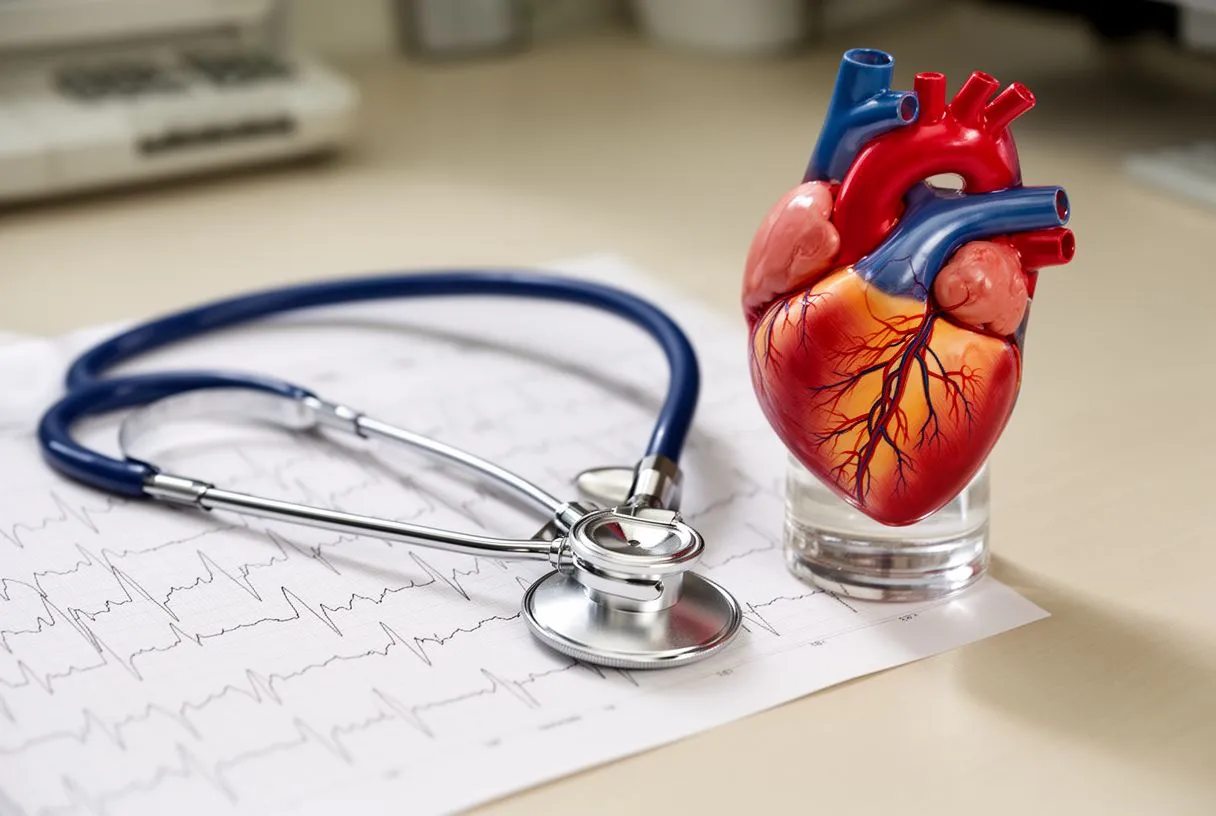
Your heart has its own electrical wiring. A natural pacemaker called the sinus node, sitting in the right upper chamber (the right atrium), fires an impulse that makes the atria squeeze. That impulse then travels down to a relay station called the atrioventricular node — usually shortened to AV node — and from there into the ventricles, the two powerful lower pumping chambers. When everything works, the top and bottom of the heart contract in perfect sequence, roughly 60 to 100 times a minute at rest.
What happens when the top of the heart isn't communicating with the bottom? Heart block is a delay or a Conduction Block at that AV relay station. The signal from the atria arrives late, drops out intermittently, or never reaches the ventricles at all. When the connection fails badly, the ventricles fall back on their own much slower built-in rhythm, and the heart rate can drop to 30 or 40 beats per minute — a condition called bradycardia. That is the core relationship: heart block is one of the principal causes of bradycardia, and the slower the escape rhythm, the more trouble the body has getting enough blood to the brain, muscles and organs.
Not every block is dangerous. A mild delay may need nothing more than observation and a repeat electrocardiogram. Complete interruption, by contrast, is an emergency that usually requires prompt Pacemaker Implantation. The rest of this article helps you understand where on that spectrum you or your family member might sit, and what the reasonable next steps look like.
What Are the Types of Heart Block?
Doctors describe heart block in three degrees, and understanding the difference matters because treatment depends entirely on which type you have. The classification is standard teaching in cardiology and is the framework used by guidelines from the American Heart Association and related societies (Circulation).
- First-degree block: the signal is delayed but every impulse still gets through. This shows up as a longer interval on the ECG, usually causes no symptoms, and rarely needs treatment.
- Second-degree block: some impulses get through and some are dropped. It comes in two flavors — Mobitz I, where the delay grows longer beat by beat until one is lost, and Mobitz II, where beats are dropped without warning. Mobitz II is the more concerning pattern.
- Third-degree block: also called complete heart block, no impulses reach the ventricles at all. The ventricles beat on their own at a very slow rate, and a pacemaker is almost always necessary.
Why does the degree change the decision? A first-degree block is a delay, not a dropout, so the heart keeps an adequate rate and most people never know they have it. Second-degree Mobitz I is often benign, seen in healthy athletes during sleep, while Mobitz II carries a real risk of progressing to complete block. Third-degree heart block is the situation where the heart's own backup rhythm cannot be trusted, which is why the conversation about a permanent pacemaker becomes straightforward rather than optional.
Second degree heart block pacemaker decisions in practice: guidelines generally recommend implantation for Mobitz II and for any symptomatic second-degree block, while Mobitz I without symptoms is usually watched. In our practice, every case is reviewed by the multidisciplinary team against international practice guidelines before any recommendation is made, and the patient receives a clear proposal with the alternatives laid out.
What Causes a Heart Block?
Heart block comes from many directions, and the cause often shapes the treatment. Some people are born with it; most acquire it later in life.
Acquired heart block treatment starts with the underlying cause. The most common cause is fibrosis — scarring of the conduction tissue that comes with age. Others include coronary artery disease and damage from a heart attack, medications that slow conduction (beta blockers, calcium channel blockers, digoxin, some antiarrhythmics), infections such as Lyme disease or rheumatic fever, infiltrative diseases, an underactive thyroid, and electrolyte disturbances like high potassium. Congenital heart block is rarer: some babies are born with a malfunctioning AV node, sometimes associated with the mother carrying certain autoantibodies, and many of these children do well for decades before the conduction system tires and a pacemaker becomes useful in adulthood.
Heart block after valve or heart surgery deserves its own mention. Conduction tissue runs right beneath the aortic valve and near the mitral valve, so procedures in those areas — surgical valve replacement and especially transcatheter aortic valve replacement (TAVR), where a new valve is delivered through a catheter — can bruise the electrical pathways. Studies following TAVR patients show a meaningful proportion develop new conduction disturbances, and ongoing research continues to refine which patients need a prophylactic pacemaker (ClinicalTrials.gov). Our team performs conventional, minimally invasive, robotic and transcatheter procedures, and we recommend the less invasive route only where the evidence supports it for that specific patient — a principle that applies with particular weight when conduction risk is part of the conversation.
One practical note: if you take a medication that slows the heart and the ECG shows first-degree AV block, never stop the medication on your own. Doctors weigh the benefit of the drug against the degree of block, and adjustment should always be a supervised decision.
Heart Block Symptoms: What to Watch For
Mild heart block often has no symptoms at all. When the rate drops low enough, however, the body starts telling you — usually through the brain, which is the organ most sensitive to reduced blood flow.
Heart block symptoms pacemaker doctors look for: the classic list includes unexplained fatigue that no amount of rest fixes, dizziness or lightheadedness when standing, shortness of breath on exertion that is out of proportion, a sensation of skipped or pounding beats, and chest discomfort. At the severe end sits syncope — a sudden faint, sometimes called a Stokes-Adams attack — which happens when the heart pauses long enough that the brain briefly loses blood flow. Syncope is never something to wait out. A faint that comes without warning, without the usual triggers like heat or standing too long, deserves urgent evaluation, because a pause in the heartbeat can be the reason.
Is a block in the heart serious? The honest answer is "it depends on the degree and the symptoms." First-degree block in an otherwise healthy person is typically a footnote on an ECG. Complete heart block is serious because the ventricular escape rhythm is slow and unreliable; without treatment the risk of fainting, injury from falls, and in some cases deterioration toward heart failure or dangerous rhythms is real. The severity isn't about the label — it's about what the block is doing to the person living with it.
Families should also watch for subtler signs in older relatives: confusion, falls blamed on "just aging," and a general slowing down. In an elderly patient, a slow heart rhythm can masquerade as dementia or frailty, and treating the rhythm sometimes restores a person remarkably. In our consultations we take the time to explain what the studies actually show, in plain words, and to answer every question before any decision is made.
How Is Heart Block Diagnosed?
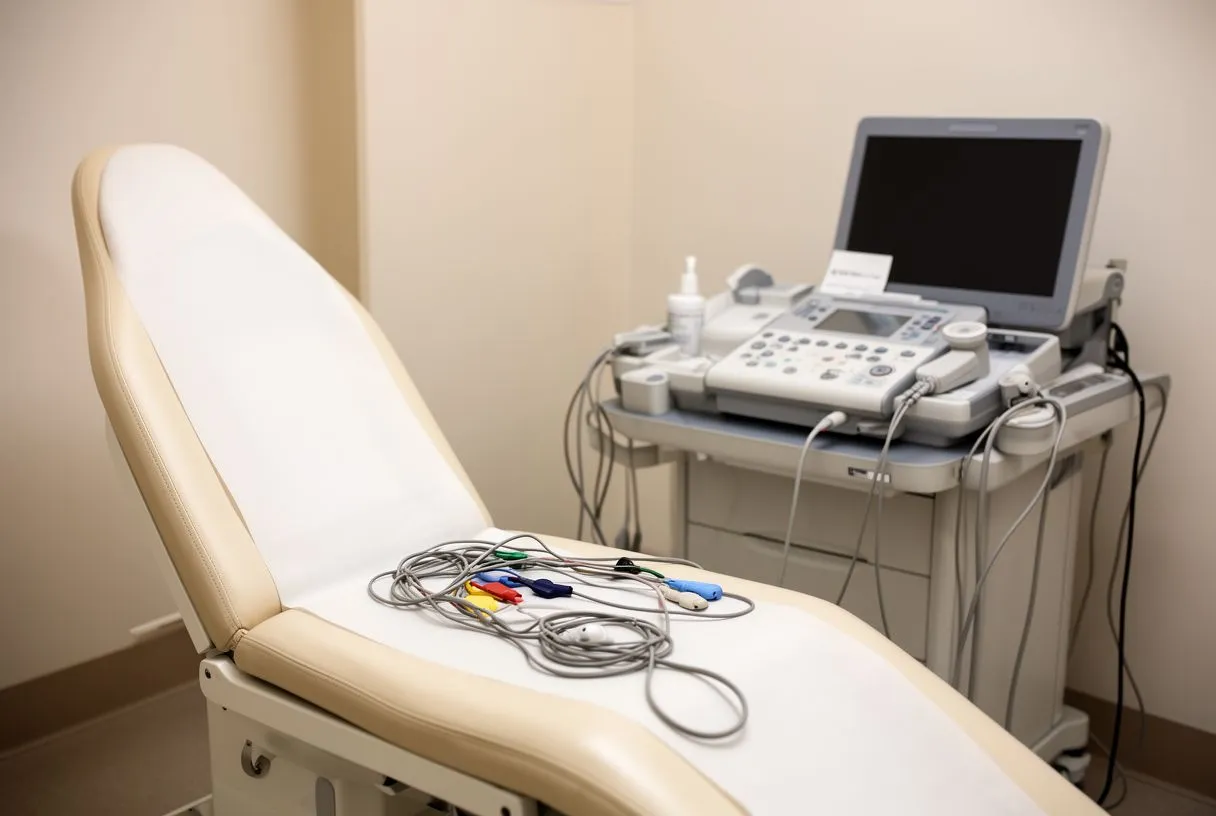
Diagnosis starts simple and escalates only when needed. The first test is almost always a 12-lead electrocardiogram, which takes a few minutes in the office and shows the conduction intervals directly. Many blocks are visible on that first tracing; others come and go.
When the block hides between visits, a heart block monitoring device fills the gap. A Holter monitor records every heartbeat for 24 to 48 hours. Extended patch monitors track one to two weeks. Implantable loop recorders — small devices about the size of a stick of gum placed under the skin — can watch for pauses or dropped beats for up to several years, which is invaluable when fainting spells are infrequent. Blood tests complement this picture by checking thyroid function, electrolytes, and medication levels, since correcting an underlying cause sometimes corrects the block.
Looking for a heart rhythm specialist in Jalisco or elsewhere in Mexico? The right specialist is a cardiologist with training in cardiac electrophysiology — the subspecialty that deals with the heart's electrical system. A cardiac electrophysiologist consultation typically includes review of your ECGs and monitor data, a symptom history, and a discussion of whether the findings explain what you feel. Our team offers the first contact as a free video consultation: we get to know the patient, talk through the condition, and say which studies are still needed so no unnecessary ones are ordered. If the diagnosis is clear and the indication solid, the next conversation is about treatment; if it is not, the next conversation is about which test answers the remaining question.
Do You Need a Pacemaker for Heart Block?
This is the question behind most consultations, and the answer follows a clear logic: the pacemaker exists because the heart's own wiring cannot be trusted to maintain an adequate rate.
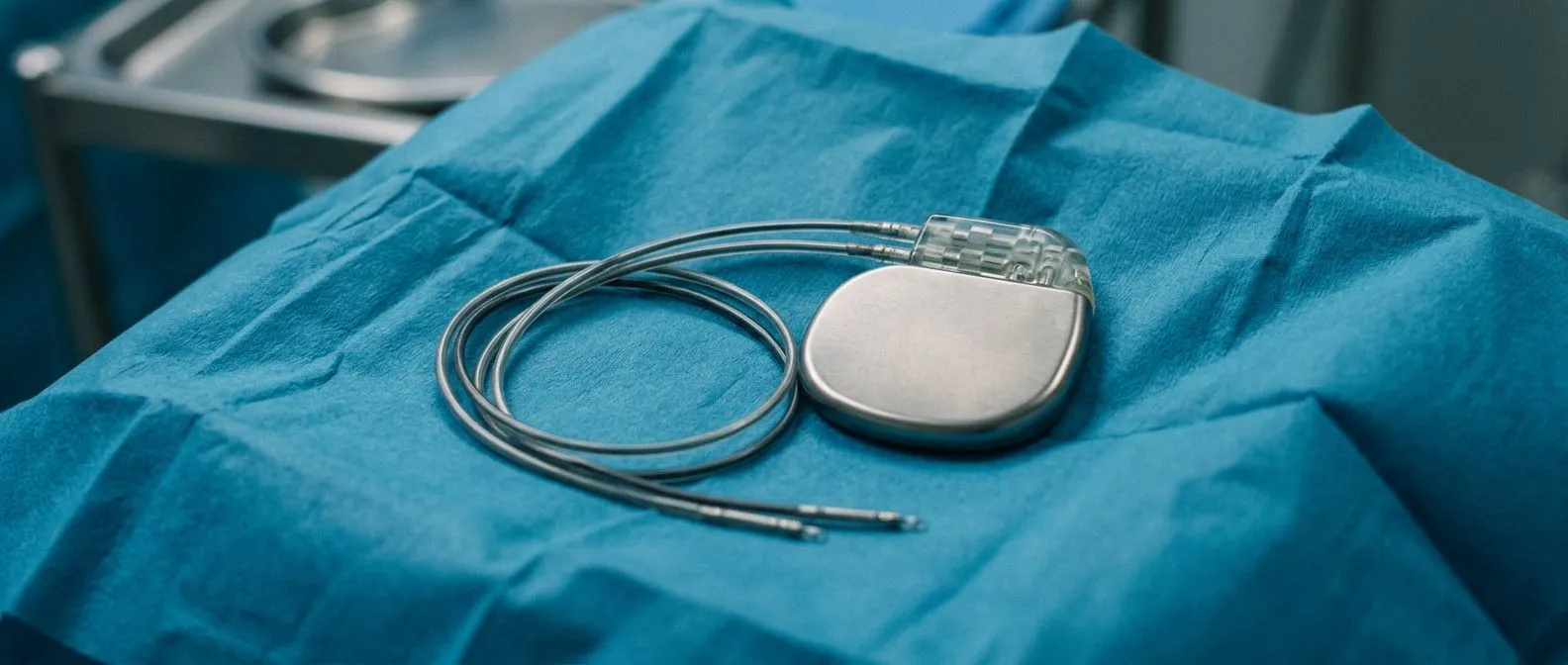
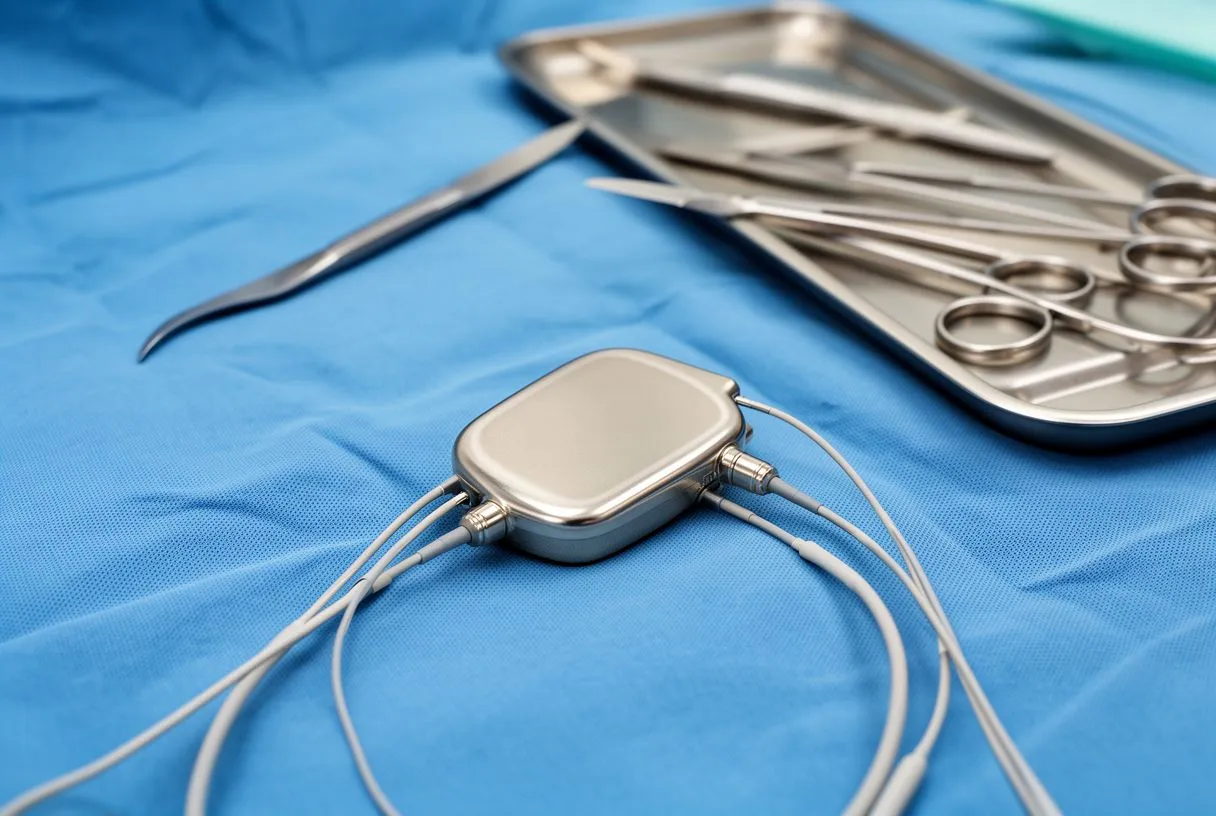
Heart block treatment options, in order of escalation: observation for asymptomatic first-degree block; medication review and correction of underlying causes wherever one exists; and pacemaker implantation when the block is advanced or symptomatic. There is no drug that reliably fixes heart block itself — medications can treat contributing conditions, but a failing conduction system is a structural problem that medication cannot repair. A Pacemaker, essentially a miniature pulse generator with one or more wires (leads) that sense the heart's activity and deliver tiny electrical impulses when the natural rhythm falters, is the established solution.
Third degree heart block treatment is unambiguous: a permanent pacemaker is the standard of care, implanted promptly — sometimes as an emergency. For second-degree Mobitz II and for symptomatic Mobitz I, implantation is likewise recommended. The question "do I need a pacemaker for heart block" therefore usually has a guideline-backed answer once the diagnosis and symptoms are pinned down; the judgment call lives in the gray zones, such as first-degree block with borderline intervals in an active older adult, or Mobitz I with vague symptoms.
What about temporarily? When a patient presents acutely unstable — very low output, fainting, or complete block after a heart attack — a temporary pacemaker stabilizes the situation while the underlying problem is treated. Sometimes the block resolves as the acute illness settles and no permanent device is needed; sometimes it does not, and the temporary system is exchanged for a Permanent Pacemaker. Either way, the decision is sequenced, not rushed, unless the situation demands it.
How Pacemaker Implantation Works
Pacemaker implantation is one of the most commonly performed cardiac procedures, and knowing the sequence removes much of the fear around it. It is done in a catheterization laboratory or a hybrid operating room, usually with local anesthesia and light sedation — you are relaxed but not under general anesthesia in most cases.
The procedure, step by step: the team makes a small incision, typically just below the left collarbone, and creates a small pocket under the skin for the generator. Through a vein, the lead or leads are guided into the heart chambers and positioned against the inner wall, where they can both sense and stimulate. The generator is connected, tested, the pocket is closed, and you are done — the whole implantation commonly takes one to two hours.
Most patients go home the same day or the next morning. The shoulder on the implant side stays relatively still for a few weeks while the leads settle in, and you will leave with specific instructions about arm movement, wound care, and when to return for the first device check. The generator itself is about the size of two stacked cookies and lasts, depending on how much it works, somewhere in the range of many years before replacement — a minor procedure to swap the battery in the same pocket.
Questions to ask before pacemaker implantation Ask who will perform it, how many they do, and what follow-up looks like. We encourage second opinions and treat seeking one as a normal part of deciding about heart surgery — a device that will be part of your body for years deserves that level of certainty. Every case at our practice is reviewed by the multidisciplinary team against international practice guidelines before a recommendation is given, and the final decision is always the patient's.
What Are the Risks of Pacemaker Surgery?
Honest medicine means saying plainly what can go wrong, even when the overall picture is reassuring. Pacemaker implantation is considered a low-risk procedure, but it is not a zero-risk one.
Complications that matter, briefly: bleeding or bruising at the pocket site; pneumothorax, where the lung is accidentally nicked while accessing the vein (usually small and self-resolving, occasionally needing a chest tube); lead displacement, which may require a second procedure to reposition; infection of the pocket or the leads, which is the most serious complication and occasionally requires removing the entire system; and rarely, cardiac perforation. Major complications occur in a small minority of procedures, and the risk profile improves with experienced operators and appropriate patient selection.
How do we keep risk low? Careful vein access planning, strict sterile technique, lead testing before closing, and close early follow-up all contribute. You should also tell your team about all medications, especially blood thinners, since their management around the procedure is part of the risk calculation.
Life After a Heart Block Pacemaker
Here is the part patients most want to hear: a pacemaker does not shrink your life. In practice, it usually expands it, because the fatigue, dizziness and faints that low heart rate caused are treated at the source.
Heart block exercise restrictions after implantation are modest and temporary. For the first several weeks you avoid lifting the arm on the implant side above shoulder height and avoid pushing, pulling or lifting heavy objects, so the leads heal firmly in place. After the recovery window — typically four to six weeks — most people return to walking, swimming, cycling, gardening and full daily activity. Very few sports are truly off the table; contact sports that could strike the device site warrant a specific conversation with your cardiologist.
Everyday questions patients ask: microwaves, phones, and modern electronics pose essentially no problem. Airport scanners: carry your device card, walk through normally, and mention the device if hand-screening is used. Medical imaging requires a note of planning — an MRI is usually possible with modern pacemaker systems, but it must be programmed appropriately first; published case reports describe safe MRI scanning in pacemaker patients when proper protocols are followed (Cardiology Research and Practice). Always tell any imaging center or dentist that you have a pacemaker; it rarely changes anything, but it should always be known.
Device checks happen in clinic a few weeks after implantation and then on a regular schedule, and many modern systems transmit data remotely, letting your team see the device's behavior and your heart's rhythm without a visit. A first device check is usually scheduled shortly after implantation, because early follow-up is where small issues are caught while they are still small.
Heart Block Prognosis and When to Seek Help
With appropriate treatment, the heart block prognosis with pacemaker in place is genuinely good. Once the device reliably maintains the heart rate, most people return to normal activity, and the symptoms that brought them to the doctor largely disappear. The prognosis of untreated complete heart block, by contrast, is poor — which is exactly why recognizing the signs and acting on them matters so much.
Seek medical attention promptly if:
- You or a family member faints suddenly and without an obvious cause — this can signal an intermittent complete block.
- The pulse is persistently below 40 beats per minute, or the heart rate drops abruptly with dizziness.
- Dizziness, confusion or extreme fatigue in an older adult is being attributed to age without the heart rate ever having been checked.
- New heart block appears in the days after heart surgery or a heart attack — conduction can evolve, and it needs monitoring.
Complete heart block pacemaker outcomes, in one honest sentence: the device replaces what the body lost, and while it requires periodic checks and eventual battery replacement, it is one of the most successful interventions in all of medicine at converting a dangerous condition into a manageable one.
Heart block spans a spectrum from a harmless ECG finding to a rhythm that demands urgent treatment, and the dividing line is drawn by symptoms, the degree of block, and the underlying cause. If you have read this far because a symptom or a diagnosis fits something in these pages, do not settle for self-diagnosis. We are a multidisciplinary team of cardiac surgeons led by Dr Alejandro Molina, with consulting rooms in Guadalajara, Querétaro and Hermosillo, and the first step is a free video consultation where we talk through your situation and map out exactly which studies — if any — are still needed. Bring your questions, bring your ECGs, and let a qualified cardiac team look at your specific heart before any decision is made. That conversation, more than anything you read online, is where the right answer lives.






