

Mitral Valve Replacement: Recovery and Outlook
Mitral valve replacement recovery—from hospital to cardiac rehab and returning to work.
If you or someone close to you has been told the mitral valve needs replacing, the first questions are usually practical ones. How long will recovery from mitral valve replacement take? When can you drive, work, or climb stairs without thinking twice? This guide walks through the whole path — the hospital days, the weeks at home, cardiac rehabilitation, and the long-term outlook — so you know what to expect at each stage and can talk to your surgical team with confidence.
What to Expect After Mitral Valve Replacement
A new valve, a healing chest. Mitral Valve Replacement means a surgeon removes your diseased mitral valve — the gate between the left upper and lower chambers of the heart — and puts a prosthetic valve in its place. After surgery, most people notice a real change in how they feel: the breathlessness and fatigue caused by a leaking or narrowed valve often lift within weeks, because blood is finally flowing the way it should.
The recovery period has three broad phases. First come the days in hospital, when the care team manages pain, watches your heart rhythm, and gets you walking. Then come four to eight weeks at home, when the breastbone heals if you had open surgery. Finally, cardiac rehabilitation and gradually returning to normal life can take three months or more, depending on your age, other health conditions, and how the surgery was performed.
In our practice, every patient leaves the first consultation knowing which of these phases applies to them and why — we explain the studies in plain words before anyone commits to a date or a plan. Knowing the sequence in advance lowers anxiety considerably. Healing follows a predictable rhythm, even when it does not feel that fast from the inside.
How Long Is Recovery From Mitral Valve Replacement?
The honest timeline. Most patients ask the same question: how long is recovery from mitral valve replacement? A realistic mitral valve surgery recovery timeline looks like this: five to seven days in hospital for open surgery, often two to four days for a minimally invasive approach; six to eight weeks for the breastbone to knit; and roughly three months before you feel "back to yourself," with full recovery sometimes stretching to six months in older patients or those with other conditions.
Minimally invasive mitral valve surgery — done through a small incision between the ribs rather than through the breastbone — usually shortens the early part of this timeline. Patients tend to walk sooner, spend fewer days in hospital, and return to light work faster. But the heart muscle itself needs the same time to adjust to the new valve, so do not measure your progress only against someone else's incision.
Recovery from mitral valve repair, the alternative operation where the surgeon fixes your own valve instead of replacing it, follows a similar bone-healing schedule when done through a sternotomy. The distinction that matters most is not repair versus Valve Replacement but how your body responds day by day. Your surgeon should give you a personal estimate, not a statistic.
What Happens in Mitral Valve Replacement Surgery?
Is the heart stopped? Yes — in conventional Mitral Valve Replacement, the heart is deliberately stopped and a heart-lung machine takes over circulation while the surgeon works on a still, bloodless field. The valve is approached through the left atrium, the diseased leaflets are removed, and a prosthetic valve is sewn into the annulus, the ring of tissue that holds the valve in place.
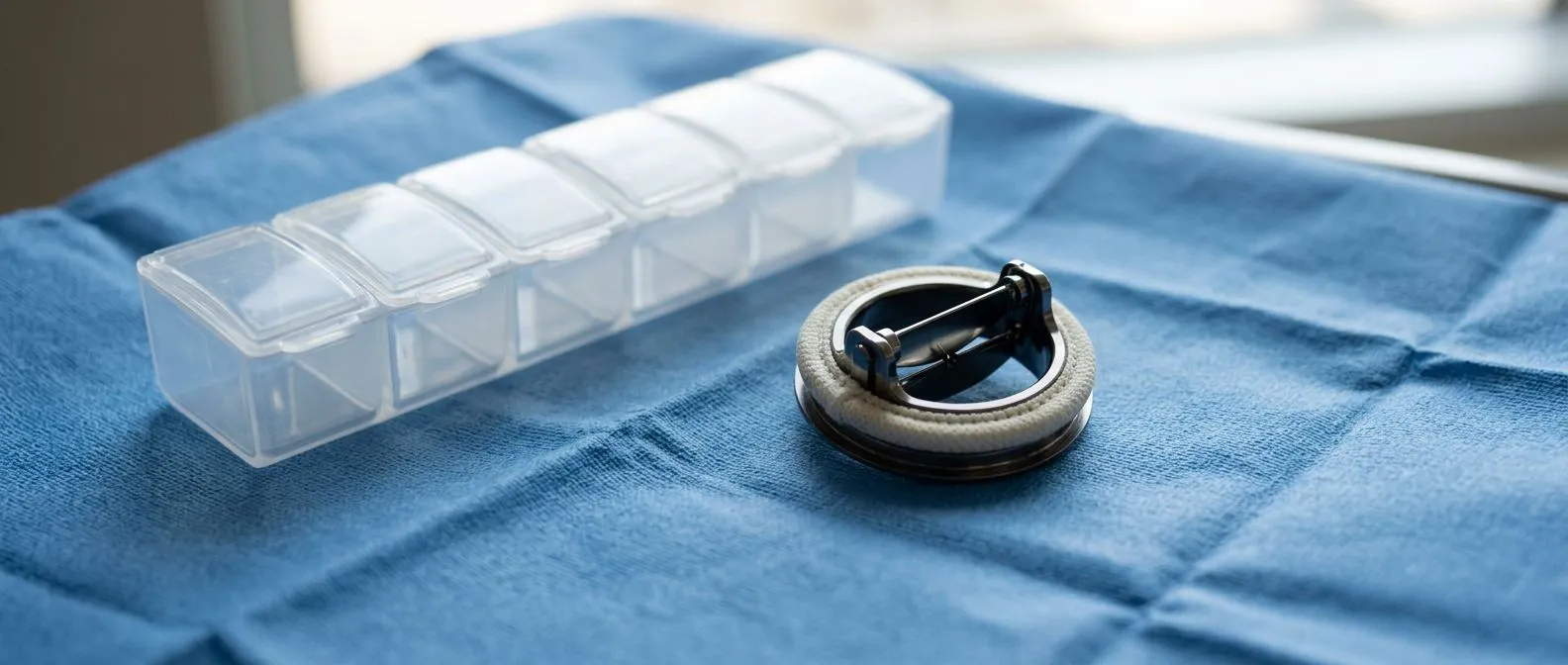
Mechanical or tissue valve. You will discuss two valve types beforehand. Mechanical valves last decades but require lifelong blood-thinning medication. Tissue valves, including the Porcine Valve made from pig tissue, avoid blood thinners in many cases but can degenerate over ten to fifteen years. The right choice depends on your age, your other medications, and your tolerance for anticoagulation.
Transcatheter options. Some patients cannot tolerate open surgery at all. Transcatheter Mitral Valve Replacement delivers a new valve through a catheter, usually from a vein in the groin, without opening the chest — an approach particularly studied in patients with severe mitral annular calcification, where surgical results carry extra risk (1-Year Outcomes of Transcatheter Mitral Valve Replacement in Patients With Severe Mitral Annular Calcification). Our team performs conventional, minimally invasive, robotic and transcatheter procedures, and we recommend the less invasive route only where the evidence supports it for that specific patient.
Mitral Valve Replacement Recovery at Home
The first two weeks. Mitral valve replacement recovery at home begins the moment you leave hospital, and the rules are simple but strict. Walk several times a day, starting with short distances. Do not lift anything heavier than about five kilograms — roughly a bag of groceries — for six weeks, because the breastbone needs protection. Sleep propped up on pillows if lying flat feels strange; many patients find this normalizes within two weeks.
Your incision needs daily attention: keep it clean and dry, and watch for redness, drainage, or increasing pain. Sternal precautions — no pushing up from a chair with your arms, no driving until your surgeon clears you — feel tedious but prevent serious setbacks. Most people can drive again at four to six weeks after open surgery, once they can brake confidently without pain.
Household recovery steps. The practical recovery steps most patients value most are small ones:
- Plan two or three short walks daily and increase them by a few minutes each day.
- Keep everything you need on one floor for the first two weeks if your home has stairs.
- Cook simple meals or accept help; eat enough protein, since wound healing demands it.
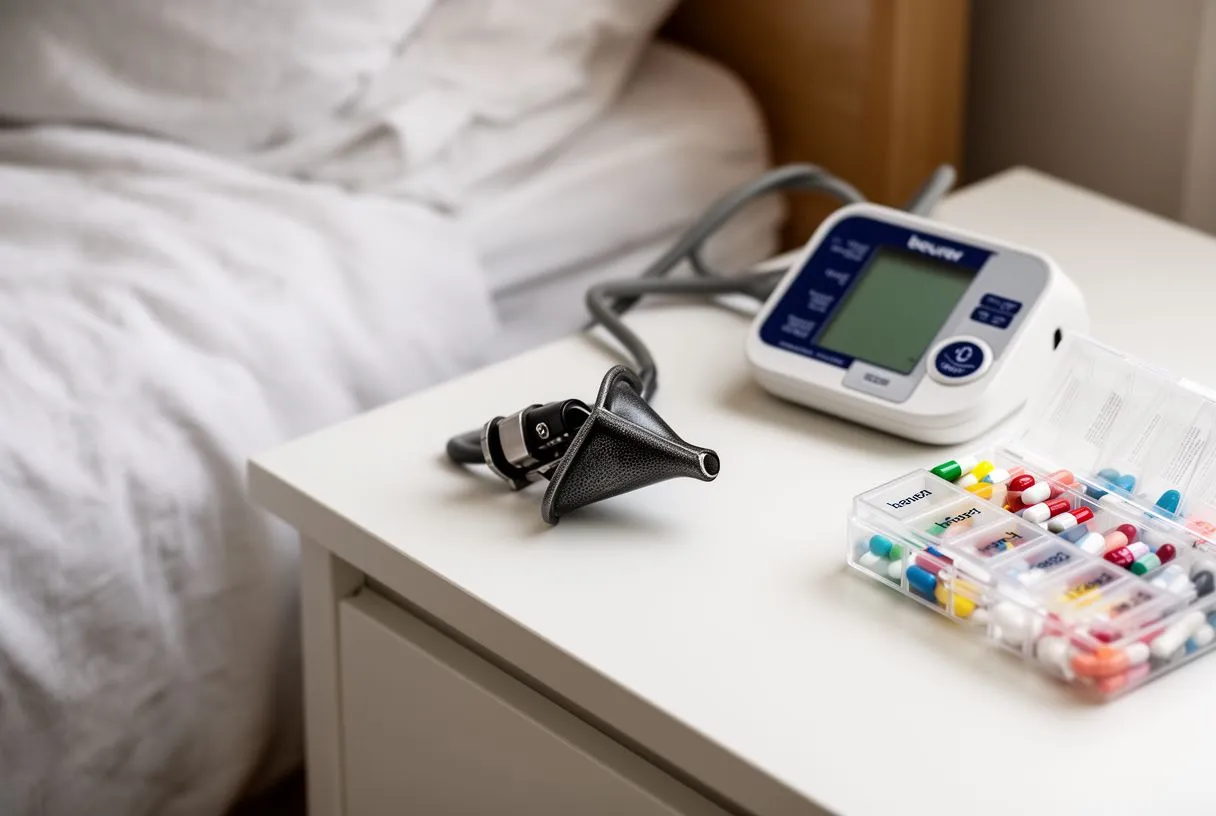
- Set phone alarms so heart medications, especially blood thinners, are never missed.
Recovery at home is also where mood dips happen most. Feeling low, tearful, or unusually irritable in the first weeks is common after any open-heart operation and usually settles — but mention it to your team rather than enduring it silently.
Cardiac Rehabilitation and Exercise After Mitral Valve Replacement
Why rehab matters. Cardiac rehabilitation — a supervised program of monitored exercise, education and support — is one of the best-studied ways to rebuild strength safely after heart surgery. Exercise after mitral valve replacement should begin gently in the first weeks and progress under professional guidance, not by guesswork. A structured program typically runs six to twelve weeks, with sessions two or three times weekly.
What rehab actually involves. You wear a heart monitor while walking on a treadmill or cycling, and therapists adjust the workload to your heart rate. Beyond exercise, rehab covers breathing technique, energy conservation, medication understanding, and the psychological side of recovery. Patients who complete rehabilitation consistently report more confidence and faster return to daily activity than those who go it alone.
Building back strength safely. The general progression runs: walking in weeks one to four, stationary cycling and light resistance in weeks five to eight, and gradually normal activity from month three onward. A follow-up review before higher-intensity exercise is sensible, because the right pace depends on rhythm, valve function and healing on each person's own echo images. Competitive sports or heavy lifting need explicit clearance — never resume them on your own judgment.

Returning to Work After Mitral Valve Replacement
Desk work versus physical work. Returning to work after mitral valve replacement depends heavily on what your job demands. Office-based patients often go back at six to eight weeks, easing in with reduced hours if possible. Jobs involving lifting, machinery, or prolonged standing may need eight to twelve weeks, and some roles require a phased return agreed with your employer and your surgeon.
Plan the return rather than rushing it. A gradual schedule — half days for the first week, then building up — prevents the exhaustion that comes from treating your first day back like any other. Tell your employer you may need short breaks initially; most workplaces accommodate this without difficulty.
Tell your doctor exactly what your job involves, so the clearance and the return-to-work plan match reality instead of a generic template. If your work involves commercial driving, aviation, or heavy certification, mention this early — those licenses often carry their own medical review timelines.
Mitral Valve Replacement Recovery Tips
Small habits, real gains. The most useful mitral valve replacement recovery tips are rarely dramatic. They are about minimizing friction between what your body needs and what your daily life demands. Patients who recover smoothly tend to share the same habits, and none of them cost money.
- Attend every follow-up appointment, even when you feel well — changes on an echocardiogram often appear before symptoms do.
- Check your incision weekly for redness, swelling or discharge, and photograph it if you are unsure it has changed.
- Keep an accurate medication list on your phone; blood thinner dosing errors are among the most preventable complications.
- Sleep when your body asks for it; fatigue is information, not weakness.
- Stop smoking completely — it directly impairs wound and bone healing.
Another practical tip concerns diet. Anemia after cardiac surgery is common and can slow your recovery, leaving you tired when you should be gaining strength; a study of patients undergoing mitral valve replacement found that correcting postoperative anemia through blood-saving technology supported better postoperative outcomes (Correction of Postoperative Anemia in Patients undergoing Mitral Valve Replacement through Blood Saving Technology). Eat iron-rich foods, attend your blood counts, and tell your team if fatigue persists beyond what walking and sleep should fix.
Finally, protect your follow-up imaging. Echocardiograms — ultrasound scans of the heart — at regular intervals let your team confirm the prosthetic valve is working properly long before you could feel a difference yourself.
Mitral Valve Replacement Recovery Complications
What to watch for. Most recoveries are uneventful, but knowing the warning signs of mitral valve replacement recovery complications lets you act early rather than late. In the first weeks, the main concerns are bleeding, wound infection, irregular heart rhythm, and blood clots around the new valve.
Call your surgical team immediately if you develop any of the following:
- Fever above 38°C, especially with chills or night sweats.
- New redness, swelling, or oozing at the incision.
- A racing, skipping, or irregular heartbeat that persists.
- Sudden swelling of a leg, or pain and redness in a calf.
- New or worsening breathlessness, or coughing pink-tinged sputum.
Infection of the new valve. One serious long-term risk is Prosthetic Valve Endocarditis — infection of the artificial valve itself. It is uncommon, but it is the reason dental teams and cardiologists recommend careful dental hygiene and, for many patients, preventive antibiotics before certain dental procedures. Brush thoroughly, keep dental checkups, and tell any treating dentist or doctor that you have a prosthetic valve.
Blood thinner management is the other ongoing responsibility. Too little anticoagulation raises clot risk; too much raises bleeding risk. If you take warfarin, keep your scheduled INR blood tests without exception. Newer anticoagulants are appropriate for some patients and not others — this is a decision to make with your cardiologist, not from a leaflet.

Who Is Not a Candidate for Mitral Valve Replacement?
When surgery is not the answer. Patients often ask, with real worry, who is not a candidate for mitral valve replacement. No single rule excludes anyone; candidacy depends on the balance between the valve disease itself and the risks surgery would add. Frailty with severe weakness of the left ventricle, serious lung or kidney disease, active infection elsewhere in the body, or an extreme surgical risk profile can all shift the recommendation away from open surgery.
Alternatives that exist. Exclusion from open surgery does not mean exclusion from treatment. Transcatheter Mitral Valve Replacement can reach patients who cannot tolerate a sternotomy. Edge-to-edge repair (TEER) for mitral regurgitation — a clip delivered by catheter that pins the leaking leaflets together — suits selected patients with a leaky valve and prohibitive surgical risk. And for many patients, careful medication management is the right plan for now, with surgery revisited if symptoms progress.
How serious is replacing a mitral valve, then? For a suitable candidate at a center that does this regularly, it is a well-established operation with predictable risks — but it is never a casual one, which is exactly why candidacy is assessed person by person. Every case in our practice is reviewed by the multidisciplinary team against international practice guidelines before any recommendation is made, and the patient receives a clear proposal with the alternatives — the final decision is always theirs.
Can You Live a Long Life After Mitral Valve Replacement?
The long-term outlook. Can you live a long life after mitral valve replacement? For most patients, yes — modern prosthetic valves function reliably for years to decades, and many people return to full normal activity, travel, and work. Long-term survival depends less on the valve itself than on the health of the rest of the heart, other conditions such as diabetes or blood pressure, and how consistently the follow-up plan is kept.
Living with your valve. Life with a new valve involves ongoing habits rather than limitations: keeping anticoagulation in range if you have a mechanical valve, taking preventive antibiotics before certain dental work, attending scheduled echocardiograms, and staying active. Mechanical valves and tissue valves each carry trade-offs, and your team should revisit that choice with you if your circumstances change. The same thinking applies elsewhere in valve surgery — Surgical Aortic Valve Replacement, the aortic equivalent, follows similar principles of lifelong surveillance.
When symptoms persist. If breathlessness, palpitations, or fatigue continue well past the expected recovery period, say so plainly at your follow-up. A leaky mitral valve — meaning blood flowing backward where it should not — produces telltale symptoms: shortness of breath on exertion, fatigue, swollen ankles, and sometimes a fluttering or racing heartbeat. These symptoms can also come from other causes, which is why testing, not guessing, settles it. Which heart valve is the hardest to replace is a question patients sometimes ask; the mitral valve is among the most demanding because of its complex anatomy and its relationship to the left ventricle, which is one reason surgical experience matters so much.
Dr Molina trained in cardiothoracic surgery at the Universidad de Guadalajara, and in cardiac, minimally invasive, robotic and structural surgery at the University of Montreal, with further training in structural cardiology and TAVR at CHU Bordeaux — experience we bring to every valve decision, including the choice between repair and replacement.
Recovery from mitral valve replacement follows a path you can map in advance: days in hospital, weeks of protected healing at home, rehabilitation to rebuild strength, and a gradual return to the life you had. The valve choice, the surgical approach, and the pace of recovery are personal decisions, made with a team that knows your heart and your circumstances. If you are weighing your options, start with a conversation rather than a search engine — a consultation with a qualified cardiac team, including a free video consultation where you can discuss your condition and exactly which studies are still needed, is the surest first step. You do not have to decide anything alone.






