

Modified Bentall Procedure: Aortic Root and Valve
Learn how a modified Bentall procedure replaces the aortic root and valve.
If you or a family member have been told you need aortic root surgery, you have probably heard the word "Bentall" and wondered what it means. The modified Bentall procedure is the operation most commonly used today to replace both the aortic root — the first stretch of the body's main artery, where it leaves the heart — and the aortic valve inside it. It is a well-established operation, and in this guide we explain what it involves, why it is recommended, what recovery really looks like, and what questions to ask before you decide.
What Is a Modified Bentall Procedure?
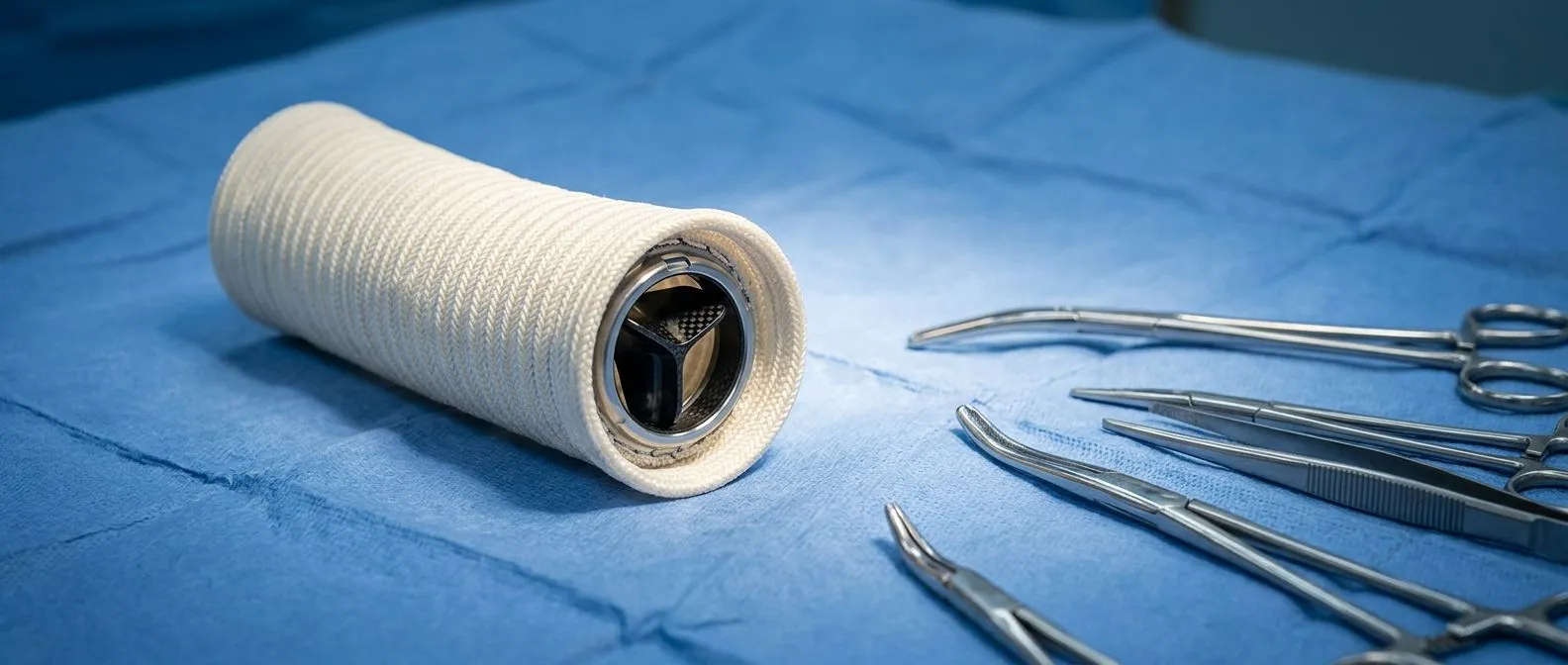
The modified Bentall procedure is an operation that replaces the aortic valve, the aortic root, and a short piece of the ascending aorta with a single artificial tube that contains a valve. This combined device is called a valved conduit. You can read more about what the Bentall procedure involves in What is the Bentall procedure?, but the short version is this: the diseased section of artery is removed, and a new conduit carries blood from the heart onward.
What changed from the original operation? In the original Bentall technique, described in the 1960s, the small coronary arteries that feed the heart muscle were reattached to the conduit as a whole cuff of tissue. The modified version reattaches them individually as small "buttons" of artery, separated carefully from the surrounding tissue. This is why it is sometimes called the "button-Bentall" technique.
Why does the modified button technique matter? Reattaching each coronary artery separately gives a more precise, secure connection and makes it easier to control bleeding around the coronary openings. It also leaves a rim of native tissue around the coronary anastomoses — the surgical joins — which some surgeons use as a "collar" technique to reinforce the connection. The modified Bentall is now the standard approach in most cardiac surgery centres worldwide.
In our practice, when a patient's studies show disease of both the aortic valve and the aortic root, the modified Bentall is often the operation we recommend, but always after the whole team reviews the case together.
When Is a Bentall Procedure Needed?
Aortic root widening. A frequent starting point is aortic root widening — an enlargement of the root, often called an aortic root aneurysm. The aorta is a living elastic tube, and when its wall weakens, it stretches like an overinflated tyre. Guidelines generally advise surgery when the ascending aorta reaches about 5.5 cm, or earlier in some conditions such as a genetic connective tissue disorder or when the valve itself is leaking.
Valve disease inside the root. Sometimes the problem is not the artery alone. The aortic valve may be leaking badly (regurgitation), narrowed (stenosis), or malformed from birth — for example a bicuspid aortic valve, which has two leaflets instead of three. Research on bicuspid valve phenotypes shows that valve disease and aortopathy — disease of the aortic wall — often travel together, and that the patterns differ between men and women (Open Heart, BMJ).
Tearing or dissection. The most urgent reason is an aortic dissection, a true cardiovascular emergency in which the aortic wall splits and blood forces its way between the layers. Other warning signs on imaging include a penetrating aortic ulcer, a deep sore in the aortic wall that can weaken it over time.
In our consultation rooms in Guadalajara, Querétaro and Hermosillo, we take the time to explain in plain words what the studies actually show — the diameter, the valve function, the growth rate — so the patient understands why surgery is being considered at all.

Modified Bentall Procedure vs Standard Bentall
Families often ask how the modified Bentall procedure differs from the standard one, and whether the difference matters for them. In practice, the goals are identical: remove the diseased root, replace the valve, and reconnect the coronary arteries. What differs is the technical detail of how those connections are made.
The coronary reattachment. In the classical operation, both coronary arteries were reattached in a single block of tissue, sometimes along with part of the native aortic wall. That saved time but carried a higher risk of bleeding and late aneurysm formation in the remaining tissue. The modified technique removes almost all the diseased wall and reattaches each coronary artery as a small, clean button.
Bleeding control and durability. The collar-technique variation — leaving a thin cuff of tissue around the coronary openings to buttress the anastomosis — was developed specifically to control bleeding from coronary ostia anastomoses. Surgical groups have published refinements such as the "miniskirt" technique for the same purpose. These are technical evolutions of the same operation, not different operations.
What it means for you. For the patient, the practical difference is usually felt in the operating room, not in the ward: shorter pump times in experienced hands, better haemostasis, and a very low rate of late coronary-related problems. Both versions are legitimate; your surgeon's experience with the technique matters more than the name on the operation note.
How Does the Modified Bentall Procedure Work?
Before the operation. You will have an echocardiogram (an ultrasound of the heart), a CT scan of the aorta, and often a coronary angiogram. These tell the surgical team the size of the root, the function of the valve, and the position of the coronary openings — details that shape the exact plan.
During the operation. The operation is done through the breastbone under general anaesthesia, with the heart-lung machine taking over circulation. The surgeon opens the ascending aorta, removes the diseased valve and root, and sews a valved conduit — often a mechanical valve inside a polyester tube, or a biological (tissue) valve inside one — where the root was. The coronary buttons are then reimplanted into the side of the conduit.
Choosing the valve. A mechanical valve lasts decades but requires lifelong blood-thinning medication. A biological valve avoids long-term anticoagulation but may need reoperation years later. There are also newer options to know about: an intra-annular valve design sits lower within the conduit, and sutureless rapid-deployment valves such as the Lotus Valve have been studied in surgical root replacement — with trials registered on ClinicalTrials.gov exploring how these devices fit into conventional surgery.
- Mechanical conduit: maximum durability, lifelong anticoagulation, best for younger patients.
- Biological conduit: no long-term blood thinner, reasonable durability, better for older patients or those who cannot take anticoagulants.
- Decision is shared: your age, lifestyle, other conditions and preferences all shape which conduit is right for you.
Aortic Root Aneurysm Surgery Options
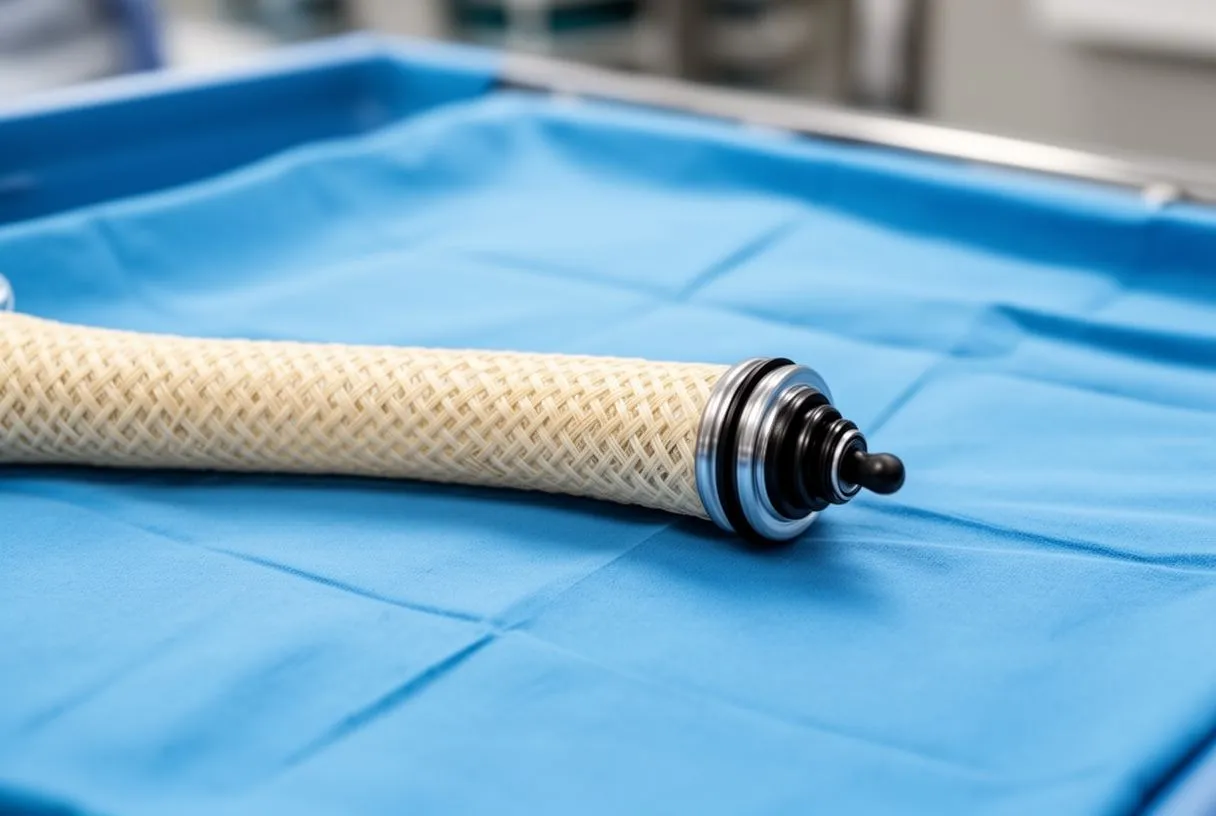
Not everyone with an aortic root aneurysm needs a valve replaced as well. This is where knowing your heart — the aortic valve in particular — becomes genuinely important, because the anatomy decides which operation fits. Broadly, aortic root aneurysm surgery options fall into three groups.
Valve-sparing root replacement. When the valve leaflets themselves are healthy, a valve-sparing root replacement can preserve your own valve. The surgeon replaces the enlarged aortic wall with a tube but keeps the native valve inside it, reimplanting it carefully. It avoids anticoagulation entirely and is often preferred in younger patients with normal leaflets, though it is technically demanding and only suitable when the valve tissue is good.
Root replacement with a stented valve. When the valve is too damaged to save, the modified Bentall with a conventional stented valve inside a conduit is the workhorse solution. A stentless valve — one without a fabric frame — has also been used in root position by some centres, though it is less common today.
Transcatheter and valve-in-valve options. Transcatheter aortic valve implantation — known in most of the Americas as TAVR — treats the valve without open surgery, but on its own it cannot address a diseased aortic root. Where it matters for Bentall patients is later: if a biological valve inside the conduit wears out years down the line, a valve-in-valve transcatheter procedure can often be done through the groin without reopening the chest. Related operations, such as aortic root replacement tailored to the mitral side in patients with mitral valve prolapse, are separate decisions with their own trade-offs.
Our team performs conventional, minimally invasive, robotic and transcatheter procedures, and we recommend the less invasive route only where the evidence genuinely supports it for that specific patient — never as a default.
Modified Bentall Surgery Complications
Bleeding and reoperation. The most common early complication of any aortic root operation is bleeding, which occasionally requires a return to the operating room. The modified button technique was designed in part to reduce exactly this risk around the coronary connections, and the collar-technique variations address it directly.
Heart rhythm and stroke. Temporary rhythm disturbances are frequent and usually settle; permanent pacemaker requirement is uncommon but possible when the surgery sits close to the conduction system. Stroke is a recognised risk of any open heart operation on the aorta — atherosclerotic debris can be displaced during clamping — and its likelihood depends heavily on age, prior stroke, and the condition of the aortic wall.
Other risks to discuss honestly. Kidney injury can occur from the period of low blood pressure on the heart-lung machine. There is also a late risk worth knowing: the science of why root aneurysms form shows unique patterns of elastin degradation — the loss of the elastic fibres that give the aortic wall its strength — in patients with bicuspid valves (Atlantis Press), which is why patients with bicuspid anatomy need lifelong imaging of the whole aorta even after a successful operation.
Every case we operate on is reviewed by the multidisciplinary team against international practice guidelines before a recommendation is made, and the risks are explained openly so the patient can weigh them.
Modified Bentall Procedure Recovery
In the hospital. Most patients wake in intensive care with a breathing tube that is usually removed within hours. You can expect two to five days in hospital in an uncomplicated course, moving from intensive care to a regular ward as drains are removed and you begin walking. How long it takes to recover from aorta repair surgery depends on many factors, but the in-hospital phase is usually the shortest part.
The first six weeks. The breastbone needs about six to eight weeks to knit. During this time you will avoid driving, lifting anything heavier than a few kilograms, and pushing or pulling. A cardiac rehabilitation programme — supervised, progressive exercise — is strongly recommended and measurably improves both recovery speed and long-term confidence.
Back to normal life. Most patients return to desk work around six to eight weeks and to fuller activity by three months. If you have a mechanical valve, the anticoagulation routine becomes part of daily life with regular blood tests. Wound care, sleep changes and emotional swings after open heart surgery are all normal and worth mentioning to your team.

What Is Long-Term Survival After Bentall Surgery?
Life expectancy after aortic root repair surgery is one of the most searched questions in this field, and the honest answer is encouraging when surgery is done at the right time. For elective patients operated before complications occur, long-term survival after the modified Bentall is good, and many published series report survival curves approaching that of matched general populations in experienced centres. The operation itself is durable: the conduit rarely fails, and the main late events relate to the patient's other arteries, blood pressure control, and — with biological valves — eventual valve degeneration.
What protects your outcome? The strongest predictors are timing and follow-up. Elective surgery, done before dissection or severe heart enlargement, carries far lower risk than emergency surgery. Lifelong blood pressure control, never smoking, and periodic imaging of the remaining aorta all matter as much as the operation itself.
Follow-up that never really ends. After a modified Bentall you will typically have echocardiography at intervals, and periodic CT or MRI of the remaining aorta, particularly if you have a bicuspid valve or a connective tissue condition. This is not because the surgery is fragile — it is because the aortic wall condition that caused the first problem can affect other sections.
Patients who do best under long-term surveillance are usually those who keep their follow-up appointments and treat any new chest or back pain as something to report immediately, not to wait out.
Cost is a fair and practical question, especially for international patients. The honest answer is that the price of a modified Bentall varies substantially between hospitals and depends on the type of valve conduit chosen, the length of stay, and whether any complications occur. Rather than quoting numbers, here is what to ask any team you are considering.
Questions that reveal quality. Ask how many aortic root procedures the surgeon and the hospital perform each year. Ask who will be in the operating room and who covers you at night. Ask which valve the team recommends for your specific age and lifestyle, and why. A confident, transparent team will answer all of these without defensiveness.
For patients travelling. Look for a team that offers pre-travel video consultation, clear documentation in English and Spanish, an itemised quote covering surgeon, hospital, conduit and expected stay, and a defined follow-up plan for when you return home. Ascending aortic aneurysm treatment and root surgery are among the most plan-able operations in cardiac surgery when they are elective — planning is where you should invest your time.
- Video consultation first: share your imaging and history before booking travel, so nothing is wasted.
- One clear proposal: the recommended operation, the alternatives, and the risks of each — in writing.
- Second opinions are normal: any team worth choosing will welcome another expert reviewing your case.
Talking to a Cardiac Surgeon About Your Options
Facing aortic root surgery is daunting, but it is one of the best-studied, most refined operations in all of cardiac surgery. The modified Bentall procedure replaces the diseased root and valve with a durable conduit, protects the coronary arteries through careful button reimplantation, and — when done electively, at the right time, by an experienced team — offers excellent long-term prospects.
If surgery has been proposed for you or someone you love, the most useful next step is not more internet searching. It is a conversation with a qualified cardiac team who can look at your own images, your own valve, and your own circumstances. Bring every study you have, ask about valve-sparing alternatives and TAVR, and ask what the evidence says for your specific case.
We are a multidisciplinary team of cardiac surgeons led by Dr Alejandro Molina, and the first contact is a free video consultation: we get to know you, talk through your condition, and tell you exactly which studies are still needed so no unnecessary ones are ordered. We encourage second opinions and treat seeking one as a normal part of deciding about heart surgery — the final decision is always yours.






