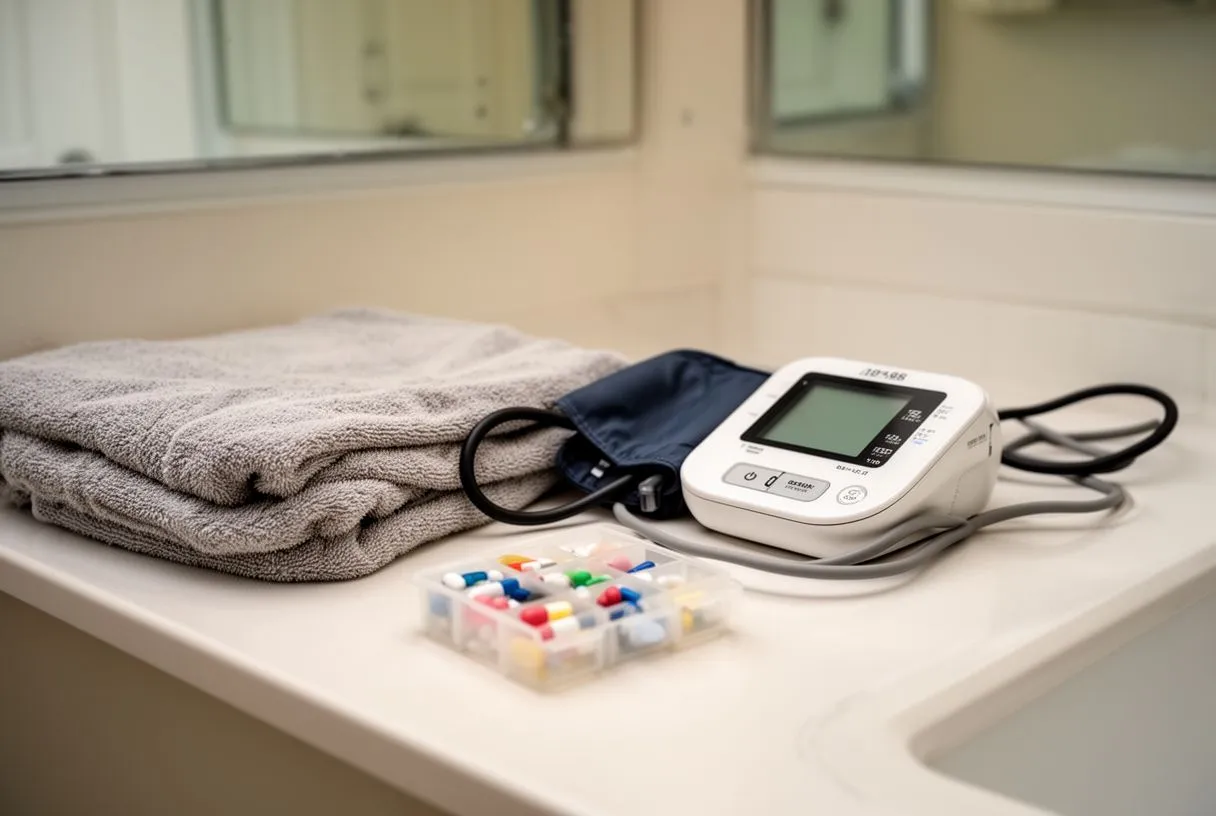
Night Sweats and Heart Infection: A Sign of Endocarditis
Night sweats endocarditis often reveal a hidden heart valve infection.
Drenching sheets at 3 a.m. are easy to blame on a heavy duvet or a stressful week. But when night sweats endocarditis is the true explanation, the sweating is only the surface of a deeper problem: an infection settling on the inner lining of the heart or on one of its valves. Infective endocarditis, as doctors call it, is uncommon, yet it can damage a valve quickly and it rarely announces itself loudly. Recognising the pattern — night sweats paired with fever, fatigue and unexplained weight loss — can be the difference between simple antibiotic treatment and emergency valve surgery.
What Is Endocarditis and Why Night Sweats Happen
Endocarditis is an infection of the heart's inner lining. Bacteria — occasionally fungi — travel through the bloodstream and attach to the endocardium, the smooth membrane that lines the heart's chambers and covers the valves. Damaged or artificial valves are the most likely landing spots, because rough or foreign surfaces give microbes something to cling to. Once attached, they form a vegetation: a clump of bacteria, fibrin and platelets that can erode valve tissue or break off and travel to other organs.
The night sweats connection is straightforward once you see the whole picture. The body responds to the infection with a persistent, low-grade fever, and the fever spikes often peak overnight. As the immune system battles the bacteria, your temperature rises and falls in cycles, and each drop in temperature triggers heavy sweating as the body tries to cool down. The result is the classic endocarditis pattern: you wake soaked, you feel feverish in the evening, and this repeats for days or weeks.
It is worth knowing that endocarditis can develop silently even in people who feel otherwise well. Some patients have no dramatic fever at all — just chills, aching joints and night sweats that they attribute to overwork. That quiet presentation is exactly why this condition is so often diagnosed late.
Why Are Night Sweats a Red Flag for Heart Infection?
Night sweats themselves are common; the pattern is the warning. Most episodes of sweating at night come from an overheated bedroom, menopause, alcohol before bed, or anxiety, and they are harmless. The red flag is sweating that is drenching — wet enough to soak sheets and require changing — happens repeatedly without an obvious cause, and comes with other symptoms such as low-grade fever, unexplained fatigue or losing weight without trying. Doctors call this combination "B symptoms," and it always deserves investigation.
Why is this combination worrying? Because it points to a systemic process: something inside the body driving the immune system continuously. Infections, certain cancers and inflammatory diseases produce this pattern, and infective endocarditis is one of the classic infectious causes. A person with endocarditis night sweats may also notice small dark lines under the fingernails, painless red spots on the palms or soles, or tiny hemorrhages in the eyes — all signs of the vegetations shedding debris into the circulation.
Another reason night sweats matter is timing. Endocarditis tends to develop over weeks. If you catch it during that window, antibiotics often resolve the infection and the valve is preserved. If it goes unrecognised, the valve can be destroyed, heart failure can develop, and emergency surgery becomes the only option. Sweating that persists more than a couple of weeks deserves a doctor's attention, not just a lighter blanket.
What Are the Main Causes of Night Sweats?
The causes range from harmless to serious. Before assuming the worst, it helps to see the full landscape. When people ask what causes night sweats, the honest answer is that dozens of conditions can, and heart infection is only one of them — though one of the more urgent.
- Menopause and hormonal changes: hot flashes at night are the most frequent cause in women over 45, driven by falling estrogen levels.
- Infections: tuberculosis, HIV, abscesses and infective endocarditis all classically produce fever and night sweats.
- Medications: antidepressants, diabetes drugs, steroids and fever-reducing medicines taken at the wrong time can trigger sweating.
- Anxiety and stress: the nervous system can activate sweat glands overnight during periods of chronic worry.
- Other conditions: acid reflux, sleep apnea, thyroid problems, some cancers such as lymphoma, and chronic diseases like kidney disease.
The way doctors narrow this down is simple: they listen to the story. A 52-year-old woman with months of hot flashes and a normal exam is very different from a person with a mechanical heart valve who has two weeks of fevers and chills. If you have any history of valve disease, a prosthetic valve, congenital heart disease or a recent dental or medical procedure, mention the night sweats immediately — that history changes the priority of the workup.
One practical note: alcohol, spicy food and a warm bedroom can cause one-off sweaty nights that mean nothing. Infection-related sweating comes with the fever cycle, and it does not stop when you change the thermostat.
Endocarditis Symptoms: Night Sweats, Fever and Chills
The symptom picture builds gradually. Infective endocarditis symptoms usually appear over days to weeks, and the full set is worth knowing because no single symptom is decisive on its own:
- Fever with chills and drenching night sweats — the triad that most often sends patients to a doctor.
- Persistent fatigue and weakness — a flu-like tiredness that rest does not fix.
- Unintentional weight loss — the body burns enormous energy fighting a chronic infection.
- Small skin or nail changes — tiny red or purple spots, splinter-like lines under nails, or painful nodules on the fingertips.
- New or changed heart murmur — the sound the valve makes when infection has altered it.
- Shortness of breath or chest discomfort — signs the valve is starting to leak or fail.
If the infection travels, symptoms can appear far from the heart. A stroke in a young person, a painful swollen spleen, or back and joint pain can all be the first visible sign of endocarditis, because fragments of vegetation lodge in small vessels elsewhere. This is why an unexplained fever lasting more than a week — especially in someone with a known heart condition — should prompt blood cultures before any antibiotics are started.
People who have had endocarditis once often describe the symptoms retrospectively as "flu that never ended." That description is useful: if a flu-like illness has lasted more than ten days without improving, and you have any heart risk factors, it is reasonable to ask your doctor specifically about endocarditis and request blood cultures.
How Endocarditis Is Diagnosed
Blood cultures come first. Diagnosis rests on two pillars: demonstrating bacteria in the bloodstream and showing the infection on the heart itself. Blood cultures are drawn on separate occasions before any antibiotics are given, because antibiotics in the system can make the bacteria invisible. The laboratory then grows the organism to identify it and determine which antibiotics will actually kill it.
The second pillar is imaging. An echocardiogram uses ultrasound to look at the valves, and it can show vegetations, abscesses and leaks. A transthoracic echo is the quick, external scan; a transesophageal echo — a thin probe passed into the esophagus — gives a much closer view and is often needed when the first scan is normal but suspicion remains high. For patients with prosthetic valves or suspected complications, computed tomography and even nuclear imaging can add detail.
Doctors combine these findings with the patient's history using standardised criteria (the modified Duke criteria), which weigh blood culture results, echo findings, fever and other evidence. In our practice, every suspected case of endocarditis is reviewed by the multidisciplinary team against international guidelines before any treatment plan is proposed, because the diagnosis drives everything that follows — antibiotics alone, surgery during treatment, or surgery as an emergency.
We also make a point of explaining the studies in plain words during the consultation, so patients understand exactly what the echo shows and why a particular route is being recommended before they commit to anything.
Endocarditis Antibiotic Treatment and Recovery
Long-course intravenous antibiotics are the backbone. Endocarditis antibiotic treatment typically means four to six weeks of antibiotics given through a vein, first in hospital and often continued at home through a catheter. The duration exists for a reason: the bacteria live inside the vegetation, a protected structure where antibiotics penetrate slowly, so the course must be long enough to sterilise it completely.
Recovery is staged rather than sudden. During the first weeks, patients have regular blood tests to confirm the bacteria are clearing and to monitor kidney and liver function. Heart rhythm and valve function are watched with repeat echocardiograms. Once the course finishes, follow-up echoes continue for months, because a damaged valve can leak or deteriorate even after the infection is gone. Many people return to normal activity, but the schedule is individual and patience pays off.
Sometimes surgery is required during treatment rather than after — for example, when a valve suddenly fails and causes heart failure, when an abscess forms, when infection persists despite the right antibiotics, or when fragments keep travelling to other organs. The surgical team removes infected tissue and rebuilds or replaces the valve. Deciding the timing of that surgery is one of the most important judgement calls in the whole illness, and it should never be made by one person alone.
Patients treated early with antibiotics alone often make a full recovery with their own valve intact. That is the strongest argument for taking night sweats and persistent fever seriously rather than waiting them out.
When Heart Valve Surgery Becomes Necessary
Not every case needs surgery, but a significant number do. Surgery is considered when the valve has been badly damaged, when infection is not controlled, or when complications threaten other organs. The operation itself involves removing infected tissue, repairing or replacing the valve, and sometimes reconstructing nearby structures such as the aortic root — the region where the aorta meets the heart. Choice of prosthesis (biological versus mechanical) depends on age, lifestyle and the specifics of the infection.
The approaches available today are broader than most patients realise. Conventional open surgery through the breastbone remains the standard in complex cases, but minimally invasive and robotic techniques can reach some valves through small incisions, and transcatheter options — including TAVR for the aortic valve — exist in carefully selected situations. We recommend the less invasive route only where the evidence supports it for that specific patient, and we present every alternative with its trade-offs, because the final decision always belongs to the patient.
It helps to know who is doing the operation. Dr Molina trained in cardiothoracic surgery at the Universidad de Guadalajara, in cardiac, minimally invasive, robotic and structural surgery at the University of Montreal, and in structural cardiology and TAVR at CHU Bordeaux; our team also trained at Jena, Bad Berka and Buffalo. Dr Molina performed the first robotic mitral valve repair in the Ángeles Health System and the first robotic heart surgery in Guadalajara — experience that matters when an infected, fragile valve demands precise handling.
For patients travelling from abroad for care, the first step is usually simple: a free video consultation in which we get to know the patient, review existing studies, and say clearly which additional tests are genuinely needed so that no unnecessary ones are ordered. A face-to-face visit at our consulting rooms in Guadalajara, Querétaro or Hermosillo follows only when the patient decides to proceed.
Prosthetic Valve Endocarditis Signs to Watch
An artificial valve is a lifelong commitment to vigilance. Prosthetic valve endocarditis — infection of a replacement valve, whether mechanical or biological — is less common than infection of native valves but more dangerous, because the infection can spread to the ring of tissue (the sewing ring) that holds the valve in place, or form abscesses beside it. Anyone with a prosthetic valve should know the signs cold: new fever, new night sweats, unexplained fatigue, or a new heart murmur.
Diagnosis can be harder in these patients because echo images are partly blocked by the artificial materials, which is why transesophageal echo is almost always used, and why CT may be added. Occasionally infection reaches devices rather than valves themselves. Cases have been reported in which bacteria colonised a coronary stent — the small metal scaffold placed to open an artery — leading to a very late stent infection with a fistula forming between the coronary vessel and the heart chamber, together with infective endocarditis; this rare scenario was described in detail in a published case report (JACC Case Reports). While uncommon, it illustrates that any implanted heart device can, in principle, become a foothold for infection.
Patients with prosthetic valves or prior device implantation should know that any fever lasting more than a few days, or any return of night sweats and chills, is a reason to seek medical attention promptly — not to wait for the next appointment. Early prosthetic valve infections discovered in time can often be treated, but delay turns a treatable infection into an emergency reconstruction.
Good dental hygiene deserves special mention here. Dental procedures are one of the most common ways bacteria enter the bloodstream in valve patients, and regular dental care is one of the simplest, most effective protections available.
Endocarditis Prevention After Cardiac Procedures
Prevention is practical, not dramatic. Guidelines from cardiology societies worldwide define which patients should receive preventive antibiotics before certain procedures, and the list of procedures has narrowed over the years as evidence accumulated. Patients at highest risk — those with prosthetic valves, previous endocarditis, certain congenital heart conditions or transplanted hearts with valve disease — are the group for whom antibiotic prophylaxis before dental work remains standard.
Beyond antibiotics, everyday habits do most of the work. Keep teeth and gums healthy and see a dentist regularly. Treat skin infections and wounds promptly. Avoid unsterile body piercing or tattooing. Inform every doctor and dentist that you have a valve problem before any procedure, however minor. None of this is burdensome, and together it dramatically reduces the chances that bacteria reach your heart in dangerous numbers.
For patients recovering from cardiac surgery itself, wound care matters as much as the operation. Written instructions on wound hygiene, signs of infection to watch for, and exactly when to call are valuable, because the weeks after surgery are a window when the body is more vulnerable. We also actively encourage second opinions, treating them as a normal part of deciding about heart surgery rather than a slight to the treating team.
The takeaway is modest but powerful: endocarditis prevention is mostly about knowing your own risk category and acting on it consistently. If you are unsure which category you fall into, that is precisely the question to bring to a cardiac consultation.
When to See a Cardiologist for Night Sweats
The decision rule is simple and worth memorising. See a doctor when drenching night sweats persist more than two weeks without an obvious cause, when they come with fever, chills, fatigue or weight loss, and urgently — the same day, or to an emergency department — when they appear with breathlessness at rest, chest pain, fainting, signs of stroke, or new confusion. These emergency signs suggest the valve is failing or debris is travelling, and delay carries real cost.
For most people, the first stop is a general physician, who can order blood cultures, an initial echocardiogram and basic labs, and refer onward if suspicion grows. But if you already carry a diagnosis of valve disease, have a prosthetic valve, have survived rheumatic heart disease or a congenital heart condition, or have had a coronary stent placed, going directly to a cardiologist is reasonable. Patients sometimes delay because they fear they are overreacting; with a possible heart infection, asking is always the right call.
When night sweats endocarditis is the concern, the questions to bring are concrete: Should I have blood cultures before any antibiotics? What did the echocardiogram show about my valves? Do my risk factors place me in the high-prevention group? Am I a candidate for a less invasive approach if surgery is needed? In our consulting rooms in Guadalajara, Querétaro and Hermosillo, we take the time in the first consultation to answer exactly these questions, in plain language, before any decision is made.
The safest move you can make today, if night sweats and fevers describe your last few weeks, is to book an evaluation with a qualified cardiac team rather than self-diagnose. Endocarditis caught early is usually treatable; caught late, it changes lives. Bring your questions, bring your history, and let a specialist team determine whether your sweating is simply menopause or the first signal of a heart infection that deserves immediate attention.