

Robotic Cardiac Surgery: Benefits and Recovery
Explore robotic cardiac surgery benefits including faster recovery, smaller incisions and less pain.
Robotic cardiac surgery is one of the most important shifts in heart care of the last two decades, and many patients are only now hearing about it. If you or a family member has been told you need a valve repair, a bypass or another heart operation, the word "robot" can sound alarming. In practice, it means the surgeon sits at a console a short distance from the operating table and controls instruments with greater precision than the human hand allows, through small incisions instead of opening the chest. This guide explains what robotic cardiac surgery actually involves, the robotic cardiac surgery benefits that matter to patients, what recovery really looks like, and the honest limitations you should weigh before deciding. Nothing here replaces a conversation with a qualified team, but it will help you ask better questions.
What Is Robotic cardiac surgery?
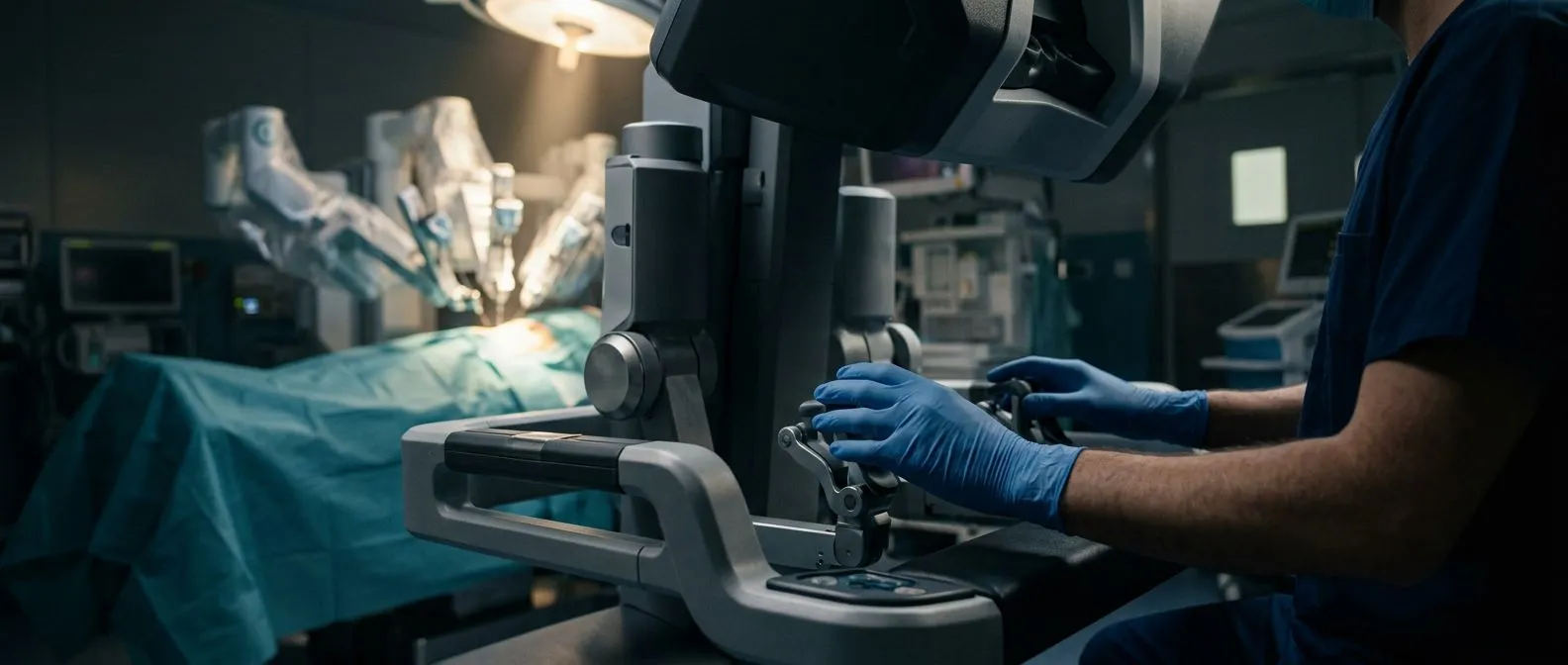
Robotic cardiac surgery is heart surgery performed with a robotic surgical system rather than directly through a large chest opening. Instead of splitting the breastbone — the sternotomy used in traditional open-heart surgery — the surgeon makes a few small incisions, usually between the ribs. Long, thin instruments and a high-definition 3D camera are placed through these openings. The surgeon does not operate by hand at the bedside; he or she sits at a console and translates hand movements into scaled, tremor-filtered motions of the instruments inside the chest.
Why the word "robot" can mislead. The machine does not decide anything and does not move on its own. Every motion comes from the surgeon in real time, much like remote-controlled instruments. The robot's role is to give the surgeon wrists inside the chest that bend and rotate beyond what human wrists can do, plus magnified vision of structures like the mitral valve leaflets. The published overview of robotic applications in cardiac surgery describes this as an enabling technology: the surgeon's judgement drives the operation, and the platform extends reach and precision.
Which operations can be done robotically? The most established robotic cardiac procedures are mitral valve repair, some tricuspid procedures, septal defect closures, myxoma (benign heart tumour) removal, and selected coronary bypass operations. In our practice, robotic surgery is one of several approaches we offer for valve disease, coronary disease and structural heart conditions, and we recommend the less invasive route only where the evidence supports it for that patient. Some hearts are better served by a conventional approach, and saying so plainly is part of good counselling.
What Are the Main Robotic Cardiac Surgery Benefits?
The robotic cardiac surgery benefits that matter most to patients fall into three groups: less physical trauma from the incision itself, a faster and more comfortable recovery, and cosmetic results that matter more to people than surgeons once assumed. These minimally invasive cardiac surgery advantages are real and well documented for the right candidate, but they depend heavily on careful patient selection — the same operation done robotically on the wrong patient can be worse than done conventionally.
- Less blood loss and trauma: small incisions between the ribs avoid cutting the breastbone, so there is less tissue damage and usually less bleeding during the operation.
- Shorter hospital stay: many patients who would spend five to seven days in hospital after open-heart surgery go home sooner after a robotic procedure, because there is no sternum to heal.
- Lower infection risk at the incision: a sternal wound infection is one of the most feared complications of open-heart surgery; smaller incisions reduce that exposure.
What patients notice first. Patients consistently report that the early days after a robotic operation feel different from what friends described after open-heart surgery: less pain heart surgery options mean fewer strong painkillers, easier breathing exercises, and the ability to get out of a chair and walk the corridor without bracing the chest. Because the breastbone is intact, there are also no sternal precautions — the six-week rule about not lifting, pushing or driving that every sternotomy patient must follow.
In our consultations we take the time to explain what the studies actually show, in plain words, before any recommendation is made — because the honest answer is that these advantages apply to selected patients, not everyone. Our multidisciplinary team reviews every case against international practice guidelines before proposing an approach, and the European Society of Cardiology publishes the guideline framework many teams work from when weighing minimally invasive versus conventional options.
What Is Robotic Surgery and How Is It Used on the Heart?
When people ask "what is robotic surgery?", they are usually referring to procedures performed with a robotic surgical system. In cardiac care, robotic heart surgery typically means robotic mitral valve repair or another intracardiac procedure carried out through a few ports on the right side of the chest. The system has been in clinical use since the late 1990s, and cardiac applications were among its early development areas alongside urology and gynaecology.
What happens in the operating room. A full team is present, exactly as in open-heart surgery: an anaesthetist, a perfusionist who runs the heart-lung machine when it is needed, a surgical assistant at the bedside, and the console surgeon. The heart is usually stopped and protected with cardioplegia — a solution that preserves the heart muscle — just as in conventional surgery. The difference is not the heart-lung machine or the cardiac arrest; it is the access. Robotic heart surgery recovery therefore follows the same internal healing timeline as any heart operation, with a faster external recovery.
Dr Molina trained in robotic surgery at the University of Montreal and performed the first robotic mitral valve repair in the Ángeles Health System as well as the first robotic heart surgery in Guadalajara — experience that matters, because the console learning curve is one of the steepest in surgery. When you ask our team about robotic heart surgery recovery, we can walk you through real expectations week by week rather than brochure promises.
Robotic Surgery vs Open Heart Surgery: Which Is Right for You?
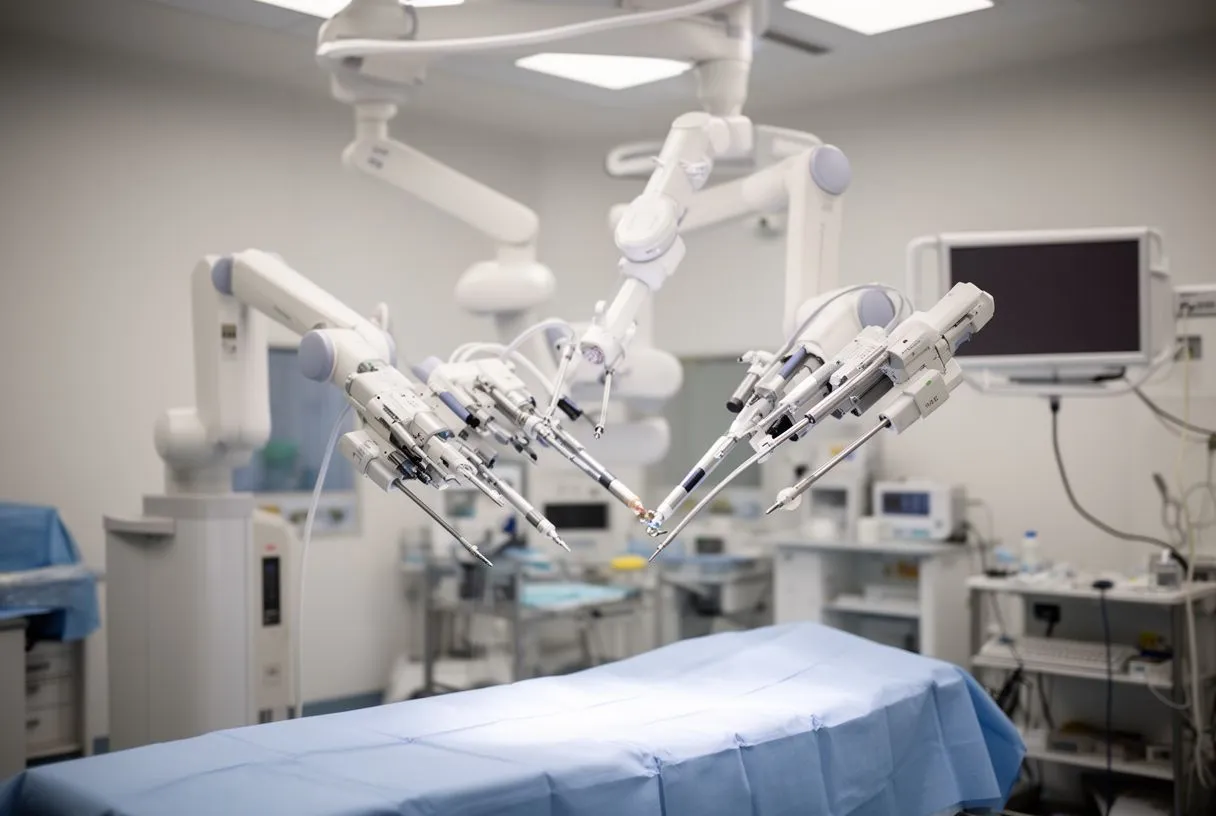
Comparing robotic surgery vs open heart surgery is less about which is "better" and more about which fits your anatomy, your disease and your overall health. Open-heart surgery through a sternotomy remains the gold standard for many situations — complex multi-vessel bypass, emergency operations, calcified vessels, and patients who cannot tolerate single-lung ventilation, which robotic procedures require. Robotic access shines for isolated mitral valve disease, small septal defects and selected other targets in younger or physiologically robust patients.
Key trade-offs to discuss with your surgeon. Both approaches are done under general anaesthesia and both carry real risk. A balanced comparison usually comes down to these points:
- Access and visibility: a sternotomy gives the surgeon direct vision and touch; robotic surgery gives magnified vision and instrument dexterity but no tactile feedback through the instruments.
- Operative time: robotic cases can take longer, especially early in a team's experience; ask how many cases your team performs per year.
- Conversion: in a small percentage of robotic cases the team converts to open surgery if bleeding or anatomy demands it — this is a safety mechanism, not a failure.
In our practice, the discussion of robotic surgery vs open heart surgery happens with the whole picture on the table: every case is reviewed by the multidisciplinary team against international practice guidelines before a recommendation is given, the patient receives a clear proposal with the alternatives, and the final decision is always theirs. We also encourage second opinions and treat seeking one as a normal part of deciding about heart surgery — no reputable team should discourage that.
What Are the Robotic Heart Valve Repair Benefits?
The mitral valve — the valve between the left atrium and left ventricle — is the structure where robotic heart valve repair benefits are most clearly established. Degenerative mitral regurgitation, where the valve leaflets flop backward and leak, is often caused by elongated or ruptured chords, the fine threads that tether the leaflets. Robotic access through the right chest gives the surgeon an excellent view of these leaflets, and repair techniques through small incisions mirror the techniques used through a sternotomy.
Why repair beats replacement when it is possible. Preserving the patient's own valve tissue avoids the lifelong trade-offs of an artificial valve: a mechanical valve requires blood thinners forever, while a tissue valve wears out and may need reoperation. Surgeons have long shown that a durable mitral repair in expert hands offers excellent long-term function, and robotic access lets that repair be delivered without splitting the breastbone.
Who is a candidate? Ideal candidates have degenerative disease in a repairable pattern, acceptable lung function to allow single-lung ventilation, no severe chest wall deformity, and no extensive peripheral artery disease that would block the catheter routes. Cardiac robot assisted surgery outcomes for mitral repair in experienced centres show repair rates and durability comparable to conventional surgery, which is why the debate today is about access and selection rather than whether the repair itself is valid. In our team's experience, the patients who do best are those whose valve anatomy, imaging and overall health we can review together before committing to an approach.
What Are the Robotic CABG Surgery Benefits and Long-Term Results?
Coronary artery bypass grafting — CABG, the operation that reroutes blood around blocked coronary arteries — is done robotically less often than valve repair, but the robotic CABG surgery benefits are meaningful for selected patients. The main approach is a robotic beating-heart bypass using the left internal thoracic artery, the "gold standard" graft to the front of the heart, harvested through small ports without opening the chest. Some centres combine this with stents to the other vessels in a hybrid strategy.
What is the long-term success rate of robotic bypass surgery? This is one of the most searched questions in the field, and the honest answer is that results depend on the graft, not the incision. A well-placed left internal thoracic artery graft — the artery almost always used in robotic bypass — is known to stay open and functional for many years in the great majority of patients, which is precisely why it is preferred in modern guidelines regardless of access method. What patients should ask is not "robotic or not?" but "which graft, placed by whom, with what published patency in this team's hands?"
In our team, coronary cases are planned graft by graft: we review the angiogram with the patient, explain which vessels need grafting and which technique suits each one, and say openly when a conventional approach gives better coverage. For patients facing decisions about a single-vessel lesion or a hybrid plan, that transparency about long-term graft durability matters more than any marketing claim about small incisions.
What Are the Downsides of Robotic Heart Surgery?
Every informed patient should understand the disadvantages of robotic heart surgery before choosing it, and any team that presents it as strictly superior is not being straight with you. The downsides fall into practical, technical and physiological categories, and most are manageable — but they are real.
What are the disadvantages worth weighing? The most cited ones are longer operative times in less experienced hands, the absence of tactile feedback (the surgeon sees but cannot feel tissue resistance through the instruments), the requirement for single-lung ventilation, which excludes some patients with lung disease, and the potential need to convert to an open operation if bleeding or unexpected anatomy appears. There is also a cost dimension: robotic systems are expensive to buy and maintain, which can raise the cost of the procedure where it is not offset by shorter stays.
The learning curve question. Surgeon experience is perhaps the single biggest variable in robotic outcomes. A team that performs robotic cases regularly will have shorter operations and smoother results than a team that does a handful a year. When you evaluate a programme, ask directly how many robotic cardiac cases they perform annually and what their conversion rate is. In our practice, patients who ask about downsides are patients who are thinking carefully — and we answer every question before any decision, including the ones that make our less invasive option look less convenient.
Is Robotic Heart Surgery Safe?
The question "is robotic heart surgery safe?" deserves a clear, evidence-based answer rather than reassurance. In experienced centres, robotic cardiac procedures show safety profiles comparable to conventional surgery for the right candidates, with the specific advantage of fewer sternal wound complications and less blood loss. The safety of the procedure rests on three pillars: proper patient selection, a team's accumulated experience, and the readiness to convert to open surgery when needed.
How selection drives safety. Not every heart is a robotic heart. Patients with severe lung disease, severe peripheral artery disease, chest deformities, or unstable haemodynamics that require emergency surgery are generally better served by conventional approaches. Making the "wrong route" choice is where the main safety risk lives — which is why rigorous preoperative assessment, including imaging of the peripheral arteries and lungs, is standard practice in established programmes. Published surgical literature, including the IntechOpen overview of robotic applications in cardiac surgery, consistently frames the technology as safe when the patient and the disease are matched to the platform.
Safety is also a team property. A robotic cardiac operation involves the console surgeon, the bedside assistant, the perfusionist and the anaesthetist working as a unit, and the team's collective experience matters as much as the lead surgeon's. I have seen how much the bedside assistant's skill shapes the flow of a robotic case — and in our team, every case is reviewed collectively before we recommend anything, so the plan is never one person's opinion alone.
How Long Does It Take to Recover From Robotic Heart Surgery?
Recovery time is where robotic cardiac surgery changes patients' lives most visibly. If you are wondering how long it takes to recover from robotic surgery, the honest framing is this: the internal healing — the valve repair, the graft, the heart tissue itself — follows the same biological timeline in every approach. What shortens is the external recovery, because there is no divided breastbone to heal.
Robotic heart surgery recovery time, week by week. Patients who compare robotic heart surgery recovery time with conventional open-heart surgery usually see a compressed schedule: many robotic valve patients are discharged from hospital in fewer days than sternotomy patients, walk comfortably within days, and return to desk work in a few weeks rather than the two to three months a sternotomy typically demands. Driving, lifting and normal activity resume earlier because there are no sternal precautions to respect.
Typical recovery milestones for a robotic heart valve repair include:
- First days: walking in the corridor, breathing exercises, and pain managed largely with oral medication rather than continuous strong painkillers.
- Early weeks: gradual return to daily activities and, once the care team agrees, driving — often weeks sooner than after a sternotomy.
- Later weeks to a couple of months: return to desk work and progressively normal life, with cardiac rehabilitation shaping the longer-term strength and fitness plan.
Recovery is not the same for everyone. Age, lung health, diabetes, overall fitness and the complexity of the operation all move the timeline. What we tell our patients is that recovery after heart surgery with smaller incisions is faster and more comfortable for most people, but it still requires commitment: breathing exercises, early mobilisation, wound care and cardiac rehabilitation are not optional extras. When our patients ask about recovery, we map the milestones to their own lives — work, family, travel — rather than quoting averages.

Choosing a Robotic Heart Surgery Team in Mexico: What to Ask
For patients considering care in Mexico, the question of the best hospital for robotic heart surgery is best answered by evaluating the team rather than the building. A robotic cardiac programme needs four things: a properly maintained robotic platform, a console surgeon with substantial case volume, a bedside team that has grown with the programme, and a system for selecting patients honestly. When these align — as they do in the best robotic cardiac surgery programmes in Mexico — the experience and outcomes can match international standards.
Questions to ask any team you consult. Bring these to your first appointment, whether it is with us or another team:
- Volume: How many robotic cardiac cases does your team perform per year, and what is your conversion rate to open surgery?
- Selection: Based on my imaging, am I a candidate for the robotic approach — and if not, what is the better route and why?
- Outcomes: What are your published or documented cardiac robot assisted surgery outcomes for the specific operation I need?
How we work with patients. Our first contact is a free video consultation: we get to know the patient, talk through the condition, and say which studies are still needed so no unnecessary ones are ordered — a face-to-face visit at our consulting rooms in Guadalajara, Querétaro or Hermosillo follows when the patient decides to go ahead. We encourage second opinions and treat seeking one as a normal part of deciding about heart surgery. Any cardiac robot surgery consultation should leave you with a clear proposal, the alternatives, and enough time to decide — never pressure and never a single option presented as the only one.
In closing, robotic cardiac surgery benefits patients most when it is matched to the right patient, the right disease and the right team. The smaller incisions, shorter hospital stay and faster return to normal life are real advantages; the longer operative learning curve, the need for careful selection and the possibility of conversion are real limitations. The heart inside you heals on the same timeline either way — the difference is the journey to get there. If you are facing a valve repair, a bypass or another heart operation, the most valuable next step is not more internet research but a conversation with a qualified cardiac team that can review your specific situation. We would be glad to talk it through with you, and we will always tell you honestly when the robotic approach is — and is not — the right one for you.






