

Supra-Annular Valve Design for Small Aortic Roots
Supra-annular valve small annulus solutions prevent patient-prosthesis mismatch and improve blood flow.
When a patient is told they need a new aortic valve, one of the first technical questions their surgical team asks is a surprisingly simple one: how much room is there to work with? A narrow aortic annulus — the ring of tissue where the valve sits — changes the whole conversation. In that situation, choosing a supra-annular valve for small annulus anatomy can be the difference between a valve that flows well for decades and one that quietly strains the heart. This guide explains what these valves are, why annulus size matters, and what your realistic options are.
What Is a Supra-Annular Valve and Why Does Annulus Size Matter?
The aortic valve sits at the outlet of the heart's main pumping chamber, inside the aortic root — the short segment of artery just above the valve. The annulus is the firm ring of tissue at the base of that valve. Every replacement valve, whatever its design, has to fit through or into that ring.
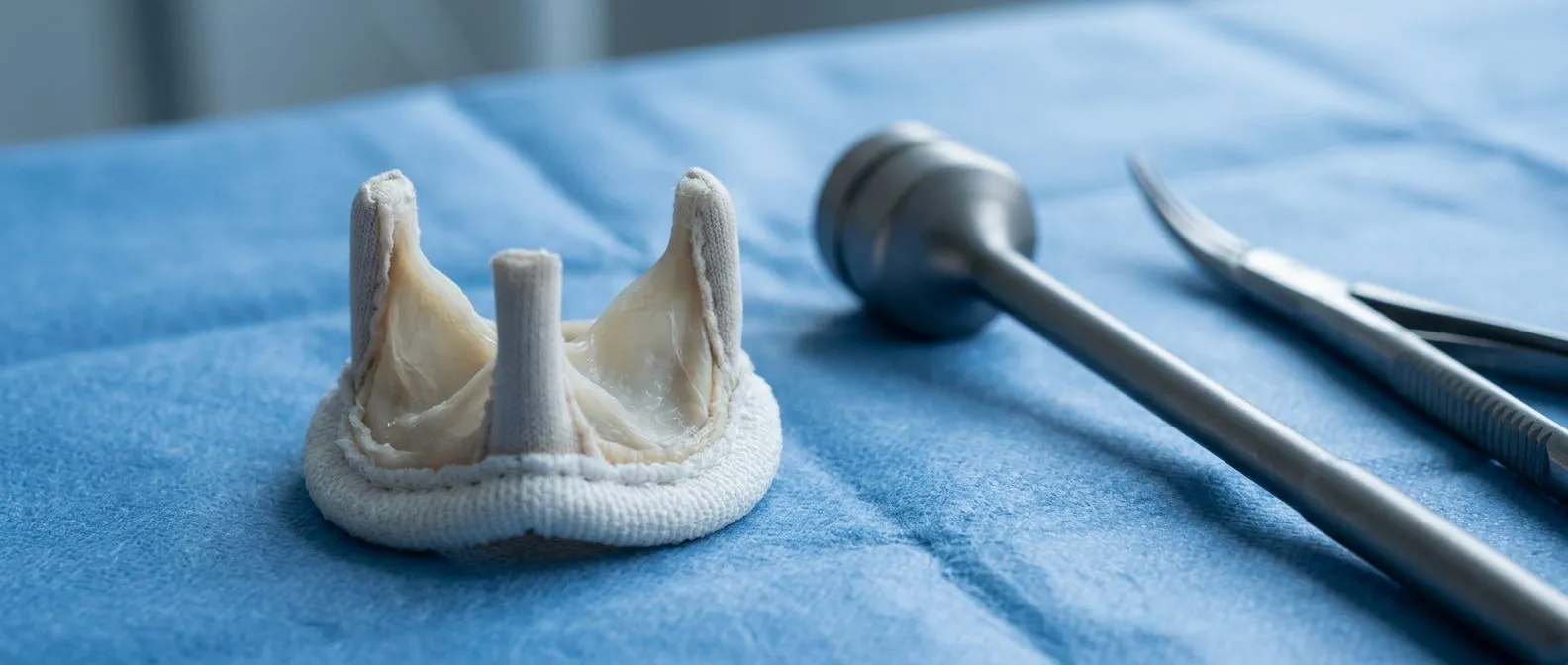
Supra-annular positioning explained. A supra-annular valve is placed slightly above the natural annulus rather than directly in it. Because the aorta widens as it rises, the space just above the annulus is a few millimetres larger. A surgeon can therefore implant a larger valve than the annulus itself would seem to allow, and the sewing ring of the valve rests on that wider landing zone.
Why the extra millimetres matter. Blood flow through a valve depends on its effective opening area. Even one or two millimetres of extra diameter translates into a meaningfully larger opening, less resistance, and less work for the heart. That is the entire logic behind a supra-annular valve: use the anatomy just above the tightest point to give the patient more flow from the same annulus.
Why Does a Small Aortic Annulus Complicate Valve Replacement?
A small annulus is not rare. It is common in smaller-framed patients, particularly women, and in some people born with a bicuspid aortic valve — a valve with two leaflets instead of three — where the whole aortic root can develop differently. Research has shown distinct patterns of tissue change in the ascending aortas of bicuspid patients, which is one reason this anatomy needs individual assessment rather than a one-size-fits-all approach (Atlantis Press).
The fitting problem. Standard replacement valves come in fixed sizes. If the annulus measures 19 millimetres across, the largest valve that fits inside it may still offer a small opening once its frame and sewing ring take up space. The surgeon is left choosing between a valve that fits but flows poorly, or making the annulus bigger so a larger valve can go in.
Consequences of forcing a small valve. A valve that is too small for the patient's body forces the left ventricle — the main pumping chamber — to push blood through a narrow gap. Over time this can thicken the heart muscle, raise pressures inside the heart, and shorten the valve's effective life. This is precisely the problem supra-annular designs were created to reduce.
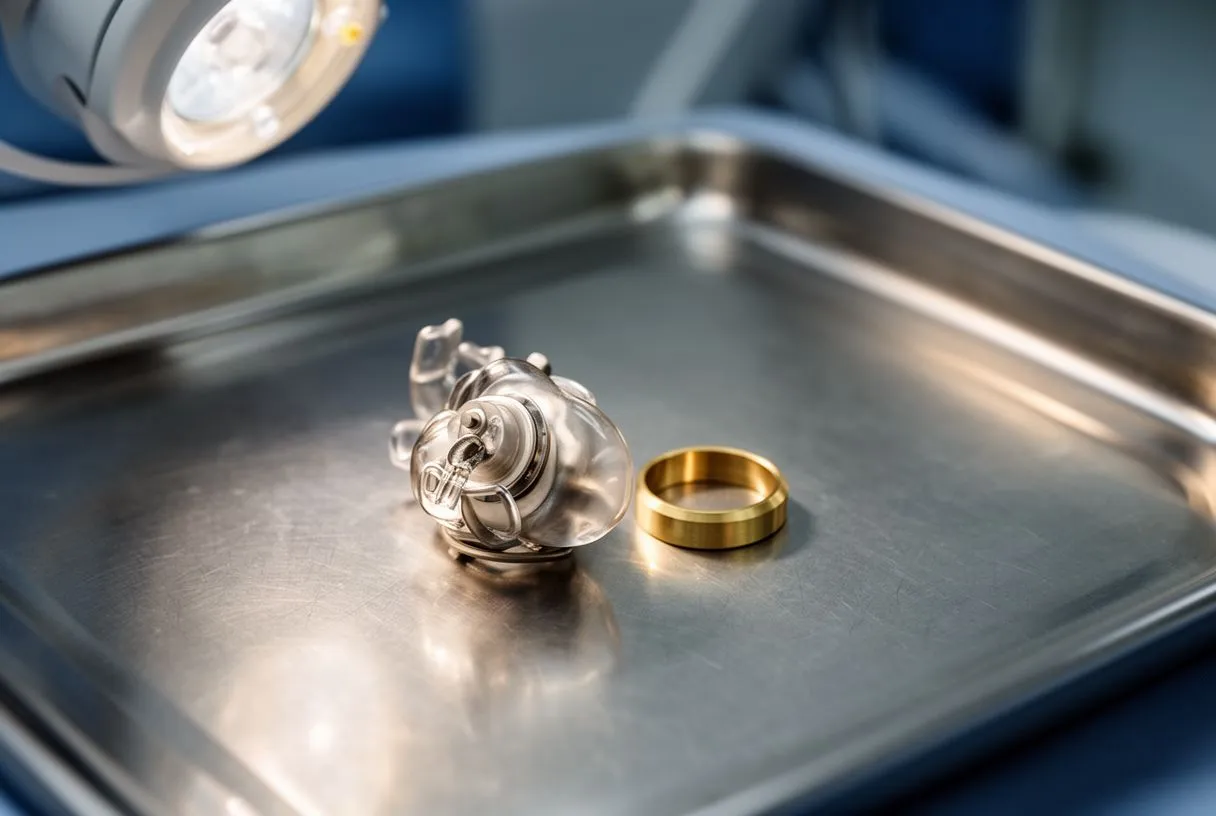
How we assess it. In our practice, every annulus is measured on echocardiography and computed tomography before any recommendation is made, because the difference between a 19 mm and a 22 mm annulus changes the entire plan. The measurements are not a formality — they decide which designs are even possible for that patient.
What Is Patient-Prosthesis Mismatch in a Small Aortic Root?
Patient-prosthesis mismatch is the formal term for a replacement valve that is functionally too small for the patient's needs — even though it was correctly sized to the annulus. The valve fits, but it does not pass enough blood for that person's body.
Why small roots are at highest risk. The smaller the annulus, the smaller the largest valve that fits, and the tighter the margin between "fits" and "flows well". International guidelines from the European Society of Cardiology emphasise that valve choice should be judged by the flow it delivers, not only by the size label on the box (European Society of Cardiology).
How mismatch is detected. Mismatch is suspected when the pressure gradient across the new valve — the pressure drop the heart must overcome — stays higher than expected after surgery. Patients may notice that breathlessness or fatigue improves less than hoped, even though the operation was technically successful.
Preventing it before it happens. The best treatment for mismatch is prevention: careful sizing, choosing a supra-annular design when the annulus is tight, and considering root enlargement when no valve will flow adequately. Our team reviews every case against international practice guidelines before recommending a specific valve, precisely because mismatch is far easier to avoid in the planning stage than to fix afterwards.
Supra-Annular vs Intra-Annular Valve Design: What Is the Difference?
These two terms describe where the valve sits relative to the natural annulus, and the difference is genuinely clinical, not just catalogue language.
Intra-annular valves. An intra-annular valve sits down inside the annulus, in the position the native valve occupied. Its sewing ring consumes part of the available opening, so the effective orifice area — the real opening blood flows through — is smaller than the annulus itself. In a generous annulus this hardly matters. In a tight one, it matters a lot.
Supra-annular valves. A supra-annular valve's sewing ring sits above the annulus, on the wider part of the aortic root. The valve's opening can then be closer to the full diameter of the space available, which usually means a larger effective orifice area and a lower gradient. This is why supra-annular designs are frequently the first choice for small aortic root valve replacement.
The trade-offs. Supra-annular placement is not free of considerations. The valve sits closer to the coronary artery openings, which requires the surgeon to verify that those openings are not obstructed. It also slightly changes the geometry if a future transcatheter valve-in-valve procedure might ever be needed. These are technical details your surgeon weighs, and they are exactly the kind of question worth asking in consultation.
How Does Surgical Aortic Valve Replacement Work for a Small Root?
Surgical aortic valve replacement is the established operation: the heart is reached, the diseased valve is removed, and a replacement valve is sewn into place. The patient is under general anaesthesia, and the heart is stopped temporarily while a heart-lung machine takes over circulation.
Where a supra-annular valve fits in. During the operation, the surgeon measures the annulus with sizing instruments, then decides whether the chosen valve sits in the standard position or in the supra-annular position. For a tight annulus, the supra-annular position is often the one that delivers the largest usable opening.
What the patient experiences. Most patients stay in intensive care for a day or two, then on a regular ward for several more. The breastbone is typically closed with wire, and full recovery of daily activities takes several weeks to a few months. Fatigue in the early weeks is normal and expected.
Our approach. In our consultation we take the time to explain what the imaging studies actually show, in plain words, and to walk through the surgical plan and its alternatives before any decision is made — the final decision is always the patient's.
What Is a Transcatheter Supra-Annular Valve (TAVR)?
TAVR — transcatheter aortic valve replacement — delivers a new valve through a catheter, usually from an artery in the groin, without opening the chest. The valve is crimped narrow, advanced to the aortic root, and expanded in place. Many of these transcatheter valves are designed to function in a supra-annular fashion: the tissue leaflets sit above the stent frame's lower edge, gaining effective area.
Why it suits small annuli. Because a transcatheter valve displaces the diseased valve rather than removing it, the frame occupies space inside the annulus — but the supra-annular leaflet position partially recovers that lost area. This is why transcatheter supra-annular designs have become a key option for aortic valve small annulus treatment in patients who are older or at higher surgical risk.
The evidence base. Repositionable transcatheter valves, studied in trials such as the REPRISE II study of the Lotus valve system, demonstrated that precise placement and retrieval-and-repositioning capability are feasible in a transcatheter design (ClinicalTrials.gov). That matters in small annuli, where millimetre-level placement accuracy influences the final result.
Who is a candidate. TAVR suitability depends on age, surgical risk, valve anatomy, and access vessels. Our team performs conventional, minimally invasive, robotic and transcatheter procedures, and we recommend the less invasive route only where the evidence supports it for that specific patient — never as a default.
Mechanical vs Bioprosthetic Valve for a Small Aortic Root: Which Is Better?
Once the position is decided, the material of the valve matters too. The two main families are mechanical valves and bioprosthetic valves — tissue valves made from animal or human tissue.
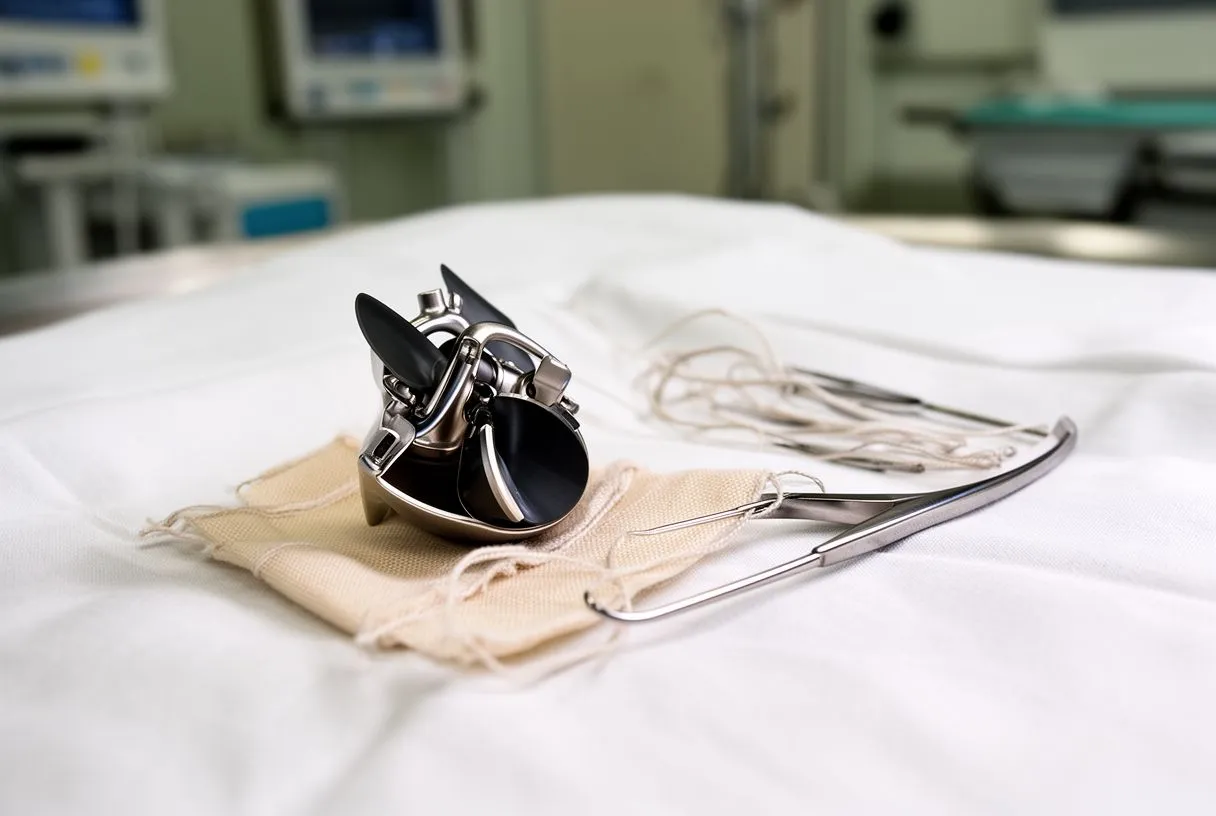
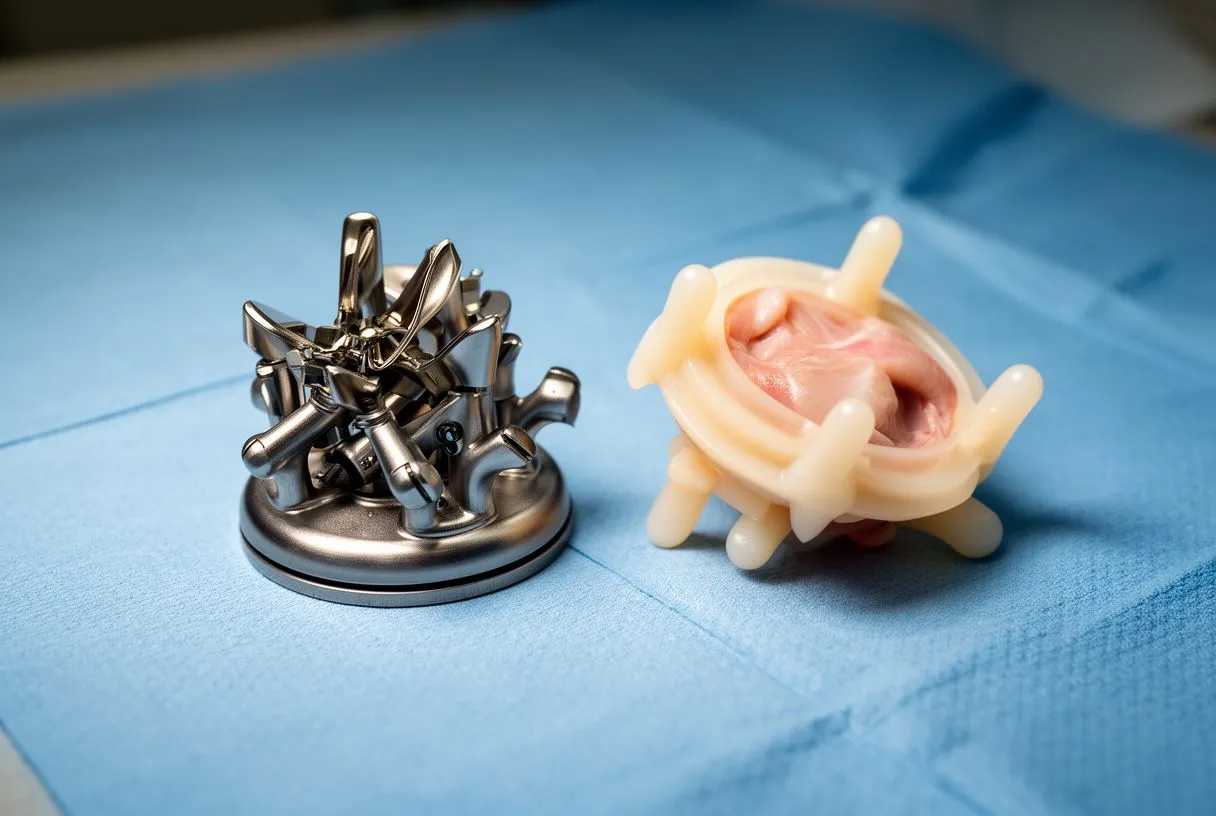
Mechanical valves. A mechanical valve is extremely durable and can last a lifetime, but it requires lifelong anticoagulation medication — blood thinners such as warfarin — to prevent clots forming on it. Some mechanical designs are well suited to supra-annular placement.
Bioprosthetic valves. A bioprosthetic valve — often a porcine valve, made from pig tissue — avoids lifelong blood thinners in most patients, but it degenerates over the years and may eventually need replacement. In young patients, tissue valves may need reoperation sooner; in older patients, they often outlast the need.
- Mechanical valve: longest durability, requires lifelong anticoagulation; best for younger patients who accept daily medication.
- Bioprosthetic valve: no routine blood thinners, gentler lifestyle, but limited lifespan and possible future reoperation.
- Small annulus consideration: whichever material you choose, supra-annular positioning helps maximise the effective opening — material choice and position are two separate decisions.
There is no universal winner. The right answer depends on age, lifestyle, other medical conditions, and how the patient weighs the trade-offs.
Is Aortic Root Enlargement an Alternative to a Small Valve?
When the annulus is too small even for a supra-annular valve to flow adequately, surgeons can enlarge the annulus itself. This is called aortic root enlargement, or annulus enlargement, and it is a well-established technique.
How it works. The surgeon makes a controlled incision that extends the annulus and patches the resulting gap with a small piece of tissue or synthetic material, creating room for a valve one or two sizes larger. Variants of this operation have been used for decades and carry a well-understood risk profile.
When it is worth the extra complexity. Root enlargement is most valuable in younger, active patients, in whom the long-term cost of a small valve — patient-prosthesis mismatch — would be highest. In older or frailer patients, a supra-annular valve or a transcatheter approach often achieves acceptable flow without the added operative time.
Related procedures. In some patients the entire aortic root is diseased, and the appropriate operation is a full aortic root replacement or, in carefully selected cases, a valve-sparing root replacement that keeps the patient's own valve. Every case we plan is reviewed by the multidisciplinary team against international practice guidelines, and the patient receives a clear proposal with the alternatives laid out side by side.
What Is Recovery Like After Minimally Invasive Supra-Annular Valve Surgery?
Not every valve replacement needs a full sternotomy. Minimally invasive supra-annular valve surgery reaches the aortic valve through a small incision between the ribs or a partial upper breastbone split, and the implantation technique — including supra-annular positioning — is the same.
What recovery looks like. Hospital stays are often shorter than with open surgery, and return to driving, work and light exercise is typically faster. The patient still needs the same cardiac rehabilitation discipline: gradual walking, breathing exercises, and a supervised return to activity over weeks.
Warning signs to watch. After any valve surgery, patients should report fever, worsening breathlessness, new palpitations, or wound problems promptly. These are rarely emergencies in the early days, but they are never things to wait out.
Our experience. Dr Molina trained in cardiac, minimally invasive, robotic and structural surgery at the University of Montreal and in structural cardiology and TAVR at CHU Bordeaux, and our team has performed the first robotic mitral valve repair in the Ángeles Health System and the first robotic heart surgery in Guadalajara — so we see recovery timelines up close, and we plan them with the patient before the operation, not after.
Which Is the Best Valve for a Small Aortic Annulus?
There is no single best valve for small aortic annulus anatomy — there is a best-matched valve for each person. The honest answer is a shortlist, not a product name.
The checklist a good team works through.
- Measure first: exact annulus and root dimensions on echo and CT decide which designs are feasible.
- Position over brand: for a tight annulus, supra-annular positioning usually delivers more flow than any brand swap inside a standard position.
- Patient profile: age, activity, anticoagulation tolerance and future valve-in-valve possibility all shape the choice.
- Second opinion: a genuinely good recommendation survives a second opinion — and seeking one is a normal part of deciding about heart surgery.
How we put it together. Our first contact is a free video consultation: we get to know the patient, talk through the condition, and say which studies are still needed so no unnecessary ones are ordered — and if a supra-annular valve for small annulus anatomy is the right answer, we will explain why in plain words.
Choosing a supra-annular valve for small annulus anatomy is ultimately about one thing: giving the heart the largest, most natural flow possible from the space it has. The technology is mature, the options are real — surgical supra-annular valves, transcatheter supra-annular designs, and root enlargement when needed — and the right choice comes from careful measurement, honest discussion of trade-offs, and a team that treats the patient as the final decision-maker. If a small annulus has been mentioned in your own diagnosis, bring your questions to a qualified cardiac team and book a consultation rather than trying to resolve it alone.






