

TAVR Questions: 11 Quick Answers for You and Your Family
Get clear TAVR questions answered in this quick guide.
A rapid guide for you and your family: how it works, the risks, who it suits, the evidence, and what it costs in Mexico. These are the TAVR questions families ask us most. The 2021 ESC/EACTS guidelines on valvular heart disease set out who should be offered TAVR.
Eleven quick questions about TAVR, as a rapid guide for you and your family.
1. What is TAVR?
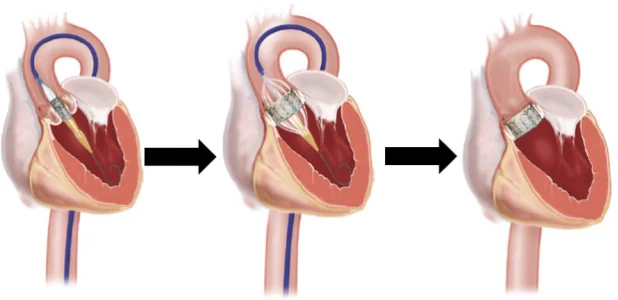
TAVR is a procedure in which a new aortic valve is implanted in the heart without the need for open-heart surgery. Our full TAVR guide covers it in depth.
2. How is it performed?
Using a catheter introduced through the groin or the femoral artery, carrying the new valve to the heart and positioning it there without open surgery.
3. How long does the procedure take?
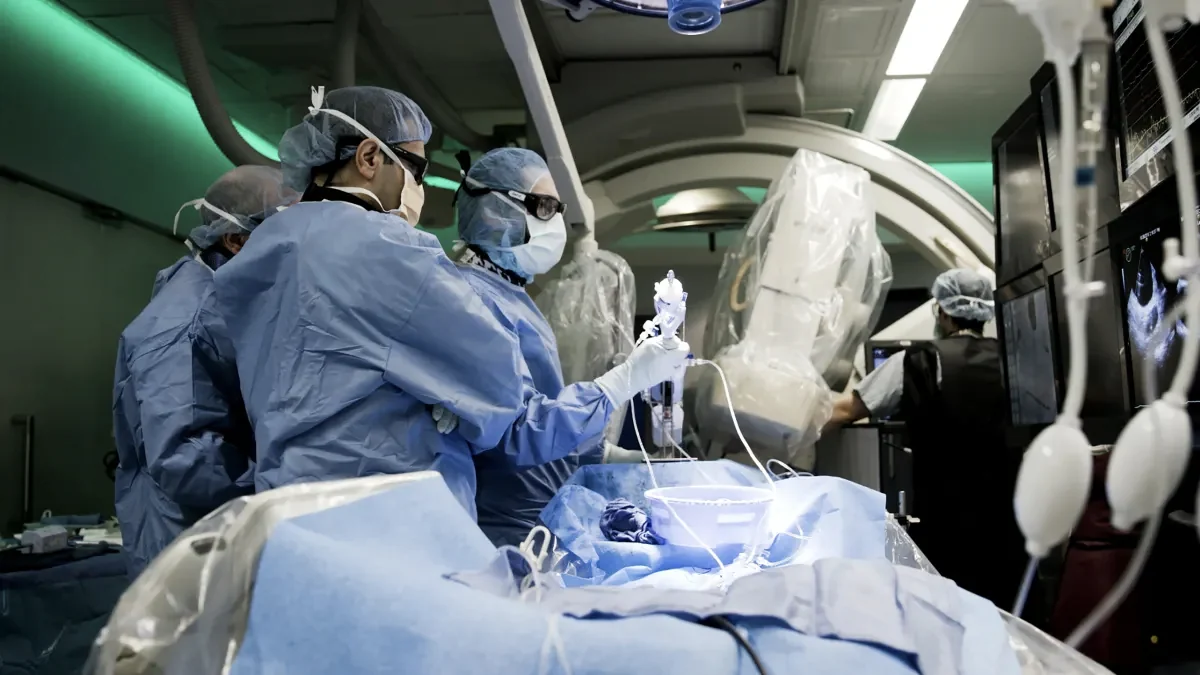
Approximately 1 to 1.5 hours in theatre, provided there are no complications.
4. What are the risks?
Vascular complications, blocks in the heart's electrical conduction, cerebral emboli, and damage to the kidneys from the contrast used.
5. What are the benefits?
Avoiding open-heart surgery, a reduced recovery time, and results similar to traditional surgery in terms of survival and improvement of symptoms.
6. What studies are needed beforehand?
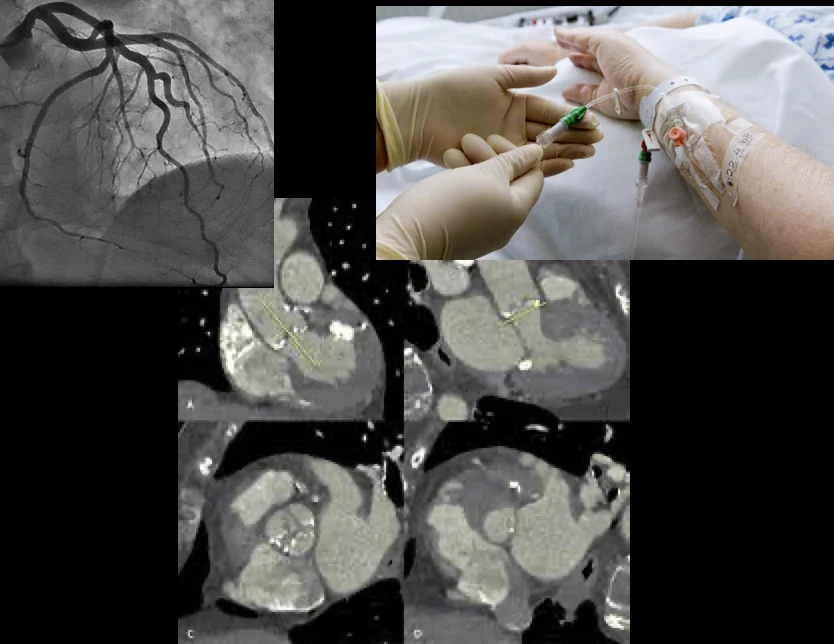
Echocardiogram, cardiac catheterisation and CT scan, to assess whether the patient is suitable for the procedure.
7. Who are the ideal candidates?
Those over 70 with symptomatic severe aortic stenosis and high surgical risk; intermediate surgical risk in some cases; and, in selected cases, low risk.
8. Who can perform TAVR procedures?
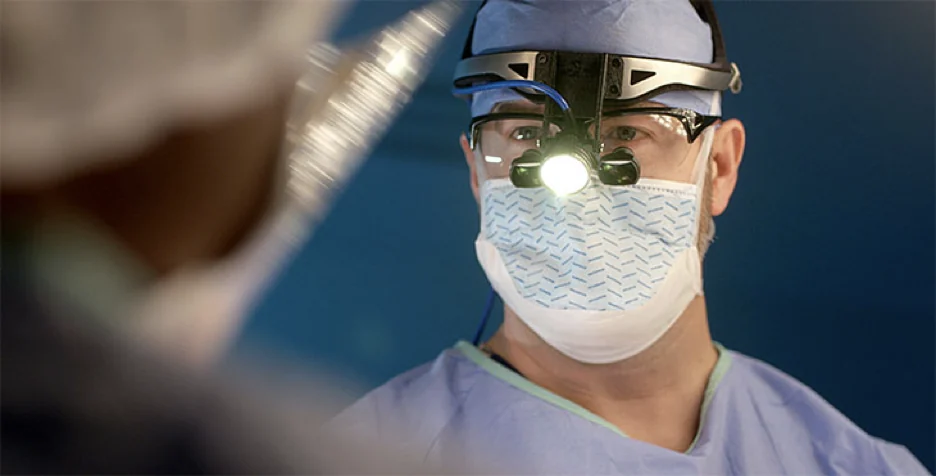
Cardiac surgeons and interventional cardiologists with training in structural cardiology, working as a team.
9. What alternatives exist?
Minimally invasive surgery, open-heart surgery and conservative medical treatment, which should be considered according to the individual case.
10. Which recent studies support TAVR?
Notable studies include PARTNER 3, Evolut Low Risk and NOTION, which compared TAVR with open-heart surgery in different patient groups.
11. What does a TAVR procedure cost in Mexico?
In private hospitals in Mexico the price ranges between 800,000 and 950,000 pesos. This can vary with where it is performed and the type of valve. In recent years this has increased in Mexico and Latin America, even with the arrival of new valves and greater competition in the market.
Two thirds of this cost corresponds to the valve itself, since it remains very expensive technology. It can often be double the price, particularly in the private sector.
More TAVR questions families ask us
The eleven answers above are the short version. In our practice the consultation rarely stops there. Once the basics are clear, the TAVR questions become more personal. How does it compare with surgery for me? Am I the right age? How long will the new valve last? What happens on the day itself? The sections below answer the TAVR questions we hear most often after the first eleven. They are general information. Your own heart team will tailor every answer to your case.
TAVR vs open heart surgery: how do they compare?
Both treatments replace a narrowed aortic valve. Both work well when they are offered to the right patient. The difference lies in how the new valve reaches the heart, and in what each approach can and cannot do.
- The approach. In TAVR the valve travels on a catheter, usually from the groin. In conventional surgery the surgeon opens the chest, stops the heart and connects it to the heart-lung machine.
- The recovery. After TAVR most patients walk within a day and go home within a few days. After open surgery the breastbone needs several weeks to heal, and the full recovery usually takes longer.
- The valve itself. TAVR valves are biological, made from animal tissue. In surgery we can choose a biological or a mechanical valve. A mechanical valve lasts longer but needs anticoagulants for life.
- Other problems. Surgery can treat several problems at once, such as blocked coronary arteries, another diseased valve or an enlarged aorta. TAVR treats the aortic valve alone.
- Specific risks. TAVR carries a higher chance of needing a permanent pacemaker and of a small leak around the valve. Surgery carries the risks of a larger operation and a longer stay.
In the large trials that compared the two, results for survival and stroke were broadly similar in the patients studied. That is why the choice is not about which treatment is better in general. It is about which one is better for you. We look at your age, your anatomy, your other conditions and your own priorities, and we decide together.
What does a TAVR procedure look like on the day?
Many patients tell us that the unknown worries them more than the procedure itself. Knowing the sequence helps. This is what a typical transfemoral TAVR looks like in our practice, although details vary between patients and hospitals.
- Admission. You usually come in fasting, on the day or the day before. The team checks your blood tests and your medicines, and places an intravenous line.
- Anaesthesia. Most transfemoral procedures are done under local anaesthetic with sedation. You are relaxed and drowsy, and you should not feel pain. Some patients need a general anaesthetic instead.
- Access. Through a small puncture in the groin, a sheath is placed in the femoral artery. A temporary pacing wire is often placed through a vein to control the heart rhythm during implantation.
- Positioning. Guided by X-ray and, in some cases, ultrasound, the folded valve is advanced to the heart and positioned inside the old, narrowed valve.
- Implantation. The valve is expanded with a balloon or allowed to open by itself, depending on its design. For a few seconds the heart may be paced very fast to keep it still.
- Checks and closure. We confirm that the new valve opens and closes well and that there is no significant leak. The groin puncture is then closed, usually with a closure device.
Afterwards you are monitored closely, usually in intensive care or a cardiac unit. Most people sit up and eat within hours, and walk the next day.
TAVR candidacy age and other reasons TAVR may not suit you
Age is one of the most common TAVR questions, and it matters. Age is a guide, not a strict rule. The 2025 European guidelines generally favour TAVR from around 70 years, or in younger people whose surgical risk is high. In patients under 70 who are fit for surgery, conventional valve replacement is usually preferred, partly because its long-term durability is better documented. Around that age, the decision is shared after a careful discussion of both options.
Age is not the only factor. Some people are not good candidates for TAVR for other reasons:
- Anatomy. Very small, tortuous or heavily calcified arteries can make the groin route unsafe. Other access routes exist, but they are not suitable for everyone.
- The valve and its surroundings. Some valve shapes, such as certain bicuspid valves, a very large or very small aortic annulus, or coronary arteries that arise very close to the valve, can make TAVR less safe.
- Other heart problems. If you also need a bypass, another valve repair or surgery on the aorta, one operation that treats everything may be better.
- Active infection. Active endocarditis, an infection of the heart valves, is generally a reason to avoid TAVR.
- Limited benefit. When other serious illnesses mean the procedure is unlikely to improve quality of life or survival, we discuss this openly. Sometimes the kindest option is medical treatment and good symptom control.
How quickly does aortic stenosis get worse?
Aortic stenosis usually progresses slowly, over years rather than months. The speed varies a great deal from person to person. A heavily calcified valve tends to narrow faster. On average, once stenosis is moderate, the valve opening becomes a little smaller each year.
What changes everything is the arrival of symptoms. Breathlessness on effort, chest pain, dizziness or fainting mean the stenosis is probably severe. Once symptoms appear, the outlook without valve replacement worsens quickly. That is why we do not recommend waiting when severe stenosis causes symptoms.
For people without symptoms, regular check-ups with an echocardiogram are essential. Mild stenosis is usually checked every few years, moderate stenosis every one to two years, and severe stenosis more often, typically every six months. Tell your doctor straight away if you notice new symptoms between appointments.
How long will a TAVR valve last?
This is one of the most important TAVR questions, especially for younger patients. Like any biological valve, a TAVR valve wears out over time. Studies following patients for five to ten years show durability broadly similar to surgical biological valves over that period. Beyond ten years, the evidence is still growing, because the technology is relatively young.
For older patients this is rarely a limitation. For younger patients it is a key part of the decision. If a TAVR valve does wear out, it can often be treated with a second transcatheter valve placed inside the first, called valve-in-valve. Whether that will be possible depends on your anatomy, so we plan for it from the start.
Will I need a pacemaker after TAVR?
Among the practical TAVR questions, this one comes up in almost every consultation. The new valve sits very close to the heart's electrical wiring. When it expands, it can press on that wiring and slow the heartbeat. Most patients do not need a pacemaker. Some do, and the chance depends on the valve design, your anatomy and any conduction problem you already have on your electrocardiogram.
We monitor the heart rhythm closely for the first days after the procedure. If a lasting block appears, a permanent pacemaker is implanted through a small incision below the collarbone. It is a short procedure, and most people return to normal life with it. Before TAVR, we review your electrocardiogram and tell you whether your own risk is lower or higher than average.
Recovery and daily life after TAVR
Recovery after a transfemoral TAVR is usually quick. Most patients stay in hospital for a few days. At home, you can walk from the first days and increase your activity gradually. Your team will advise you about the groin wound, bathing, driving and lifting during the first week or two.
- Medication. You will receive antiplatelet or anticoagulant medicines. Take them exactly as prescribed, and never stop them on your own.
- Follow-up. An echocardiogram after the procedure gives a baseline. After that, regular check-ups, often yearly, monitor the valve.
- Teeth and infection. Good dental hygiene and regular dental visits matter. Tell your dentist you have a valve prosthesis, because antibiotics are usually recommended before some dental procedures.
- Warning signs. Seek attention for fever, new breathlessness, fainting, a very slow pulse or swelling at the groin.
Cardiac rehabilitation helps many patients regain strength and confidence after the procedure. Your surgeon sets the individual plan.
TAVR procedure cost in Mexico: what changes the price
Question 11 gives the typical range. Among the TAVR questions about money, families often ask why quotes differ so much. The main drivers are the valve model, the hospital, the days in intensive care and on the ward, the studies needed beforehand, and the team involved. Insurance cover also varies widely between policies. We prepare a quote for your case at the consultation, so there are no surprises.
Bring your TAVR questions to the consultation
The best consultations are the ones where patients bring their own TAVR questions written down. Bring your most recent echocardiogram, any CT or catheterisation reports, and a list of your medicines. Bring a family member if you can. Ask about the alternatives, the risks in your case and the plan for follow-up. We operate in Guadalajara, Querétaro and Hermosillo, and we are happy to go through each question with you until it is clear.
About the author
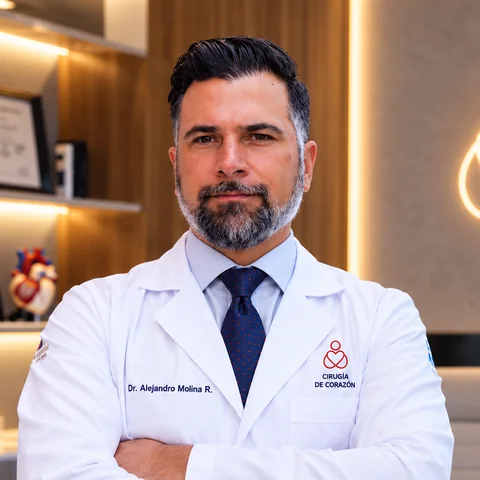
Dr Alejandro Molina is a cardiovascular surgeon practising in Guadalajara, Querétaro and Hermosillo. He trained in cardiothoracic surgery at the Universidad de Guadalajara, completed advanced training in cardiac surgery, minimally invasive surgery, robotic surgery and structural interventions at the University of Montreal, and a fellowship in structural cardiology and TAVR at CHU Bordeaux, France. He performed the first robotic mitral valve repair in the Ángeles Health System and the first robotic heart surgery in Guadalajara.
Medical degree: Universidad Autónoma de Guadalajara, Cédula Profesional 5757260 · Cardiothoracic surgery: Universidad de Guadalajara, Cédula de Especialidad 10768871 · Current certification, Consejo Nacional de Cirugía del Tórax, no. 447
Talk to a specialist
Request a free video consultation to clear up your questions and make a better-informed decision.





