Tearing Chest Pain: An Aortic Dissection Warning
Tearing chest pain aortic dissection is a life-threatening emergency.
Sudden tearing chest pain aortic dissection is one of the few symptoms in medicine that demands immediate action, because it often signals that the main artery carrying blood from the heart has split open along its wall. Most chest discomfort turns out to be harmless — muscle strain, acid reflux, anxiety. But the tearing kind is different, and knowing the difference can save a life. This guide explains what aortic dissection is, how it feels, who is most at risk, how doctors diagnose and treat it, and what recovery really looks like.
What Is Tearing Chest Pain and Why Does It Happen?
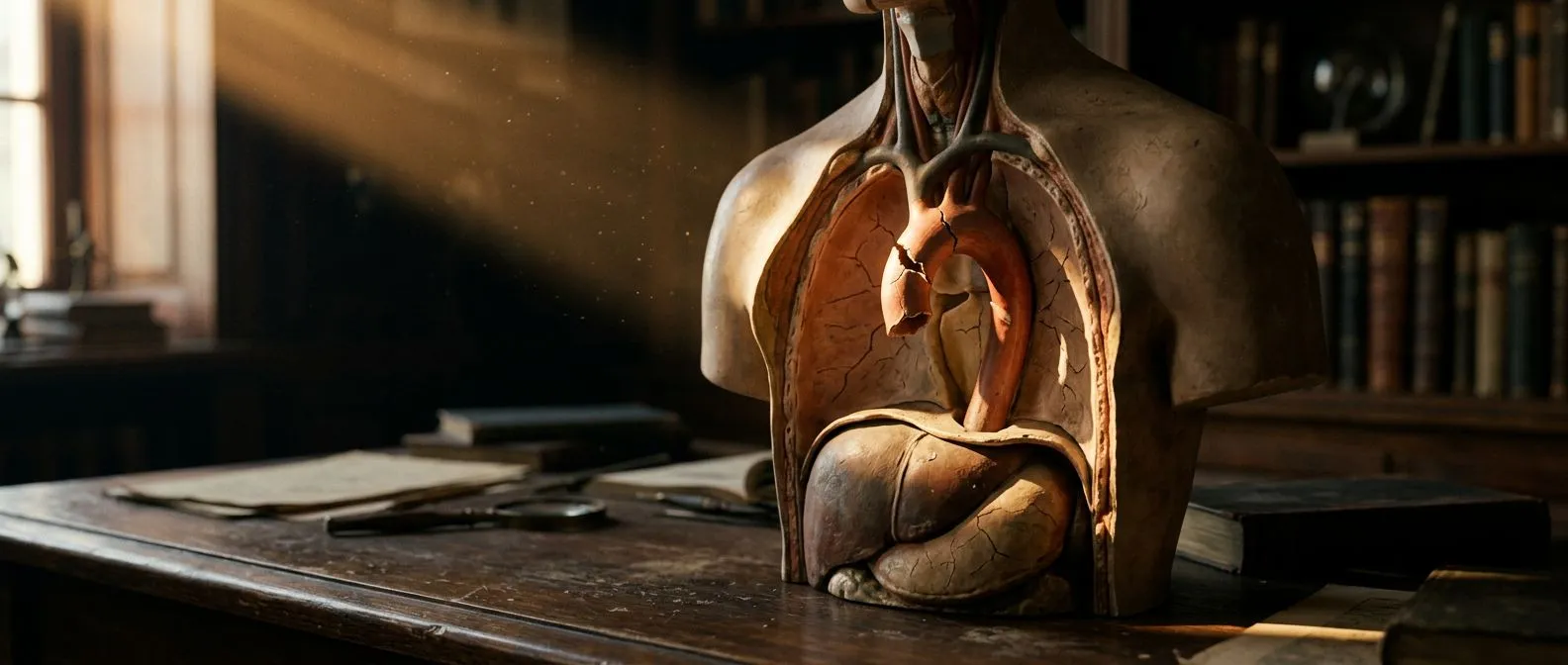
What the aorta actually does. The aorta is the largest artery in your body. It leaves the heart, arches upward through the chest, and runs down behind the abdomen, carrying oxygen-rich blood to every organ. Its wall is made of three layers, like a garden hose with an inner lining, a muscular middle, and an outer coat. When that inner lining tears, blood forces its way between the layers, splitting the wall apart. This is called an aortic dissection.
Why the pain feels like tearing. The pain is not like a cramp or a burn. Patients consistently describe it as ripping, shearing, or tearing — as if something inside the chest were being pulled apart. The sensation often begins at maximum intensity within seconds, unlike a heart attack, where discomfort usually builds over minutes. That sudden, severe onset is one of the clearest warning signs.
Where dissection happens. The tear most often starts in the first few centimeters of the aorta, where blood pressure and wall stress are highest. From there, the split can extend along the entire artery, sometimes for more than half a meter. It can also press on or block the smaller arteries branching off the aorta, which is why dissection can affect the brain, arms, legs, kidneys, and bowels all at once.
Why Tearing Chest Pain Aortic Dissection Is a Medical Emergency
Why the minutes matter. Tearing chest pain aortic dissection is a true cardiovascular emergency. Studies published in major medical journals show that without treatment, mortality rises steeply in the first hours — roughly one in two patients with the most dangerous form may not survive the first day. The wall of the aorta can rupture into the chest cavity, or the dissection can cut off blood flow to the heart muscle, brain, or spinal cord.
How the body fails during a dissection. As blood tracks between the layers, the true channel that feeds the organs becomes squeezed. The kidneys may stop producing urine. A leg may turn cold and pulseless. The aortic valve — the one-way gate between the heart and the aorta — can be torn loose, causing sudden aortic insufficiency, which is blood leaking backward into the heart. Each of these events develops on a timeline measured in minutes to hours.
What happens in the hospital. Emergency teams treat suspected dissection as a priority on par with a major heart attack. Blood pressure is lowered immediately with intravenous medication to reduce the force pushing against the torn wall. CT scans confirm the diagnosis. From there, a cardiac surgeon and an interventional team decide the treatment plan, often within the same hour.
How Aortic Dissection Differs From a Heart Attack
Two different problems. A heart attack happens when Coronary Artery Disease — cholesterol plaque blocking the small arteries that feed the heart muscle — cuts off blood supply. A dissection is a problem with the aorta itself, the main pipe. Both cause Chest Pain, and both can be fatal, but the mechanisms, the tests, and the treatments are entirely different.
Clues that point to the aorta. The pain character differs. Dissection pain is often described as tearing or ripping, while the classic heart attack pain is more of a Crushing Chest Pain or pressure. Pain that migrates — moving from the chest to the back, or down the spine as the dissection extends — is called Migrating Chest Pain and is a strong dissection signal. A measurable difference in blood pressure or pulse between the two arms is another red flag.
Why the difference matters for treatment. Giving strong blood-thinning medication — the standard first step for a suspected heart attack — can be dangerous if the real problem is a dissection, because it increases bleeding if the aorta ruptures. This is why emergency teams order a CT angiogram early when the story sounds like dissection. It is also why patients should describe their pain precisely: the words "tearing" and "ripping" carry real diagnostic weight.
What Are the First Aid Steps for Tearing Chest Pain?
Call for help immediately. If you or someone near you develops sudden, severe chest pain — especially pain that tears or rips and moves to the back — call emergency services right away. In Mexico, dial 911. Do not drive yourself to the hospital. Do not wait to see if it passes. The safest place for anyone with this symptom is an emergency department with CT imaging and cardiac surgery available.
While waiting for the ambulance. The person should sit or lie down and stay still. Loosen tight clothing. If they have prescribed blood pressure medication, they can take it as directed. Give nothing to eat or drink, since surgery may follow. Keep them calm and warm; anxiety and stress raise blood pressure, which is exactly what a torn aorta does not need.
- Call 911 immediately: say "severe chest pain" and describe the tearing quality — this directs the ambulance to the right hospital.
- Rest and stay still: physical activity raises blood pressure and the force on the torn wall.
- Take only prescribed medications: never take aspirin or other drugs on your own decision, since they may be wrong for a dissection.
What not to do. Do not ignore the pain hoping it is muscle strain. Do not take antacids and wait. Do not search the internet for answers while the clock runs. Dissection is time-critical, and the earlier the diagnosis, the more options the surgical team has.
Chest Pain Radiating to the Back: When to Suspect the Aorta
Why the back is involved. Chest pain radiating to the back aortic dissection pattern is so common because the aorta runs directly behind the heart, just in front of the spine. When the tear extends down the chest, the pain follows the path of the splitting wall — from between the shoulder blades, down into the mid-back, sometimes into the abdomen. Many patients say the pain "moved through" them.
Other locations to watch. The pain may also mimic other problems. Some patients feel Epigastric Pain — discomfort just below the ribs in the upper abdomen — when the dissection reaches the abdominal aorta. Others feel pain in the arm or neck. Sharp chest pain when breathing can come from the irritated outer lining of the lung, which dissection blood can inflame.
The pattern that should never be ignored. Pain that begins suddenly at full force, tears or rips, and travels — especially from chest to back — should be treated as a possible dissection until proven otherwise, regardless of age. Young, athletic people can have dissections too, particularly if they have an inherited condition affecting the aorta. When in doubt, get imaged.
Who Is at Risk? Hypertension, Marfan Syndrome and Other Causes
High blood pressure is the leading risk factor. Aortic dissection risk factors hypertension tops the list. Chronically elevated blood pressure pounds the aortic wall from the inside, year after year, weakening its layers until a tear develops. This is why dissection is most common in people in their sixties and seventies with long-standing, poorly controlled hypertension. The medical literature documents acute dissection presenting as a hypertensive emergency — dangerously high blood pressure that is both the trigger and the result of the tear.
Genetic conditions that weaken the aorta. Marfan syndrome is the best-known inherited disorder of the aorta. It affects the connective tissue that gives the vessel wall its strength. People with Marfan syndrome tend to be tall, with long limbs and flexible joints, and their aortas can enlarge and tear at much younger ages. Related conditions include Ehlers-Danlos syndrome and a bicuspid aortic valve, where the valve has two leaflets instead of three.
Other contributors. Smoking, high cholesterol, cocaine use, and pregnancy (which raises blood pressure and softens the vessel wall) all increase risk. A pre-existing aortic aneurysm — a balloon-like widening of the aorta — is a major precursor. The key distinction: an aneurysm is a slow stretching, while a dissection is an acute split. One can lead to the other.
We review every patient's aortic measurements against international practice guidelines before recommending any intervention.
How Doctors Diagnose Tearing Chest Pain
The first five minutes. Diagnosis begins before any scan. The emergency team checks blood pressure in both arms, feels the pulses in the wrists and feet, and listens to the heart for a new murmur — the sound of blood leaking through a damaged aortic valve. They may note a Chest Pain score that weights the tearing quality, the migration, and the pulse difference.
Imaging the aorta. The definitive test is a CT angiogram: a fast CT scan with contrast dye that shows the aorta in fine detail, revealing the tear, the split between the layers, and any organs losing blood supply. A Coronary Calcium Score or coronary angiography may be used to rule out a heart attack as the cause instead. Ultrasound of the heart, called echocardiography, can be done at the bedside and shows the aortic valve and the first segment of the aorta.
What the images decide. The scan answers three questions that determine treatment: where the tear begins, whether it involves the ascending aorta near the heart, and whether any branch arteries are blocked. In the consultation, we take the time to explain what the studies actually show, in plain words, before any decision about surgery is made.
Type A and Type B Aortic Dissection: How Treatment Differs
Two categories, two very different paths. Type A Aortic Dissection means the tear involves the ascending aorta — the segment closest to the heart. This form is almost always treated with emergency open surgery, because the risk of rupture, heart failure, and stroke is too high to manage medically. Type B Aortic Dissection starts beyond the left subclavian artery, in the descending aorta. Many Type B cases are first managed with aggressive blood pressure control in the intensive care unit.
Open surgery for Type A. The surgeon replaces the torn segment of the aorta with a synthetic graft, often repairing or replacing the aortic valve at the same time. This is major open-heart surgery performed under circulatory support. For patients with Marfan syndrome or an enlarged root, the operation may include a valve-sparing aortic root replacement.
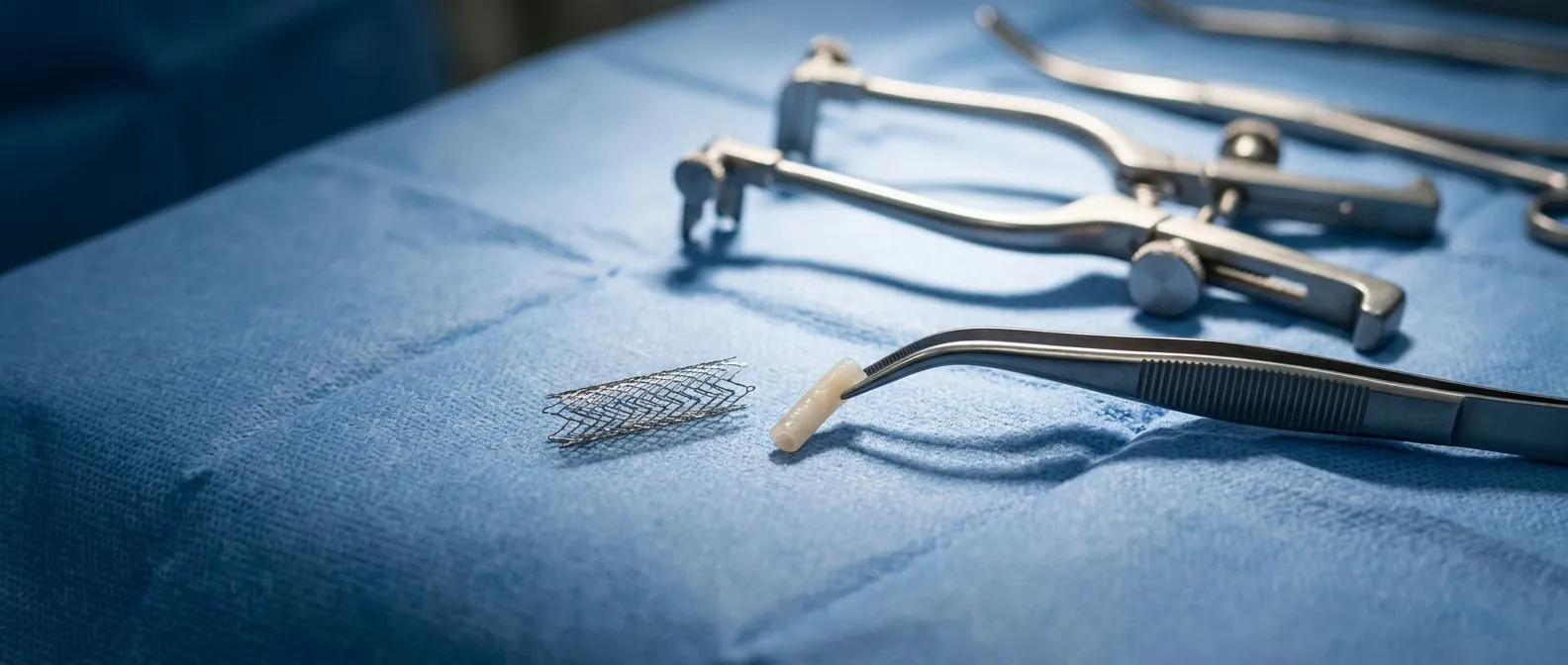
Endovascular repair for Type B. For many Type B patients, and for complications that appear later, endovascular repair is an option. Through a small incision in the groin, a stent graft — a fabric tube mounted on a metal frame — is threaded up the aorta and deployed to seal the tear and redirect blood flow through the true channel. Recent research on the structural helicity of aortic dissection shows how the geometry of the split influences the results of endovascular repair, helping surgeons plan each case individually. As a team, we perform both conventional and endovascular approaches, and we recommend the less invasive route only where the evidence supports it for that specific patient.

Aortic Dissection Surgery Recovery: What to Expect
The first days. Aortic dissection surgery recovery begins in the intensive care unit, where blood pressure, kidney function, and neurological status are monitored around the clock. Most patients spend one to three days in ICU and about a week in hospital overall. Breathing tubes and drains come out within the first day or two, and walking usually starts on day two or three.
The first three months. Full recovery from open surgery typically takes six to twelve weeks. The breastbone, if divided, needs about eight weeks to knit. Patients gradually increase activity: short walks first, then longer ones, then light household tasks. Driving is usually cleared around four to six weeks. Cardiac rehabilitation — supervised, structured exercise — is strongly recommended and speeds both physical and emotional recovery.
Lifelong follow-up. Dissection changes the aorta permanently, even after successful surgery. The remaining aortic wall stays vulnerable, so patients need lifelong blood pressure control and periodic CT or MRI scans of the entire aorta, typically at six months, one year, and then annually or as directed. In our experience, patients who commit to this follow-up schedule fare far better, because any new enlargement is caught while it is still manageable.

Chronic Aortic Dissection Management and the Value of a Second Opinion
Living with a repaired or chronic dissection. Chronic aortic dissection management rests on four pillars: strict blood pressure control (often aiming lower than standard targets), imaging surveillance, quitting smoking, and monitoring for symptoms such as new chest or back pain. Some patients live for decades with a stable chronic dissection, managed entirely with medication and regular scans. Others develop enlargement of the false channel and need staged treatment.
Knowing your numbers. If you have an aortic aneurysm or a chronic dissection, ask your team for two figures: your maximum aortic diameter and your blood pressure target. Surgery is generally recommended for an ascending aortic aneurysm reaching about 5.5 centimeters, or earlier for patients with Marfan syndrome or a family history of dissection. Understanding where you stand turns an abstract worry into a concrete plan.
Getting a second opinion is normal. We encourage second opinions and treat seeking one as a normal, sensible part of deciding about heart surgery. Every case at our practice is reviewed by the multidisciplinary team before a recommendation is given, and the patient receives a clear proposal with the alternatives laid out — the final decision is always theirs. If you are weighing options after a dissection or an aneurysm diagnosis, the first contact is a free video consultation: we get to know you, talk through your condition, and identify which studies are still needed so no unnecessary ones are ordered. A face-to-face visit at our consulting rooms in Guadalajara, Querétaro or Hermosillo follows when you decide to go ahead.
- Ask about your aortic diameter: it is the number that drives the timing of surgery.
- Keep every scan: serial images over time tell your team far more than any single study.
- Second opinions add value: a fresh expert review can confirm a plan or reveal an alternative you were never offered.
Conclusion: When to Seek Help and What to Remember
Tearing chest pain aortic dissection is rare, but it is among the most time-critical emergencies in medicine. Remember the pattern: sudden, severe, tearing pain that may move to the back, with a possible difference in pulses between arms. If that pattern appears, call 911 and get to a hospital with CT imaging and cardiac surgery — do not wait, and do not self-diagnose. For everything else — an aneurysm found on a scan, a family history of aortic disease, questions about a treatment plan — the right move is to sit down with a qualified cardiac team and discuss your own situation. The aorta deserves respect, and the best protection is informed, early attention.