

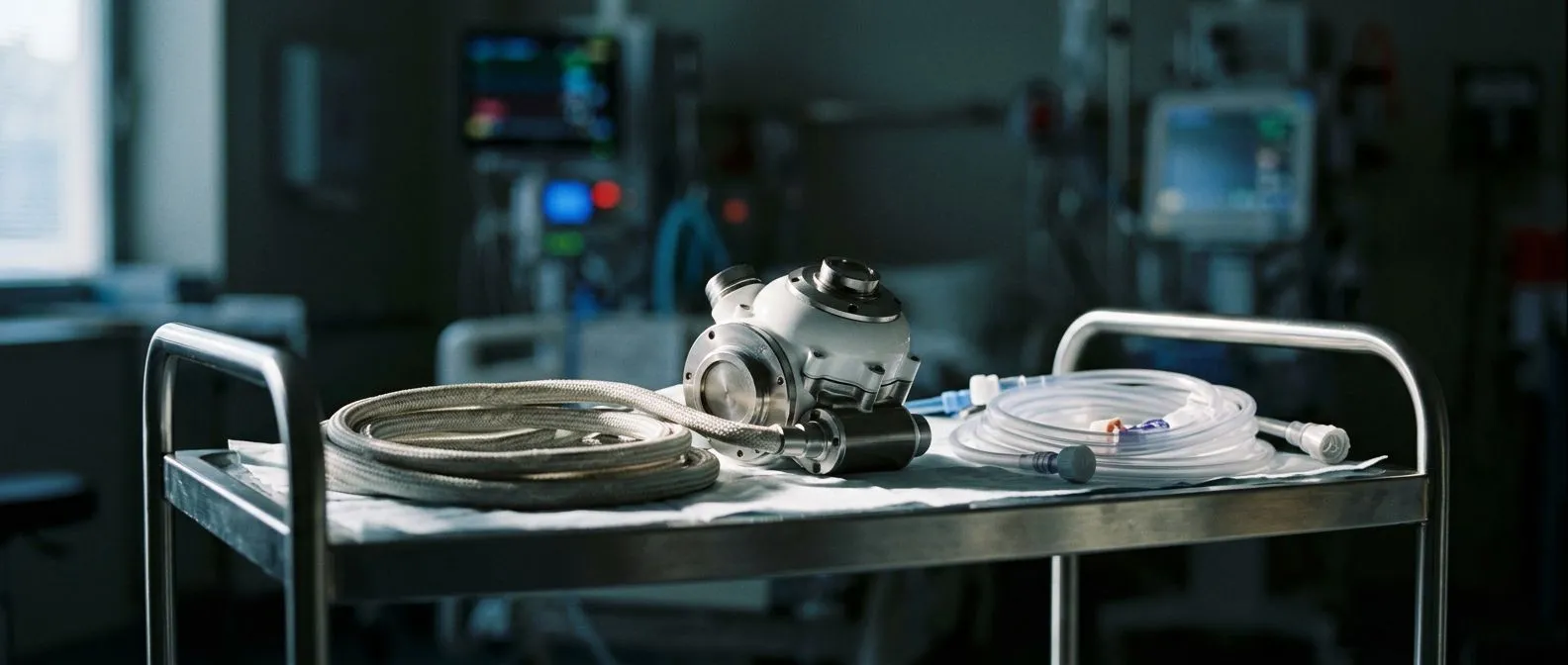
Bridge to Decision: Temporary Heart Support Options
Bridge-to-decision heart support gives patients time to choose a long-term treatment.
When a heart suddenly cannot keep up, doctors sometimes need time before they can recommend a lasting treatment. That time is bought with a bridge to decision heart support: a temporary pump or oxygenation device that keeps blood moving while the care team learns whether the heart can recover, whether a durable pump is needed, or whether a transplant is the right path. This guide explains, in plain language, what these devices are, how they work, what risks they carry, and what the journey feels like for patients and families.
What Is a Bridge to Decision Heart Support?
A bridge to decision heart support is a short-term machine that takes over part of the heart's work. The word "bridge" is deliberate: it carries the patient across a dangerous stretch of illness to a point where doctors can make a calmer, better-informed decision. Unlike a permanent device, it is not the destination. It is scaffolding that holds things steady while answers are gathered.
Why the decision cannot be made at once. In the first hours of severe heart failure or after a major complication, several things are still unknown. Is the heart muscle stunned and likely to recover on its own? Is another organ, such as the kidneys, damaged in a way that changes the options? Is the patient a candidate for a transplant, or not yet? Rushing these answers leads to choices that may not fit the person. A temporary support device slows the clock without stopping it.
The idea in one sentence. Mechanical Circulatory Support — the umbrella term for these machines — buys days or weeks of stable circulation so the team can test whether the heart recovers, plan a durable therapy, or prepare a transplant evaluation. The concept has become a standard part of advanced heart failure care, and reviews of mechanical support strategies describe exactly this staging: stabilise first, decide second. The BMJ has covered how this decision-making framework reshaped treatment for critically ill cardiac patients.
When Is a Heart Transplant Needed?
Doctors consider a heart transplant when the heart's pumping function has declined so far that medications, lifestyle changes and less invasive procedures no longer keep the patient well. This usually means advanced, or "end-stage," heart failure: severe shortness of breath at rest or with minimal activity, fluid build-up in the lungs and legs, and a prognosis that standard treatment can no longer change.
Signs the heart is failing beyond repair. Common markers include a very low ejection fraction — the percentage of blood the left ventricle pumps out with each beat — repeated hospital admissions for heart failure, dependence on intravenous medications, worsening kidney function caused by poor circulation, and inability to carry out daily activities. None of these alone decides the question. Transplant teams weigh them together, alongside the patient's other conditions.
Why temporary support often comes first. Many patients reach this point suddenly, in an intensive care unit, before any transplant evaluation has begun. In that setting, a bridge to decision heart support keeps them alive while the transplant team completes tests, reviews history, and determines whether they qualify for the waiting list. Without the bridge, some patients would deteriorate before the evaluation could even start.
In our practice, every case like this is reviewed by the multidisciplinary team against international practice guidelines before any recommendation is made, and the patient receives a clear proposal with the alternatives laid out alongside it.
Temporary Mechanical Circulatory Support Options
There is no single temporary heart pump. Several devices exist, each with a different way of assisting circulation, a different level of support, and a different risk profile. The right choice depends on which side of the heart is failing, how much help is needed, and how long support is expected to last.
Which device, and why it matters. A device that supports the left side of the heart does not help the right side, and vice versa. Some devices are inserted through an artery in the groin at the bedside or in a catheterisation lab; others require open surgery. Some run for days, others for weeks or months. Understanding the main options helps patients and families ask better questions during what is often a frightening time.
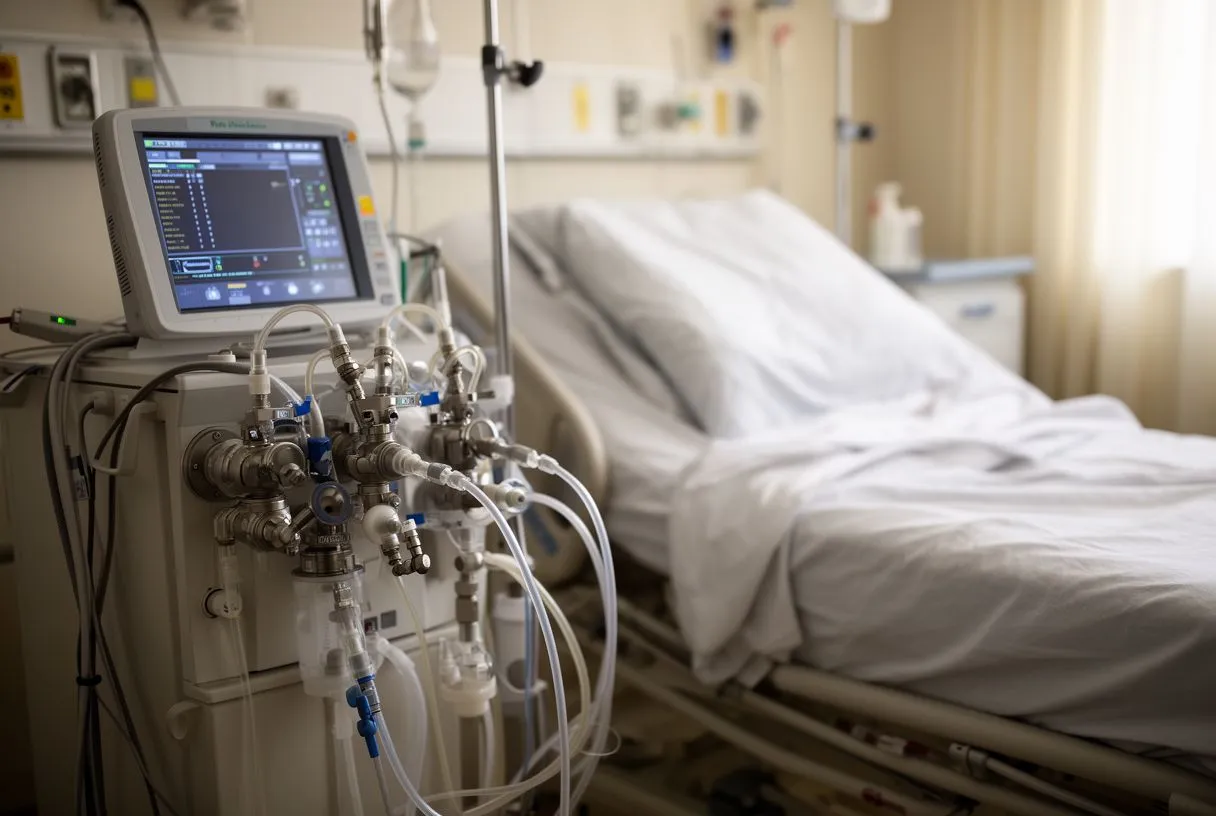
Planning complex support. Because these devices sit inside or beside the heart and major vessels, careful planning matters. Medical reviews have documented how three-dimensional printing and advanced imaging now help teams rehearse complex procedures before touching the patient, which can shorten procedure time and reduce complications. A cross-sectional multispecialty review of 3D printing in complex medical procedures describes this planning role across cardiac specialties.
ECMO Bridge to Decision: How It Works
ECMO stands for extracorporeal membrane oxygenation. In simple terms, it is a heart-lung machine outside the body. Tubes carry blood from the patient's veins to a console, where a membrane adds oxygen and removes carbon dioxide — doing the lungs' job — and a pump then returns the blood, doing part of the heart's job. Published case series describe ECMO used precisely this way: as a bridge while the team waits to learn whether the heart recovers, a durable pump should follow, or a transplant is needed.
When ECMO is chosen. ECMO is often the fastest form of support to start, which makes it valuable when a patient is deteriorating quickly — after a massive heart attack, in fulminant myocarditis (sudden inflammation of the heart muscle), or after a complication of another procedure. It can support the lungs as well as the heart, which no other device does at the same time.
The limits of ECMO. ECMO is also the most labour-intensive option. It requires continuous monitoring, blood thinning to prevent clots in the circuit, and careful watch for bleeding and limb complications. Most teams treat ECMO as a first step rather than a long-term plan: once the patient is stable, the team decides whether to come off support, upgrade to a longer-lasting device, or move toward a transplant listing.
Temporary LVAD Heart Support vs Other Temporary Heart Pump Options
An LVAD — a left ventricular assist device — is a pump that helps the left ventricle, the heart's main pumping chamber, send blood to the body. The same pump technology exists in temporary versions designed for days-to-months of use, usually implanted surgically but with the drive line and controller kept portable. A temporary LVAD provides stronger, longer-lasting support than most percutaneous devices, which is why it appears both in bridge-to-decision plans and in bridge-to-transplant plans.
The main temporary devices compared. Families often find it easier to absorb the differences in a short list:
- ECMO: supports heart and lungs together; fastest to start; usually a bridge to a further decision rather than a final plan.
- Percutaneous pumps (such as the Impella): inserted through an artery without surgery; support the left ventricle for days to a couple of weeks.
- Temporary LVAD: surgically implanted; strongest and longest-lasting temporary support for the left side; can carry a patient for months if needed.
- Right ventricular support devices: used when the right side of the heart fails, sometimes alongside left-sided support.
Matching the device to the situation. The choice is not about which device is best in the abstract. It is about which one fits this patient's anatomy, this failure pattern, and this decision timeline. A patient with recoverable heart muscle needs days of support; a patient waiting for a transplant decision may need weeks; a patient with both lungs and heart failing may need ECMO first and a different device later.
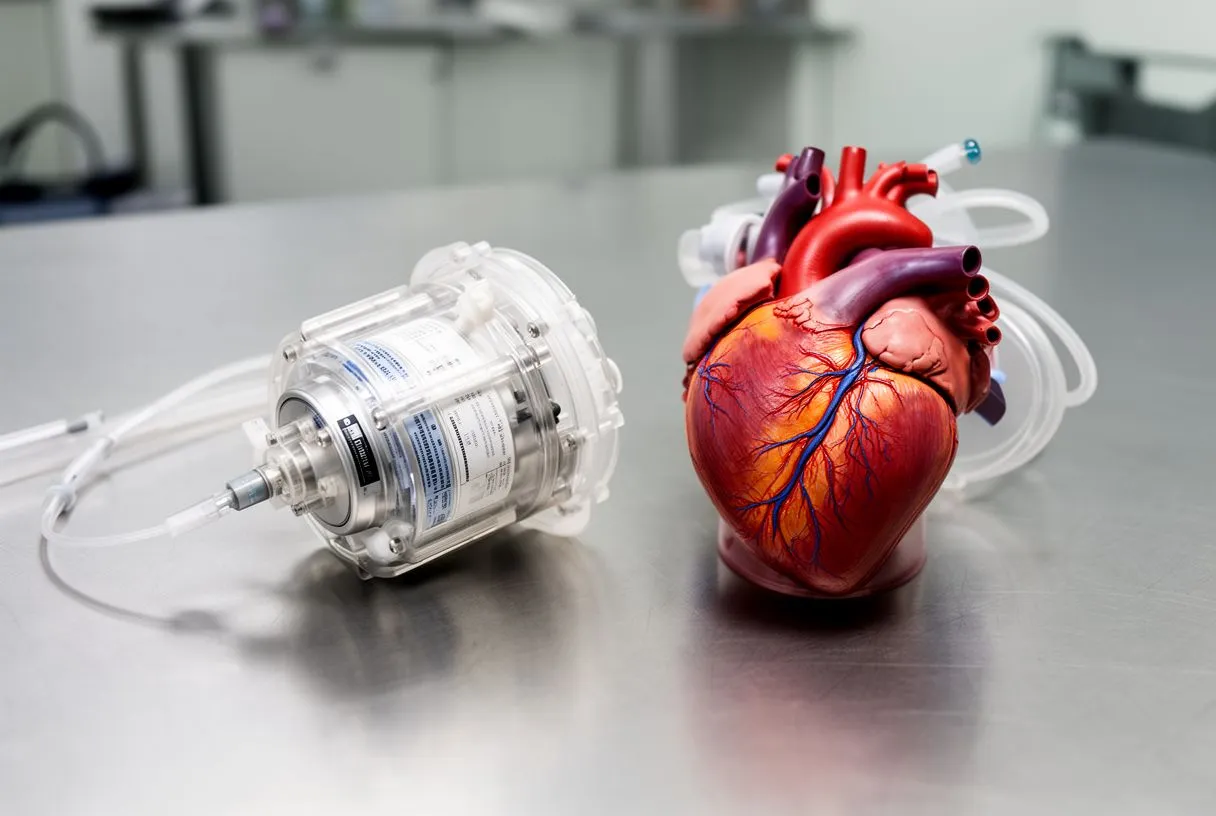
Bridge to Transplant, Bridge to Recovery, and Bridge to Candidacy
The word "bridge" appears in several compound phrases, and they are not interchangeable. Understanding the three main bridge strategies helps families follow the conversation in the intensive care unit.
Bridge to Recovery. This is the hope that the heart heals itself. Sudden but treatable problems — myocarditis, a stunned heart after a heart attack, certain rhythm crises — can recover with weeks of rest while a device carries the load. If the heart recovers enough, the device is removed and no permanent therapy is needed. Serial measurements of the heart's function tell the team when a weaning trial is reasonable.
Bridge to Transplant. Here the heart is not expected to recover, and a transplant is the destination. The temporary device keeps the patient stable — sometimes at home, in some programmes — while a donor heart is found. Bridge to Transplant support has become a routine part of transplant programmes because it prevents deterioration on the waiting list.
Bridge to Candidacy — and Bridge to Decision. Some patients initially do not qualify for a transplant: perhaps their kidneys are injured by the acute illness, or another condition needs treatment first. Temporary support that allows those problems to resolve — a strategy sometimes called bridge to candidacy — can change the answer. In this sense, Shared Decision Making with the patient and family becomes central: the team presents what the tests show, the realistic options, and the trade-offs, and the decision belongs to the patient. The bridge to decision heart support framework is what makes that conversation possible at all, because it converts an emergency into a planned choice.
What Disqualifies You From the Heart Transplant List?
Transplant candidacy is a medical and practical assessment, not a single test. Certain findings commonly prevent listing — some permanently, some only until they improve.
Common barriers to listing. Transplant committees look for conditions that would make surgery too dangerous or the outcome too poor:
- Severe irreversible kidney, liver or lung disease — often a temporary disqualification if the organ recovers with time and support.
- Active infection or recent cancer — immune suppression after transplant would worsen these; many programmes wait a defined disease-free period.
- Uncontrolled pulmonary hypertension or very high pressure in the lung arteries — a new heart alone may not cope with it.
- Continued smoking, active substance use, or inability to follow the demanding medication routine — transplant success depends heavily on lifelong adherence.
- Extreme frailty or obesity beyond programme thresholds — these raise surgical risk.
Why "not yet" can become "yes." Many disqualifications are temporary. This is one of the most important things a bridge strategy achieves: a device that stabilises the circulation can allow a damaged kidney to recover or an infection to clear, converting a patient who was refused into one who qualifies. Chronic kidney disease and cardiovascular disease frequently travel together, and reviews of this overlap explain why protecting organ function during acute heart failure changes long-term options. A review of cardiovascular disease in chronic kidney disease outlines this relationship in detail.
Are Temporary Heart Support Devices Safe?
These devices save lives, but they are not risk-free, and honest discussion of the risks is part of good care. The main complications come from the same features that make the devices work: blood touches foreign surfaces, and tubes enter large vessels.
Bleeding and clotting. Patients need anticoagulation — blood thinning — to prevent clots forming in the device. That protection increases bleeding risk, so the team balances the two continuously with blood tests. Infection. The drive line, the cable leaving the body on surgically implanted pumps, is a long-term infection risk that patients and families learn to care for meticulously. Vascular and limb issues. Devices inserted through the groin artery can reduce blood flow to the leg, which the team checks regularly. Device problems. Rarely, pumps malfunction or clots form inside them, which is why programmes have contingency plans and backup devices.
What reduces the risk. Outcomes improve most where experience is concentrated: teams that do these procedures regularly, plan them carefully, and review every complication. Our team reviews every proposed case together before recommending a route, because matching the least invasive approach to the specific patient — and only where the evidence supports it — is the single most effective way we know to lower risk.
How Long Does It Take to Recover From a Heart Transplant?
Recovery after a transplant unfolds in stages rather than a single date. Most patients spend one to several weeks in hospital after surgery, initially in intensive care and then on a regular ward as drains, lines and monitoring are removed. Over the following weeks, walking and rehabilitation build strength, and the anti-rejection medication regimen — several drugs taken daily for life — is adjusted to the right balance for each person.
The first three months. This is the most intensive period: frequent clinic visits, blood tests to watch drug levels and organ function, and vigilance for rejection or infection, since the immune system is deliberately dampened. After that, visits space out and most patients return to a broadly normal life, though with permanent medication and sun-skin precautions.
Can you have children after a heart transplant? In many cases, yes — pregnancy after transplant is possible and has been documented, but it requires planning. Pregnancy places extra load on the new heart, and the anti-rejection drugs need review, because some are safer in pregnancy than others. Anyone considering this should discuss timing and medication with both their transplant cardiologist and an obstetric specialist well before trying to conceive.
Where Temporary Accommodation and Psychological Support fit in. Families who travel for transplant or advanced heart care often need Temporary Accommodation near the hospital during the intensive monitoring phase — a practical detail worth planning early. Just as important is Psychological Support: anxiety and low mood are common both during the support-device period and after transplant, and addressing them openly is part of standard recovery care, not an extra.
Choosing a Bridge to Decision Heart Support Team
Because these devices are used in emergencies as well as planned situations, many families choose a team under time pressure. Even so, a few questions are worth asking of any programme offering bridge to decision heart support: how many of these devices does the team implant each year, what is the full range of options offered, and what happens after the device goes in — is there a defined pathway to recovery, a durable pump, or transplant referral?
Experience you can ask about. Dr Molina trained in cardiothoracic surgery at the Universidad de Guadalajara, in cardiac, minimally invasive, robotic and structural surgery at the University of Montreal, and in structural cardiology and TAVR at CHU Bordeaux, and the team also trained at Jena, Bad Berka and Buffalo; in Guadalajara he performed the first robotic mitral valve repair in the Ángeles Health System and the first robotic heart surgery in the city. Training breadth matters here, because temporary support often connects to longer-term procedures, and a team that performs the full range can follow a patient from bridge to final therapy without changing hands.
A low-pressure first step. The first contact with us is a free video consultation: we get to know the patient, talk through the condition in plain words, and identify which studies are genuinely needed so no unnecessary tests are ordered — a face-to-face visit at our consulting rooms in Guadalajara, Querétaro or Hermosillo follows only when the patient decides to go ahead. We also encourage second opinions and treat seeking one as a normal, sensible part of deciding about heart surgery, not as a slight to any doctor.
The takeaway. A bridge to decision heart support does not answer the question of what comes next — it creates the time and stability in which a good answer becomes possible. Whether the destination is recovery, a durable pump, or a transplant, the sequence is the same: stabilise, evaluate, and decide together. If you or someone close to you is facing advanced heart failure, bring your questions to a qualified cardiac team and book a consultation rather than trying to navigate these choices alone; the decision deserves both expert input and your own voice in it.






