
C-Reactive Protein and Heart Risk: Reading Your Result
C-reactive protein heart risk explained clearly.
What Is C-Reactive Protein and Heart Risk?
When a blood report mentions C-reactive protein, many patients wonder whether the number means something is wrong with their heart. C-reactive protein, usually abbreviated as CRP, is a substance the liver produces whenever inflammation is active anywhere in the body. It works like a smoke detector: it signals that something is smouldering, but it cannot tell you where the fire is. In cardiology, that smouldering is often inside the walls of the arteries, where fatty deposits called plaques build up silently over many years.
Inflammation now sits at the centre of how we understand artery disease. The inner lining of an artery — the endothelium — can be injured by high blood pressure, smoking, diabetes, or oxidised cholesterol. The body responds with inflammation, and white blood cells enter the artery wall to help, forming the core of a plaque. CRP is released into the blood as part of that response, which makes it a measurable signal of the inflammatory activity happening inside the vessels.
What CRP cannot tell you on its own: A single elevated reading can reflect a recent cold, a dental infection, a flare of arthritis, or even vigorous exercise the day before. That is why C-reactive protein heart risk is always interpreted in context — alongside your blood pressure, cholesterol, family history, and symptoms. No cardiac team makes a treatment decision based on CRP alone. The number refines the overall risk estimate; it never replaces it.
How Does a C-Reactive Protein Test Work?
The c-reactive protein test is simple and familiar: a small blood sample is drawn from a vein in your arm, usually in a few minutes, and sent to the laboratory. The concentration of CRP is measured in milligrams per litre (mg/L). For detecting active infection or general inflammation, a standard CRP test is enough. When the question is specifically about heart risk, most doctors order a high-sensitivity version — often written as hs-CRP — which can detect much smaller amounts of the protein and is the version validated for cardiovascular risk assessment.
Standard CRP versus hs-CRP: A standard CRP test is useful for diagnosing acute infections or autoimmune flare-ups, because it only becomes positive when inflammation is substantial. The high-sensitivity assay resolves values as low as 0.1 mg/L — the range where cardiovascular risk signal lives. This distinction matters more than most patients realise. A report that simply says "CRP: normal" may be hiding exactly the information your cardiologist needs, which is why asking for the hs-CRP version is a reasonable question to raise at your next visit.
The test carries essentially no risk beyond the brief discomfort of a needle stick, and results are usually available within a day. If there is any suspicion that an infection or flare is inflating the number, the sensible step is to repeat it two to three weeks later, once you have fully recovered. That repeat measurement gives a far more reliable picture of your baseline inflammatory state than any single reading ever can.
How to Read CRP Blood Test Results
Learning how to read crp results starts with the thresholds. The most widely used framework for hs-CRP divides results into three tiers: below 1.0 mg/L is considered low cardiovascular risk, between 1.0 and 3.0 mg/L is moderate risk, and above 3.0 mg/L suggests higher relative risk. These categories come from large population studies and are meant to be applied with clinical judgement — never as a verdict in isolation. A crp blood test meaning is only complete once it is placed beside everything else your team knows about you.
What can falsely elevate your CRP? Several common situations can push the number upward and create unnecessary worry. A recent respiratory virus can raise CRP above 10 mg/L. Pregnancy, rheumatoid arthritis flares, inflammatory bowel disease, recent surgery, and even intense exercise within 48 hours of the draw can all distort the result. When any of these apply, the honest approach is to postpone interpretation and retest at your baseline. A single elevated result should never be the basis for a frightening conclusion about your heart.
What context looks like in practice: Suppose your hs-CRP returns at 2.4 mg/L. On its own, that sits in the moderate range. But if your blood pressure is controlled, your cholesterol is on target, and you have no family history of early heart disease, your overall risk may still be low. Conversely, the same 2.4 mg/L in someone with known coronary plaques may prompt the team to intensify preventive therapy. In our consultations we take the time to explain what each study actually shows, in plain words, so the number becomes a signal rather than a source of alarm.
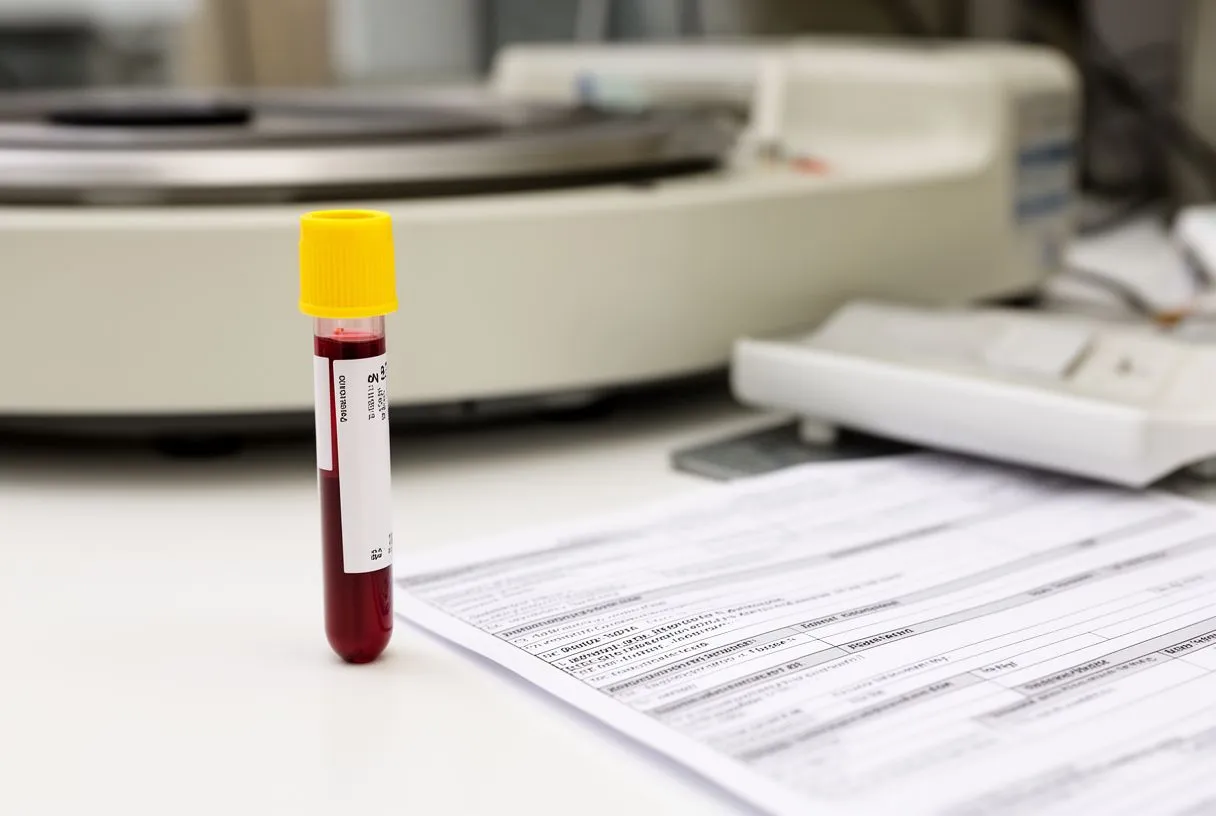
C-Reactive Protein Normal Range vs Elevated Levels
Establishing a c-reactive protein normal range depends on why the test was ordered. For cardiovascular screening with hs-CRP, the desirable target is under 1.0 mg/L. For a general CRP test used to detect infection or inflammation, the reference range is typically below 5.0 mg/L, and any value above 10.0 mg/L strongly suggests an acute inflammatory process — one that usually deserves investigation for its source, which is often not the heart at all.
It is worth knowing that CRP levels naturally fluctuate. They tend to run slightly higher in the evening than in the morning, and they can rise during the second half of the menstrual cycle. Age, excess body weight, and poor sleep also nudge the baseline upward. If you are tracking CRP over time for cardiac reasons, try to have the blood drawn at the same time of day and under similar conditions each visit. Consistency in how the sample is collected makes trend comparison far more reliable.
What elevated levels mean for your care plan: A persistently elevated hs-CRP does not automatically mean medication or surgery. It means your team should look closer — checking for silent sources of inflammation, reviewing your risk factors, and deciding whether further testing such as a coronary calcium score would refine the picture. In our practice, every case is reviewed by the multidisciplinary team against international practice guidelines before a recommendation is made, and the patient receives a clear proposal with the alternatives, so the final decision always rests with them.
High CRP and Heart Disease: The Connection
The link between high CRP and heart disease is one of the most studied topics in modern cardiology. The connection runs through inflammation. When a plaque inside a coronary artery becomes inflamed, its fibrous cap — the thin layer that keeps the fatty core sealed inside — can weaken and tear. When that happens, the fatty core spills into the bloodstream and triggers clot formation. If the clot blocks the artery, the result is a heart attack.
Does high CRP cause heart attacks? CRP itself is not believed to be the cause of plaque rupture. It is a marker — a measurable reflection — of the inflammation that does cause rupture. This distinction matters because it changes what treatment means: lowering CRP for its own sake is not the goal; reducing the underlying inflammation and stabilising the plaques is. A high-sensitivity CRP ratio has even been studied in specific heart failure populations, where the relationship between HDL cholesterol and CRP was examined in patients with preserved ejection fraction, as published in the Journal of Cardiovascular Medicine (ESC Heart Failure). The lesson is consistent: inflammation and cardiovascular risk travel together.
Who benefits most from CRP testing? CRP is most useful for patients in the intermediate-risk category — those whose age, blood pressure, cholesterol, and smoking status place them somewhere in the middle of the risk spectrum. For these individuals, an elevated hs-CRP can tip the balance toward more aggressive prevention, such as starting a statin or intensifying lifestyle changes. In patients who already have documented disease, the decision to treat intensively has usually been made, so CRP adds less incremental information.

CRP Levels and Stroke Risk
CRP levels and stroke risk are connected through the same mechanism as heart attack risk. Inflammation destabilises plaques not only in the coronary arteries but also in the carotid arteries — the vessels in the neck that carry blood to the brain. When a carotid plaque ruptures, a clot can form and travel upstream to the brain, blocking a vessel and causing an ischaemic stroke. This is why cardiologists sometimes check CRP in patients with carotid narrowing or a history of transient ischaemic attacks, sometimes called mini-strokes.
What the evidence suggests: Chronically elevated hs-CRP has been associated with a higher rate of cardiovascular events in general, and this association extends to cerebrovascular disease. The association is not a prediction — it is a signal that raises the index of suspicion. If you have carotid disease, your team will usually combine CRP with imaging of the neck vessels, blood pressure control, and cholesterol management rather than treating the number alone.
Symptoms that should never be ignored: Regardless of what your CRP shows, sudden weakness or numbness on one side of the body, difficulty speaking, sudden vision loss in one eye, or a sudden severe headache with no obvious cause require urgent medical attention. These are possible stroke symptoms, and no blood test outranks them. CRP is for planning ahead; these symptoms are for acting now.
HS-CRP Cardiac Risk: High Sensitivity Testing Explained
The term hs-crp cardiac risk refers specifically to testing with a high-sensitivity assay — a laboratory method capable of detecting CRP at concentrations far below what a standard test can measure. This precision matters because the cardiovascular signal lives in the range below 3.0 mg/L, where ordinary CRP tests simply report "normal" without distinguishing between 0.3 mg/L and 2.8 mg/L. High-sensitivity testing closes that gap.
When is hs-CRP the right test? Doctors typically consider hs-CRP if you are between 40 and 75 years old, have no known heart disease, and fall into an intermediate-risk category based on traditional factors. It can also be useful when there is a strong family history of early heart disease but your cholesterol and blood pressure look reassuring — sometimes inflammation is the missing piece. The test is generally not recommended during active infections, autoimmune flares, or soon after surgery, because the result would be uninterpretable.
Some patients worry that a high-sensitivity test means something is seriously wrong. The name refers only to the laboratory technique, not to your condition. If your hs-CRP comes back elevated, the next step is almost never an emergency. It is a measured conversation about lifestyle, medication options, and possibly additional non-invasive testing, so a complete picture is built before any decision is made.
Inflammatory Markers and Heart Disease: The Bigger Picture
CRP is one of several inflammatory markers heart disease specialists may evaluate. Others include interleukin-6, fibrinogen, and lipoprotein-associated phospholipase A2. Each reflects a slightly different arm of the inflammatory cascade, and in research settings measuring several together gives a richer picture. In everyday clinical practice, however, hs-CRP remains the most accessible and validated option, which is why it is the marker most patients encounter first.
The inflammation–atherosclerosis timeline: Artery disease develops over decades. The earliest lesions can appear in the second or third decade of life as fatty streaks — flat deposits that cause no symptoms. Over the years, some progress into more complex plaques with fibrous caps. The plaques most likely to rupture are not necessarily the largest; the most dangerous lesions are often those causing only mild narrowing, which would not show up on a stress test. Inflammation weakens the cap, and CRP tracks that weakening process. This is why a patient can pass a stress test and still carry meaningful risk.
It is also worth remembering that the same habits that drive inflammation drive cardiovascular disease more broadly. A major risk assessment published in the The Lancet identified high blood pressure, smoking, and high body mass index among the leading global risk factors for cardiovascular death — many of which work through inflammation. The same lifestyle interventions that lower blood pressure and cholesterol also tend to lower CRP, because they address the underlying driver rather than the marker. And as research on hormone therapy in the Women's Health Initiative trial showed — published in JAMA — treatments that seemed beneficial on paper can carry unexpected cardiovascular risk, which is why every intervention deserves careful, individual review.
How to Reduce C-Reactive Protein Naturally
Many patients ask how to reduce c-reactive protein after seeing an elevated result. The encouraging news is that the same measures proven to reduce heart attack risk also tend to lower CRP, because they target the root inflammation rather than masking the signal. There is no single pill or supplement that reliably lowers CRP in isolation; the evidence supports a comprehensive approach, and the benefits accrue over weeks to months.
- Mediterranean-style eating pattern: Rich in olive oil, fish, vegetables, nuts, and whole grains — consistently associated with lower CRP in clinical studies.
- Regular aerobic exercise: Around 150 minutes per week of moderate activity, such as brisk walking, cycling, or swimming, gradually lowers inflammatory markers.
- Smoking cessation: Quitting smoking is one of the fastest ways to reduce systemic inflammation; CRP begins to fall within weeks of stopping.
- Sleep and stress management: Chronic sleep deprivation and sustained psychological stress both raise inflammatory markers; addressing them is often overlooked in cardiac prevention.
What about supplements and medications? Some evidence suggests omega-3 fatty acids may modestly lower CRP, though results vary between studies. Statin medications — prescribed primarily to lower cholesterol — have a well-documented secondary effect of reducing CRP, and this anti-inflammatory action may partly explain why statins benefit patients even when cholesterol is already at target. Always discuss any supplement with your cardiac team before adding it, particularly if you are on blood thinners or scheduled for surgery. When patients come to us for a first consultation, we review which studies are genuinely needed and which are not, so nothing unnecessary is ordered and no important signal is missed.
When to See a Cardiologist About Your CRP Levels
Knowing when to seek specialist input about your C-reactive protein can prevent both unnecessary anxiety and dangerous complacency. If your primary care doctor ordered the test and the result falls in the moderate or higher range on repeat testing, a cardiology consultation is a reasonable next step — not because an emergency is likely, but because a cardiac specialist can place the number within a structured risk assessment and recommend the right follow-up path. This is especially important with a family history of early heart disease, existing hypertension or diabetes, or symptoms such as chest discomfort, unexplained arm pain, or breathlessness on exertion.
What a cardiac consultation involves: A cardiologist will review your full history, examine you, and may order additional tests — an electrocardiogram, an echocardiogram, a coronary calcium scan, or a stress test, depending on the picture. The goal is to assemble enough information to give you a personalised risk estimate and a clear, evidence-based plan, not a generic checklist. In our consulting rooms in Guadalajara, Querétaro and Hermosillo, the first contact is a free video consultation: we get to know the patient, talk through the condition, and identify exactly which studies are still needed before anything is ordered.
Surgery and inflammation: If a CRP result is part of a larger picture that leads to a discussion of cardiac procedures, the surgical risk assessment matters enormously. Our team — led by Dr Alejandro Molina, with training in conventional, minimally invasive, robotic and transcatheter procedures — reviews every case as a multidisciplinary group and recommends the less invasive route only where the evidence supports it for that specific patient. We also encourage second opinions and treat seeking one as a normal part of deciding about heart surgery. If your CRP is persistently elevated, or you simply want your numbers explained in context, book a consultation rather than interpreting a laboratory report alone — the right decision almost always comes from a conversation.